Species · Reptiles
Gau Iguana Brachylophus gau
The scientific name of the Gau Iguana is Brachylophus gau. It is a species of reptile in the family Iguanidae (iguanas), order Squamata. The name dates from 2017.
- Scientific name
- Brachylophus gau Fisher, Niukula, Watling & Harlow, 2017
- Common name
- Gau Iguana
- Genus
- Brachylophus
- Family
- Iguanidae (Iguanas)
- Order
- Squamata
- Class
- Reptilia
- Red List category
- EN Endangered
- Recorded in
- 1 country
- Name status
- accepted in the Catalogue of Life

Overview
Brachylophus gau is endemic to Gau Island in the Fijian archipelago. Both sexes have green throats, while males have a solid green throat and a distinctive color pattern.
Written 26 November 2026 from the sources listed below. Each statement was checked against the passage it cites; statements that could not be supported were removed.
Similar species
The Gau Iguana is one of four living species of South Pacific iguana. It is approximately 13% smaller than the next largest iguana species in Fiji and 40% smaller than the largest iguana species.[1][2][3]
Males have a distinctive color pattern and solid green throat that distinguish them from other South Pacific iguanas. Males of other iguana species do not have solid green throats.[4][5]
Appearance
Both male and female Gau Iguanas have green throats. Males have a solid green throat and a distinctive color pattern.[4][6]
Habitat
The Gau Iguana primarily inhabits well-preserved upland forests on Gau Island. Most individuals occur in relatively intact large inland forests.[7][8]
Smaller populations occur in degraded coastal forests, which support fewer Gau Iguanas than the mid-elevation forests.[9][10]
Gau Island has an area of approximately 130 square kilometers, and approximately half of the island consists of forest. The remaining landscape includes grasslands, plantations and forests regenerated after timber harvesting.[11][12][13]
Conservation
The Gau Iguana is classified as endangered on the IUCN Red List. Habitat loss and invasive species threaten the species.[14][15]
Invasive black rats, Polynesian rats, feral cats and free-ranging goats threaten the species on Gau Island. Mongooses, feral cats, rats and goats are also identified as threats to Pacific iguanas.[16][17]
Agricultural burning of forests contributes to habitat loss by converting forest into grassland. Increasing cyclone intensity associated with climate change may also threaten the species.[18][19]
Cyclones can create temporary forest gaps that invasive plants and insects subsequently colonize. The invasive plant Mikania micrantha and yellow crazy ant Anoplolepis gracilipes are identified as potential threats.[20][21]
Further research is intended to clarify the Gau Iguana's range and identify conservation priority areas. Collaboration with local communities is planned to help conserve the species and its forest habitats.[22][23]
Classification of the Gau Iguana
| Kingdom | Animalia |
|---|---|
| Phylum | Chordata |
| Subphylum | Vertebrata |
| Infraphylum | Gnathostomata |
| Parvphylum | Osteichthyes |
| Megaclass | Tetrapoda |
| Class | Reptilia (Reptile) |
| Order | Squamata (Snakes) |
| Suborder | Iguania (Iguanas) |
| Family | Iguanidae (Iguanas) |
| Genus | Brachylophus (Melanesian Iguanas) |
| Species | Brachylophus gau Fisher, Niukula, Watling & Harlow, 2017 |
Where the Gau Iguana is found
Checklists and occurrence records place Brachylophus gau in 1 country. GBIF holds 7 georeferenced records of it.
Countries
Range as the checklists state it
Republic of Fiji (Gau Island)
A number beside a place is its count of GBIF occurrence records. A place without a number comes from a checklist alone. Records show where a species has been observed or collected, which can include escapes and vagrants.
Common names
English
- Gau Iguana
- Gau Banded Iguana
- Gau Iguana (pronounced Ngau)
Names in 1 other language
- Arabic
- إغوانة جاو
Related species
-
 Central Fijian Banded IguanaBrachylophus bulabula
-
 Fiji Crested IguanaBrachylophus vitiensis
-
 Lau Banded IguanaBrachylophus fasciatus
-
 Green IguanaIguana iguana
-
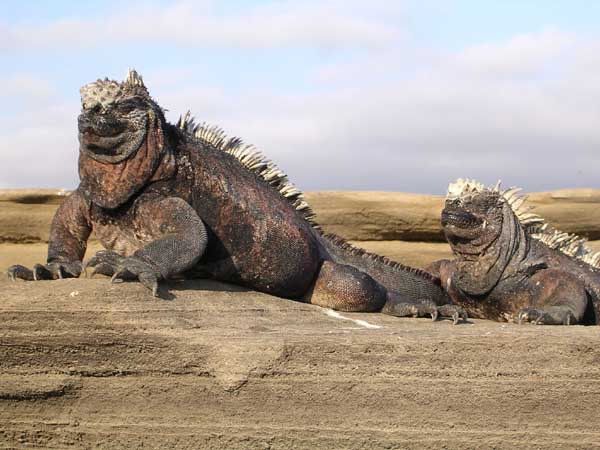 Marine IguanaAmblyrhynchus cristatus
-
 Black Spiny-tailed IguanaCtenosaura similis
-
 Blue IguanaCyclura lewisi
-
 Rhinoceros IguanaCyclura cornuta
Compare
Questions and answers
What is the scientific name of the Gau Iguana?
The scientific name of the Gau Iguana is Brachylophus gau. Written with its author, the full name is Brachylophus gau Fisher, Niukula, Watling & Harlow, 2017.
Which family does the Gau Iguana belong to?
Brachylophus gau belongs to the family Iguanidae, in the order Squamata and the class Reptilia.
Where is the Gau Iguana found?
Checklists and occurrence records place Brachylophus gau in 1 country: Fiji.
What is the conservation status of the Gau Iguana?
The IUCN Red List category recorded for Brachylophus gau is Endangered (EN).
What other names does the Gau Iguana have?
Brachylophus gau is also known in English as Gau Banded Iguana and Gau Iguana (pronounced Ngau).
Sources
Passages the profile rests on
- Brachylophus gau is one of four living species of South Pacific iguana. Source passage: “is one of only four living species of South Pacific iguana” — usgs.gov
- The Gau iguana is 13% smaller than the next largest iguana species in Fiji. Source passage: “being 13 percent smaller than the next largest species” — usgs.gov
- The Gau iguana is 40% smaller than the largest iguana species. Source passage: “and 40 percent smaller than the largest species.” — usgs.gov
- Males have a distinctive color pattern and a solid green throat that distinguish them from other South Pacific iguanas. Source passage: “the male's distinctive color pattern and solid green throat.” — English Wikipedia
- Males of other iguana species do not have solid green throats. Source passage: “whereas males of other iguana species never have solid green throats.” — usgs.gov
- Both male and female Gau iguanas have green throats. Source passage: “including green throats on both males and females” — usgs.gov
- The species primarily inhabits well-preserved upland forests on Gau Island. Source passage: “It mostly lives in the well-preserved upland forests of the island” — English Wikipedia
- Gau iguanas mostly inhabit the relatively intact large inland forests of Gau Island. Source passage: “Gau iguanas mostly inhabit the island’s large inland forests, which remain relatively intact.” — usgs.gov
- Smaller populations occur in degraded coastal forests on Gau Island. Source passage: “with smaller populations in the degraded coastal forests.” — English Wikipedia
- The coastal forests of Gau Island are more degraded than its mid-elevation forests and support fewer Gau iguanas. Source passage: “Gau’s coastal forests were more degraded than those found at mid-elevations and hosted smaller numbers of these iguanas.” — usgs.gov
- Gau Island has an area of approximately 130 square kilometers. Source passage: “with an area of about 130 square kilometers” — usgs.gov
- Approximately half of Gau Island consists of forest. Source passage: “is about half forest” — usgs.gov
- The remaining landscape of Gau Island includes grasslands, plantations and forests regenerated after timber harvesting. Source passage: “and half a mix of grasslands, plantations and forests regrown following timber harvests.” — usgs.gov
- The Gau iguana is classified as endangered on the IUCN Red List. Source passage: “It is considered endangered on the IUCN Red List” — English Wikipedia
- Habitat loss and invasive species are identified as threats to Pacific iguanas, including the Gau iguana. Source passage: “Pacific iguanas face threats from habitat loss and invasive species” — usgs.gov
- Invasive black rats, Polynesian rats, feral cats and free-ranging goats threaten the species on Gau Island. Source passage: “such as black rats (Rattus rattus), Polynesian rats (Rattus exulans), feral cats (Felis catus), and free-ranging goats (Capra hircus).” — English Wikipedia
- Mongooses, feral cats, rats and goats are among the invasive animals identified as threats to Pacific iguanas. Source passage: “such as mongoose, feral cats, rats and goats.” — usgs.gov
- Agricultural burning of forests contributes to habitat loss by converting forest into grassland. Source passage: “Forests are frequently burned for agriculture and eventually turn into grassland, accelerating habitat loss.” — English Wikipedia
- Increasing cyclone intensity associated with climate change may threaten the species. Source passage: “Climate change may also play a threat by increasing cyclone intensity” — English Wikipedia
- Cyclones can create temporary forest gaps that invasive plants and insects subsequently colonize. Source passage: “they can create temporary gaps in the forests that can be taken over by invasive plant and insect species” — English Wikipedia
- The invasive plant Mikania micrantha and yellow crazy ant Anoplolepis gracilipes are identified as potential threats. Source passage: “such as Mikania micrantha and yellow crazy ant (Anoplolepis gracilipes)” — English Wikipedia
- Further research is intended to clarify the Gau iguana's range and identify conservation priority areas. Source passage: “With further study, researchers can establish a more comprehensive understanding of the iguana’s range, and identify priority areas for conservation.” — usgs.gov
- Collaboration with local communities is planned to help conserve the Gau iguana and its forest habitats. Source passage: “continuing the NatureFiji-MareqetiViti collaborations with local communities to conserve both the Gau iguana and Gau forest habitats” — usgs.gov
Data
- Catalogue of Life, 2026-10-16 XR cc by
- Global Biodiversity Information Facility CC BY 4.0
- Wikidata CC0
- GeoNames CC BY 4.0
- Wikimedia Commons per image; credit shown with each image
- Within the Catalogue of Life, this name comes from The Reptile Database cc by
References
- FISHER, ROBERT N.; JONE NIUKULA, DICK WATLING, PETER S. HARLOW. (2017). A new species of iguana Brachylophus Cuvier 1829 (Sauria: Iguania: Iguanidae) from Gau Island, Fiji Islands. Zootaxa 4273 (3): 407–422. Link where the name was published
- Buckley, Larry J.; Kevin de Queiroz, Tandora D. Grant, Bradford D. Hollingsworth, John B. Iverson (Chair, Stesha A. Pasachnik, and Catherine L. Stephen (Iguana Taxonomy Working Group, ITWG. (2016). A Checklist of the Iguanas of the World (Iguanidae; Iguaninae). Herp. Cons. Biol. 11 (Monograph 6).
- Kwet, & Axel. (2017). Brachylophus gau, ein neuer Leguan der Fidschiinseln. Terraria-Elaphe 2017 (6): 67.
This species in other databases
Page built on 27 November 2026. See how the catalog is made and all sources and licences.
Cite this page
ScientificNames.org. (2026). Brachylophus gau (Gau Iguana). Retrieved November 27, 2026, from https://scientificnames.org/species/brachylophus-gau
“Brachylophus gau (Gau Iguana).” ScientificNames.org, 2026, scientificnames.org/species/brachylophus-gau. Accessed 27 Nov. 2026.
ScientificNames.org. “Brachylophus gau (Gau Iguana).” Accessed November 27, 2026. https://scientificnames.org/species/brachylophus-gau.
@misc{scientificnames_brachylophus_gau_gau_iguana,
  author = {{ScientificNames.org}},
  title = {Brachylophus gau (Gau Iguana)},
  year = {2026},
  url = {https://scientificnames.org/species/brachylophus-gau},
  note = {Accessed 2026-11-27}
}