Species · Mammals
Wolf Canis lupus
The scientific name of the Wolf is Canis lupus. It is a species of mammal in the family Canidae (dogs), order Carnivora. The name dates from 1758.
- Scientific name
- Canis lupus Linnaeus, 1758
- Common name
- Wolf
- Genus
- Canis
- Family
- Canidae (Dogs)
- Order
- Carnivora
- Class
- Mammalia
- Red List category
- LC Least Concern
- Environment
- terrestrial
- Recorded in
- 73 countries
- Name status
- accepted in the Catalogue of Life

Overview
The Gray Wolf occurs naturally across Eurasia and North America. The Gray Wolf has a coat ranging from white and gray to brown and black and generally lives in social packs.
Written 24 November 2026 from the sources listed below. Each statement was checked against the passage it cites; statements that could not be supported were removed.
Appearance
The Gray Wolf's coat ranges from white and gray to brown and black. It has small, pointed ears and small eyes positioned relatively far apart.[1][2]
The wolf develops a thick, fluffy winter coat with longer guard hairs and a dense undercoat. It sheds most of its undercoat in spring and regrows its coat in autumn.[3][4]
The wolf's legs are generally longer than those of other canids, helping it move through deep snow. Females generally have slimmer bodies and shorter legs than males.[5][6]
Adult wolves measure approximately 105–160 cm in body length and typically stand 80–85 cm at the shoulder. Their tails measure approximately 29–50 cm long.[7][8][9]
The average body mass of wolves is approximately 40 kg, with recorded masses ranging from approximately 12 to 80 kg. European wolves average approximately 38.5 kg, while North American wolves average approximately 36 kg.[10][11][12][13]
Female wolves typically weigh 2.3–4.5 kg less than males in the same population. Adult male wolves in Interior Alaska generally weigh 38.6–52.3 kg, while female wolves in Alaska average 2–5 kg less than males.[14][15][16]
Habitat
The Gray Wolf inhabits forests, wetlands, shrublands, grasslands, Arctic tundra, pastures, deserts, and rocky mountain peaks. It can live in both wilderness areas and landscapes modified by humans.[17][18]
Diet
The Gray Wolf primarily consumes large wild hoofed mammals. It also eats smaller animals, livestock, carrion, and garbage.[19]
Important prey species for North American wolves include elk, moose, caribou, white-tailed deer, and mule deer. European wolves prey on wild boar, chamois, roe deer, red deer, and moose.[20][21]
Alaskan wolves commonly supplement their diet with Dall sheep, squirrels, snowshoe hares, beavers, birds, and fish. Moose and caribou are the primary food sources for wolves across much of mainland Alaska.[22][23]
Salmon are an important seasonal food for coastal wolves in southeastern Alaska, particularly young individuals. Wolves in southeastern Alaska primarily feed on Sitka black-tailed deer, mountain goats, and beavers.[24][25]
Behaviour
The Gray Wolf is highly social and generally lives in a pack. Packs commonly consist of a breeding pair, their previous-year offspring, and new pups.[26][27]
A typical wolf pack in the northern United States Rocky Mountains contains five to ten animals. Alaskan wolf packs average six or seven individuals, although some contain 20–30 individuals.[28][29][30]
Wolf packs generally maintain territories used almost exclusively by their own members. Wolves use howling to communicate and maintain contact with pack members, and their howls can be heard from distances of up to five miles.[31][32][33]
Wolves typically avoid contact with humans. They generally target young, old, or debilitated prey rather than healthy middle-aged animals.[34][35]
Reproduction and life cycle
Most wolf packs produce one litter annually, typically containing four to six pups. A female wolf in an Alaskan pack typically gives birth to approximately seven pups each year.[36][37]
Wolf dens may be located in underground burrows, abandoned beaver lodges, hollow trees, or shallow rock caves.[38]
Conservation
The global wild Gray Wolf population is estimated at approximately 300,000 individuals. The species has been assessed as Least Concern by the IUCN.[39][40]
Alaska has an estimated wolf population of 7,000–11,000 individuals. Wolves have not been classified as threatened or endangered in Alaska.[41][42]
Gray Wolves are federally listed as endangered in the western two-thirds of Washington. Human activities have caused wolves to disappear from much of their historical range.[43][44]
Human-caused mortality is the leading source of wolf deaths in the northern Rocky Mountain states.[45]
Few wild wolves live longer than five years, although some individuals reach 15 years.[46]
Classification of the Wolf
| Kingdom | Animalia |
|---|---|
| Phylum | Chordata |
| Subphylum | Vertebrata |
| Infraphylum | Gnathostomata |
| Parvphylum | Osteichthyes |
| Megaclass | Tetrapoda |
| Class | Mammalia (Mammal) |
| Subclass | Theria |
| Infraclass | Eutheria |
| Order | Carnivora (Carnivores) |
| Suborder | Caniformia (Dog-like Carnivores) |
| Family | Canidae (Dogs) |
| Genus | Canis (Dogs) |
| Species | Canis lupus Linnaeus, 1758 |
Where the Wolf is found
Checklists and occurrence records place Canis lupus in 73 countries across Africa, Asia, North America and Oceania. GBIF holds 119,810 georeferenced records of it.
Countries
- Afghanistan 13
- Albania 14
- Armenia 49
- Australia 633
- Austria 297
- Azerbaijan 14
- Belarus 60
- Belgium 127
- Bosnia and Herzegovina 10
- Bulgaria 6
- Canada 4,844
- China 191
- Croatia 56
- Czechia 20
- Denmark 897
- Egypt 12
- Estonia 851
- Finland 967
- France 44,690
- Georgia 20
- Germany 1,124
- Greece 47
- Greenland 66
- Hungary 20
- India 267
- Indonesia 26
- Iran 60
- Iraq 31
- Israel 7,400
- Italy 2,775
- Japan 39
- Jordan 25
- Kazakhstan 13
- Kosovo 4
- Latvia 15
- Lebanon 9
- Liechtenstein 5
- Lithuania 21
- Luxembourg 176
- Malaysia 10
- Mexico 723
- Moldova 6
- Mongolia 43
- Montenegro 31
- Nepal 14
- New Zealand 466
- Nigeria 5
- North Macedonia 8
- Norway 12,697
- Oman 53
- Pakistan 10
- Palestinian Territory 75
- Poland 1,958
- Portugal 1,101
- Reunion 17
- Romania 59
- Russia 857
- Saudi Arabia 13
- Serbia 11
- Slovakia 40
- Slovenia 39
- Spain 4,568
- Sweden 1,124
- Switzerland 15,090
- Syria 30
- Tajikistan 7
- The Netherlands 1,572
- Trinidad and Tobago 3
- Turkey 70
- Ukraine 910
- United Kingdom 54
- United States 12,247
- Uzbekistan 5
Regions and cities with the most records
- Vaud, Switzerland 8,664
- Auvergne-Rhône-Alpes, France 8,355
- Provence-Alpes-Côte d'Azur, France 7,864
- Bourgogne-Franche-Comté, France 7,039
- Grand Est, France 6,660
- Southern District, Israel 4,631
- Alaska, United States 2,944
- Occitanie, France 2,498
- Valais, Switzerland 2,050
- Akershus, Norway 1,414
- Pays de la Loire, France 1,340
- New Mexico, United States 1,329
- Northern District, Israel 1,274
- Galicia, Spain 1,239
- Gelderland, The Netherlands 1,219
- Centre-Val de Loire, France 1,174
- Lombardy, Italy 1,131
- Wyoming, United States 980
- Clermont-Ferrand, France 945
- Ede, The Netherlands 871
- Arnhem, The Netherlands 857
- Veenendaal, The Netherlands 815
- Northwest Territories, Canada 804
- Dijon, France 700
- La Roche-sur-Yon, France 648
- Australian Capital Territory, Australia 628
- Canberra, Australia 627
- Tuggeranong, Australia 627
- Ticino, Switzerland 617
- British Columbia, Canada 606
- Hauts-de-France, France 586
- West Bank, Palestinian Territory 538
- Troyes, France 520
- Île-de-France, France 498
- Basque Country, Spain 479
- Durango, Mexico 455
4 more countries have a few records outside this range
These countries hold a few records of Canis lupus but lie outside the range the checklists give for it. Such records are often zoo or garden specimens, museum material or vagrants, so the species is not counted as occurring there.
Range as the checklists state it
Europe & Northern Asia (excluding China)
Middle America
North America
Southern Asia
A number beside a place is its count of GBIF occurrence records. A place without a number comes from a checklist alone. Records show where a species has been observed or collected, which can include escapes and vagrants.
Common names
English
- Wolf
- American Wolf
- Black Wolf
- Common Wolf
- Gray Wolf
- Grey Wolf
- Large Wolf
- Timber Wolf
- Western Wolf
- White Wolf
Names in 151 other languages
- Albanian
- Ujk, Ujku, Ujku gri
- Arabic
- Dheeb, الذئب, الذئب العربي, ذئب رمادي, ذئب رمادي، ذئب
- Armenian
- Գայլ, Գորշ գայլ
- Asturian
- Llobu
- Azerbaijani
- Adi canavar, Canavar
- Basque
- Otso
- Belarusian
- воўк, звычайны воўк, шэры воўк
- Breton
- Bleiz
- Bulgarian
- Вълк
- Burmese
- ဝံပုလွေ
- Catalan
- Llop
- Chinese
- 灰狼
- Croatian
- Vuk
- Czech
- vlk obecný
- Danish
- Grå ulv, Ulv
- Estonian
- Hallhunt, Hunt
- Faroese
- Fjallaúlvur, Úlvur
- Finnish
- susi
- French
- Loup Vulgaire, Loup gris, loup
- Georgian
- მგელი, მგელი - ႫႢႤႪႨ
- Greek
- Γκρίζος Λύκος
- Gujarati
- વરુ
- Hawaiian
- 'Īlio hae, ʻĪlio hae
- Hebrew
- זאב מצוי
- Hindi
- भेड़िया
- Hungarian
- Farkas, szürke farkas
- Icelandic
- Úlfur
- Indonesian
- Serigala
- Irish
- Faolchú, Mac tíre
- Italian
- Lupo, Lupo grigio
- Japanese
- オオカミ, タイリクオオカミ
- Kannada
- ತೋಳ
- Kazakh
- Қасқыр
- Khmer
- វនសុនខ
- Korean
- 늑대, 회색늑대
- Latin
- Lupus
- Latvian
- Vilks
- Lithuanian
- Pilkasis vilkas, Vilkas
- Luxembourgish
- Wollef
- Macedonian
- волк
- Malagasy
- Amboadia
- Malay
- Serigala - سريڬالا, Serigala Kelabu
- Malayalam
- ചെന്നായ്
- Maltese
- Lupu
- Marathi
- लांडगा
- Mongolian
- Saaral Chono, Саарал чоно, ᠴᠢᠨᠤᠠ - Чоно
- Māori
- Wuruhi
- Nepali
- Bwanso ब्वाँसो
- Northern Sami
- gumpe
- Pashto
- لېوه
- Persian
- گرگ
- Polish
- Wilk, Wilk Szary
- Punjabi
- ਬਘਿਆੜ
- Romanian
- Lup, Lup cenuşiu
- Russian
- Обыкновенный волк, Серый волк
- Scottish Gaelic
- Faol, madadh-allaidh, madaidhean-allaidh
- Serbian
- Вук - Vuk, вук
- Sinhala
- අළු වෘකයා, වෘකයා
- Slovak
- Vlk, Vlk dravý
- Slovenian
- Sivi volk, Volk
- Spanish
- Lobo, Lobo gris
- Swedish
- varg, varg/hund
- Tamil
- ஓநாய்
- Telugu
- తోడేలు
- Thai
- หมาป่า, หมาป่าสีเทา
- Turkish
- Avrasya Kurdu, Kurt
- Ukrainian
- вовк
- Urdu
- بھیڑیا
- Uzbek
- Boʻri, Bo‘ri, qashqir
- Vietnamese
- Chó sói
- Welsh
- Blaidd
- aar
- Dalehö
- abk
- Абгаду
- ady
- Тыгъужъ
- ain
- ウォセカムィ, ホㇿケゥ
- akz
- Waso
- alt
- Бӧрӱ
- amh
- ተኵላ
- ang
- Ƿulf
- arc
- ܕܐܒܐ
- asm
- বাঘ
- ava
- БацӀ
- bak
- Бүре
- bar
- Wuif/Woif
- bod
- Chengu སྤྱང་ཀི།
- bos
- Vuk - Вук
- bxr
- Шоно
- che
- Борз
- cho
- Nashoba
- chr
- ᏩᏯ
- chu
- Влькъ - Ⰲⰾⱐⰽⱏ
- chv
- Ахаль кашкӑр, Кашкӑр, Сӑрӑ кашкӑр
- chy
- Hó'nehe
- cor
- Blyth
- cre
- Mahiihkan - ᒪᐦᐃᐦᑲᓐ
- crh
- Борю
- diq
- Verg
- div
- ހިޔަޅު
- frp
- Lop
- fur
- Lôf
- got
- 𐍅𐌿𐌻𐍆𐍃
- grc
- λύκος
- hak
- 狼
- hat
- Lou
- hbs
- Sivi vuk
- hop
- Kwewu
- hsb
- Wjelk
- ido
- Volfo
- iku
- Amaruq - ᐊᒪᕈᖅ
- ipk
- Amabuq
- kaa
- Qasqır
- kal
- Amaroq
- kbd
- Дыгъужь
- kca
- пӑсты вой
- kir
- Карышкыр
- koi
- Кӧин
- kur
- گور
- lad
- Lovo
- lao
- ຫມາປ່າ
- lbe
- БарцӀ
- ldn
- holanemid
- lez
- Жанавур
- lij
- Lô
- lim
- Wouf
- lmo
- Luf
- lut
- stiqayuʔ
- mdf
- Врьгаз, Вьрьгаз
- mhr
- Пире
- mus
- Yvhv
- myv
- Верьгиз
- nav
- Mąʼiitsoh
- nov
- Lupe
- oji
- Ma’iingan, ma'iingan
- oss
- Бирӕгъ
- sah
- Бөрө
- san
- वृकः
- snd
- بگھڙ
- som
- Yey
- tah
- Ruto
- tgk
- Гург, гурги хокистарӣ, зайб, зиъб, увайс
- tir
- ተኹላ
- tyv
- Бөрү
- udm
- Кион
- uig
- بۆرە
- vec
- Lóvo
- vep
- Hahk händikaz, Händikaz, Järgeline händikaz
- wam
- Ontoquas
- was
- tulí∙šɁ
- wln
- Leu
- xmf
- გერი
- yid
- וואלף
Synonyms
17 other scientific names have been used for this species and are now treated as synonyms of Canis lupus.
- Canis karanorensis Matschie, 1907
- Canis lupus altaicus (Noack, 1911)
- Canis lupus canus de Sélys Longchamps, 1839
- Canis lupus chanco Tate, 1947
- Canis lupus coreanus Abe, 1923
- Canis lupus deitanus Cabrera, 1907
- Canis lupus flavus Kerr, 1792
- Canis lupus fulvus de Sélys Longchamps, 1839
- Canis lupus laniger Kuroda, 1938
- Canis lupus lycaon Trouessart, 1910
- Canis lupus major Ogérien, 1863
- Canis lupus minor Ogérien, 1863
- Canis lupus niger Hermann, 1804
- Canis lupus orientalis (Wagner, 1841)
- Canis niger Sclater, 1874
- Lupus laniger Hodgson, 1847
- Lupus lupus Linnaeus, 1758
Subspecies and varieties
- Canis lupus albus (Tundra Wolf) subspecies
- Canis lupus arabs (Arab Wolf) subspecies
- Canis lupus arctos (Polar Wolf) subspecies
- Canis lupus baileyi (Lobo) subspecies
- Canis lupus chanco subspecies
- Canis lupus columbianus (British Columbia Wolf) subspecies
- Canis lupus cubanensis (Caspian Sea Wolf) subspecies
- Canis lupus hattai (Hokkaido Wolf) subspecies
- Canis lupus hodophilax (Ōkami) subspecies
- Canis lupus italicus (Italian Wolf) subspecies
- Canis lupus lupus (Desert Wolf) subspecies
- Canis lupus mediterraneus subspecies
- Canis lupus mosbachensis subspecies
- Canis lupus nubilus (Loafer) subspecies
- Canis lupus occidentalis (Kenai Wolf) subspecies
- Canis lupus pallipes (Indian Wolf) subspecies
- Canis lupus signatus (Murcia Wolf) subspecies
Related species
- DogCanis familiaris
-
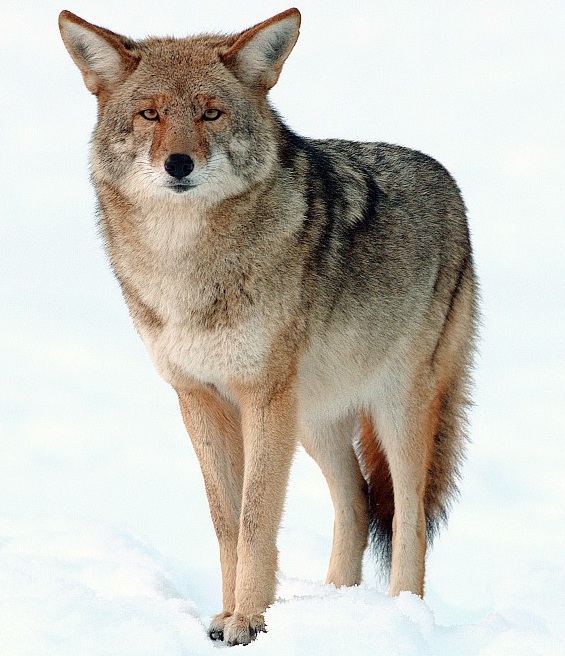 CoyoteCanis latrans
-
 Golden JackalCanis aureus
- African WolfCanis lupaster
-
 Ethiopian WolfCanis simensis
- Red WolfCanis rufus
- Eastern WolfCanis lycaon
-
 Red FoxVulpes vulpes
Compare
Questions and answers
What is the scientific name of the Wolf?
The scientific name of the Wolf is Canis lupus. Written with its author, the full name is Canis lupus Linnaeus, 1758.
Which family does the Wolf belong to?
Canis lupus belongs to the family Canidae, in the order Carnivora and the class Mammalia.
Where is the Wolf found?
Checklists and occurrence records place Canis lupus in 73 countries, including France, Switzerland, Norway, United States, Israel and Canada.
What is the conservation status of the Wolf?
The IUCN Red List category recorded for Canis lupus is Least Concern (LC).
What other names does the Wolf have?
Canis lupus is also known in English as American Wolf, Black Wolf, Common Wolf, Gray Wolf, Grey Wolf and Large Wolf.
What does Canis lupus mean?
The genus name Canis is derived from the Latin word meaning dog. The meaning of lupus is not established here.[47]
What does the wolves' diet consist of?
Wolves primarily consume large wild hoofed mammals and also eat smaller animals, livestock, carrion, and garbage. Their prey varies by location and includes deer, elk, moose, caribou, wild boar, and other animals.[19][20][21][22][23][24][25]
What kind of habitat do wolves live in?
Wolves inhabit forests, wetlands, shrublands, grasslands, Arctic tundra, pastures, deserts, and rocky mountain peaks. They can live in both wilderness areas and landscapes modified by humans.[17][18]
What is wolf's favorite food?
A single favorite food is not established. Wolves primarily consume large wild hoofed mammals.[19]
What is a wolf's biggest enemy?
Human-caused mortality is the leading source of wolf deaths in the northern Rocky Mountain states.[45]
Sources
Passages the profile rests on
- The gray wolf has a coat that can range from white and gray to brown and black. Source passage: “The wolf's fur is usually mottled white, brown, grey, and black, although subspecies in the Arctic region may be nearly all white.” — English Wikipedia
- The wolf has small, pointed ears and small eyes positioned relatively far apart. Source passage: “It has small, wide-set eyes and small pointed ears.” — English Wikipedia
- The wolf develops a thick, fluffy winter coat with longer guard hairs and a dense undercoat. Source passage: “The wolf has a thick and fluffy winter coat, with the guard hairs being longer and rougher than the undercoat.” — English Wikipedia
- The wolf sheds most of its undercoat in spring and regrows its coat in autumn. Source passage: “It moults during spring, mostly the undercoat, before growing back in autumn.” — English Wikipedia
- The wolf's legs are generally longer than those of other canids, helping it move through deep snow. Source passage: “The wolf's legs are moderately longer than those of other canids, which enables the animal to move swiftly and through deep snow” — English Wikipedia
- Female wolves generally have slimmer bodies and shorter legs than males. Source passage: “Females tend to have slenderer builds and shorter legs than males.” — English Wikipedia
- Adult wolves measure approximately 105–160 cm in body length. Source passage: “Adult wolves measure 105–160 cm (41–63 in) in length” — English Wikipedia
- Adult wolves typically measure 80–85 cm at the shoulder. Source passage: “80–85 cm (31–33 in) at the shoulder.” — English Wikipedia
- The wolf's tail measures approximately 29–50 cm long. Source passage: “The tail measures 29–50 cm (11–20 in) in length” — English Wikipedia
- The average body mass of wolves is approximately 40 kg. Source passage: “The mean body mass of the wolf is 40 kg (88 lb)” — English Wikipedia
- Recorded wolf body masses range from approximately 12 to 80 kg. Source passage: “the smallest specimen recorded at 12 kg (26 lb) and the largest at 80 kg (180 lb).” — English Wikipedia
- European wolves average approximately 38.5 kg in body mass. Source passage: “On average, European wolves weigh 38.5 kg (85 lb)” — English Wikipedia
- North American wolves average approximately 36 kg in body mass. Source passage: “North American wolves 36 kg (79 lb)” — English Wikipedia
- Female wolves typically weigh 2.3–4.5 kg less than males in the same population. Source passage: “Females in any given wolf population typically weigh 5–10 lb (2.3–4.5 kg) less than males.” — English Wikipedia
- Adult male wolves in Interior Alaska generally weigh 38.6–52.3 kg. Source passage: “Most adult male wolves in Interior Alaska weigh from 85 to 115 pounds (38.6-52.3)” — adfg.alaska.gov
- Female wolves in Alaska average 2–5 kg less than males. Source passage: “Females average 10 to 15 pounds (2-5 kg) lighter than males” — adfg.alaska.gov
- Wolves inhabit forests, wetlands, shrublands, grasslands, Arctic tundra, pastures, deserts, and rocky mountain peaks. Source passage: “Wolves live in forests, inland wetlands, shrublands, grasslands (including Arctic tundra). pastures, deserts, and rocky peaks on mountains.” — English Wikipedia
- Wolves can inhabit both wilderness areas and landscapes modified by humans. Source passage: “The wolf occurs mostly in wilderness and remote areas, but can adapted to human-modified landscapes.” — English Wikipedia
- Wolves primarily consume large wild hoofed mammals and also eat smaller animals, livestock, carrion, and garbage. Source passage: “A carnivore, the wolf is an apex predator that feeds on large wild hooved mammals as well as smaller animals, livestock, carrion, and garbage.” — English Wikipedia
- Important prey species for North American wolves include elk, moose, caribou, white-tailed deer, and mule deer. Source passage: “In North America, important range-wide prey are elk, moose, caribou, white-tailed deer and mule deer.” — English Wikipedia
- European wolves prey on wild boar, chamois, roe deer, red deer, and moose. Source passage: “In Europe, species taken include wild boar, chamois, roe deer, red deer and moose” — English Wikipedia
- Alaskan wolves commonly supplement their diet with Dall sheep, squirrels, snowshoe hares, beavers, birds, and fish. Source passage: “with Dall sheep, squirrels, snowshoe hares, beaver, and occasionally birds and fish as supplements in the diet.” — adfg.alaska.gov
- Moose and caribou are the primary food sources for wolves across much of mainland Alaska. Source passage: “in most of mainland Alaska moose and/or caribou are their primary food” — adfg.alaska.gov
- Salmon are an important seasonal food for coastal wolves in southeastern Alaska, particularly young individuals. Source passage: “Research indicates that salmon are important seasonally where they are available, especially to young wolves.” — adfg.alaska.gov
- Wolves in southeastern Alaska primarily feed on Sitka black-tailed deer, mountain goats, and beavers. Source passage: “In Southeast Alaska, Sitka black-tailed deer, mountain goats, and beaver are the most important sources of food.” — adfg.alaska.gov
- Wolves are highly social animals that generally live in packs. Source passage: “Gray wolves are highly social and live in packs.” — wdfw.wa.gov
- Wolf packs commonly consist of a breeding pair, their previous-year offspring, and new pups. Source passage: “The pack usually consists of a dominant breeding pair (an alpha male and alpha female), their offspring from the previous year, and new pups.” — wdfw.wa.gov
- A typical wolf pack in the northern United States Rocky Mountains contains five to ten animals. Source passage: “a typical pack in the northern U.S. Rockies is five to 10 animals.” — wdfw.wa.gov
- Alaskan wolf packs average six or seven individuals. Source passage: “The average pack size is six or seven animals” — adfg.alaska.gov
- Some Alaskan wolf packs contain 20–30 individuals. Source passage: “Packs of 20 to 30 wolves sometimes occur” — adfg.alaska.gov
- Wolf packs generally maintain territories used almost exclusively by their own members. Source passage: “In most areas wolf packs tend to remain within a territory used almost exclusively by pack members” — adfg.alaska.gov
- Wolves use howling to communicate and maintain contact with pack members. Source passage: “Howling is a common behavior that helps pack members communicate and stay together.” — wdfw.wa.gov
- Wolf howls can be heard from distances of up to five miles. Source passage: “Howls are audible for up to five miles” — wdfw.wa.gov
- Wolves typically avoid contact with humans. Source passage: “Wolves are shy by nature and typically avoid human contact.” — wdfw.wa.gov
- Wolves generally target young, old, or debilitated prey rather than healthy middle-aged animals. Source passage: “Since wolves are opportunistic, young, old, or debilitated animals are preyed upon more heavily than healthy middle-age animals.” — adfg.alaska.gov
- Most wolf packs produce one litter annually, typically containing four to six pups. Source passage: “Most packs produce one litter annually, typically consisting of four to six pups.” — wdfw.wa.gov
- A female wolf in an Alaskan pack typically gives birth to approximately seven pups each year. Source passage: “Typically one female wolf in a pack has a litter of about seven pups each year.” — adfg.alaska.gov
- Wolf dens may be located in underground burrows, abandoned beaver lodges, hollow trees, or shallow rock caves. Source passage: “Wolves often develop dens in underground burrows, but also use abandoned beaver lodges, hollow trees, and shallow rock caves.” — wdfw.wa.gov
- The global wild gray wolf population is estimated at approximately 300,000 individuals. Source passage: “The global wild grey wolf population is estimated to be 300,000” — English Wikipedia
- The gray wolf has been assessed as Least Concern by the IUCN. Source passage: “has been assessed as Least Concern by the International Union for Conservation of Nature (IUCN).” — English Wikipedia
- Alaska has an estimated wolf population of 7,000–11,000 individuals. Source passage: “There are 7,000 to 11,000 wolves in Alaska.” — adfg.alaska.gov
- Wolves have not been classified as threatened or endangered in Alaska. Source passage: “Wolves have never been threatened or endangered in Alaska.” — adfg.alaska.gov
- Gray wolves are federally listed as endangered in the western two-thirds of Washington. Source passage: “Gray wolves are federally listed as Endangered west of these highways (western two-thirds of WA).” — wdfw.wa.gov
- Human activities have caused wolves to disappear from much of their historical range. Source passage: “the wolf is now extirpated (locally extinct) from much of its range in Western Europe, the United States and Mexico” — English Wikipedia
- Human-caused mortality is the leading source of wolf deaths in the northern Rocky Mountain states. Source passage: “Research in the northern Rocky Mountain states has shown that humans cause most wolf deaths in the region.” — wdfw.wa.gov
- Few wild wolves live longer than five years, although some individuals reach 15 years. Source passage: “Few wolves live more than five years in the wild, although individuals have been known to reach 15 years of age.” — wdfw.wa.gov
- The scientific genus name Canis is derived from the Latin word meaning dog. Source passage: “Canis is the Latin word meaning "dog"” — English Wikipedia
Data
- Catalogue of Life, 2026-10-16 XR cc by
- Global Biodiversity Information Facility CC BY 4.0
- Wikidata CC0
- GeoNames CC BY 4.0
- Wikimedia Commons per image; credit shown with each image
- Within the Catalogue of Life, this name comes from The Integrated Taxonomic Information System cc0
References
- Syst. Nat., 10th ed. vol.1 p.39 where the name was published
- Banks, R. C., R. W. McDiarmid, and A. L. Gardner. (1987). Checklist of Vertebrates of the United States, the U.S. Territories, and Canada. Resource Publication, No. 166.
- Wilson, Don E., and DeeAnn M. Reeder, eds. (1993). Mammal Species of the World: A Taxonomic and Geographic Reference, 2nd Ed., 3rd Printing.
- Wilson, Don E., and F. Russell Cole. (2000). Common Names of Mammals of the World.
- Wilson, Don E., and DeeAnn M. Reeder, eds. (2005). Mammal Species of the World: A Taxonomic and Geographic Reference, 3rd Ed., Vols. 1 & 2.
- Sillero-Zubiri, C. / Don E. Wilson and Russell A. Mittermeier, eds. (2009). Family Canidae (Dogs). Handbook of the Mammals of the World. Vol. 1: Carnivores.
- Burgin, Connor J., Don E. Wilson, Russell A. Mittermeier, Anthony B. Rylands, et al. (2020). Illustrated Checklist of the Mammals of the World. Vol. 1. Monotremata to Rodentia.
This species in other databases
- Catalogue of Life QLXL
- Wikidata Q18498
- iNaturalist 42048
- WoRMS urn:lsid:marinespecies.org:taxname:1506689
Page built on 24 November 2026. See how the catalog is made and all sources and licences.
Cite this page
ScientificNames.org. (2026). Canis lupus (Wolf). Retrieved November 24, 2026, from https://scientificnames.org/species/canis-lupus
“Canis lupus (Wolf).” ScientificNames.org, 2026, scientificnames.org/species/canis-lupus. Accessed 24 Nov. 2026.
ScientificNames.org. “Canis lupus (Wolf).” Accessed November 24, 2026. https://scientificnames.org/species/canis-lupus.
@misc{scientificnames_canis_lupus_wolf,
  author = {{ScientificNames.org}},
  title = {Canis lupus (Wolf)},
  year = {2026},
  url = {https://scientificnames.org/species/canis-lupus},
  note = {Accessed 2026-11-24}
}