Species · Birds
Hooded Berryeater Carpornis cucullata
The scientific name of the Hooded Berryeater is Carpornis cucullata. It is a species of bird in the family Cotingidae (contingas), order Passeriformes. The name dates from 1821.
- Scientific name
- Carpornis cucullata (Swainson, 1821)
- Common name
- Hooded Berryeater
- Genus
- Carpornis
- Family
- Cotingidae (Contingas)
- Order
- Passeriformes
- Class
- Aves
- Red List category
- LC Least Concern
- Recorded in
- 1 country
- Name status
- accepted in the Catalogue of Life

Overview
The Hooded Berryeater is endemic to Brazil. Adult males are marked by an entirely black head, neck, and upper breast bordered by a thin yellow collar.
Written 27 November 2026 from the sources listed below. Each statement was checked against the passage it cites; statements that could not be supported were removed.
Appearance
The Hooded Berryeater measures 22.5–25 cm in length and weighs approximately 67–85 g. Male and female plumage is similar.[1][2][3]
Adult males have an entirely black head, neck, and upper breast, bordered by a thin yellow collar around the sides and back of the neck. Their back is chestnut-tinged brown, and their rump and uppertail coverts are dull greenish-olive.[4][5]
The wings and tail are predominantly blackish with olive-green feather edges. The greater and median wing coverts have buffish-yellow tips that form two wing bars, and the underparts below the upper breast are yellow.[6][7][8]
Adult females are generally duller than males, with an olive wash on the head and body, particularly on the wings and tail. They have faint olive bars on the breast.[9][10][11]
Both sexes have dark brown irises and blue to violet-blue bills, legs, and feet. Juveniles resemble adult females but have dark gray heads, green wing coverts, and more heavily barred, duller yellow breasts.[12][13]
Diet
The Hooded Berryeater feeds primarily on fruit and also consumes some small insects.[14]
Behaviour
The Hooded Berryeater is a year-round resident and usually forages alone between the forest mid-story and subcanopy.[15][16]
Its song is described as a soft, mellow vocalization.[17]
Reproduction and life cycle
The Hooded Berryeater's breeding season appears to include September and October.[18]
Conservation
The Hooded Berryeater was assessed as Near Threatened by the IUCN in 1994 and classified as Least Concern in 2022. Its most recent IUCN Red List assessment was in 2022.[19][20][21]
The species has a large geographic range, but its population size is unknown and believed to be declining. It is considered uncommon.[22][23]
Much of its habitat within its range has been destroyed. Urbanisation, industrialisation, agricultural expansion, colonisation, and associated road construction are identified as key threats.[24][25]
The Hooded Berryeater occurs in several protected areas. It is sensitive to forest fragmentation, particularly avoiding smaller forest patches.[26][27]
The Hooded Berryeater appears to be an important species for maintaining ecological networks in Atlantic Forests.[28]
Similar species
The Hooded Berryeater shares its genus with the Black-headed Berryeater (Carpornis melanocephala). Both species belong to the genus Carpornis.[29]
Classification of the Hooded Berryeater
| Kingdom | Animalia |
|---|---|
| Phylum | Chordata |
| Subphylum | Vertebrata |
| Infraphylum | Gnathostomata |
| Parvphylum | Osteichthyes |
| Megaclass | Tetrapoda |
| Class | Aves (Bird) |
| Order | Passeriformes (Passerine) |
| Family | Cotingidae (Contingas) |
| Genus | Carpornis (Berryeater) |
| Species | Carpornis cucullata (Swainson, 1821) |
Where the Hooded Berryeater is found
Checklists and occurrence records place Carpornis cucullata in 1 country across South America. GBIF holds 10,552 georeferenced records of it.
Countries
Regions and cities with the most records
- São Paulo, Brazil 4,583
- Guapiara, Brazil 2,070
- Santa Catarina, Brazil 1,960
- Rio de Janeiro, Brazil 1,127
- Espírito Santo, Brazil 996
- Paraná, Brazil 881
- Rio Grande do Sul, Brazil 865
- Vargem Alta, Brazil 690
- Castelo, Brazil 583
- São Pedro, Brazil 486
- Teresópolis, Brazil 486
- Guapimirim, Brazil 485
- Piraquara, Brazil 467
- Quatro Barras, Brazil 374
- Cachoeiras de Macacu, Brazil 333
- Nova Friburgo, Brazil 324
- Campina Grande do Sul, Brazil 319
- Morretes, Brazil 317
- Schroeder, Brazil 290
- Petrópolis, Brazil 263
- Ribeirão Pires, Brazil 239
- Rio Grande da Serra, Brazil 239
- Cubatão, Brazil 238
- Pinhais, Brazil 230
- São Miguel Arcanjo, Brazil 222
- Cunha, Brazil 196
- Dois Irmãos, Brazil 195
- Sapiranga, Brazil 195
- Campo Bom, Brazil 190
- Ubatuba, Brazil 188
- Corupá, Brazil 187
- Bertioga, Brazil 182
- Nova Hartz, Brazil 181
- Ivoti, Brazil 150
- Novo Hamburgo, Brazil 149
- São Francisco de Paula, Brazil 145
Range as the checklists state it
South America
A number beside a place is its count of GBIF occurrence records. A place without a number comes from a checklist alone. Records show where a species has been observed or collected, which can include escapes and vagrants.
Common names
English
- Hooded Berryeater
Names in 24 other languages
- Arabic
- آكل التوت المقنع
- Catalan
- cotinga encapuxat
- Chinese
- 冠食果伞鸟, 黑胸食莓傘鳥
- Croatian
- crnoglava kotinga
- Czech
- kotinga kápová
- Danish
- Hættekotinga
- Dutch
- Zwart-gele Besseneter
- Esperanto
- kapuĉa kotingo
- Finnish
- keltamarjakotinga
- French
- Cotinga coqueluchon
- German
- Braunmantel-Beerenfresser
- Italian
- Beccabacca monaco
- Japanese
- ズキンカザリドリ
- Lithuanian
- rudnugarė uoginė kotinga
- Norwegian
- brunryggkotinga
- Polish
- jagodowiec żółtobrzuchy
- Portuguese
- Corocochó, corocoxó, cotinga-de-capuz
- Russian
- Буробокий ягодоед, Чернокрылый ягодоед
- Serbian
- Kapuljačasti bobičar
- Slovak
- ovociar kapucňový, piha kapucňová
- Spanish
- Cotinga encapuchado
- Swedish
- brunryggig bärkotinga
- Turkish
- Başlıklı Meyveyiyen
- Ukrainian
- ягодолюб жовточеревий
Synonyms
3 other scientific names have been used for this species and are now treated as synonyms of Carpornis cucullata.
- Capornis cucullatus Swainson, WJ, 1821
- Carpornis cucullatus (Swainson, 1821)
- Procnias cucullata Swainson, 1821
Related species
-
 Black-headed BerryeaterCarpornis melanocephala
-
 CapuchinbirdPerissocephalus tricolor
-
 Andean Cock-of-the-rockRupicola peruvianus
-
 White BellbirdProcnias albus
-
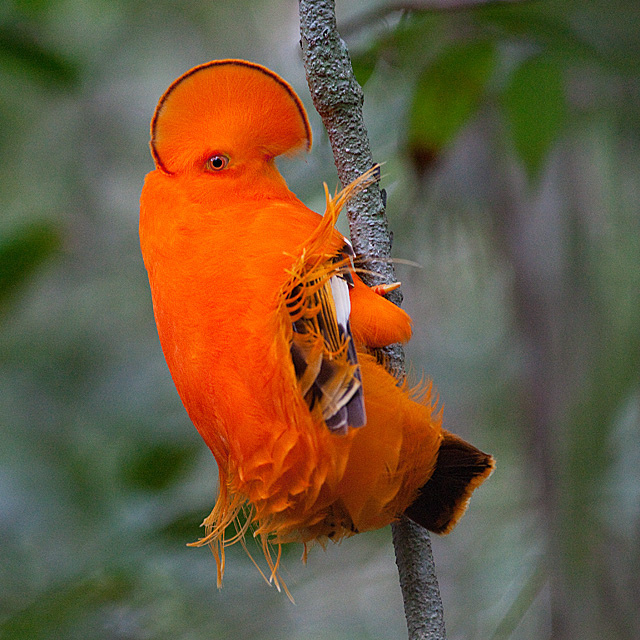 Guianan Cock-of-the-rockRupicola rupicola
-
 Screaming PihaLipaugus vociferans
-
 Bare-throated BellbirdProcnias nudicollis
-
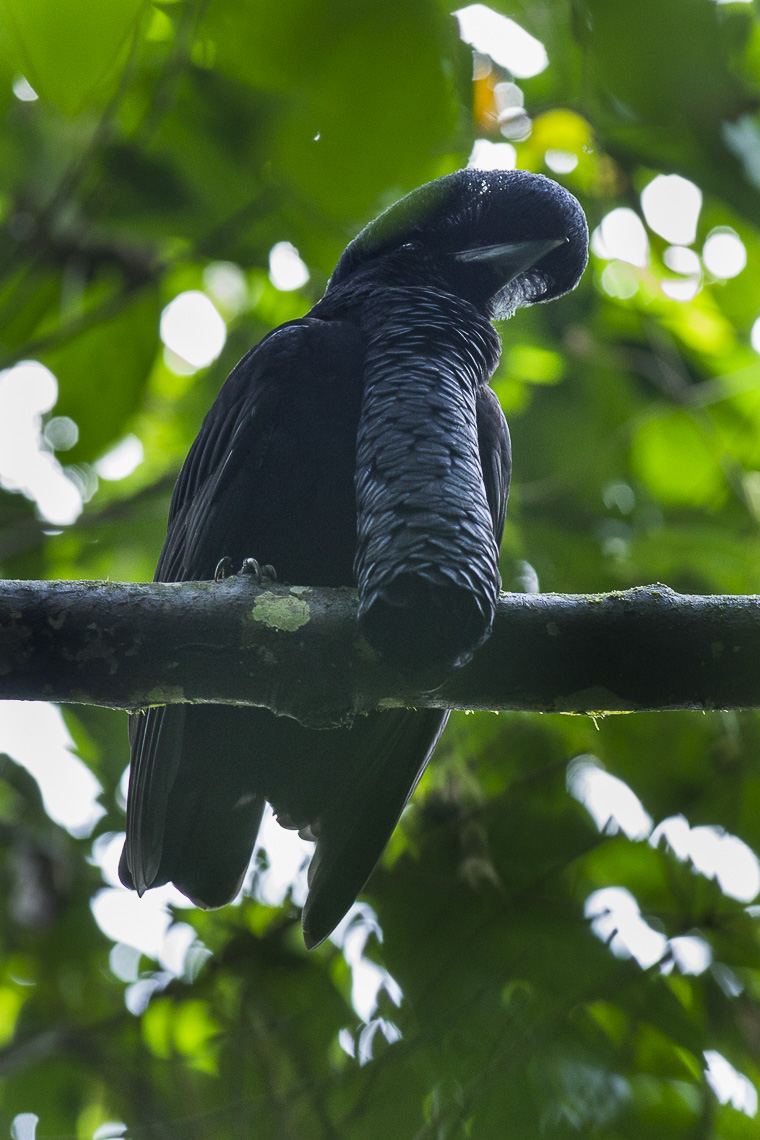 Long-wattled UmbrellabirdCephalopterus penduliger
Compare
Questions and answers
What is the scientific name of the Hooded Berryeater?
The scientific name of the Hooded Berryeater is Carpornis cucullata. Written with its author, the full name is Carpornis cucullata (Swainson, 1821).
Which family does the Hooded Berryeater belong to?
Carpornis cucullata belongs to the family Cotingidae, in the order Passeriformes and the class Aves.
Where is the Hooded Berryeater found?
Checklists and occurrence records place Carpornis cucullata in 1 country: Brazil.
What is the conservation status of the Hooded Berryeater?
The IUCN Red List category recorded for Carpornis cucullata is Least Concern (LC).
Where is the Hooded Berryeater found?
The Hooded Berryeater is endemic to Brazil.[30]
How large is the Hooded Berryeater?
It measures 22.5–25 cm in length and weighs approximately 67–85 g.[1][2]
What does the Hooded Berryeater eat?
It feeds primarily on fruit and also consumes some small insects.[14]
Is the Hooded Berryeater migratory?
The Hooded Berryeater is a year-round resident.[15]
What is the conservation status of the Hooded Berryeater?
It was classified as Least Concern in 2022, its most recent IUCN Red List assessment.[20][21]
What are the main threats to the Hooded Berryeater?
Identified threats include urbanisation, industrialisation, agricultural expansion, colonisation, and associated road construction. Much of its habitat within its range has been destroyed.[24][25]
Which species shares its genus?
The Black-headed Berryeater (Carpornis melanocephala) shares the genus Carpornis with the Hooded Berryeater.[29]
Sources
Passages the profile rests on
- The Hooded Berryeater measures 22.5–25 cm in length. Source passage: “The hooded berryeater is 22.5 to 25 cm (8.9 to 9.8 in) long” — English Wikipedia
- The Hooded Berryeater weighs approximately 67–85 g. Source passage: “weighs about 67 to 85 g (2.4 to 3.0 oz).” — English Wikipedia
- Male and female Hooded Berryeaters have similar plumage. Source passage: “The sexes have similar plumage.” — English Wikipedia
- Adult males have an entirely black head, neck, and upper breast, bordered by a thin yellow collar around the sides and back of the neck. Source passage: “Adult males have an entirely black head, neck, and upper breast with a thin yellow "collar" around the sides and back of the neck.” — English Wikipedia
- Adult males have a chestnut-tinged brown back and dull greenish-olive rump and uppertail coverts. Source passage: “Their back is chestnut-tinged brown and their rump and uppertail coverts dull greenish olive.” — English Wikipedia
- The wings and tail are predominantly blackish with olive-green feather edges. Source passage: “Their wings and tail are mostly blackish with olive-green edges on the feathers.” — English Wikipedia
- The greater and median wing coverts have buffish-yellow tips that form two wing bars. Source passage: “The greater and median wing coverts have buffish yellow tips that form two wing bars.” — English Wikipedia
- Adult males have yellow underparts below the upper breast. Source passage: “Their underparts below the upper breast are yellow.” — English Wikipedia
- Adult females are generally duller in coloration than males. Source passage: “Adult females are overall duller than males.” — English Wikipedia
- Adult females have an olive wash on the head and body, particularly on the wings and tail. Source passage: “Their head and body have an olive wash, especially on the wings and tail.” — English Wikipedia
- Adult females have faint olive bars on the breast. Source passage: “Their breast has faint olive bars.” — English Wikipedia
- Both sexes have dark brown irises and blue to violet-blue bills, legs, and feet. Source passage: “Both sexes have a dark brown iris and blue to violet-blue bill, legs, and feet.” — English Wikipedia
- Juveniles resemble adult females but have dark gray heads, green wing coverts, and more heavily barred, duller yellow breasts. Source passage: “Juveniles are similar to adult females but have a dark gray head, green wing coverts, and a more heavily barred and duller yellow breast.” — English Wikipedia
- The Hooded Berryeater feeds primarily on fruit and also consumes some small insects. Source passage: “The hooded berryeater feeds primarily on fruit and includes some small insects in its diet.” — English Wikipedia
- The Hooded Berryeater is a year-round resident. Source passage: “The hooded berryeater is a year-round resident.” — English Wikipedia
- The Hooded Berryeater usually forages alone between the forest mid-story and subcanopy. Source passage: “It usually forages singly, from the forest's mid-story to the subcanopy.” — English Wikipedia
- The Hooded Berryeater's song is described as a soft, mellow vocalization. Source passage: “The hooded berryeater's song is a "soft, mellow, wrat? what-now".” — English Wikipedia
- The Hooded Berryeater's breeding season appears to include September and October. Source passage: “The hooded berryeater's breeding season appears to include September and October” — English Wikipedia
- The Hooded Berryeater was assessed as Near Threatened by the IUCN in 1994. Source passage: “The IUCN originally in 1994 assessed the hooded berryeater as Near Threatened.” — English Wikipedia
- The Hooded Berryeater was classified as Least Concern in 2022. Source passage: “As of 2022 it has been rated as being of Least Concern.” — English Wikipedia
- The Hooded Berryeater was assessed most recently for the IUCN Red List in 2022. Source passage: “Hooded Berryeater Carpornis cucullata has most recently been assessed for The IUCN Red List of Threatened Species in 2022.” — iucnredlist.org
- The Hooded Berryeater has a large geographic range, but its population size is unknown and believed to be declining. Source passage: “It has a large range; its population size is not known and is believed to be decreasing.” — English Wikipedia
- The Hooded Berryeater is considered uncommon. Source passage: “It is considered uncommon.” — English Wikipedia
- Much of the Hooded Berryeater's habitat within its range has been destroyed. Source passage: “Much of the habitat within its range has been destroyed.” — English Wikipedia
- Urbanisation, industrialisation, agricultural expansion, colonisation, and associated road construction are identified as key threats to the species. Source passage: “Current key threats are urbanisation, industrialisation, agricultural expansion, colonisation and associated road-building.” — English Wikipedia
- The Hooded Berryeater occurs in several protected areas. Source passage: “It occurs in several protected areas.” — English Wikipedia
- The Hooded Berryeater is sensitive to forest fragmentation, particularly avoiding smaller forest patches. Source passage: “sensitive to fragmentation, particularly shunning smaller-sized forest patches” — English Wikipedia
- The Hooded Berryeater appears to be an important species for maintaining ecological networks in Atlantic Forests. Source passage: “appears] to be a key species in maintaining ecological networks in Atlantic Forests” — English Wikipedia
- The Hooded Berryeater shares its genus with the Black-headed Berryeater (Carpornis melanocephala). Source passage: “The hooded berryeater shares its genus with the black-headed berryeater (C. melanocephala).” — English Wikipedia
- The Hooded Berryeater is endemic to Brazil. Source passage: “It is endemic to Brazil.” — English Wikipedia
Data
- Catalogue of Life, 2026-10-16 XR cc by
- Global Biodiversity Information Facility CC BY 4.0
- Wikidata CC0
- GeoNames CC BY 4.0
- Wikimedia Commons per image; credit shown with each image
- Within the Catalogue of Life, this name comes from The Integrated Taxonomic Information System cc0
References
- David, Normand, & and Michel Gosselin. (2002). The grammatical gender of avian genera. Bulletin of the British Ornithologists’ Club, Vol. 122, No. 4.
- Gill, Frank, & and Minturn Wright. (2006). Birds of the World: Recommended English Names.
This species in other databases
Page built on 27 November 2026. See how the catalog is made and all sources and licences.
Cite this page
ScientificNames.org. (2026). Carpornis cucullata (Hooded Berryeater). Retrieved November 27, 2026, from https://scientificnames.org/species/carpornis-cucullata
“Carpornis cucullata (Hooded Berryeater).” ScientificNames.org, 2026, scientificnames.org/species/carpornis-cucullata. Accessed 27 Nov. 2026.
ScientificNames.org. “Carpornis cucullata (Hooded Berryeater).” Accessed November 27, 2026. https://scientificnames.org/species/carpornis-cucullata.
@misc{scientificnames_carpornis_cucullata_hooded_berryeater,
  author = {{ScientificNames.org}},
  title = {Carpornis cucullata (Hooded Berryeater)},
  year = {2026},
  url = {https://scientificnames.org/species/carpornis-cucullata},
  note = {Accessed 2026-11-27}
}