Species · Flowering plants
Chinese Plumbago Ceratostigma willmottianum
The scientific name of the Chinese Plumbago is Ceratostigma willmottianum. It is a species of flowering plant in the family Plumbaginaceae (leadwort family), order Caryophyllales.
- Scientific name
- Ceratostigma willmottianum Stapf
- Common name
- Chinese Plumbago
- Genus
- Ceratostigma
- Family
- Plumbaginaceae (Leadwort Family)
- Order
- Caryophyllales
- Class
- Magnoliopsida
- Recorded in
- 2 countries
- Name status
- accepted in the Catalogue of Life

Overview
Chinese plumbago is a deciduous flowering shrub with pale blue flowers. The species grows in warm valleys at elevations between 700 and 3,500 metres above sea level and is native to western China and Tibet. Its blue flowers bloom from early summer through autumn, while its foliage can turn yellow, rust, or red before falling.
Written 26 November 2026 from the sources listed below. Each statement was checked against the passage it cites; statements that could not be supported were removed.
Appearance
Chinese plumbago is a deciduous shrub with small, pointed leaves covered in dense hairs that are shed annually. Its diamond-shaped leaves are often sparsely distributed along gently fanning stems, which form a loose mound with an airy appearance.[1][2][3][4]
Its leaves hang distinctly and curve slightly to display their bright green surfaces. In autumn, the foliage can turn yellow, rust, or red before falling, and the leafless stems become rusty brown during winter.[5][6][7]
The blue flowers bloom from early summer through autumn. Its inflorescences contain between three and seven hermaphrodite flowers, each with five petals fused into a tube, purple corolla tubes, and bright blue corolla lobes.[8][9][10][11][12]
The plant produces capsule fruits approximately 6 mm long containing black seeds.[13]
Its stems are longer, more slender, and somewhat thicker than those of the groundcover species Ceratostigma plumbaginoides.[14]
Habitat
Chinese plumbago grows in warm valleys at elevations between 700 and 3,500 metres above sea level.[15]
The species is native to western China and Tibet. Its native range includes Gansu, western Guizhou, southern and western Sichuan, southeastern Xizang, and eastern and northern Yunnan.[16][17]
Reproduction and life cycle
Chinese plumbago has hermaphrodite flowers and develops rhizomes as perennial organs. It can spread through underground rhizomes and may also reproduce through self-sowing.[12][18][19][20]
Its rhizomes may require annual removal to control its growth.[21]
Uses
Chinese plumbago is cultivated as an ornamental garden plant for its late-season red foliage and blue flowers. It has received the Royal Horticultural Society's Award of Garden Merit.[22][23]
Similar species
Ceratostigma minus resembles Chinese plumbago but has somewhat paler blue flowers and a more restrained overall form.[24]
Ceratostigma plumbaginoides is a groundcover species that spreads more rapidly than the shrub species in the genus.[25]
Classification of the Chinese Plumbago
| Kingdom | Plantae |
|---|---|
| Subkingdom | Pteridobiotina |
| Phylum | Tracheophyta |
| Class | Magnoliopsida |
| Order | Caryophyllales |
| Family | Plumbaginaceae (Leadwort Family) |
| Tribe | Plumbagineae |
| Genus | Ceratostigma (Plumbago) |
| Species | Ceratostigma willmottianum Stapf |
Where the Chinese Plumbago is found
Checklists and occurrence records place Ceratostigma willmottianum in 2 countries across Asia. GBIF holds 190 georeferenced records of it.
Countries
Regions and cities with the most records
- Sichuan, China 78
- Tibet, China 28
- Gansu, China 26
- Wenxian Chengguanzhen, China 24
- Yunnan, China 12
- Pingwu County, China 7
- Dagzê, China 5
- Bayi, China 4
- Guizhou, China 4
- Liupanshui, China 4
- Nyingchi, China 4
- Chengde, China 3
- Hebei, China 3
5 more countries have a few records outside this range
These countries hold a few records of Ceratostigma willmottianum but lie outside the range the checklists give for it. Such records are often zoo or garden specimens, museum material or vagrants, so the species is not counted as occurring there.
Range as the checklists state it
China (Gansu, Guizhou, Sichuan, Yunnan); SE-Tibet
A number beside a place is its count of GBIF occurrence records. A place without a number comes from a checklist alone. Records show where a species has been observed or collected, which can include escapes and vagrants.
Common names
English
- Chinese Plumbago
- Chinese-plumbago
Names in 5 other languages
- Chinese
- min jiang lan xue hua
- Finnish
- laaksosinikko
- Russian
- Цератостигма Уилмотта
- Slovak
- rohoblizník Willmottov
- Swedish
- kinesisk blåblomma
Related species
-
 Blue LeadwortCeratostigma plumbaginoides
- Ceratostigma minus
- Ceratostigma abyssinicum
- Ceratostigma griffithii
- Ceratostigma asperrimum
- Ceratostigma ulicinum
-
 Cape LeadwortPlumbago auriculata
-
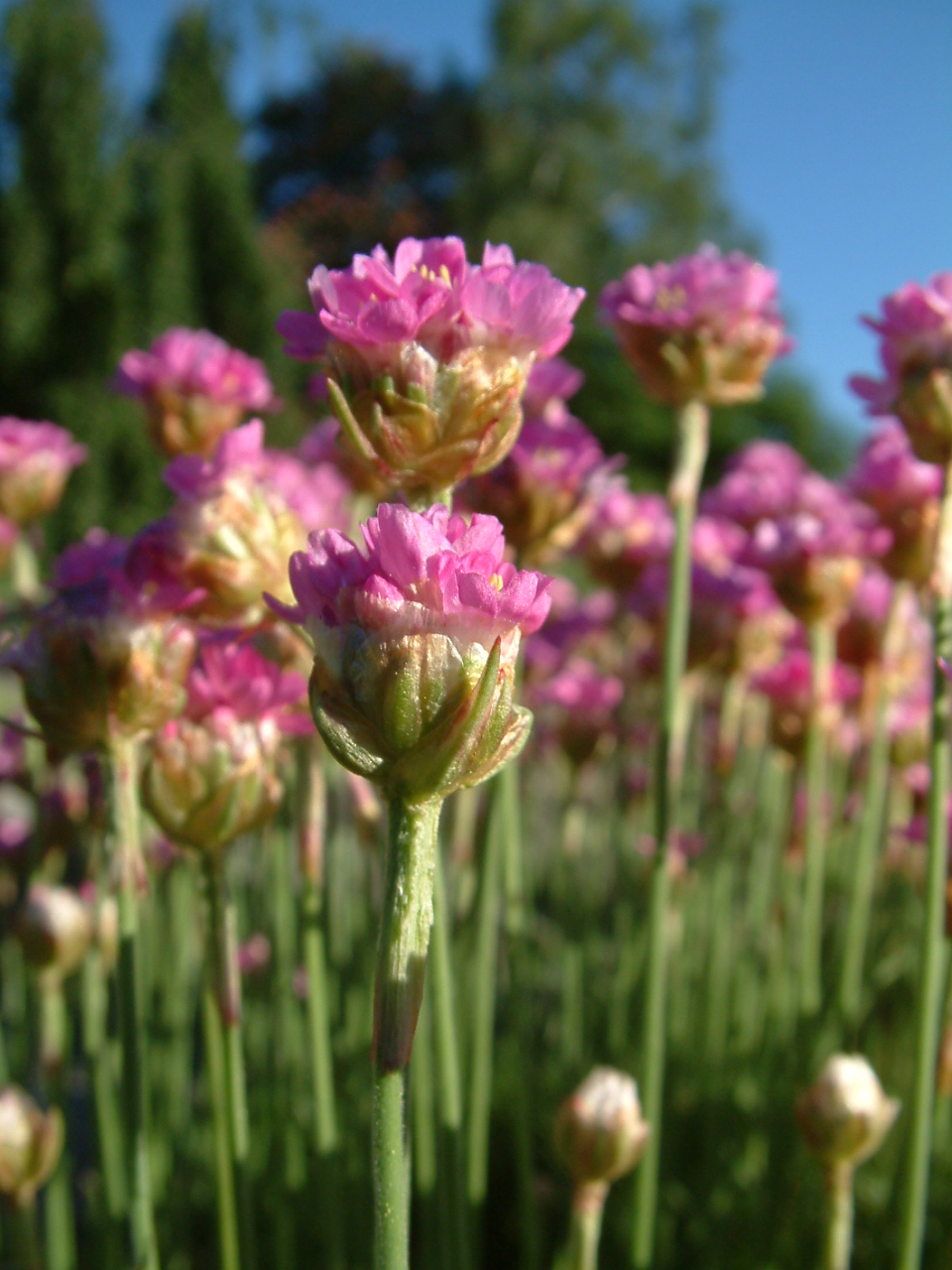 Sea ThriftArmeria maritima
Compare
Questions and answers
What is the scientific name of the Chinese Plumbago?
The scientific name of the Chinese Plumbago is Ceratostigma willmottianum. Written with its author, the full name is Ceratostigma willmottianum Stapf.
Which family does the Chinese Plumbago belong to?
Ceratostigma willmottianum belongs to the family Plumbaginaceae, in the order Caryophyllales and the class Magnoliopsida.
Where is the Chinese Plumbago found?
Checklists and occurrence records place Ceratostigma willmottianum in 2 countries: China and India.
What other names does the Chinese Plumbago have?
Ceratostigma willmottianum is also known in English as Chinese-plumbago.
Is Ceratostigma invasive?
Chinese plumbago can spread through underground rhizomes and may develop into a thicket if its horizontal spread is not managed over several years. Its rhizomes may require annual removal to control its growth.[19][21][26]
Do plumbagos come back every year?
Chinese plumbago is a deciduous shrub that develops rhizomes as perennial organs. It produces new growth rapidly in spring after being cut back.[1][18][27]
How big does Ceratostigma grow?
Chinese plumbago typically grows between 2 and 4 feet tall and can reach a height of 2 metres. It can grow taller and wider under ideal conditions.[28][29][30]
Where to plant Ceratostigma?
Chinese plumbago grows in warm valleys at elevations between 700 and 3,500 metres above sea level.[15]
Sources
Passages the profile rests on
- Ceratostigma willmottianum is a deciduous shrub with pale blue flowers that bloom in autumn as its leaves turn red. Source passage: “It is an ornamental deciduous shrub that grows to 1 metre in height, with pale blue plumbago-like flowers appearing in autumn as the leaves start to turn red.” — English Wikipedia
- The plant has small, pointed leaves covered in dense hairs that are shed annually. Source passage: “The small, pointed leaves are densely hairy and are shed every year.” — English Wikipedia
- Its diamond-shaped leaves are often sparsely distributed along gently fanning stems. Source passage: “This 2-4 ft. shrub bears somewhat diamond-shaped leaves, often sparsely, along stems that fan out gently in a lax fashion.” — ucanr.edu
- Its stems form a loose mound with an airy appearance. Source passage: “They form a delicate mound and give the plant an airy look that belies its toughness.” — ucanr.edu
- Its leaves hang distinctly and curve slightly to display their bright green surfaces. Source passage: “Each leaf hangs distinctly and is curved slightly to show off its bright green color.” — ucanr.edu
- Its autumn foliage can turn yellow, rust, or red before falling. Source passage: “Autumn foliage may be yellow, rust, or red before dropping.” — ucanr.edu
- Its leafless stems become rusty brown during winter. Source passage: “Even leafless, the wiry stems look attractive as they turn rusty brown in winter and may be left standing, or the entire plant may be cut to the ground.” — ucanr.edu
- Its inflorescences contain between three and seven flowers. Source passage: “There are three to seven flowers in an inflorescence.” — English Wikipedia
- Its hermaphrodite flowers have five petals fused into a tube. Source passage: “The hermaphrodite flowers have five petals. The five petals are fused together in a tube.” — English Wikipedia
- The flowers have purple corolla tubes and bright blue corolla lobes. Source passage: “The corolla tube is purple and the corolla lobes are bright blue.” — English Wikipedia
- Its blue flowers bloom from early summer through autumn. Source passage: “Blue blossoms begin in early summer and last through fall, in contrast to deep green leaves.” — ucanr.edu
- The species has hermaphrodite flowers. Source passage: “The hermaphrodite flowers have five petals.” — English Wikipedia
- The plant produces capsule fruits approximately 6 mm long containing black seeds. Source passage: “Capsule fruits measuring around 6 mm with black seeds are formed.” — English Wikipedia
- Its stems are longer, more slender, and somewhat thicker than those of the groundcover species Ceratostigma plumbaginoides. Source passage: “Ceratostigma willmottianum, Chinese plumbago, also has wiry stems, but these are longer, lankier, and somewhat stouter than those of the groundcover species.” — ucanr.edu
- The species grows in warm valleys at elevations between 700 and 3,500 metres above sea level. Source passage: “It grows in warm valleys at altitudes between 700 and 3500 m above sea level.” — English Wikipedia
- The species is native to western China and Tibet. Source passage: “is native to western China and Tibet.” — English Wikipedia
- Its native range includes Gansu, western Guizhou, southern and western Sichuan, southeastern Xizang, and eastern and northern Yunnan. Source passage: “Chinese provinces: Gansu, western Guizhou, southern and western Sichuan, southeastern Xizang, eastern and northern Yunnan” — English Wikipedia
- The species develops rhizomes as perennial organs. Source passage: “It is a small shrub that develops a rhizome as a perennial organ” — English Wikipedia
- The species can spread through underground rhizomes. Source passage: “Because all Ceratostigma species slowly spread by underground rhizomes and may also self-sow” — ucanr.edu
- The species may also reproduce through self-sowing. Source passage: “Because all Ceratostigma species slowly spread by underground rhizomes and may also self-sow” — ucanr.edu
- Its rhizomes may require annual removal to control its growth. Source passage: “In ideal conditions, Chinese plumbago may grow taller and wider, and rhizomes may require annual removal to control size.” — ucanr.edu
- The species is cultivated as an ornamental garden plant for its late-season red foliage and blue flowers. Source passage: “Ceratostigma willmottianum is cultivated as a garden plant, valued for its late season red leaves and rich blue flowers.” — English Wikipedia
- The species has received the Royal Horticultural Society's Award of Garden Merit. Source passage: “Both the species and the cultivar Forest Blue ('Lice') have gained the Royal Horticultural Society's Award of Garden Merit.” — English Wikipedia
- Ceratostigma minus resembles C. willmottianum but has somewhat paler blue flowers and a more restrained overall form. Source passage: “Ceratostigma minus bears considerable resemblance to willmottianum, but its blossoms are somewhat paler blue. The overall form is also similar but more restrained.” — ucanr.edu
- Ceratostigma plumbaginoides is a groundcover species that spreads more rapidly than the shrub species in the genus. Source passage: “Ceratostigma plumbaginoides, a groundcover called dwarf plumbago, spreads more rapidly than shrub members of the genus” — ucanr.edu
- The shrub can develop into a thicket if its horizontal spread is not managed over several years. Source passage: “To manage the shrub’s horizontal spread and avoid a thicket from developing after a number of years, some branches can be pulled out or dug up.” — ucanr.edu
- The shrub produces new growth rapidly in spring after being cut back. Source passage: “It will generate new growth rapidly in spring.” — ucanr.edu
- The shrub can reach a height of 2 metres. Source passage: “It is a small shrub that develops a rhizome as a perennial organ and reaches heights of up to 2 meters.” — English Wikipedia
- The shrub typically grows between 2 and 4 feet tall. Source passage: “This 2-4 ft. shrub bears somewhat diamond-shaped leaves” — ucanr.edu
- The shrub can grow taller and wider under ideal conditions. Source passage: “In ideal conditions, Chinese plumbago may grow taller and wider, and rhizomes may require annual removal to control size.” — ucanr.edu
Data
- Catalogue of Life, 2026-10-16 XR cc by
- Global Biodiversity Information Facility CC BY 4.0
- Wikidata CC0
- GeoNames CC BY 4.0
- Wikimedia Commons per image; credit shown with each image
- Within the Catalogue of Life, this name comes from Synonymic Checklists of the Vascular Plants of the World cc by
References
- Stapf. (1914). Bot. Mag. 140: t. 8591 (1914). where the name was published
This species in other databases
Page built on 29 November 2026. See how the catalog is made and all sources and licences.
Cite this page
ScientificNames.org. (2026). Ceratostigma willmottianum (Chinese Plumbago). Retrieved November 29, 2026, from https://scientificnames.org/species/ceratostigma-willmottianum
“Ceratostigma willmottianum (Chinese Plumbago).” ScientificNames.org, 2026, scientificnames.org/species/ceratostigma-willmottianum. Accessed 29 Nov. 2026.
ScientificNames.org. “Ceratostigma willmottianum (Chinese Plumbago).” Accessed November 29, 2026. https://scientificnames.org/species/ceratostigma-willmottianum.
@misc{scientificnames_ceratostigma_willmottianum_chinese_plumbago,
  author = {{ScientificNames.org}},
  title = {Ceratostigma willmottianum (Chinese Plumbago)},
  year = {2026},
  url = {https://scientificnames.org/species/ceratostigma-willmottianum},
  note = {Accessed 2026-11-29}
}