Species · Mammals
Baja Pocket Mouse Chaetodipus rudinoris
The scientific name of the Baja Pocket Mouse is Chaetodipus rudinoris. It is a species of mammal in the family Heteromyidae (pocket mice), order Rodentia. The name dates from 1903.
- Scientific name
- Chaetodipus rudinoris (Elliot, 1903)
- Common name
- Baja Pocket Mouse
- Genus
- Chaetodipus
- Family
- Heteromyidae (Pocket Mice)
- Order
- Rodentia
- Class
- Mammalia
- Red List category
- LC Least Concern
- Recorded in
- 2 countries
- Name status
- accepted in the Catalogue of Life

Overview
Chaetodipus rudinoris occurs in southern California, Baja California, and several islands in the Gulf of California. It has fur-lined external cheek pouches used for food storage and light grayish-brown dorsal fur mixed with yellow.
Written 27 November 2026 from the sources listed below. Each statement was checked against the passage it cites; statements that could not be supported were removed.
Habitat
The Baja Pocket Mouse primarily inhabits flat desert terrain, including scrub flats and slopes, but also occurs in washes and on rocky hillsides. Populations on the Baja California peninsula inhabit shrublands in arid plains, while those in the Sierra de San Pedro Martir occupy rocky hillsides.[1][2][3]
The species occupies elevations ranging from 270 to 720 metres. It commonly inhabits coarse soil, gravel, and small rocks near bushes and cacti, and can also occupy disturbed and overgrazed environments.[4][5][6]
The Montserrat Island subspecies inhabits xeric scrubland on Montserrat Island in the Gulf of California.[7]
Appearance
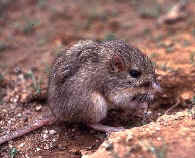
The species has light grayish-brown dorsal fur mixed with yellow and lacks lateral lines. Its underparts and feet are white, while the upper surface of its tail is dark and the underside is lighter.[8][9][10]
Dark, wispy hairs protrude around its rump. Its external cheek pouches are lined with fur, open beside the mouth, and are used for food storage.[11][12]
The species has a total of 20 teeth.[13]
Behaviour
The Baja Pocket Mouse is nocturnal and terrestrial. Individuals are mostly solitary except during the mating season and remain active throughout the year, although activity may decline during winter.[14][15][16]
Individuals may enter short periods of torpor during high summer temperatures. They walk on all four limbs rather than moving by hopping.[17][18]
Individuals construct complex burrows beneath rocks or shrubs, containing networks of tunnels and chambers used for sleeping and food storage. Underground nests are constructed using dried grasses and other plants.[19][20][21]
Individuals may close their burrow entrances during daylight hours to reduce predator detection and maintain humidity. Home ranges measure between 0.12 and 0.24 hectares, averaging 0.20 hectares.[22][23]
Diet
The Baja Pocket Mouse is herbivorous and primarily granivorous. Its diet consists mainly of seeds, succulent plant parts, and nuts, with occasional consumption of small insects and green vegetation.[24][25]
Seeds accounted for 84 to 89 percent of the recorded diet in southeastern Arizona. The species prefers plants that produce larger seeds.[26][27]
Recorded food plants include Acacia species, honey mesquite, ocotillo, creosote bush, and Opuntia species. Individuals collect seeds by scratch-digging and transport them to their burrows for storage.[28][29]
Reproduction and life cycle
The species may reproduce once or twice annually, depending on food availability. When reproduction occurs in two annual pulses, the first takes place in spring and the second in late summer.[30][31]
Reproductive activity follows seasonal rainfall and increased vegetation growth. Gestation lasts approximately three to four weeks, and the average litter contains two to five offspring.[32][33][34]
Young individuals reach sexual maturity at approximately six months of age. Females are presumed to provide food and nesting care to their offspring.[35][36]
Conservation
Six subspecies of the Baja Pocket Mouse are recognized. The subspecies Chaetodipus rudinoris fornicatus became extinct in 1975, with its last sighting recorded that year.[37][38]
Similar species
The Baja Pocket Mouse is indistinguishable in appearance from Bailey's pocket mouse (Chaetodipus baileyi).[39]
Classification of the Baja Pocket Mouse
| Kingdom | Animalia |
|---|---|
| Phylum | Chordata |
| Subphylum | Vertebrata |
| Infraphylum | Gnathostomata |
| Parvphylum | Osteichthyes |
| Megaclass | Tetrapoda |
| Class | Mammalia (Mammal) |
| Subclass | Theria |
| Infraclass | Eutheria |
| Order | Rodentia (Rodent) |
| Suborder | Castorimorpha |
| Family | Heteromyidae (Pocket Mice) |
| Subfamily | Perognathinae (Silky Pocket Mice) |
| Genus | Chaetodipus (Hispid Pocket Mice) |
| Species | Chaetodipus rudinoris (Elliot, 1903) |
Where the Baja Pocket Mouse is found
Checklists and occurrence records place Chaetodipus rudinoris in 2 countries across North America. GBIF holds 637 georeferenced records of it.
Countries
Regions and cities with the most records
- Baja California, Mexico 277
- Baja California Sur, Mexico 209
- San Felipe, Mexico 33
- California, United States 11
- Ciudad Constitución, Mexico 6
- Lázaro Cárdenas, Mexico 6
- La Joya, Mexico 3
- La Paz, Mexico 3
- Las Delicias, Mexico 3
- Pórticos de San Antonio, Mexico 3
- Rosarito, Mexico 3
- Tijuana, Mexico 3
- Villa del Prado 2da Sección, Mexico 3
Range as the checklists state it
Middle America
North America
A number beside a place is its count of GBIF occurrence records. A place without a number comes from a checklist alone. Records show where a species has been observed or collected, which can include escapes and vagrants.
Common names
English
- Baja Pocket Mouse
- Baja California Pocket Mouse
- Peninsular Pocket Mouse
Names in 4 other languages
- German
- Baja-Taschenmaus
- Japanese
- バハポケットマウス
- Polish
- chomikomyszka półwyspowa
- Spanish
- Ratón de abazones de Baja California
Synonyms
One other scientific name has been used for this species and is now treated as a synonym of Chaetodipus rudinoris.
- Perognathus baileyi rudinoris Elliot, 1903
Subspecies and varieties
- Chaetodipus rudinoris extimus subspecies
- Chaetodipus rudinoris fornicatus subspecies
- Chaetodipus rudinoris hueyi subspecies
- Chaetodipus rudinoris mesidios subspecies
- Chaetodipus rudinoris rudinoris subspecies
Related species
-
 Rock Pocket MouseChaetodipus intermedius
-
 Desert Pocket MouseChaetodipus penicillatus
-
 Spiny Pocket MouseChaetodipus spinatus
-
 Little Desert Pocket MouseChaetodipus arenarius
-
 Hispid Pocket MouseChaetodipus hispidus
-
 California Pocket MouseChaetodipus californicus
-
 Bailey's Pocket MouseChaetodipus baileyi
-
 Nelson's Pocket MouseChaetodipus nelsoni
Compare
Questions and answers
What is the scientific name of the Baja Pocket Mouse?
The scientific name of the Baja Pocket Mouse is Chaetodipus rudinoris. Written with its author, the full name is Chaetodipus rudinoris (Elliot, 1903).
Which family does the Baja Pocket Mouse belong to?
Chaetodipus rudinoris belongs to the family Heteromyidae, in the order Rodentia and the class Mammalia.
Where is the Baja Pocket Mouse found?
Checklists and occurrence records place Chaetodipus rudinoris in 2 countries: Mexico and United States.
What is the conservation status of the Baja Pocket Mouse?
The IUCN Red List category recorded for Chaetodipus rudinoris is Least Concern (LC).
What other names does the Baja Pocket Mouse have?
Chaetodipus rudinoris is also known in English as Baja California Pocket Mouse and Peninsular Pocket Mouse.
Why are they called pocket mice?
They have fur-lined external cheek pouches that open beside the mouth and are used for food storage.[12]
What do desert pocket mice eat?
The Baja Pocket Mouse is herbivorous and primarily eats seeds, succulent plant parts, and nuts. It occasionally consumes small insects and green vegetation.[24][25]
Sources
Passages the profile rests on
- The species primarily inhabits flat desert terrain but also occurs in washes and on rocky hillsides. Source passage: “They are mostly found in flat terrain of deserts but can also be found within washes or rocky hillsides.” — animaldiversity.org
- Populations on the Baja California peninsula inhabit shrublands in arid plains, while those in the Sierra de San Pedro Martir occupy rocky hillsides. Source passage: “Baja pocket mice inhabit shrublands in arid areas on the plains of the Baja California peninsula, but rocky hillsides of the Sierra de San Pedro Martir.” — animaldiversity.org
- Suitable habitat includes scrub flats and slopes. Source passage: “Pattern: Suitable habitat includes scrub flats or slopes.” — nrm.dfg.ca.gov
- The species occupies elevations ranging from 270 to 720 metres. Source passage: “The elevational range at which this species lives is 270 to 720 m.” — animaldiversity.org
- The species commonly inhabits coarse soil, gravel, and small rocks near bushes and cacti. Source passage: “Within these areas, Baja pocket mice prefer a widespread distribution in coarse soil, gravel, and small rocks near bushes and cacti.” — animaldiversity.org
- The species can inhabit stony and gravelly soils as well as disturbed and overgrazed environments. Source passage: “Unlike other pocket mice, Baja pocket mice can live on stony gravelly soils as well as disturbed and over-grazed areas.” — animaldiversity.org
- The Montserrat Island subspecies inhabits xeric scrubland on Montserrat Island in the Gulf of California. Source passage: “A subspecies, Monserrate Island pocket mouse Chaetodipus rudinoris fornicatus lives on Montserrat Island in the Gulf of California, dwelling in xeric scrubland.” — animaldiversity.org
- The species has light grayish-brown dorsal fur mixed with yellow and lacks lateral lines. Source passage: “Baja pocket mice have light, grayish-brown fur mixed with yellow on their backs and no lateral lines.” — animaldiversity.org
- The species has white underparts, including white feet. Source passage: “Their underparts are white, including their feet.” — animaldiversity.org
- The species has dark upper tail coloration and lighter coloration underneath. Source passage: “Their tails are darker on the top and lighter on the bottom” — animaldiversity.org
- The species has dark, wispy hairs protruding around its rump. Source passage: “Baja pocket mice have wispy dark hairs that protrude from around their rumps.” — animaldiversity.org
- The species has fur-lined external cheek pouches that open beside the mouth and are used for food storage. Source passage: “Like closely-related species, Baja pocket mice have fur-lined external cheek pouches that open alongside their mouths, which they use to store food.” — animaldiversity.org
- The species has a total of 20 teeth. Source passage: “The dental formula for Baja pocket mice is 1 1/1, C 0/0, PM 1/1, M 3/3 making 20 teeth in total.” — animaldiversity.org
- The species is nocturnal and terrestrial. Source passage: “Baja pocket mice are nocturnal and terrestrial.” — animaldiversity.org
- Individuals are mostly solitary except during the mating season. Source passage: “They are mostly solitary, with the exception of during mating season.” — animaldiversity.org
- The species remains active throughout the year, although activity may decline during winter. Source passage: “Baja pocket mice are nocturnal and active yearlong, although activity may decrease during winter months” — animaldiversity.org
- Individuals may enter short periods of torpor during high summer temperatures. Source passage: “they may occasionally enter torpor (decreased metabolic rate and body temperature) for short periods during high summer temperatures.” — animaldiversity.org
- Individuals walk on all four limbs rather than moving by hopping. Source passage: “Baja pocket mice walk on all four limbs along the ground, as opposed to hopping.” — animaldiversity.org
- Individuals construct complex burrows beneath rocks or shrubs. Source passage: “Baja pocket mice build complex burrows under rocks or shrubs” — animaldiversity.org
- The burrows contain networks of tunnels and chambers used for sleeping and food storage. Source passage: “The burrows consist of a network of tunnels and chambers for sleeping and food storage.” — animaldiversity.org
- Individuals construct their underground nests using dried grasses and other plants. Source passage: “They make these underground nests of dried grasses and other plants.” — animaldiversity.org
- Individuals may close their burrow entrances during daylight hours to reduce predator detection and maintain humidity. Source passage: “Baja pocket mice may close entrance holes during the day to prevent detection from predators during sleeping hours. Closing entrance holes during the day also helps maintain higher humidity.” — animaldiversity.org
- Individual home ranges measure between 0.12 and 0.24 hectares, averaging 0.20 hectares. Source passage: “Home range varies from 0.12 to 0.24 ha, averaging 0.20 ha.” — animaldiversity.org
- The species is herbivorous and primarily granivorous. Source passage: “Baja pocket mice are herbivores (granivores) and dietary generalists.” — animaldiversity.org
- Its diet consists mainly of seeds, succulent plant parts, and nuts, with occasional consumption of small insects and green vegetation. Source passage: “They feed mainly on seeds, succulent plant parts, and nuts, but they have been found to consume small insects and green vegetation seasonally.” — animaldiversity.org
- Seeds accounted for 84 to 89 percent of the recorded diet in southeastern Arizona. Source passage: “Reichman (1974, 1975) found that Baja pocket mouse diets in southeastern Arizona consisted of 84 to 89% seeds” — animaldiversity.org
- The species prefers plants that produce larger seeds. Source passage: “with a preference for plants that bore larger seeds.” — animaldiversity.org
- Recorded food plants include Acacia species, honey mesquite, ocotillo, creosote bush, and Opuntia species. Source passage: “The most commonly consumed plant species include: Acacia species, honey mesquite, ocotillo, creosote bush, Opuntia sp.” — animaldiversity.org
- Individuals collect seeds by scratch-digging and transport them to their burrows for storage. Source passage: “Similar to other heteromyid rodents, Baja pocket mice collect seeds by scratch-digging. They collect seeds and bring them back to their burrows, where they hoard the seeds for later consumption.” — animaldiversity.org
- The species may reproduce once or twice annually, depending on food availability. Source passage: “Baja pocket mice once or twice a year. Two periods of reproductive activity are possible, depending on food availability.” — animaldiversity.org
- When reproduction occurs in two annual pulses, the first takes place in spring and the second in late summer. Source passage: “When breeding occurs in two pulses, the first one is in the spring and the second one is in late summer.” — animaldiversity.org
- Reproductive activity follows seasonal rainfall and increased vegetation growth. Source passage: “These periods of reproductive activity follow seasonal rainfalls and increased vegetation growth.” — animaldiversity.org
- Gestation lasts approximately three to four weeks. Source passage: “Gestation of young takes 3 to 4 weeks.” — animaldiversity.org
- The average litter contains two to five offspring. Source passage: “The average litter size of Baja pocket mice is 2 to 5 offspring.” — animaldiversity.org
- Young individuals reach sexual maturity at approximately six months of age. Source passage: “These newborns reach sexual maturity at approximately 6 months old” — animaldiversity.org
- Females are presumed to provide food and nesting care to their offspring. Source passage: “However, it can be inferred that females take care of the young by supplying food and a nest.” — animaldiversity.org
- Six subspecies of the Baja pocket mouse are recognized. Source passage: “The Baja pocket mouse has six recognised subspecies.” — English Wikipedia
- The subspecies Chaetodipus rudinoris fornicatus became extinct in 1975, with its last sighting recorded that year. Source passage: “The Montserrat Island pocket mouse (Chaetodipus rudinoris fornicatus) became extinct in 1975 (last sighting).” — English Wikipedia
- The Baja pocket mouse is indistinguishable in appearance from Bailey's pocket mouse (Chaetodipus baileyi). Source passage: “Baja pocket mice are indistinguishable in appearance to Bailey’s pocket mice ( Chaetodipus baileyi ).” — animaldiversity.org
Data
- Catalogue of Life, 2026-10-16 XR cc by
- Global Biodiversity Information Facility CC BY 4.0
- Wikidata CC0
- GeoNames CC BY 4.0
- Wikimedia Commons per image; credit shown with each image
- Within the Catalogue of Life, this name comes from The Integrated Taxonomic Information System cc0
References
- Field Columb. Mus., Zool. Ser. (Publ. 74) vol.3 10 p.167 where the name was published
- Wilson, Don E., and DeeAnn M. Reeder, eds. (2005). Mammal Species of the World: A Taxonomic and Geographic Reference, 3rd Ed., Vols. 1 & 2.
- Hafner, M. S. / Wilson, Don E., T. E. Lacher Jr., and R. A. Mittermeier, eds. (2016). Family Heteromyidae (Pocket Mice, Kangaroo Mice and Kangaroo Rats). Handbook of the Mammals of the World. Vol. 6: Lagomorphs and Rodents I.
- Burgin, Connor J., Don E. Wilson, Russell A. Mittermeier, Anthony B. Rylands, et al. (2020). Illustrated Checklist of the Mammals of the World. Vol. 1. Monotremata to Rodentia.
This species in other databases
Page built on 29 November 2026. See how the catalog is made and all sources and licences.
Cite this page
ScientificNames.org. (2026). Chaetodipus rudinoris (Baja Pocket Mouse). Retrieved November 29, 2026, from https://scientificnames.org/species/chaetodipus-rudinoris
“Chaetodipus rudinoris (Baja Pocket Mouse).” ScientificNames.org, 2026, scientificnames.org/species/chaetodipus-rudinoris. Accessed 29 Nov. 2026.
ScientificNames.org. “Chaetodipus rudinoris (Baja Pocket Mouse).” Accessed November 29, 2026. https://scientificnames.org/species/chaetodipus-rudinoris.
@misc{scientificnames_chaetodipus_rudinoris_baja_pocket_mouse,
  author = {{ScientificNames.org}},
  title = {Chaetodipus rudinoris (Baja Pocket Mouse)},
  year = {2026},
  url = {https://scientificnames.org/species/chaetodipus-rudinoris},
  note = {Accessed 2026-11-29}
}