Species · Mammals
Luzon Striped Rat Chrotomys whiteheadi
The scientific name of the Luzon Striped Rat is Chrotomys whiteheadi. It is a species of mammal in the family Muridae (mice), order Rodentia. The name dates from 1895.

Overview
Chrotomys whiteheadi is endemic to the Cordillera Central mountain range on Luzon in the Philippines, where it occurs at elevations ranging from 925 to 2,700 metres. It is distinguished by a buff or orange stripe running from between the eyes down the back, bordered by broad glossy black bands.
Written 26 November 2026 from the sources listed below. Each statement was checked against the passage it cites; statements that could not be supported were removed.
Appearance
The Luzon Striped Rat has soft, thick fur that is not particularly long. Its general coat colour ranges from greyish brown to rufous in some individuals.[1][2]
A distinct buff or orange stripe runs from between the eyes down the back almost to the tail, with a broad, glossy black band bordering each side. Its underside is dull slaty buff and is not sharply demarcated along the sides.[3][4][5]
The upper surface of its muzzle is dark brown and connects with the dark margins of its central yellow stripe. Its medium-sized ears are covered with fine hairs and uniformly blackish brown.[6][7]
Its metapodials are glossy grey, while its nearly naked digits are whitish. Its skull has a generally wedge-shaped form.[8][9]
Its tail is short and slender, measuring approximately half the combined length of its head and body. It is sparsely hairy and brownish black above, somewhat paler underneath, with a whitish tip.[10][11]
Habitat
The Luzon Striped Rat is endemic to the Cordillera Central mountain range on Luzon in the Philippines. It occurs at elevations ranging from 925 to 2,700 metres, and Mount Data is its type locality.[12][13][14]
It occupies a wide variety of forested and forest-edge habitats, including subtropical or tropical dry forests. It can persist in human-modified environments, including gardens and rice fields.[15][16][17]
Behaviour
The Luzon Striped Rat is partially fossorial.[18]
Conservation
The IUCN assesses the Luzon Striped Rat as Least Concern. This assessment is attributed to its large range, large population, and tolerance of partially human-disturbed habitats.[19][20]
Classification of the Luzon Striped Rat
| Kingdom | Animalia |
|---|---|
| Phylum | Chordata |
| Subphylum | Vertebrata |
| Infraphylum | Gnathostomata |
| Parvphylum | Osteichthyes |
| Megaclass | Tetrapoda |
| Class | Mammalia (Mammal) |
| Subclass | Theria |
| Infraclass | Eutheria |
| Order | Rodentia (Rodent) |
| Suborder | Myomorpha (Mice) |
| Superfamily | Muroidea |
| Family | Muridae (Mice) |
| Subfamily | Murinae (Old World Mice) |
| Genus | Chrotomys (Philippine Striped Rats) |
| Species | Chrotomys whiteheadi Thomas, 1895 |
Where the Luzon Striped Rat is found
Checklists and occurrence records place Chrotomys whiteheadi in 1 country across Asia. GBIF holds 175 georeferenced records of it.
Countries
Regions and cities with the most records
- Baggabag B, Philippines 45
- Bambang, Philippines 45
- Bayombong, Philippines 45
- Solano, Philippines 45
- Mankayan, Philippines 35
- Bontoc, Philippines 23
- Dupax Del Norte, Philippines 21
Range as the checklists state it
Southern Asia
A number beside a place is its count of GBIF occurrence records. A place without a number comes from a checklist alone. Records show where a species has been observed or collected, which can include escapes and vagrants.
Common names
English
- Luzon Striped Rat
- Luzon Montane Striped Shrew Rat
- Luzon Montane Striped Shrew-rat
- Montane Chrotomys
- Montane Striped Shrew Rat
Names in 5 other languages
- Finnish
- luzoninjuovarotta
- German
- Luzon-Bergstreifenratte
- Japanese
- ヤマシマハナナガネズミ
- Polish
- pręgoszczur górski
- Russian
- Лузонская полосатая крыса
Related species
- Mindoro Striped RatChrotomys mindorensis
- Isarog Striped Shrew-ratChrotomys gonzalesi
-
 Blazed Luzon Shrew-ratChrotomys silaceus
- Sibuyan Striped Shrew-ratChrotomys sibuyanensis
-
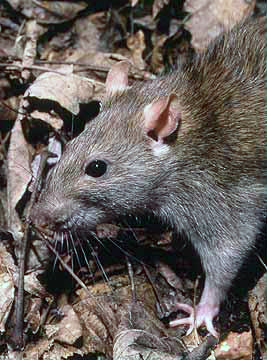 Brown RatRattus norvegicus
-
 Black RatRattus rattus
-
 Polynesian RatRattus exulans
-
 RakaliHydromys chrysogaster
Compare
Questions and answers
What is the scientific name of the Luzon Striped Rat?
The scientific name of the Luzon Striped Rat is Chrotomys whiteheadi. Written with its author, the full name is Chrotomys whiteheadi Thomas, 1895.
Which family does the Luzon Striped Rat belong to?
Chrotomys whiteheadi belongs to the family Muridae, in the order Rodentia and the class Mammalia.
Where is the Luzon Striped Rat found?
Checklists and occurrence records place Chrotomys whiteheadi in 1 country: Philippines.
What is the conservation status of the Luzon Striped Rat?
The IUCN Red List category recorded for Chrotomys whiteheadi is Least Concern (LC).
What other names does the Luzon Striped Rat have?
Chrotomys whiteheadi is also known in English as Luzon Montane Striped Shrew Rat, Luzon Montane Striped Shrew-rat, Montane Chrotomys and Montane Striped Shrew Rat.
Sources
Passages the profile rests on
- The species has soft, thick fur that is not particularly long. Source passage: “Fur soft and thick, but not specially long.” — English Wikipedia
- Its general coat colour ranges from greyish brown to rufous in some individuals. Source passage: “General colour greyish brown, tending in some specimens to rufous;” — English Wikipedia
- It has a distinct buff or orange stripe running from between the eyes down the back almost to the tail. Source passage: “a well-defined buff or orange line extending from between the eyes down the back nearly to the tail” — English Wikipedia
- A broad, glossy black band borders each side of its dorsal stripe. Source passage: “shown up on each side by a broad shining black band.” — English Wikipedia
- Its underside is dull slaty buff and is not sharply demarcated along the sides. Source passage: “Under surface dull slaty buff, not sharply defined on the sides.” — English Wikipedia
- The upper surface of its muzzle is dark brown and connects with the dark margins of its central yellow stripe. Source passage: “Top of muzzle dark brown, continuous with the dark edgings to the central yellow band.” — English Wikipedia
- Its ears are medium-sized, covered with fine hairs, and uniformly blackish brown. Source passage: “Ears of medium length, fairly covered with minute hairs, uniformly blackish brown.” — English Wikipedia
- Its metapodials are glossy grey, while its nearly naked digits are whitish. Source passage: “Metapodials shining grey, digits nearly naked, whitish.” — English Wikipedia
- Its skull has a generally wedge-shaped form. Source passage: “Skull in general form wedge-shaped.” — English Wikipedia
- Its tail is short and slender, measuring approximately half the combined length of its head and body. Source passage: “Tail short, slender, about half the length of the head and body,” — English Wikipedia
- Its tail is sparsely hairy and brownish black above, somewhat paler underneath, with a whitish tip. Source passage: “thinly hairy, brownish black above, rather paler below, extreme tip whiteish.” — English Wikipedia
- The Luzon striped rat is endemic to the Cordillera Central mountain range on Luzon in the Philippines. Source passage: “The species is endemic to the Cordillera Central mountain range, Luzon, in the Philippines” — English Wikipedia
- The species occurs at elevations ranging from 925 to 2,700 metres. Source passage: “at altitudes between 925 metres (3,035 ft) to 2,700 metres (8,900 ft).” — English Wikipedia
- Mount Data is the type locality of the species. Source passage: “The type locality was Mount Data.” — English Wikipedia
- The species occupies a wide variety of forested and forest-edge habitats. Source passage: “It is found in a wide variety of forested and near-forest habitats,” — English Wikipedia
- It can persist in human-modified environments, including gardens and rice fields. Source passage: “does well even in areas highly modified by humans such as gardens and rice fields.” — English Wikipedia
- Its natural habitat includes subtropical or tropical dry forests. Source passage: “Its natural habitat is subtropical or tropical dry forests.” — inaturalist.org
- The Luzon striped rat is partially fossorial. Source passage: “Like other species in the genus, it is partially fossorial.” — English Wikipedia
- The IUCN assesses the species as Least Concern. Source passage: “The IUCN assesses the Luzon striped rat as a species of Least Concern” — English Wikipedia
- Its Least Concern assessment is attributed to its large range, large population, and tolerance of partially human-disturbed habitats. Source passage: “due to its large range and population and ability to live in habitats partially disturbed by humans.” — English Wikipedia
Data
- Catalogue of Life, 2026-10-16 XR cc by
- Global Biodiversity Information Facility CC BY 4.0
- Wikidata CC0
- GeoNames CC BY 4.0
- Wikimedia Commons per image; credit shown with each image
- Within the Catalogue of Life, this name comes from The Integrated Taxonomic Information System cc0
References
- Ann. Mag. Nat. Hist., ser. 6 vol.16 p.161 where the name was published
- Wilson, Don E., and DeeAnn M. Reeder, eds. (1993). Mammal Species of the World: A Taxonomic and Geographic Reference, 2nd Ed., 3rd Printing.
- Musser, Guy G., and Michael D. Carleton / Wilson, Don E., and DeeAnn M. Reeder, eds. (2005). Superfamily Muroidea. Mammal Species of the World: A Taxonomic and Geographic Reference, 3rd Ed., Vol. 2.
This species in other databases
Page built on 28 November 2026. See how the catalog is made and all sources and licences.
Cite this page
ScientificNames.org. (2026). Chrotomys whiteheadi (Luzon Striped Rat). Retrieved November 28, 2026, from https://scientificnames.org/species/chrotomys-whiteheadi
“Chrotomys whiteheadi (Luzon Striped Rat).” ScientificNames.org, 2026, scientificnames.org/species/chrotomys-whiteheadi. Accessed 28 Nov. 2026.
ScientificNames.org. “Chrotomys whiteheadi (Luzon Striped Rat).” Accessed November 28, 2026. https://scientificnames.org/species/chrotomys-whiteheadi.
@misc{scientificnames_chrotomys_whiteheadi_luzon_striped_rat,
  author = {{ScientificNames.org}},
  title = {Chrotomys whiteheadi (Luzon Striped Rat)},
  year = {2026},
  url = {https://scientificnames.org/species/chrotomys-whiteheadi},
  note = {Accessed 2026-11-28}
}