Species · Mammals
Dinagat Bushy-tailed Cloud Rat Crateromys australis
The scientific name of the Dinagat Bushy-tailed Cloud Rat is Crateromys australis. It is a species of mammal in the family Muridae (mice), order Rodentia. The name dates from 1985.
- Scientific name
- Crateromys australis Musser, Heaney & Rabor, 1985
- Common name
- Dinagat Bushy-tailed Cloud Rat
- Genus
- Crateromys
- Family
- Muridae (Mice)
- Order
- Rodentia
- Class
- Mammalia
- Red List category
- EN Endangered
- Recorded in
- 1 country
- Name status
- accepted in the Catalogue of Life
Overview
The Dinagat Bushy-tailed Cloud Rat is a mammal in the cloud rat group within the family Muridae. The species inhabits tropical lowland forests and was first recorded in Balitbiton, Loreto Municipality, Surigao del Norte Province, on Dinagat Island. It is distinguished by tawny and orange-coloured fur, dark ears and a three-coloured striped tail with short, stiff hairs.
Written 26 November 2026 from the sources listed below. Each statement was checked against the passage it cites; statements that could not be supported were removed.
Appearance
The Dinagat Bushy-tailed Cloud Rat has tawny and orange-coloured fur without body colour patterns. Its ears are dark, round and heavily pigmented, and it lacks a crest of fur on its head.[1][2][3]
The head is uniformly coloured except around the eyes, which have rings of darkly pigmented skin surrounded by short, pale-brown hairs. The underfur on the back is grey and coarse, with short black hairs beginning in the middle of the back and gradually disappearing towards the sides.[4][5][6]
The throat and belly are uniformly bright orange-brown. The scrotum is covered with gold-coloured hairs.[7][8]
The tail has three-coloured stripes and short, stiff hairs.[9]
The species is medium-sized among members of the genus Crateromys. The original adult male specimen measured 26.5 cm from the head to the rear of the body, and its tail measured 28 cm.[10][11][12]
Each leg measures approximately 5.4 cm in length.[13]
Habitat
The Dinagat Bushy-tailed Cloud Rat inhabits tropical lowland forests. Its original specimen was collected in disturbed lowland forest near a logging road.[14][15]
A living individual was observed at a semi-protected watershed reserve in central-north Dinagat.[16]
Behaviour
The Dinagat Bushy-tailed Cloud Rat is nocturnal and arboreal. Individuals were observed fleeing when camera flashes were used.[17][18][19]
Conservation
The species' tropical lowland forest habitat faces environmental threats. Habitat loss is associated with progressive deforestation caused by heavy logging and chromite mining, and most of the forest habitat has been logged by mining companies.[20][21][22]
Only one male specimen was available between the species' discovery in 1975 and rediscovery in 2012. Five live specimens were discovered in 2012.[23][24]
Classification of the Dinagat Bushy-tailed Cloud Rat
| Kingdom | Animalia |
|---|---|
| Phylum | Chordata |
| Subphylum | Vertebrata |
| Infraphylum | Gnathostomata |
| Parvphylum | Osteichthyes |
| Megaclass | Tetrapoda |
| Class | Mammalia (Mammal) |
| Subclass | Theria |
| Infraclass | Eutheria |
| Order | Rodentia (Rodent) |
| Suborder | Myomorpha (Mice) |
| Superfamily | Muroidea |
| Family | Muridae (Mice) |
| Subfamily | Murinae (Old World Mice) |
| Genus | Crateromys (Bushy-tailed Cloud Rats) |
| Species | Crateromys australis Musser, Heaney & Rabor, 1985 |
Where the Dinagat Bushy-tailed Cloud Rat is found
Checklists and occurrence records place Crateromys australis in 1 country across Asia. GBIF holds 3 georeferenced records of it.
Countries
Range as the checklists state it
Southern Asia
A number beside a place is its count of GBIF occurrence records. A place without a number comes from a checklist alone. Records show where a species has been observed or collected, which can include escapes and vagrants.
Common names
English
- Dinagat Bushy-tailed Cloud Rat
- Dinagat Crateromys
- Dinagat Hairy-tailed Cloud Rat
- Dinagat Island Cloud Rat
Names in 4 other languages
- Czech
- krysa dinagatská
- Finnish
- dinagatinpörrörotta
- Japanese
- ディナガットフサオクモネズミ
- Polish
- obłocznik samotny
Related species
- Ilin Island CloudrunnerCrateromys paulus
-
 Panay CloudrunnerCrateromys heaneyi
-
 Giant Bushy-tailed Cloud RatCrateromys schadenbergi
-
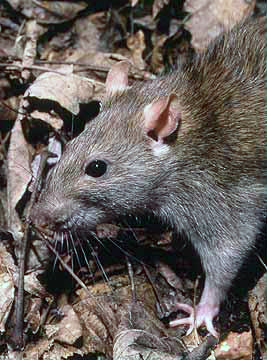 Brown RatRattus norvegicus
-
 Black RatRattus rattus
-
 Polynesian RatRattus exulans
-
 RakaliHydromys chrysogaster
-
 Wood MouseApodemus sylvaticus
Compare
Questions and answers
What is the scientific name of the Dinagat Bushy-tailed Cloud Rat?
The scientific name of the Dinagat Bushy-tailed Cloud Rat is Crateromys australis. Written with its author, the full name is Crateromys australis Musser, Heaney & Rabor, 1985.
Which family does the Dinagat Bushy-tailed Cloud Rat belong to?
Crateromys australis belongs to the family Muridae, in the order Rodentia and the class Mammalia.
Where is the Dinagat Bushy-tailed Cloud Rat found?
Checklists and occurrence records place Crateromys australis in 1 country: Philippines.
What is the conservation status of the Dinagat Bushy-tailed Cloud Rat?
The IUCN Red List category recorded for Crateromys australis is Endangered (EN).
What other names does the Dinagat Bushy-tailed Cloud Rat have?
Crateromys australis is also known in English as Dinagat Crateromys, Dinagat Hairy-tailed Cloud Rat and Dinagat Island Cloud Rat.
Can you describe the Dinagat bushy-tailed cloud rat?
The Dinagat Bushy-tailed Cloud Rat has tawny and orange-coloured fur without body colour patterns, dark heavily pigmented ears and a three-coloured striped tail with short, stiff hairs. It is nocturnal and arboreal and inhabits tropical lowland forests.[14][1][2][9][3][17][18]
Sources
Passages the profile rests on
- The species has tawny and orange-coloured fur without body colour patterns. Source passage: “it has tawny and orange coloured fur, lacking the colour patterns on its body” — English Wikipedia
- The species has dark-coloured ears and lacks a crest of fur on its head. Source passage: “its ears are dark in colour, its head lacks crest of fur” — English Wikipedia
- The ears are round and heavily pigmented, with short brown hairs on their upper halves. Source passage: “The ears are round and heavily pigmented. Short brown hairs grow on the top half of each ear.” — English Wikipedia
- The head is uniformly coloured except around the eyes, which have rings of darkly pigmented skin surrounded by short, pale-brown hairs. Source passage: “The head is uniformly coloured but is broken around the eyes, where the colour appears in rings of darkly pigmented skin surrounded by short, pale-brown hairs.” — English Wikipedia
- The underfur on the back is grey and coarse. Source passage: “The underfur on the back (dorsum) is gray and coarse.” — English Wikipedia
- Short black hairs begin in the middle of the back and gradually disappear towards the sides. Source passage: “Short black hairs start from the middle of the dorsum and gradually disappear on all sides.” — English Wikipedia
- The throat and belly are uniformly bright orange-brown. Source passage: “The throat and belly region are bright orange-brown, and uniform throughout the body.” — English Wikipedia
- The scrotum is covered with gold-coloured hairs. Source passage: “The scrotum is covered by gold-coloured hairs.” — English Wikipedia
- Its tail has three-coloured stripes and short, stiff hairs. Source passage: “the tail is striped in three colours with short and stiff hairs.” — English Wikipedia
- The species is medium-sized among members of the genus Crateromys. Source passage: “It is medium in size among the species of Crateromys” — English Wikipedia
- The original adult male specimen measured 26.5 cm from the head to the rear of the body. Source passage: “measures 26.5 cm (10.4 in) from head to body rear.” — English Wikipedia
- The tail measures 28 cm and is longer than the body. Source passage: “The tail is longer than the body, measuring 28 cm (11 in).” — English Wikipedia
- Each leg measures approximately 5.4 cm in length. Source passage: “Each leg is about 5.4 cm (2.1 in) long.” — English Wikipedia
- The species inhabits tropical lowland forests. Source passage: “The natural habitat is tropical lowland forests” — English Wikipedia
- The original specimen was collected in disturbed lowland forest near a logging road. Source passage: “It was found in a disturbed lowland forest, near a logging road.” — English Wikipedia
- A living individual was observed at a semi-protected watershed reserve in central-north Dinagat. Source passage: “a living specimen in a semi-protected watershed reserve site in central-north Dinagat.” — English Wikipedia
- The species is nocturnal. Source passage: “it is nocturnal and arboreal.” — English Wikipedia
- The species is arboreal. Source passage: “it is nocturnal and arboreal.” — English Wikipedia
- Individuals were observed fleeing when camera flashes were used. Source passage: “The rat fled when flashes were on.” — English Wikipedia
- The species' tropical lowland forest habitat faces environmental threats. Source passage: “The natural habitat is tropical lowland forests, which are facing environmental threats.” — English Wikipedia
- Habitat loss is associated with progressive deforestation caused by heavy logging and chromite mining. Source passage: “Habitat loss is caused by progressive deforestation from heavy logging and chromite mining in the area.” — English Wikipedia
- Most of the forest habitat has been logged by mining companies. Source passage: “As a result, most of the forest is logged down by mining companies.” — English Wikipedia
- Only one male specimen was available between the species' discovery in 1975 and rediscovery in 2012. Source passage: “Since its discovery in 1975 and until its rediscovery in 2012, only one male specimen was available” — English Wikipedia
- Five live specimens were discovered in 2012. Source passage: “five live specimens were discovered by Milada Řeháková, Václav Řehák and William L.R. Oliver, in 2012.” — English Wikipedia
Data
- Catalogue of Life, 2026-10-16 XR cc by
- Global Biodiversity Information Facility CC BY 4.0
- Wikidata CC0
- GeoNames CC BY 4.0
- Within the Catalogue of Life, this name comes from The Integrated Taxonomic Information System cc0
References
- Am. Mus. Novit. vol.2821 p.3 where the name was published
- Wilson, Don E., and DeeAnn M. Reeder, eds. (1993). Mammal Species of the World: A Taxonomic and Geographic Reference, 2nd Ed., 3rd Printing.
- Musser, Guy G., and Michael D. Carleton / Wilson, Don E., and DeeAnn M. Reeder, eds. (2005). Superfamily Muroidea. Mammal Species of the World: A Taxonomic and Geographic Reference, 3rd Ed., Vol. 2.
This species in other databases
Page built on 29 November 2026. See how the catalog is made and all sources and licences.
Cite this page
ScientificNames.org. (2026). Crateromys australis (Dinagat Bushy-tailed Cloud Rat). Retrieved November 29, 2026, from https://scientificnames.org/species/crateromys-australis
“Crateromys australis (Dinagat Bushy-tailed Cloud Rat).” ScientificNames.org, 2026, scientificnames.org/species/crateromys-australis. Accessed 29 Nov. 2026.
ScientificNames.org. “Crateromys australis (Dinagat Bushy-tailed Cloud Rat).” Accessed November 29, 2026. https://scientificnames.org/species/crateromys-australis.
@misc{scientificnames_crateromys_australis_dinagat_bushy_tailed_cloud_rat,
  author = {{ScientificNames.org}},
  title = {Crateromys australis (Dinagat Bushy-tailed Cloud Rat)},
  year = {2026},
  url = {https://scientificnames.org/species/crateromys-australis},
  note = {Accessed 2026-11-29}
}