Species · Flowering plants
Spring Gold Crocidium multicaule
The scientific name of the Spring Gold is Crocidium multicaule. It is a species of flowering plant in the family Asteraceae (composite), order Asterales.
- Scientific name
- Crocidium multicaule Hook.
- Common name
- Spring Gold
- Genus
- Crocidium
- Family
- Asteraceae (Composite)
- Order
- Asterales
- Class
- Magnoliopsida
- Recorded in
- 2 countries
- Name status
- accepted in the Catalogue of Life

Overview
Crocidium multicaule occurs in grasslands and woodlands, mostly in dry, open habitats, and is native to western North America from British Columbia to California. It has lemon-yellow ray florets surrounding bright-yellow disc florets, and fuzzy brown achenes that become gluey when wet.
Written 27 November 2026 from the sources listed below. Each statement was checked against the passage it cites; statements that could not be supported were removed.
Appearance
Spring gold has a low patch of somewhat fleshy leaves growing at ground level and several erect, thin stems. The lower portions of its stems usually bear reduced leaves, and each stem is topped by a single flower head.[1][2][3]
Each flower head contains five to thirteen lemon-yellow ray florets, usually eight, which can reach one centimeter in length. Tiny bright-yellow disc florets occupy the center of each flower head.[4][5][6]
Its fruits are fuzzy, brown achenes that become gluey when wet. The achenes measure one or two millimeters in length.[7][8][9]
Spring gold typically grows to no more than 30 centimeters tall when flowering.[10]
Habitat
Spring gold occurs in grasslands and woodlands and is found mostly in dry, open habitats.[11][12]
It is native to western North America, ranging from British Columbia to California.[13]
Reproduction and life cycle
Spring gold is an annual plant.[14]
Classification of the Spring Gold
| Kingdom | Plantae |
|---|---|
| Subkingdom | Pteridobiotina |
| Phylum | Tracheophyta |
| Class | Magnoliopsida |
| Order | Asterales |
| Family | Asteraceae (Composite) |
| Subfamily | Asteroideae |
| Tribe | Senecioneae |
| Subtribe | Tussilagininae |
| Genus | Crocidium (Gold Star) |
| Species | Crocidium multicaule Hook. |
Where the Spring Gold is found
Checklists and occurrence records place Crocidium multicaule in 2 countries across North America. GBIF holds 2,429 georeferenced records of it.
Countries
Regions and cities with the most records
- Oregon, United States 799
- Washington, United States 675
- The Dalles, United States 336
- California, United States 242
- British Columbia, Canada 207
- Central Saanich, Canada 89
- Saanich, Canada 85
- Oak Bay, Canada 84
- Victoria, Canada 84
- Colwood, Canada 83
- Esquimalt, Canada 83
- Langford, Canada 83
- Yakima, United States 67
- Ellensburg, United States 55
- Courtenay, Canada 51
- North Cowichan, Canada 40
- Central Point, United States 37
- Grants Pass, United States 37
- Medford, United States 37
- Duncan, Canada 35
- Anacortes, United States 34
- Ashland, United States 24
- Redmond, United States 22
- Hermiston, United States 20
- Harewood, Canada 17
- Nanaimo, Canada 17
- Canby, United States 14
- Oregon City, United States 14
- Tualatin, United States 14
- West Linn, United States 14
- Wilsonville, United States 14
- Sherwood, United States 13
- Happy Valley, United States 12
- Lake Oswego, United States 12
- Milwaukie, United States 12
- Oak Grove, United States 12
Range as the checklists state it
Canada (British Columbia); USA (California, Idaho, Oregon, Washington)
A number beside a place is its count of GBIF occurrence records. A place without a number comes from a checklist alone. Records show where a species has been observed or collected, which can include escapes and vagrants.
Common names
English
- Spring Gold
- Common Spring Gold
- Gold Star
- Gold Stars
- Spring-gold
Names in 1 other language
- French
- crocidie à tiges nombreuses
Synonyms
One other scientific name has been used for this species and is now treated as a synonym of Crocidium multicaule.
- Crocidium pugetense H.St.John
Related species
-
 Jerusalem ArtichokeHelianthus tuberosus
-
 ChicoryCichorium intybus
-
 Absinthe WormwoodArtemisia absinthium
-
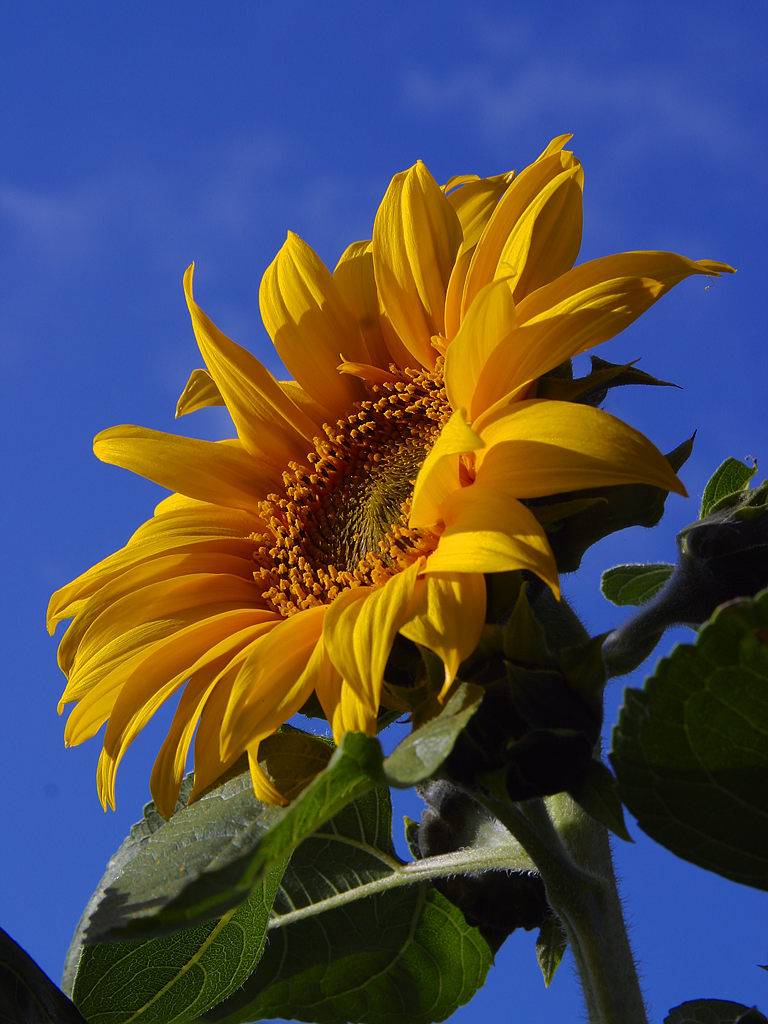 Common SunflowerHelianthus annuus
-
 Common YarrowAchillea millefolium
-
 LettuceLactuca sativa
-
 TarragonArtemisia dracunculus
-
 African MarigoldTagetes erecta
Compare
Questions and answers
What is the scientific name of the Spring Gold?
The scientific name of the Spring Gold is Crocidium multicaule. Written with its author, the full name is Crocidium multicaule Hook..
Which family does the Spring Gold belong to?
Crocidium multicaule belongs to the family Asteraceae, in the order Asterales and the class Magnoliopsida.
Where is the Spring Gold found?
Checklists and occurrence records place Crocidium multicaule in 2 countries: United States and Canada.
What other names does the Spring Gold have?
Crocidium multicaule is also known in English as Common Spring Gold, Gold Star, Gold Stars and Spring-gold.
Sources
Passages the profile rests on
- Crocidium multicaule has a low patch of somewhat fleshy leaves growing at ground level and several erect, thin stems. Source passage: “It grows from a low small patch of somewhat fleshy leaves at the ground and erects several tall thin stems” — English Wikipedia
- The lower portions of its stems usually bear reduced leaves. Source passage: “usually with reduced leaves on the lower part of the stem” — English Wikipedia
- Each stem is topped by a single flower head. Source passage: “topped by a single flower head.” — English Wikipedia
- Each flower head contains five to thirteen lemon-yellow ray florets, usually eight. Source passage: “five to 13 (usually 8) lemon yellow ray florets” — English Wikipedia
- The ray florets can reach one centimeter in length. Source passage: “each up to a centimeter long.” — English Wikipedia
- The center of each flower head contains tiny bright-yellow disc florets. Source passage: “The center of the head is filled with tiny disc florets, in a similar shade of bright yellow.” — English Wikipedia
- Its fruits are fuzzy and brown achenes. Source passage: “The fruits are fuzzy brown achenes” — English Wikipedia
- Its achenes become gluey when wet. Source passage: “which turn gluey when wet.” — English Wikipedia
- Its achenes measure one or two millimeters in length. Source passage: “only one or two millimeters long” — English Wikipedia
- Crocidium multicaule typically grows to no more than 30 centimeters tall when flowering. Source passage: “typically not exceeding 30 centimetres (12 in) in height when in flower.” — English Wikipedia
- Crocidium multicaule occurs in grasslands and woodlands. Source passage: “varied habitats from grassland to woodland” — English Wikipedia
- Crocidium multicaule is found mostly in dry, open habitats. Source passage: “mostly in dry open habitat.” — English Wikipedia
- Crocidium multicaule is native to western North America, ranging from British Columbia to California. Source passage: “native to western North America from British Columbia to California” — English Wikipedia
- Crocidium multicaule is an annual plant. Source passage: “Crocidium multicaule is a small annual” — English Wikipedia
Data
- Catalogue of Life, 2026-10-16 XR cc by
- Global Biodiversity Information Facility CC BY 4.0
- Wikidata CC0
- GeoNames CC BY 4.0
- Wikimedia Commons per image; credit shown with each image
- Within the Catalogue of Life, this name comes from Synonymic Checklists of the Vascular Plants of the World cc by
References
- Hook. (1833). Fl. Bor.-Amer. [Hooker] 1: 335, t. 118 (1833). where the name was published
This species in other databases
- Catalogue of Life ZJYD
- Wikidata Q5187279
- iNaturalist 57524
- World Flora Online wfo-0000081762
- GRIN 448123
Page built on 28 November 2026. See how the catalog is made and all sources and licences.
Cite this page
ScientificNames.org. (2026). Crocidium multicaule (Spring Gold). Retrieved November 28, 2026, from https://scientificnames.org/species/crocidium-multicaule
“Crocidium multicaule (Spring Gold).” ScientificNames.org, 2026, scientificnames.org/species/crocidium-multicaule. Accessed 28 Nov. 2026.
ScientificNames.org. “Crocidium multicaule (Spring Gold).” Accessed November 28, 2026. https://scientificnames.org/species/crocidium-multicaule.
@misc{scientificnames_crocidium_multicaule_spring_gold,
  author = {{ScientificNames.org}},
  title = {Crocidium multicaule (Spring Gold)},
  year = {2026},
  url = {https://scientificnames.org/species/crocidium-multicaule},
  note = {Accessed 2026-11-28}
}