Species · Flowering plants
Cape Ivy Delairea odorata
The scientific name of the Cape Ivy is Delairea odorata. It is a species of flowering plant in the family Asteraceae (composite), order Asterales.
- Scientific name
- Delairea odorata Lem.
- Common name
- Cape Ivy
- Genus
- Delairea
- Family
- Asteraceae (Composite)
- Order
- Asterales
- Class
- Magnoliopsida
- Recorded in
- 23 countries
- Name status
- accepted in the Catalogue of Life

Overview
The species is native to South Africa and occurs along forest edges in moist areas of the Drakensberg Mountains.
Written 26 November 2026 from the sources listed below. Each statement was checked against the passage it cites; statements that could not be supported were removed.
Appearance
The upper surfaces of its leaves are light green, usually with a purple tinge, while the undersides are somewhat silvery. The leaves measure three to ten centimetres long and three to eight centimetres wide.[1][2]
Its flowers are yellow, sweet-scented and discoid, without petal-like ray florets. The flower heads occur in compact clusters at branch ends, typically containing approximately 15 to 50 heads.[3][4][5]
Each flower head has eight to ten small green phyllaries surrounding its tubular florets. The heads measure two to seven millimetres across and two to five millimetres long.[6][7]
Habitat
In its native South African range, Cape Ivy occurs along forest edges in moist areas of the Drakensberg Mountains. In California, it commonly occurs in coastal fog-belt environments.[8][9]
Inland California populations are particularly associated with subtropical riparian sites that have permanent moisture. On the West Coast of North America, the plant has invaded disturbed areas with year-round moisture.[10][11]
Cape Ivy prefers partial shade but can tolerate heavy shade. It thrives in moist soils but does not tolerate waterlogged soils.[12][13]
Behaviour
Cape Ivy grows rapidly as a climbing vine. Its climbing stems can reach heights of two to four metres, and the plant can grow approximately three metres tall.[14][15][16]
Its stems and leaves die back between late summer and early autumn. New shoots use the old stems for climbing support.[17]
Its active growth period extends from early autumn to late spring, followed by summer dormancy.[18]
Reproduction and life cycle
Cape Ivy flowers mainly from winter to early spring, although its flowering period can extend from autumn through early spring.[19][20]
The plant can reproduce vegetatively from stem fragments, stolons or rhizomes as small as 2.5 centimetres. It can also reproduce from stem fragments measuring as little as 0.5 inches.[21][22]
Cape Ivy reaches reproductive maturity after two years. A mature plant can produce more than 30,000 seeds annually.[23][24]
Its achenes are approximately two millimetres long.[25]
Conservation
Cape Ivy is invasive in coastal California, Hawaii, coastal Oregon, New Zealand and southern Australia, particularly Victoria. It competes with native vegetation by smothering it after becoming established in new habitats.[26][27]
Its dense growth can inhibit native seed germination and growth by covering the ground. Its shallow root system contributes to hillside soil erosion.[28][29]
Chemical compounds produced by Cape Ivy are toxic to mammals, spiders and aquatic macroinvertebrates.[30]
The European Union classifies Cape Ivy as an invasive alien species of Union concern.[31]
Uses
Cape Ivy was originally cultivated as an ornamental plant on trellises and as groundcover. It is also cultivated as an ornamental houseplant for its foliage.[32][33]
In cultivation, the plant is propagated using stem cuttings that readily root in water or soil.[34]
Cape Ivy was introduced to the United States during the nineteenth century as a Victorian-era houseplant. It was introduced to California in the 1950s as a houseplant.[35][36]
Similar species
Cape Ivy resembles Senecio tamoides, Senecio angulatus and Senecio macroglossus. It is more closely related to members of the genus Curio than to Senecio angulatus.[37][38]
Delairea odorata was previously classified within the genus Senecio under the name Senecio mikanioides. It is one of two members of the genus Delairea.[39][40]
Classification of the Cape Ivy
| Kingdom | Plantae |
|---|---|
| Subkingdom | Pteridobiotina |
| Phylum | Tracheophyta |
| Class | Magnoliopsida |
| Order | Asterales |
| Family | Asteraceae (Composite) |
| Subfamily | Asteroideae |
| Tribe | Senecioneae |
| Subtribe | Senecioniinae |
| Genus | Delairea (Cape Ivy) |
| Species | Delairea odorata Lem. |
Where the Cape Ivy is found
Checklists and occurrence records place Delairea odorata in 23 countries across Africa, Europe, North America, Oceania and South America. GBIF holds 12,986 georeferenced records of it.
Countries where it is native or its origin is not stated
Countries where it has been introduced
- Algeria 9
- Argentina 16
- Australia 3,768
- Bolivia 5
- Chile 21
- Colombia 30
- Costa Rica 2
- Croatia 3
- France 250
- Guatemala
- Ireland 10
- Italy 21
- New Zealand 1,159
- Portugal 1,273
- Spain 887
- Sweden 3
- United Kingdom 532
- United States 4,613
- Uruguay 23
Regions and cities with the most records
- California, United States 4,264
- New South Wales, Australia 1,800
- Victoria, Australia 1,563
- South San Francisco, United States 1,005
- San Bruno, United States 986
- San Francisco, United States 947
- Bayview-Hunters Point, United States 941
- Daly City, United States 918
- Pacifica, United States 893
- Oakland, United States 782
- Alameda, United States 754
- Millbrae, United States 713
- Azores, Portugal 690
- Burlingame, United States 627
- San Mateo, United States 557
- Albany, United States 510
- Santa Barbara, United States 463
- Richmond, United States 432
- Berkeley, United States 429
- Burwood, Australia 401
- El Cerrito, United States 394
- San Rafael, United States 351
- Monterey, United States 330
- England, United Kingdom 325
- Goleta, United States 325
- Glendale, United States 318
- Burbank, United States 316
- Santa Monica, United States 314
- Parramatta, Australia 313
- Seaside, United States 313
- Pacific Grove, United States 312
- Hornsby, Australia 311
- Wollongong, Australia 305
- Sydney, Australia 302
- Los Angeles, United States 300
- Monrovia, United States 294
10 more countries have a few records outside this range
These countries hold a few records of Delairea odorata but lie outside the range the checklists give for it. Such records are often zoo or garden specimens, museum material or vagrants, so the species is not counted as occurring there.
Range as the checklists state it
England [I] (SW-England [I], S-Wales [I], Isles of Scilly [I]); Ireland [I] (S-Ireland [I]); Sweden [I]; Portugal [I]; Spain [I]; Baleares [I]; France [I]; Channel Isl. [I]; Italy [I]; Sicily [I]; Croatia [I]; Algeria [I]; Azores [I] (Sao Miguel Isl. [I], Terceira [I], Graciosa [I], Sao Jorge [I], Pico [I], Faial [I]); Madeira [I] (Madeira Isl. [I]); Canary Isl. [I] (Gran Canaria [I], Tenerife [I], La Palma [I]); South Africa (KwaZulu-Natal, W-Cape Prov., E-Cape Prov.); Lesotho; St. Helena [I]; Australia [I] (NE-New South Wales [I], E-Victoria [I], Tasmania [I]); New Zealand [I]; Chatham Isl. [I]; Hawaii [I] (Maui [I], Hawaii Isl. [I]); USA [I] (California [I], Oregon [I]); Guatemala [I]; Costa Rica [I]; Colombia [I]; Bolivia [I]; Uruguay [I]; Argentina [I]; Chile [I] (Valparaíso [I], Ñuble [I], Biobío [I], Los Rios [I]); Juan Fdz. Isl. [I]
Madeira Island
A number beside a place is its count of GBIF occurrence records. A place without a number comes from a checklist alone. Records show where a species has been observed or collected, which can include escapes and vagrants.
Common names
English
- Cape Ivy
- Cape-ivy
- German Ivy
- German-Ivy
- Parlor-ivy
Names in 15 other languages
- Arabic
- سنيسيو صبار
- Catalan
- Heura groga
- Chinese
- 德國常春藤, 肉藤菊, 開普敦常春藤
- Danish
- Slyngende brandbæger
- Dutch
- Klimopkruiskruid
- Finnish
- murattivillakko
- French
- Délairéa odorant, Lierre d'Allemagne, Séneçon grimpant
- German
- Salonefeu, Sommerefeu
- Portuguese
- Erva-de-são-tiago
- Russian
- Делерея душистая
- Slovak
- delérea voňavá
- Spanish
- Hiedra Amarilla
- Swedish
- sommarmurgröna
- Turkish
- Nazlı Hanım Sarmaşığı
- Welsh
- Creulys Dail Eiddew
Synonyms
4 other scientific names have been used for this species and are now treated as synonyms of Delairea odorata.
- Delairea scandens Lem.
- Senecio mikanioides Otto ex Walp.
- Senecio mikanoides Otto ex Walp.
- Senecio scandens DC. ambiguous synonym
Related species
- Delairea aparadensis
-
 Jerusalem ArtichokeHelianthus tuberosus
-
 ChicoryCichorium intybus
-
 Absinthe WormwoodArtemisia absinthium
-
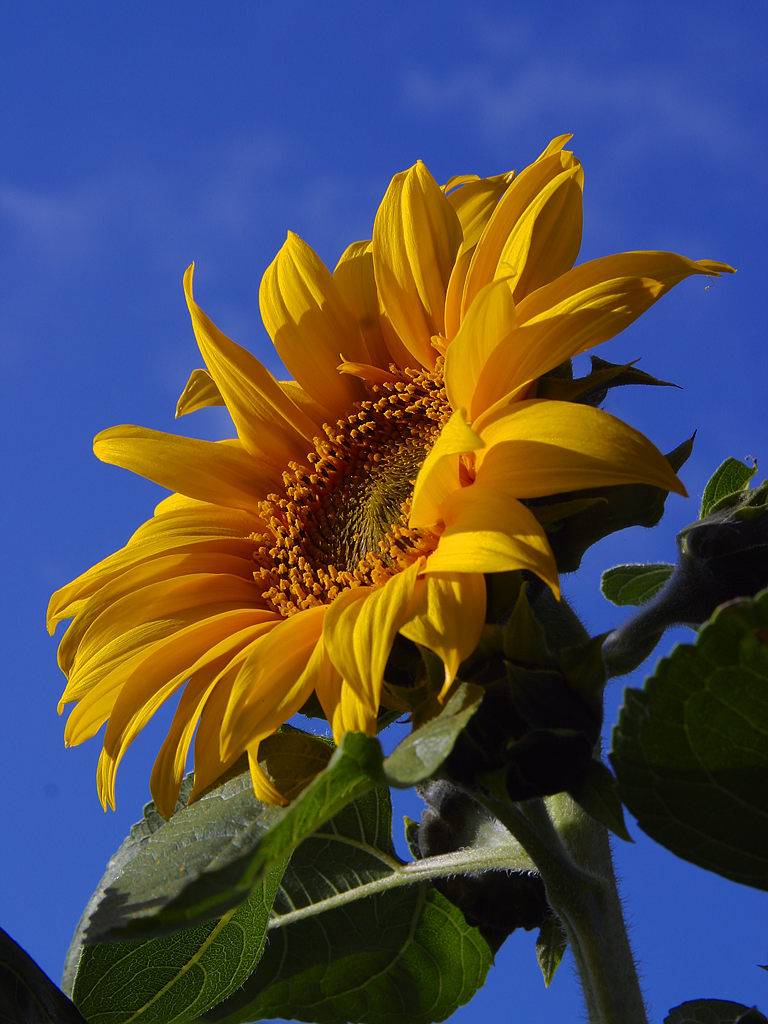 Common SunflowerHelianthus annuus
-
 Common YarrowAchillea millefolium
-
 LettuceLactuca sativa
-
 TarragonArtemisia dracunculus
Compare
Questions and answers
What is the scientific name of the Cape Ivy?
The scientific name of the Cape Ivy is Delairea odorata. Written with its author, the full name is Delairea odorata Lem..
Which family does the Cape Ivy belong to?
Delairea odorata belongs to the family Asteraceae, in the order Asterales and the class Magnoliopsida.
Where is the Cape Ivy found?
Checklists and occurrence records place Delairea odorata in 23 countries, including South Africa, Saint Helena, Reunion and Lesotho.
What other names does the Cape Ivy have?
Delairea odorata is also known in English as Cape-ivy, German Ivy, German-Ivy and Parlor-ivy.
Sources
Passages the profile rests on
- The upper surfaces of its leaves are light green, usually with a purple tinge, while their undersides are somewhat silvery. Source passage: “The upper leaf surface is light green, usually with a somewhat purple cast, while the reverse is somewhat silvery.” — English Wikipedia
- Its leaves measure three to ten centimetres long and three to eight centimetres wide. Source passage: “are 3–10 centimetres (1+1⁄4–4 in) long and 3–8 centimetres (1+1⁄4–3+1⁄4 in) wide” — English Wikipedia
- Its flowers are yellow, sweet-scented and discoid, without petal-like ray florets. Source passage: “Its sweet-scented discoid flowers are yellow, and lack the petal-like ray florets found in typical daisies.” — English Wikipedia
- Its flower heads occur in compact clusters at the ends of branches. Source passage: “Flower-heads (2–7 millimetres (5⁄64–35⁄128 in) across and 2–5 millimetres (5⁄64–25⁄128 in) long) occur in compact clusters at the ends of the branches (terminal corymbs)” — English Wikipedia
- Its flower clusters typically contain approximately 15 to 50 flower heads. Source passage: “with clusters consisting of about 15-50 flower-heads.” — English Wikipedia
- Each flower head has eight to ten small green phyllaries surrounding its tubular florets. Source passage: “They have tiny tubular florets surrounded by an involucre of 8-10 small green phyllaries” — English Wikipedia
- Its flower heads measure two to seven millimetres across and two to five millimetres long. Source passage: “Flower-heads (2–7 millimetres (5⁄64–35⁄128 in) across and 2–5 millimetres (5⁄64–25⁄128 in) long)” — English Wikipedia
- In its native South African range, the plant occurs along forest edges in moist areas of the Drakensberg Mountains. Source passage: “Originally found in the Drakensberg Mountains, on forest edges, at elevations above 1,500 metres (4,900 ft), in moist areas.” — English Wikipedia
- In California, the species commonly occurs in coastal fog-belt environments. Source passage: “In California, it is generally found in the coastal fog belt” — English Wikipedia
- Inland California populations are particularly associated with subtropical riparian sites that have permanent moisture. Source passage: “particularly in subtropical riparian sites that feature permanent moisture.” — English Wikipedia
- On the West Coast of North America, the plant has invaded disturbed areas with year-round moisture. Source passage: “On the West Coast, it successfully invaded disturbed areas that contained year-round moisture.” — nps.gov
- The plant prefers partial shade but can tolerate heavy shade. Source passage: “It prefers partial shade, but can withstand heavy shade.” — English Wikipedia
- The species thrives in moist soils but does not tolerate waterlogged soils. Source passage: “Although it can tolerate drought, it thrives better in moist soils, but it cannot withstand soggy soils.” — English Wikipedia
- The plant grows rapidly as a climbing vine. Source passage: “Delairea odorata is a fast-growing vine” — English Wikipedia
- The plant can grow approximately three metres tall. Source passage: “It is a twining perennial, herbaceous plant that grows 3 metres (9.8 ft) tall.” — English Wikipedia
- Its climbing stems can reach heights of two to four metres. Source passage: “Delairea odorata is a fast-growing vine that can climb to heights of 2–4 metres (7–13 ft).” — English Wikipedia
- Its stems and leaves die back between late summer and early autumn, with new shoots using the old stems for climbing support. Source passage: “The plant's stems and leaves will die between late summer and early autumn, being superseded by new shoots that employ the old stems as climbing support.” — English Wikipedia
- Its active growth period extends from early autumn to late spring, followed by summer dormancy. Source passage: “Its active growth is from early autumn to late spring, with a dormant period in summer.” — English Wikipedia
- The plant flowers mainly from winter to early spring. Source passage: “Flowering occurs mostly during winter to early spring.” — English Wikipedia
- Its flowering period can extend from autumn through early spring. Source passage: “it can flower from as early as autumn through to early spring.” — English Wikipedia
- The species can reproduce vegetatively from stem fragments, stolons or rhizomes as small as 2.5 centimetres. Source passage: “the plant readily reproduce from stem fragments, stolons, or rhizomes as small as 2.5 centimetres” — English Wikipedia
- Cape ivy can reproduce from stem fragments measuring as little as 0.5 inches. Source passage: “It is able to reproduce from stem fragments as small as 0.5 inches” — nps.gov
- The plant reaches reproductive maturity after two years. Source passage: “D. odorata reaches reproductive maturity in two years” — English Wikipedia
- A mature plant can produce more than 30,000 seeds annually. Source passage: “can produce over 30,000 seeds annually.” — English Wikipedia
- Its achenes are approximately two millimetres long. Source passage: “The seeds (or achenes) are approximately 2 millimetres (5⁄64 in) long” — English Wikipedia
- The plant is invasive in coastal California, Hawaii, coastal Oregon, New Zealand and southern Australia, particularly Victoria. Source passage: “D. odorata has been an invasive species in coastal California since 1892, Hawaii, coastal Oregon, New Zealand and southern Australia (particularly in Victoria).” — English Wikipedia
- Cape ivy competes with native vegetation by smothering it after becoming established in new habitats. Source passage: “Once established in a new habitat, Cape-ivy is highly invasive and outcompetes native vegetation by smothering it.” — ars.usda.gov
- The plant's dense growth can inhibit native seed germination and growth by covering the ground. Source passage: “will also cover ground intensively over a wide area, thereby impeding the germination and growth of native seeds.” — English Wikipedia
- Cape ivy has a shallow root system that contributes to hillside soil erosion. Source passage: “It also has a shallow root system, contributing to soil erosion on hillsides” — nps.gov
- Chemical compounds produced by Cape ivy are toxic to mammals, spiders and aquatic macroinvertebrates. Source passage: “Cape ivy produces strong chemical compounds (pyrrolizidine alkaloids and xanthones) which are toxic to mammals, spiders, and aquatic macroinvertebrates” — nps.gov
- The European Union classifies the species as an invasive alien species of Union concern. Source passage: “The European Union has included it in the list of invasive alien species of Union concern” — English Wikipedia
- The species was originally cultivated as an ornamental plant on trellises and as groundcover. Source passage: “Originally used as an ornamental plant on trellises and as groundcover” — English Wikipedia
- Cape ivy is cultivated as an ornamental houseplant for its foliage. Source passage: “the plant is grown as an ornamental houseplant for its foliage.” — English Wikipedia
- The plant is propagated in cultivation using stem cuttings that readily root in water or soil. Source passage: “Propagation is done by cuttings as its stems root readily both in water and soil” — English Wikipedia
- The species was introduced to the United States during the nineteenth century as a Victorian-era houseplant. Source passage: “The plant was introduced to the United States in the 19th century as a Victorian era-style houseplant.” — English Wikipedia
- Cape ivy was introduced to California in the 1950s as a houseplant. Source passage: “It was introduced to California in the 1950s as a common house plant.” — nps.gov
- Delairea odorata resembles Senecio tamoides, Senecio angulatus and Senecio macroglossus. Source passage: “German ivy is very similar to Senecio angulatus, Senecio tamoides and Senecio macroglossus.” — English Wikipedia
- The species is more closely related to members of the genus Curio than to Senecio angulatus. Source passage: “Open Tree of Life indicates that it is most closely related to species in the genus Curio, followed by Senecio angulatus.” — English Wikipedia
- Delairea odorata was previously classified within the genus Senecio under the name Senecio mikanioides. Source passage: “it was previously included in the genus Senecio as Senecio mikanioides.” — English Wikipedia
- The species is one of two members of the genus Delairea. Source passage: “One of the two species in the genus Delairea” — English Wikipedia
Data
- Catalogue of Life, 2026-10-16 XR cc by
- Global Biodiversity Information Facility CC BY 4.0
- Wikidata CC0
- GeoNames CC BY 4.0
- Wikimedia Commons per image; credit shown with each image
- Within the Catalogue of Life, this name comes from Synonymic Checklists of the Vascular Plants of the World cc by
References
- Lem. (1844). Ann. Sci. Nat., Bot., Sér. 3, 1: 380 (1844). where the name was published
This species in other databases
- Catalogue of Life 34FHY
- Wikidata Q2702202
- iNaturalist 53208
- World Flora Online wfo-0000069201
- GRIN 410179
Page built on 27 November 2026. See how the catalog is made and all sources and licences.
Cite this page
ScientificNames.org. (2026). Delairea odorata (Cape Ivy). Retrieved November 27, 2026, from https://scientificnames.org/species/delairea-odorata
“Delairea odorata (Cape Ivy).” ScientificNames.org, 2026, scientificnames.org/species/delairea-odorata. Accessed 27 Nov. 2026.
ScientificNames.org. “Delairea odorata (Cape Ivy).” Accessed November 27, 2026. https://scientificnames.org/species/delairea-odorata.
@misc{scientificnames_delairea_odorata_cape_ivy,
  author = {{ScientificNames.org}},
  title = {Delairea odorata (Cape Ivy)},
  year = {2026},
  url = {https://scientificnames.org/species/delairea-odorata},
  note = {Accessed 2026-11-27}
}