Species · Birds
Western House Martin Delichon urbicum
The scientific name of the Western House Martin is Delichon urbicum. It is a species of bird in the family Hirundinidae (swallow), order Passeriformes. The name dates from 1758.
- Scientific name
- Delichon urbicum (Linnaeus, 1758)
- Common name
- Western House Martin
- Genus
- Delichon
- Family
- Hirundinidae (Swallow)
- Order
- Passeriformes
- Class
- Aves
- Red List category
- LC Least Concern
- Environment
- terrestrial
- Recorded in
- 141 countries
- Name status
- accepted in the Catalogue of Life

Overview
The Western House Martin is a migratory bird in the family Hirundinidae. It breeds across temperate Eurosiberia, in Morocco, Tunisia, and northern Algeria, and winters in sub-Saharan Africa. Adults are distinguished by their steel-blue upperparts, white rump, and white underparts.
Written 26 November 2026 from the sources listed below. Each statement was checked against the passage it cites; statements that could not be supported were removed.
Appearance
Adults have steel-blue upperparts, a white rump, and white underparts, including the underwings. They have brown eyes, a small black bill, and pink toes and exposed portions of their legs.[1][2][3]
The short legs have white downy feathering. Juveniles are sooty black, with white tips and edges on some wing coverts and quills.[4][5]
Adults measure approximately 13 cm in length, with a wingspan ranging from 26 to 29 cm. Their average body mass is 18.3 g.[6][7][8]
Habitat
The Western House Martin occupies open country with low vegetation, including pasture, meadows, and farmland. It also occurs in open areas, coastal cliffs, cultivated land, and human habitations, generally preferring habitats near water.[9][10][11]
The species occupies urban areas and can nest in city centres. It also occurs in mountains at elevations of at least 2,200 m.[12][13]
Its breeding range extends across temperate Eurosiberia eastward to central Mongolia and the Yenisei River. It also breeds in Morocco, Tunisia, and northern Algeria, and winters in sub-Saharan Africa.[14][15][16]
Diet
The Western House Martin catches insects while flying. Flies and aphids constitute much of its diet in breeding areas, while flying ants are important food items in the wintering area.[17][18][19]
During breeding, the species hunts at an average height of approximately 21 m. Its typical hunting grounds are within 450 m of the nest.[20][21]
On wintering grounds, the species hunts at heights exceeding 50 m.[22]
Behaviour
The Western House Martin is migratory and moves on a broad migration front. Migrating individuals generally travel during daylight.[23][24]
The species frequently breeds in colonies, and its breeding nests may be constructed in contact with one another. Pairs generally remain together for life once established.[25][26][27]
The species is socially monogamous despite frequent extra-pair copulations. It produces a soft song of melodious chirps throughout the year.[28][29]
Reproduction and life cycle
The Western House Martin constructs closed, convex cup-shaped nests beneath suitable ledges. Both sexes build nests using mud pellets collected in their beaks, and the interiors are lined with grasses, hair, or other soft materials.[30][31][32]
Females usually lay four or five white eggs. The eggs average 1.9 cm by 1.33 cm in dimensions and have an average mass of 1.7 g.[33][34][35]
Females perform most of the incubation, which normally lasts 14–16 days. Young birds leave the nest approximately 22–32 days after hatching, depending on weather.[36][37][38]
Parents continue feeding fledged young for approximately one week after they leave the nest. The species normally produces two broods annually, and third broods are not uncommon.[39][40][41]
Conservation
The Western House Martin is classified as Least Concern on the IUCN Red List. Its estimated global geographic range is 30.8 million square kilometres.[42][43]
The European population is estimated at 22–47 million individuals. Population numbers indicate a declining trend in Europe and Britain.[44][45]
Uses
The Western House Martin uses human-made structures as nesting sites.[46]
Classification of the Western House Martin
| Kingdom | Animalia |
|---|---|
| Phylum | Chordata |
| Subphylum | Vertebrata |
| Infraphylum | Gnathostomata |
| Parvphylum | Osteichthyes |
| Megaclass | Tetrapoda |
| Class | Aves (Bird) |
| Order | Passeriformes (Passerine) |
| Family | Hirundinidae (Swallow) |
| Genus | Delichon (House-Martins) |
| Species | Delichon urbicum (Linnaeus, 1758) |
Where the Western House Martin is found
Checklists and occurrence records place Delichon urbicum in 141 countries across Africa, Asia and North America. GBIF holds 2,786,600 georeferenced records of it.
Countries
- Afghanistan 49
- Aland Islands 1,541
- Albania 1,730
- Algeria 491
- Andorra 669
- Angola 66
- Armenia 1,798
- Austria 17,452
- Azerbaijan 463
- Bahrain 34
- Barbados 12
- Belarus 2,489
- Belgium 56,940
- Benin 23
- Bosnia and Herzegovina 823
- Botswana 461
- Bulgaria 23,840
- Burkina Faso 45
- Burundi 6
- Cabo Verde 127
- Cameroon 86
- Central African Republic 27
- Chad 17
- China 613
- Croatia 9,231
- Cyprus 5,854
- Czechia 34,666
- Democratic Republic of the Congo 68
- Denmark 199,713
- Djibouti 4
- Egypt 1,209
- Eritrea 16
- Estonia 15,119
- Eswatini 186
- Ethiopia 513
- Faroe Islands 48
- Finland 68,123
- France 281,401
- Gabon 8
- Gambia 583
- Georgia 3,581
- Germany 197,003
- Ghana 347
- Gibraltar 186
- Greece 24,788
- Guadeloupe 5
- Guernsey 209
- Guinea 77
- Guinea-Bissau 51
- Hungary 7,953
- Iceland 167
- India 2,059
- Iran 720
- Iraq 198
- Ireland 20,420
- Isle of Man 4,256
- Israel 13,713
- Italy 38,756
- Ivory Coast 28
- Japan 112
- Jersey 409
- Jordan 350
- Kazakhstan 986
- Kenya 2,664
- Kosovo 124
- Kuwait 445
- Kyrgyzstan 573
- Latvia 1,948
- Lebanon 236
- Lesotho 154
- Liberia 27
- Libya 188
- Liechtenstein 257
- Lithuania 4,187
- Luxembourg 6,483
- Malawi 181
- Maldives 4
- Mali 13
- Malta 699
- Mauritania 73
- Moldova 980
- Monaco 41
- Mongolia 254
- Montenegro 1,895
- Morocco 4,632
- Mozambique 264
- Namibia 835
- Niger 5
- Nigeria 400
- North Macedonia 1,389
- Norway 116,134
- Oman 141
- Pakistan 21
- Palestinian Territory 518
- Poland 43,646
- Portugal 128,075
- Qatar 87
- Republic of the Congo 14
- Romania 5,067
- Russia 12,609
- Rwanda 49
- Saint Pierre and Miquelon 7
- San Marino 67
- Sao Tome and Principe 9
- Saudi Arabia 450
- Senegal 476
- Serbia 5,864
- Seychelles 14
- Sierra Leone 24
- Slovakia 6,816
- Slovenia 4,658
- Somalia 3
- South Africa 17,731
- South Korea 8
- South Sudan 9
- Spain 421,018
- Sri Lanka 8
- Sudan 15
- Svalbard and Jan Mayen 28
- Sweden 345,958
- Switzerland 95,781
- Syria 50
- Taiwan 3
- Tajikistan 114
- Tanzania 1,223
- Thailand 6
- The Netherlands 111,055
- Togo 61
- Tunisia 674
- Turkey 21,664
- Turkmenistan 23
- Uganda 284
- Ukraine 7,736
- United Arab Emirates 1,231
- United Kingdom 362,988
- Uzbekistan 220
- Vatican 93
- Western Sahara 97
- Yemen 12
- Zambia 602
- Zimbabwe 1,290
Regions and cities with the most records
- England, United Kingdom 284,646
- Extremadura, Spain 61,584
- Capital Region, Denmark 49,637
- Västra Götaland, Sweden 48,429
- Occitanie, France 48,425
- Catalonia, Spain 46,065
- Skåne, Sweden 42,782
- Zealand, Denmark 40,839
- Scotland, United Kingdom 39,932
- Bourgogne-Franche-Comté, France 39,277
- Kalmar, Sweden 36,015
- Central Jutland, Denmark 35,718
- Provence-Alpes-Côte d'Azur, France 35,692
- South Denmark, Denmark 35,121
- Taastrup, Denmark 35,051
- Ishøj, Denmark 34,560
- Stockholm, Sweden 34,509
- Albertslund, Denmark 34,386
- Vallensbæk, Denmark 34,180
- Glostrup, Denmark 33,958
- Madrid, Spain 33,682
- Brøndbyvester, Denmark 33,608
- Rødovre, Denmark 32,543
- Avedøre, Denmark 31,439
- Hellerup, Denmark 31,430
- Ballerup, Denmark 31,356
- Greve, Denmark 31,240
- Frederiksberg, Denmark 30,978
- Hvidovre, Denmark 30,890
- Copenhagen, Denmark 30,449
- Valencia, Spain 30,371
- Faro, Portugal 29,372
- Aragon, Spain 29,103
- Charlottenlund, Denmark 28,273
- Lower Saxony, Germany 28,252
- Farum, Denmark 27,021
1 more country has a few records outside this range
These countries hold a few records of Delichon urbicum but lie outside the range the checklists give for it. Such records are often zoo or garden specimens, museum material or vagrants, so the species is not counted as occurring there.
Range as the checklists state it
Europe & Northern Asia (excluding China)
North America
Southern Asia
Africa
A number beside a place is its count of GBIF occurrence records. A place without a number comes from a checklist alone. Records show where a species has been observed or collected, which can include escapes and vagrants.
Common names
English
- Western House Martin
- CHMA
- Common House-Martin
- House Martin
- Northern House-martin
- Western House-Martin
- Common House Martin
- Northern House Martin
Names in 81 other languages
- Afrikaans
- Huisswael
- Albanian
- Babil
- Arabic
- سنونو أبيض البطن, سنونو المنازل الشائع, سنونو المنازل الشمالي
- Armenian
- Քաղաքային ծիծեռնակ
- Asturian
- Andarina Culu Cande, andarina apegona
- Azerbaijani
- Şəhər qaranquşu
- Basque
- Enara azpizuri, Enara azpizuria
- Belarusian
- Гарадская ластаўка
- Bengali
- হাউজ মার্টিন
- Breton
- Gwennili-doenn, Gwennili-vein-do
- Bulgarian
- Градска лястовица
- Catalan
- Oreneta cuablanca, oreneta cuablanca comuna
- Chinese
- 毛脚燕, 白腹毛脚燕, 白腹毛腳燕〔西方毛腳燕〕, 西方毛脚燕, 西方毛腳燕
- Croatian
- piljak
- Czech
- jiřička obecná
- Danish
- Bysvale
- Dutch
- huiszwaluw
- Esperanto
- Murhirundo, mura hirundo
- Estonian
- räästapääsuke
- Faroese
- lonasvala
- Finnish
- räystäspääsky
- French
- Hirondelle cul-blanc, Hirondelle de fenêtre
- Galician
- Andoriña de cu branco
- Georgian
- ქალაქის მერცხალი
- German
- Kirchschwalbe, Mehlschwalbe, Stadtschwalbe
- Greek
- Ασπροχελίδονο, Σπιτοχελίδονο
- Hebrew
- טסית, טסית בתים
- Hungarian
- molnárfecske
- Icelandic
- Bæjasvala
- Indonesian
- Layang-layang rumah
- Irish
- Gabhlán binne
- Italian
- Balestruccio
- Japanese
- イワツバメ, ニシイワツバメ
- Kazakh
- Қала қарлығашы
- Korean
- 흰턱제비
- Latvian
- mājas čurkste
- Lithuanian
- Langinė kregždė, paprastoji langinė kregždė
- Luxembourgish
- Fënsterschmuewel, Hausschmuewel
- Macedonian
- Градска (Куќна) ластовица, Градска ластовица, градска ластовичка
- Malayalam
- വെള്ളക്കറുപ്പൻ കത്രിക
- Maltese
- îawwiefa
- Mongolian
- Хүрээний хараацай
- Northern Sami
- Beškkos, beskkoš, spálfu, stohpospálfu
- Norwegian
- taksvale
- Occitan
- Ironda de fenèstra
- Persian
- چلچله دمگاه سفید
- Polish
- Oknówka, oknówka (zwyczajna), oknówka zwyczajna
- Portuguese
- andorinha-dos-beirais
- Romanian
- Lăstun de casă
- Russian
- Воронок, Городская ласточка
- Scottish Gaelic
- Gobhlan taighe, gobhlain-taighe, gobhlan-taighe
- Serbian
- Gradska lasta, Градска ласта, Градска ласта / Gradska lasta
- Slovak
- belorítka obyčajná
- Slovenian
- mestna lastovka
- Sotho
- Lekabelane
- Spanish
- Avión común, Avión común occidental
- Swahili
- Mbayuwayu-kaya
- Swedish
- hus-swala, hussvala
- Thai
- นกนางแอ่นมาตินพันธุ์ยูเรเชีย, นกนางแอ่นมาตินพันธุ์ไซบีเรีย
- Turkish
- ev kirlangici
- Ukrainian
- Ластівка міська
- Vietnamese
- Chim Nhạn hông trắng Xibêri
- Welsh
- Gwennol y Bondo, Gwenoliaid y Bondo
- arg
- Codalbet
- chm
- Льыртык
- chv
- Хула чĕкеçĕ, Хула чӗкеҫӗ, Шуркут
- cor
- Chycok
- div
- Rahmathee forike
- frr
- Sarkswaalk
- fry
- Wytgatswel
- glv
- Gollan thie
- kjn
- Хайа харачхайы
- kur
- Hechecikê malan
- kwn
- Sisampamema
- roh
- Randulina clera
- rue
- Ластівка городьска
- srd
- Arrùndili
- tyv
- Хоорай хараачыгайы
- vec
- Róndene bianca
- vls
- Huuszwoaluwe
- wln
- Oronde des ståves
Synonyms
7 other scientific names have been used for this species and are now treated as synonyms of Delichon urbicum.
- Delichon urbica (Linnaeus, 1758)
- Delichon urbica urbica (Linnaeus, 1758)
- Hirundo pallida Naumann, JF, 1833
- Hirundo urbica Linnaeus, 1758
- Hirundo urbica candida J. F. Naumann, 1833
- Hirundo urbica pallida J. F. Naumann, 1833
- Hirundo urbica varia J. F. Naumann, 1833
Subspecies and varieties
- Delichon urbicum meridionale (Southern House Martin) subspecies
- Delichon urbicum urbicum (Northern House Martin) subspecies
Related species
-
 Asian House MartinDelichon dasypus
-
 Nepal House MartinDelichon nipalense
-
 Siberian House MartinDelichon lagopodum
-
 Barn SwallowHirundo rustica
-
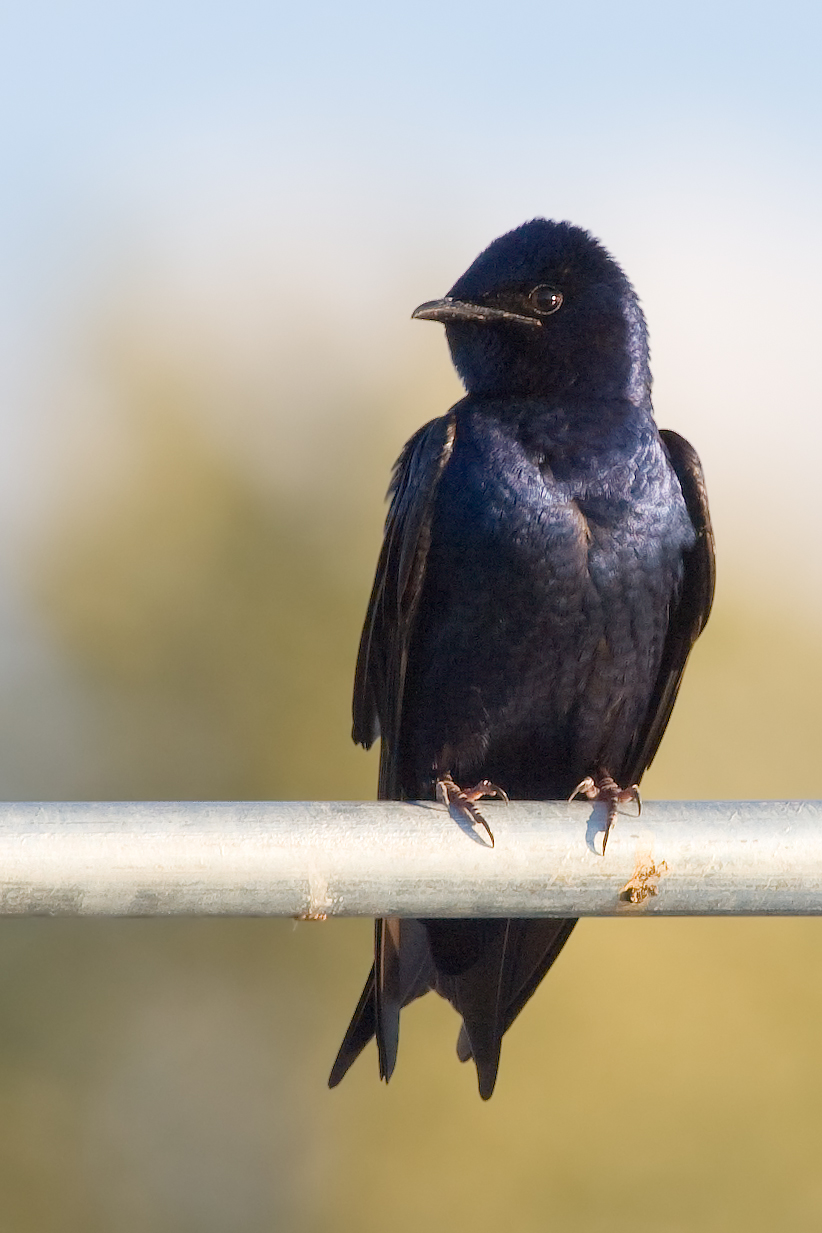 Purple MartinProgne subis
-
 Welcome SwallowHirundo neoxena
-
 Tree SwallowTachycineta bicolor
-
 Sand MartinRiparia riparia
Compare
Questions and answers
What is the scientific name of the Western House Martin?
The scientific name of the Western House Martin is Delichon urbicum. Written with its author, the full name is Delichon urbicum (Linnaeus, 1758).
Which family does the Western House Martin belong to?
Delichon urbicum belongs to the family Hirundinidae, in the order Passeriformes and the class Aves.
Where is the Western House Martin found?
Checklists and occurrence records place Delichon urbicum in 141 countries, including Spain, United Kingdom, Sweden, France, Denmark and Germany.
What is the conservation status of the Western House Martin?
The IUCN Red List category recorded for Delichon urbicum is Least Concern (LC).
What other names does the Western House Martin have?
Delichon urbicum is also known in English as CHMA, Common House-Martin, House Martin, Northern House-martin, Western House-Martin and Common House Martin.
Where do martin birds live?
The Western House Martin breeds across temperate Eurosiberia eastward to central Mongolia and the Yenisei River, as well as in Morocco, Tunisia, and northern Algeria. It winters in sub-Saharan Africa and occupies open country, coastal cliffs, cultivated land, and human habitations, including urban areas and city centres.[9][13][11][14][15][16]
Sources
Passages the profile rests on
- Adults have steel-blue upperparts, a white rump, and white underparts, including the underwings. Source passage: “It is steel-blue above with a white rump, and white underparts, including the underwings” — English Wikipedia
- Adults have brown eyes and a small black bill. Source passage: “It has brown eyes and a small black bill” — English Wikipedia
- The species has pink toes and exposed portions of its legs. Source passage: “its toes and exposed parts of the legs are pink.” — English Wikipedia
- The short legs have white downy feathering. Source passage: “even its short legs have white downy feathering.” — English Wikipedia
- Juveniles are sooty black, with white tips and edges on some wing coverts and quills. Source passage: “the juvenile bird is sooty black, and some of its wing coverts and quills have white tips and edgings.” — English Wikipedia
- Adults measure approximately 13 cm in length. Source passage: “The adult western house martin is 13 cm (5 in) long” — English Wikipedia
- The wingspan ranges from 26 to 29 cm. Source passage: “with a wingspan of 26–29 cm (10–11+1⁄2 in)” — English Wikipedia
- Adults have an average body mass of 18.3 g. Source passage: “and a weight averaging 18.3 g (21⁄32 oz).” — English Wikipedia
- The species prefers open country with low vegetation, including pasture, meadows, and farmland. Source passage: “The preferred habitat of the western house martin is open country with low vegetation, such as pasture, meadows and farmland” — English Wikipedia
- The species generally prefers habitats near water. Source passage: “and preferably near water” — English Wikipedia
- The species occupies open areas, coastal cliffs, cultivated land, and human habitations. Source passage: “This species occupies open areas, coastal cliffs, cultivation, and human habitations” — datazone.birdlife.org
- It occurs in mountains at elevations of at least 2,200 m. Source passage: “although it is also found in mountains up to at least 2,200 m (7,200 ft) elevation.” — English Wikipedia
- The species also occupies urban areas and can nest in city centres. Source passage: “It is much more urban than the barn swallow, and will nest even in city centres if the air is clean enough.” — English Wikipedia
- The breeding range extends across temperate Eurosiberia eastward to central Mongolia and the Yenisei River. Source passage: “The western house martin breeds across temperate Eurosiberia east to central Mongolia and the Yenisei River” — English Wikipedia
- The species also breeds in Morocco, Tunisia, and northern Algeria. Source passage: “and in Morocco, Tunisia and northern Algeria” — English Wikipedia
- The species winters in sub-Saharan Africa. Source passage: “and migrates on a broad front to winter in sub-Saharan Africa.” — English Wikipedia
- The species catches insects while flying. Source passage: “and catches insects in flight.” — English Wikipedia
- Flies and aphids constitute much of its diet in breeding areas. Source passage: “In the breeding areas, flies and aphids make up much of the diet” — English Wikipedia
- Flying ants are important food items in the wintering area. Source passage: “hymenopterans, especially flying ants, are important food items in the wintering area.” — English Wikipedia
- During breeding, the species hunts at an average height of approximately 21 m. Source passage: “This species hunts at an average height of 21 m (69 ft) during the breeding season” — English Wikipedia
- Its typical hunting grounds are within 450 m of the nest. Source passage: “The hunting grounds are typically within 450 m (1,480 ft) of the nest” — English Wikipedia
- On wintering grounds, the species hunts at heights exceeding 50 m. Source passage: “On the wintering grounds, hunting takes place at a greater height of over 50 m (160 ft).” — English Wikipedia
- The species is migratory and moves on a broad migration front. Source passage: “The western house martin is a migrant which moves on a broad front” — English Wikipedia
- Migrating individuals generally travel during daylight. Source passage: “and they usually travel in daylight.” — English Wikipedia
- The species frequently breeds in colonies. Source passage: “The western house martin tends to breed colonially” — English Wikipedia
- Its breeding nests may be constructed in contact with one another. Source passage: “and nests may be built in contact with each other.” — English Wikipedia
- Pairs generally remain together for life once established. Source passage: “Once established, pairs remain together to breed for life” — English Wikipedia
- The species is socially monogamous despite frequent extra-pair copulations. Source passage: “making this species genetically polygamous, despite being socially monogamous.” — English Wikipedia
- The species produces a soft song of melodious chirps throughout the year. Source passage: “The male's song, given throughout the year, is a soft twitter of melodious chirps.” — English Wikipedia
- The species constructs closed, convex cup-shaped nests beneath suitable ledges. Source passage: “The nest is a neat closed convex cup fixed below a suitable ledge” — English Wikipedia
- Both sexes construct nests using mud pellets collected in their beaks. Source passage: “It is constructed by both sexes with mud pellets collected in their beaks” — English Wikipedia
- Nest interiors are lined with grasses, hair, or other soft materials. Source passage: “and lined with grasses, hair or other soft materials.” — English Wikipedia
- Females usually lay four or five white eggs. Source passage: “Four or five white eggs are usually laid” — English Wikipedia
- Eggs average 1.9 cm by 1.33 cm in dimensions. Source passage: “which average 1.9 cm × 1.33 cm (3⁄4 in × 17⁄32 in) in size” — English Wikipedia
- Eggs have an average mass of 1.7 g. Source passage: “and weigh 1.7 g (1⁄16 oz).” — English Wikipedia
- Females perform most of the incubation. Source passage: “The female does most of the incubation” — English Wikipedia
- Incubation normally lasts 14–16 days. Source passage: “which normally lasts 14–16 days.” — English Wikipedia
- Young birds leave the nest approximately 22–32 days after hatching, depending on weather. Source passage: “after a further 22–32 days, depending on weather, the chicks leave the nest.” — English Wikipedia
- Parents continue feeding fledged young for approximately one week after they leave the nest. Source passage: “The fledged young stay with, and are fed by, the parents for about a week after leaving the nest.” — English Wikipedia
- The species normally produces two broods annually. Source passage: “There are normally two broods each year” — English Wikipedia
- Third broods are not uncommon. Source passage: “Third broods are not uncommon” — English Wikipedia
- The species is classified as Least Concern on the IUCN Red List. Source passage: “the species is evaluated as least concern on the IUCN Red List” — English Wikipedia
- The species has an estimated global geographic range of 30.8 million square kilometres. Source passage: “with an estimated global extent of 30,800,000 km2 (11,900,000 sq mi).” — English Wikipedia
- The European population is estimated at 22–47 million individuals. Source passage: “Its European population is estimated to be 22–47 million individuals.” — English Wikipedia
- Population numbers indicate a declining trend in Europe and Britain. Source passage: “In Europe and Britain, however, population numbers indicate a declining trend” — English Wikipedia
- The species uses human-made structures as nesting sites. Source passage: “It now largely uses human structures such as bridges and houses.” — English Wikipedia
Data
- Catalogue of Life, 2026-10-16 XR cc by
- Global Biodiversity Information Facility CC BY 4.0
- Wikidata CC0
- GeoNames CC BY 4.0
- Wikimedia Commons per image; credit shown with each image
- Within the Catalogue of Life, this name comes from The Integrated Taxonomic Information System cc0
References
- Syst. Nat. ed. 10 p. 192 where the name was published
- Dickinson, Edward C., ed. (2003). The Howard and Moore Complete Checklist of the Birds of the World, 3rd Edition.
- American Ornithologists’ Union. (2004). Forty-fifth supplement to the American Ornithologists’ Union Check-list of North American birds. The Auk, Vol. 121, No. 3.
- Howell, Steve N. G., Ian Lewington, and Will Russell. (2014). Rare Birds of North America.
This species in other databases
- Catalogue of Life 34GHX
- Wikidata Q26055
- iNaturalist 64705
- WoRMS urn:lsid:marinespecies.org:taxname:212752
- Avibase comhom1
Page built on 27 November 2026. See how the catalog is made and all sources and licences.
Cite this page
ScientificNames.org. (2026). Delichon urbicum (Western House Martin). Retrieved November 27, 2026, from https://scientificnames.org/species/delichon-urbicum
“Delichon urbicum (Western House Martin).” ScientificNames.org, 2026, scientificnames.org/species/delichon-urbicum. Accessed 27 Nov. 2026.
ScientificNames.org. “Delichon urbicum (Western House Martin).” Accessed November 27, 2026. https://scientificnames.org/species/delichon-urbicum.
@misc{scientificnames_delichon_urbicum_western_house_martin,
  author = {{ScientificNames.org}},
  title = {Delichon urbicum (Western House Martin)},
  year = {2026},
  url = {https://scientificnames.org/species/delichon-urbicum},
  note = {Accessed 2026-11-27}
}