Species · Birds
Asian House Martin Delichon dasypus
The scientific name of the Asian House Martin is Delichon dasypus. It is a species of bird in the family Hirundinidae (swallow), order Passeriformes. The name dates from 1850.
- Scientific name
- Delichon dasypus (Bonaparte, 1850)
- Common name
- Asian House Martin
- Genus
- Delichon
- Family
- Hirundinidae (Swallow)
- Order
- Passeriformes
- Class
- Aves
- Red List category
- LC Least Concern
- Recorded in
- 28 countries
- Name status
- accepted in the Catalogue of Life

Overview
The Asian House Martin (Delichon dasypus) is a migratory passerine bird in the family Hirundinidae, order Passeriformes and class Aves. It breeds in southeastern Russia, the Kuril Islands, Japan, Korea, the Himalayas and parts of China, and winters in Southeast Asia and lower-elevation areas of the Himalayas. Adults of the nominate subspecies have dark steel-blue upperparts, a contrasting white rump, grey-washed white underparts and a slightly forked tail.
Written 26 November 2026 from the sources listed below. Each statement was checked against the passage it cites; statements that could not be supported were removed.
Appearance
Adults of the nominate subspecies have dark steel-blue upperparts, a contrasting white rump, grey-washed white underparts and a slightly forked tail. The tail and upperwings are brownish-black, while the underwings are grey-brown.[1][2]
The legs and feet are brownish-pink and covered with white feathers. The eyes are brown and the bill is black.[3]
Males are somewhat whiter underneath than females, particularly when their plumage is fresh. Juveniles have less glossy plumage, dark brown upperparts and grey-white underparts.[4][5]
The Himalayan subspecies has brighter blue upperparts and a whiter rump than the nominate subspecies.[6]
The species has a rippling metallic trill or sibilant twitter as its song and a dry metallic call that often has two or three syllables.[7]
Adults of the nominate subspecies measure 12 cm in length.[8]
Habitat
The species prefers valleys and gorges in mountainous regions and coastal cliffs that provide natural caves or crevices for nesting. It also breeds on large man-made structures, including temples, hotels and power stations.[9][10]
In wintering areas, the species generally moves to lower-altitude open or hilly country. The Himalayan subspecies occurs at elevations between 1,500 and 5,000 metres, mainly between 2,400 and 4,000 metres.[11][12]
The species has been recorded at elevations up to 2,565 metres in Thailand during winter.[13]
Diet
The Asian House Martin feeds on small insects caught in flight, usually at high elevations in the air. Its diet includes small flies, aphids and winged ants.[14][15]
Other insects consumed include Lepidoptera, beetles and lacewings. The species sometimes collects terrestrial springtails and Lepidoptera larvae from the ground.[16][17]
Behaviour
The Asian House Martin is a migratory passerine bird. It breeds in colonies beneath overhangs on vertical cliffs, generally keeping individual nests separate.[18][19]
Its nests are generally mud structures shaped like deep cones and lined with grasses or feathers. The species frequently leaves its nest enclosure incomplete, producing an open nest.[20][21]
The Himalayan subspecies has also been recorded building shallow cup-shaped nests. In one Russian study, half of the nests in the Baikal research area were open-type nests.[22][23]
Some individuals remain around hot springs in Japan during winter.[24]
Reproduction and life cycle
The usual clutch contains three or four eggs, although clutches of up to six eggs occasionally occur. The eggs average 20.2 mm by 14.1 mm and weigh 2.1 g.[25][26]
Both sexes participate in nest construction, egg incubation and feeding the chicks.[27]
Conservation
The Asian House Martin is classified as Least Concern by the IUCN. Its extent of occurrence is 16,500,000 square kilometres for its resident and breeding range.[28][29]
The species has a large geographic range that does not appear to be contracting, and its population appears stable. The total population is unknown.[30][31]
The species is locally abundant and appears to be expanding northwards in southern Siberia.[32]
Similar species
Compared with the common house martin, the Asian House Martin has darker underparts and a less deeply forked tail.[33]
Classification of the Asian House Martin
| Kingdom | Animalia |
|---|---|
| Phylum | Chordata |
| Subphylum | Vertebrata |
| Infraphylum | Gnathostomata |
| Parvphylum | Osteichthyes |
| Megaclass | Tetrapoda |
| Class | Aves (Bird) |
| Order | Passeriformes (Passerine) |
| Family | Hirundinidae (Swallow) |
| Genus | Delichon (House-Martins) |
| Species | Delichon dasypus (Bonaparte, 1850) |
Where the Asian House Martin is found
Checklists and occurrence records place Delichon dasypus in 28 countries across Asia and Oceania. GBIF holds 44,616 georeferenced records of it.
Countries
- Australia 4
- Bangladesh 5
- Bhutan 422
- Cambodia 119
- China 6,684
- Christmas Island 30
- Cocos Islands 6
- Hong Kong 607
- India 1,155
- Indonesia 210
- Israel 19
- Japan 10,637
- Laos 122
- Macao 3
- Malaysia 263
- Mongolia 57
- Myanmar 235
- Nepal 618
- North Korea 4
- Pakistan 64
- Philippines 43
- Russia 220
- Singapore 205
- South Korea 195
- Sri Lanka 7
- Taiwan 19,070
- Thailand 3,071
- Vietnam 541
Regions and cities with the most records
- Taiwan, Taiwan 13,243
- Sichuan, China 2,650
- Tokyo, Japan 1,888
- Den’enchōfu, Japan 1,865
- Asagaya-minami, Japan 1,846
- Komae, Japan 1,843
- Noborito, Japan 1,831
- Nakano, Japan 1,813
- Tokyo, Japan 1,784
- Azamino, Japan 1,766
- Minato City, Japan 1,728
- Chūō, Japan 1,709
- Shimo’ochiai, Japan 1,709
- Machida, Japan 1,683
- Ebara, Japan 1,667
- Kanagawa, Japan 1,631
- Ōta, Japan 1,613
- Tōyō, Japan 1,595
- Kawasaki, Japan 1,572
- Kita, Japan 1,534
- Chōfu, Japan 1,500
- Kunitachi, Japan 1,496
- Koganei, Japan 1,493
- Chiang Mai, Thailand 1,491
- Musashino, Japan 1,488
- Nishi-Tokyo-shi, Japan 1,460
- Sekimachi-minami, Japan 1,457
- Shimoigusa, Japan 1,457
- Kamiigusa, Japan 1,450
- Tama, Japan 1,440
- Higashikurume, Japan 1,409
- Fuchū, Japan 1,407
- Kodaira, Japan 1,401
- Inagi, Japan 1,362
- Kokubunji, Japan 1,336
- Ōizumi-gakuenchō, Japan 1,327
Range as the checklists state it
Europe & Northern Asia (excluding China)
Southern Asia
Oceania
A number beside a place is its count of GBIF occurrence records. A place without a number comes from a checklist alone. Records show where a species has been observed or collected, which can include escapes and vagrants.
Common names
English
- Asian House Martin
- Asian House-Martin
Names in 36 other languages
- Arabic
- خطاف المنازل الاسيوي, سنونو أبيض البطن الاسيوي
- Bulgarian
- Азиатска лястовица
- Catalan
- oreneta cuablanca asiàtica
- Chinese
- 東方毛腳燕, 烟腹毛脚燕, 煙腹毛腳燕〔東方毛腳燕〕
- Croatian
- azijski piljak
- Czech
- jiřička asijská
- Danish
- Asiatisk Bysvale
- Dutch
- Aziatische Huiszwaluw
- Esperanto
- azia hirundo
- Estonian
- ida-räästapääsuke
- Finnish
- aasianräystäspääsky
- French
- Hirondelle de Bonaparte
- German
- Asiatische Mehlschwalbe, Kaschmir-Schwalbe, Kaschmirschwalbe
- Hebrew
- טסית אסייתית
- Hungarian
- ázsiai molnárfecske
- Indonesian
- Layang-layang rumah
- Irish
- Gabhlán ti Áiseach
- Italian
- Balestruccio asiatico
- Japanese
- イワツバメ
- Kazakh
- Шығыс қарлығашы
- Korean
- 흰털발제비
- Latvian
- Āzijas čurkste
- Lithuanian
- rytinė langinė kregždė
- Malayalam
- വെള്ളിക്കറുപ്പൻ കത്രിക
- Norwegian
- orienttaksvale
- Polish
- oknówka wschodnia
- Portuguese
- Andorinha-dos-beirais-asiática, andorinha-asiática, andorinha-de-bando
- Russian
- Восточный воронок
- Serbian
- Azijska gradska lasta
- Slovak
- belorítka východná
- Spanish
- Avión asiático
- Swedish
- orienthussvala
- Thai
- นกนางแอ่นมาตินพันธุ์เอเชียใต้, นกนางแอ่นมาตินพันธุ์เอเซียใต้
- Turkish
- Asya Ev Kırlangıcı
- Ukrainian
- ластівка азійська
- Welsh
- gwennol bondo Asia
Synonyms
2 other scientific names have been used for this species and are now treated as synonyms of Delichon dasypus.
- Chelidon dasypus Bonaparte, 1850
- Delichon urbica dasypus Bonaparte, CLJL, 1850
Subspecies and varieties
- Delichon dasypus cashmeriense subspecies
- Delichon dasypus dasypus subspecies
- Delichon dasypus nigrimentale subspecies
Related species
-
 Western House MartinDelichon urbicum
-
 Nepal House MartinDelichon nipalense
-
 Siberian House MartinDelichon lagopodum
-
 Barn SwallowHirundo rustica
-
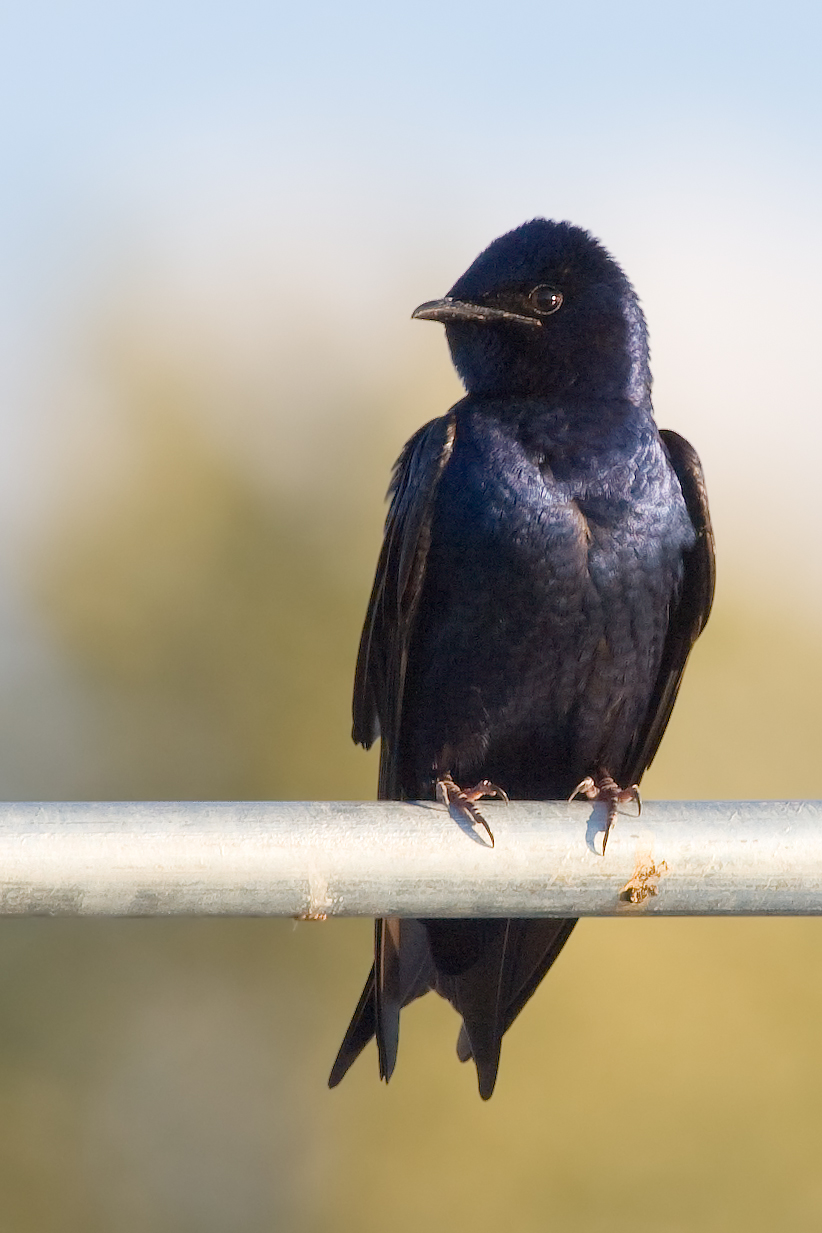 Purple MartinProgne subis
-
 Welcome SwallowHirundo neoxena
-
 Tree SwallowTachycineta bicolor
-
 Sand MartinRiparia riparia
Compare
Questions and answers
What is the scientific name of the Asian House Martin?
The scientific name of the Asian House Martin is Delichon dasypus. Written with its author, the full name is Delichon dasypus (Bonaparte, 1850).
Which family does the Asian House Martin belong to?
Delichon dasypus belongs to the family Hirundinidae, in the order Passeriformes and the class Aves.
Where is the Asian House Martin found?
Checklists and occurrence records place Delichon dasypus in 28 countries, including Taiwan, Japan, China, Thailand, India and Nepal.
What is the conservation status of the Asian House Martin?
The IUCN Red List category recorded for Delichon dasypus is Least Concern (LC).
What other names does the Asian House Martin have?
Delichon dasypus is also known in English as Asian House-Martin.
What does a martin bird eat?
The Asian House Martin feeds on small insects caught in flight, usually at high elevations in the air. Its diet includes small flies, aphids, winged ants, Lepidoptera, beetles and lacewings. It sometimes collects terrestrial springtails and Lepidoptera larvae from the ground.[14][15][16][17]
Sources
Passages the profile rests on
- Adult birds of the nominate subspecies have dark steel-blue upperparts, a contrasting white rump, grey-washed white underparts and a slightly forked tail. Source passage: “dark steel blue above with a contrasting white rump, grey-washed white underparts, and a slightly forked tail.” — English Wikipedia
- The tail and upperwings are brownish-black, while the underwings are grey-brown. Source passage: “The tail and upperwings are brownish-black, and the underwings are grey-brown.” — English Wikipedia
- Its legs and feet are brownish-pink and covered with white feathers, its eyes are brown and its bill is black. Source passage: “The legs and feet are brownish-pink and covered with white feathers, the eyes are brown, and the bill is black.” — English Wikipedia
- Males are somewhat whiter underneath than females, particularly when their plumage is fresh. Source passage: “the male is somewhat whiter below than the female, especially in fresh plumage.” — English Wikipedia
- Juveniles have less glossy plumage, dark brown upperparts and grey-white underparts. Source passage: “The juvenile bird is less glossy and has dark brown upperparts, sometimes with a brownish wash to the rump, and grey-white underparts.” — English Wikipedia
- The Himalayan subspecies has brighter blue upperparts and a whiter rump than the nominate subspecies. Source passage: “D. d. cashmiriensis has brighter blue upperparts and a whiter rump than the slightly larger nominate race.” — English Wikipedia
- The species has a rippling metallic trill or sibilant twitter as its song and a dry metallic call that often has two or three syllables. Source passage: “This species' song is a rippling metallic trill or sibilant twitter, and its call is a dry metallic cheep, often with two or three syllables.” — English Wikipedia
- Adults of the nominate subspecies measure 12 cm in length. Source passage: “The adult Asian house martin of the nominate subspecies is 12 cm (4.7 in) long” — English Wikipedia
- The species prefers valleys and gorges in mountainous regions and coastal cliffs that provide natural caves or crevices for nesting. Source passage: “The preferred habitat of the Asian house martin is valleys and gorges in mountainous areas or coastal cliffs, where natural caves or crevices provide nest sites.” — English Wikipedia
- The species also breeds on large man-made structures, including temples, hotels and power stations. Source passage: “It will also breed on large man-made sites like temples, hotels or power stations.” — English Wikipedia
- In wintering areas, the species generally moves to lower-altitude open or hilly country. Source passage: “This martin tends to move to lower altitude open or hilly country in its wintering areas” — English Wikipedia
- The Himalayan subspecies occurs at elevations between 1,500 and 5,000 metres, mainly between 2,400 and 4,000 metres. Source passage: “It is found between 1,500–5,000 m (4,900–16,400 ft) altitude, although mainly in the 2,400–4,000 m (7,900–13,100 ft) range.” — English Wikipedia
- The species has been recorded at elevations up to 2,565 metres in Thailand during winter. Source passage: “although it has been recorded at up to 2,565 m (8,415 ft) in Thailand.” — English Wikipedia
- The Asian house martin feeds on small insects caught in flight, usually at high elevations in the air. Source passage: “The Asian house martin feeds on small insects taken in flight, usually caught high in the air.” — English Wikipedia
- Its diet includes small flies, aphids and winged ants. Source passage: “taking mostly small flies, aphids and Hymenoptera such as winged ants.” — English Wikipedia
- Other insects consumed include Lepidoptera, beetles and lacewings. Source passage: “A wide range of other insects are caught, including Lepidoptera, beetles and lacewings.” — English Wikipedia
- The species sometimes collects terrestrial springtails and Lepidoptera larvae from the ground. Source passage: “The presence in the diet of terrestrial springtails and Lepidoptera larvae indicates that food is sometimes picked from the ground.” — English Wikipedia
- The Asian house martin is a migratory passerine bird. Source passage: “The Asian house martin (Delichon dasypus) is a migratory passerine bird” — English Wikipedia
- The species breeds in colonies beneath overhangs on vertical cliffs, generally keeping individual nests separate. Source passage: “breeding in colonies sited under an overhang on a vertical cliff, usually with the nests not touching.” — English Wikipedia
- Its nests are generally mud structures shaped like deep cones and lined with grasses or feathers. Source passage: “The nest is a deep mud cone lined with grasses or feathers.” — English Wikipedia
- The species frequently leaves its nest enclosure incomplete, producing an open nest. Source passage: “the Asian house martin frequently does not complete the enclosure of its nest, leaving it open instead like a deeper version of a barn swallow nest.” — English Wikipedia
- The Himalayan subspecies has also been recorded building shallow cup-shaped nests. Source passage: “the Himalayan subspecies D. d. cashmiriensis has also been recorded as building a shallow cup nest.” — English Wikipedia
- In one Russian study, half of the nests in the Baikal research area were open-type nests. Source passage: “A Russian study found half the nests in its Baikal research area to be of the open type” — English Wikipedia
- Some individuals remain around hot springs in Japan during winter. Source passage: “a few birds remain around hot springs in Japan.” — English Wikipedia
- The eggs average 20.2 mm by 14.1 mm and weigh 2.1 g. Source passage: “eggs averaging 20.2 mm × 14.1 mm (0.80 in × 0.56 in) and weighing 2.1 g (0.074 oz).” — English Wikipedia
- The usual clutch contains three or four eggs, although clutches of up to six eggs occasionally occur. Source passage: “The normal clutch is three or four (occasionally up to six) plain white eggs” — English Wikipedia
- Both sexes participate in nest construction, egg incubation and feeding the chicks. Source passage: “Both sexes build the nest, incubate the eggs and feed the chicks.” — English Wikipedia
- The species has an extent of occurrence of 16,500,000 square kilometres for its resident and breeding range. Source passage: “Extent of Occurrence (resident/breeding) 16,500,000 km²” — datazone.birdlife.org
- The Asian house martin is classified as Least Concern by the IUCN. Source passage: “is currently evaluated as Least Concern by the IUCN.” — English Wikipedia
- The species has a large geographic range that does not appear to be contracting, and its population appears stable. Source passage: “The Asian house martin has a large range that does not appear to be contracting, and its numbers appear to be stable” — English Wikipedia
- The total population of the species is unknown. Source passage: “although the total population is unknown.” — English Wikipedia
- The species is locally abundant and appears to be expanding northwards in southern Siberia. Source passage: “This species is locally abundant and appears to be expanding its range northwards in southern Siberia.” — English Wikipedia
- Compared with the common house martin, the Asian house martin has darker underparts and a less deeply forked tail. Source passage: “The Asian house martin is more similar to the common house martin, but is darker underneath and has a less deeply forked tail.” — English Wikipedia
Data
- Catalogue of Life, 2026-10-16 XR cc by
- Global Biodiversity Information Facility CC BY 4.0
- Wikidata CC0
- GeoNames CC BY 4.0
- Wikimedia Commons per image; credit shown with each image
- Within the Catalogue of Life, this name comes from The Integrated Taxonomic Information System cc0
References
- Gill, Frank, & and Minturn Wright. (2006). Birds of the World: Recommended English Names.
This species in other databases
Page built on 27 November 2026. See how the catalog is made and all sources and licences.
Cite this page
ScientificNames.org. (2026). Delichon dasypus (Asian House Martin). Retrieved November 27, 2026, from https://scientificnames.org/species/delichon-dasypus
“Delichon dasypus (Asian House Martin).” ScientificNames.org, 2026, scientificnames.org/species/delichon-dasypus. Accessed 27 Nov. 2026.
ScientificNames.org. “Delichon dasypus (Asian House Martin).” Accessed November 27, 2026. https://scientificnames.org/species/delichon-dasypus.
@misc{scientificnames_delichon_dasypus_asian_house_martin,
  author = {{ScientificNames.org}},
  title = {Delichon dasypus (Asian House Martin)},
  year = {2026},
  url = {https://scientificnames.org/species/delichon-dasypus},
  note = {Accessed 2026-11-27}
}