Species · Flowering plants
Desert Twinbugs Dicoria canescens
The scientific name of the Desert Twinbugs is Dicoria canescens. It is a species of flowering plant in the family Asteraceae (composite), order Asterales.
- Scientific name
- Dicoria canescens A.Gray
- Common name
- Desert Twinbugs
- Genus
- Dicoria
- Family
- Asteraceae (Composite)
- Order
- Asterales
- Class
- Magnoliopsida
- Recorded in
- 2 countries
- Name status
- accepted in the Catalogue of Life
Overview
Dicoria canescens grows in desert sand and occurs in the southwestern United States and northwestern Mexico. It is distinguished by whitish flower heads that sometimes occur in closely associated pairs.
Written 27 November 2026 from the sources listed below. Each statement was checked against the passage it cites; statements that could not be supported were removed.
Appearance
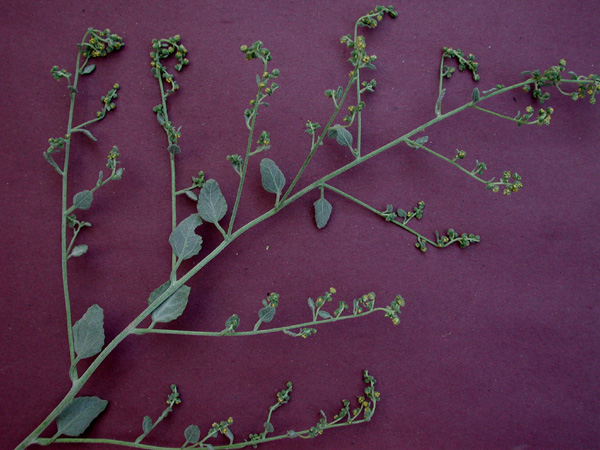
Desert Twinbugs has long, pointed lower leaves with sharply toothed edges and thin white or gray hairs. Its upper leaves are smaller and rounder than its lower leaves.[1][2]
The plant produces whitish flower heads containing disc florets but lacking ray florets. Its flower heads sometimes occur in closely associated pairs.[3][4]
Classification of the Desert Twinbugs
| Kingdom | Plantae |
|---|---|
| Subkingdom | Pteridobiotina |
| Phylum | Tracheophyta |
| Class | Magnoliopsida |
| Order | Asterales |
| Family | Asteraceae (Composite) |
| Subfamily | Asteroideae |
| Tribe | Heliantheae |
| Subtribe | Ambrosiinae |
| Genus | Dicoria (Twinbugs) |
| Species | Dicoria canescens A.Gray |
Where the Desert Twinbugs is found
Checklists and occurrence records place Dicoria canescens in 2 countries across North America. GBIF holds 2,127 georeferenced records of it.
Countries
Regions and cities with the most records
- California, United States 1,152
- Palm Springs, United States 291
- Cathedral City, United States 277
- Rancho Mirage, United States 263
- Palm Desert, United States 243
- Desert Hot Springs, United States 203
- Arizona, United States 184
- La Quinta, United States 160
- Indio, United States 146
- Coachella, United States 98
- Nevada, United States 95
- Utah, United States 81
- Baja California, Mexico 48
- Banning, United States 32
- Yuma, United States 26
- Somerton, United States 24
- Sonora, Mexico 24
- Mesa, United States 20
- Phoenix, United States 19
- Scottsdale, United States 19
- Tempe, United States 19
- Tempe Junction, United States 19
- Avondale, United States 18
- Fortuna Foothills, United States 18
- Goodyear, United States 18
- Saint George, United States 17
- Washington, United States 16
- Bloomington, United States 14
- Colton, United States 14
- Fontana, United States 14
- Gilbert, United States 14
- Glen Avon, United States 14
- Highland, United States 14
- Jurupa Valley, United States 14
- Loma Linda, United States 14
- Moreno Valley, United States 14
A number beside a place is its count of GBIF occurrence records. A place without a number comes from a checklist alone. Records show where a species has been observed or collected, which can include escapes and vagrants.
Common names
English
- Desert Twinbugs
- Desert Dicoria
Synonyms
One other scientific name has been used for this species and is now treated as a synonym of Dicoria canescens.
- Dicoria canescens var. canescens
Subspecies and varieties
- Dicoria canescens subsp. brandegeei subspecies
- Dicoria canescens subsp. canescens subspecies
- Dicoria canescens subsp. clarkiae subspecies
- Dicoria canescens subsp. hispidula subspecies
- Dicoria canescens subsp. wetherillii subspecies
Related species
- Dicoria argentea
-
 Jerusalem ArtichokeHelianthus tuberosus
-
 ChicoryCichorium intybus
-
 Absinthe WormwoodArtemisia absinthium
-
 Common SunflowerHelianthus annuus
-
 Common YarrowAchillea millefolium
-
 LettuceLactuca sativa
-
 TarragonArtemisia dracunculus
Compare
Questions and answers
What is the scientific name of the Desert Twinbugs?
The scientific name of the Desert Twinbugs is Dicoria canescens. Written with its author, the full name is Dicoria canescens A.Gray.
Which family does the Desert Twinbugs belong to?
Dicoria canescens belongs to the family Asteraceae, in the order Asterales and the class Magnoliopsida.
Where is the Desert Twinbugs found?
Checklists and occurrence records place Dicoria canescens in 2 countries: United States and Mexico.
What other names does the Desert Twinbugs have?
Dicoria canescens is also known in English as Desert Dicoria.
Where does Desert Twinbugs occur?
It occurs in the southwestern United States and northwestern Mexico. Its documented range includes Sonora, Baja California, southern California, Nevada, Arizona, Utah, southwestern Colorado, and northwestern New Mexico.[5][6]
Sources
Passages the profile rests on
- The plant has long, pointed lower leaves with sharply toothed edges and thin white or gray hairs. Source passage: “The distinctive lower leaves are long, pointed, sharply toothed, and covered in a coat of thin white or gray hairs.” — English Wikipedia
- Its upper leaves are smaller and rounder than its lower leaves. Source passage: “The upper leaves are smaller and more rounded.” — English Wikipedia
- The plant produces whitish flower heads containing disc florets but lacking ray florets. Source passage: “One plant can produce several whitish flower heads containing disc florets but no ray florets.” — English Wikipedia
- Its flower heads sometimes occur in closely associated pairs. Source passage: “Sometimes the heads form closely associated pairs” — English Wikipedia
- The species occurs in the southwestern United States and northwestern Mexico. Source passage: “This is a desert plant of the southwestern United States and northwestern Mexico” — English Wikipedia
- Its documented range includes Sonora, Baja California, southern California, Nevada, Arizona, Utah, southwestern Colorado, and northwestern New Mexico. Source passage: “found in Sonora, Baja California, southern California, Nevada, Arizona, Utah, southwestern Colorado, and northwestern New Mexico.” — English Wikipedia
- The common name twinbugs refers to the occasional pairing of the plant's flower heads. Source passage: “Sometimes the heads form closely associated pairs, a characteristic which is the origin of the common name "twinbugs".” — English Wikipedia
- The species is also known by the common name bugseed. Source passage: “known by several common names including desert twinbugs and bugseed.” — English Wikipedia
- The USDA plant profile lists Dicoria canescens A. Gray under the common name desert twinbugs. Source passage: “Dicoria canescens A. Gray desert twinbugs” — plants.sc.egov.usda.gov
- The U.S. Fish and Wildlife Service identifies the species by the common name desert twinbugs. Source passage: “Scientific Name Dicoria canescens Common Name desert twinbugs” — fws.gov
Data
- Catalogue of Life, 2026-10-16 XR cc by
- Global Biodiversity Information Facility CC BY 4.0
- Wikidata CC0
- GeoNames CC BY 4.0
- Wikimedia Commons per image; credit shown with each image
- Within the Catalogue of Life, this name comes from Synonymic Checklists of the Vascular Plants of the World cc by
References
- Gray, A. where the name was published
This species in other databases
- Catalogue of Life 35QM4
- Wikidata Q5273881
- iNaturalist 76652
- World Flora Online wfo-0000135258
- GRIN 452131
Page built on 29 November 2026. See how the catalog is made and all sources and licences.
Cite this page
ScientificNames.org. (2026). Dicoria canescens (Desert Twinbugs). Retrieved November 29, 2026, from https://scientificnames.org/species/dicoria-canescens
“Dicoria canescens (Desert Twinbugs).” ScientificNames.org, 2026, scientificnames.org/species/dicoria-canescens. Accessed 29 Nov. 2026.
ScientificNames.org. “Dicoria canescens (Desert Twinbugs).” Accessed November 29, 2026. https://scientificnames.org/species/dicoria-canescens.
@misc{scientificnames_dicoria_canescens_desert_twinbugs,
  author = {{ScientificNames.org}},
  title = {Dicoria canescens (Desert Twinbugs)},
  year = {2026},
  url = {https://scientificnames.org/species/dicoria-canescens},
  note = {Accessed 2026-11-29}
}