Species · Flowering plants
False Yellowhead Dittrichia viscosa
The scientific name of the False Yellowhead is Dittrichia viscosa. It is a species of flowering plant in the family Asteraceae (composite), order Asterales.
- Scientific name
- Dittrichia viscosa (L.) Greuter
- Common name
- False Yellowhead
- Genus
- Dittrichia
- Family
- Asteraceae (Composite)
- Order
- Asterales
- Class
- Magnoliopsida
- Recorded in
- 36 countries
- Name status
- accepted in the Catalogue of Life

Overview
False yellowhead is a highly branching perennial plant. It commonly occurs along roadsides and in ruderal habitats, including urban areas, and is common throughout the Mediterranean Basin. It has sticky foliage, an unpleasant odour and yellow flower heads.
Written 26 November 2026 from the sources listed below. Each statement was checked against the passage it cites; statements that could not be supported were removed.
Diet
False yellowhead provides food for caterpillars of certain butterflies and moths, including Iolana iolas.[1]
Behaviour
False yellowhead is a highly branching perennial plant.[2]
Reproduction and life cycle
A single plant can produce numerous yellow flower heads.[3]
Each flower head can contain up to 16 ray florets and 44 disc florets.[4]
Conservation
False yellowhead is highly resistant to adverse conditions and degraded environments.[5]
The species is considered invasive in Australia.[6]
Uses
The essential oil of false yellowhead has been used in traditional medicine since ancient times, particularly in the Levant, as an astringent.[7]
Residents and tourists on Elba Island and Corsica use fresh leaves pressed onto the skin to treat jellyfish, bee and wasp stings.[8]
The roots have been used to produce a yellow dye since ancient times.[9]
Similar species
Erigeron viscosus and Inula viscosa are listed as synonyms of Dittrichia viscosa.[10][11]
Appearance
False yellowhead has long, narrow leaves with pointed ends, toothed margins and glandular hairs on their surfaces. Its foliage is sticky and has an odour that most people find unpleasant.[12][13]
The plant produces yellow flower heads, each of which can contain up to 16 ray florets and 44 disc florets.[14][4]
Habitat
False yellowhead originally occurred mainly in dry riverbeds and abandoned fields. It commonly occurs along roadsides and in ruderal habitats, including urban areas.[15][16]
The species is common throughout the Mediterranean Basin and occurs at elevations up to 1,500 metres in its originally described habitats.[17][18]
Classification of the False Yellowhead
| Kingdom | Plantae |
|---|---|
| Subkingdom | Pteridobiotina |
| Phylum | Tracheophyta |
| Class | Magnoliopsida |
| Order | Asterales |
| Family | Asteraceae (Composite) |
| Subfamily | Asteroideae |
| Tribe | Inuleae |
| Subtribe | Inulinae |
| Genus | Dittrichia (Stinkwort) |
| Species | Dittrichia viscosa (L.) Greuter |
Where the False Yellowhead is found
Checklists and occurrence records place Dittrichia viscosa in 36 countries across Africa, Asia, Europe, Oceania and South America. GBIF holds 77,597 georeferenced records of it.
Countries where it is native or its origin is not stated
- Albania 131
- Algeria 294
- Austria 14
- Belgium 88
- Bosnia and Herzegovina 8
- Bulgaria 4
- Croatia 1,050
- Cyprus 141
- Egypt 4
- France 27,575
- Gibraltar 16
- Greece 1,569
- Iran 3
- Israel 4,440
- Italy 7,853
- Jordan 51
- Lebanon 82
- Libya 6
- Malta 135
- Montenegro 100
- Morocco 272
- Palestinian Territory 113
- Portugal 7,342
- San Marino 5
- Slovenia 107
- Spain 25,699
- Switzerland 11
- Syria 71
- The Netherlands 3
- Tunisia 32
- Turkey 245
- Ukraine 3
- United Kingdom 75
Countries where it has been introduced
Regions and cities with the most records
- Occitanie, France 11,125
- Provence-Alpes-Côte d'Azur, France 10,493
- Valencia, Spain 9,106
- Catalonia, Spain 5,893
- Corsica, France 3,204
- Perpignan, France 2,160
- Tuscany, Italy 2,105
- Castelnau-le-Lez, France 1,964
- Balearic Islands, Spain 1,958
- Montpellier, France 1,944
- Mandelieu-la-Napoule, France 1,911
- La Crau, France 1,899
- Lattes, France 1,865
- Fréjus, France 1,856
- Mauguio, France 1,846
- La Valette-du-Var, France 1,770
- Cannes, France 1,748
- Saint-Raphaël, France 1,728
- Northern District, Israel 1,707
- La Garde, France 1,676
- Le Cannet, France 1,675
- Mougins, France 1,672
- Hyères, France 1,667
- Toulon, France 1,615
- Nice, France 1,561
- Saint-Laurent-du-Var, France 1,527
- Vence, France 1,526
- Sant Cugat del Vallès, Spain 1,522
- Faro, Portugal 1,510
- Rubí, Spain 1,505
- Molins de Rei, Spain 1,501
- Cagnes-sur-Mer, France 1,475
- Madrid, Spain 1,456
- Sant Andreu de la Barca, Spain 1,448
- Vallauris, France 1,436
- Juan-les-Pins, France 1,426
1 more country has a few records outside this range
These countries hold a few records of Dittrichia viscosa but lie outside the range the checklists give for it. Such records are often zoo or garden specimens, museum material or vagrants, so the species is not counted as occurring there.
A number beside a place is its count of GBIF occurrence records. A place without a number comes from a checklist alone. Records show where a species has been observed or collected, which can include escapes and vagrants.
Common names
English
- False Yellowhead
- Woody Fleabane
- Woody-fleabane
Names in 18 other languages
- Croatian
- Ljepljivi bušak, Ljepljivi oman
- Czech
- ditrichie lepkavá
- Dutch
- Kleverige alant
- Finnish
- isotahmakko
- French
- Dittrichie visqueuse, Inule visqueuse
- German
- Großer Klebalant, Klebriger Alant
- Greek
- Διτριχία η ιξώδης
- Hebrew
- טיון דביק
- Italian
- Enula vischiosa
- Polish
- Omanowiec lepki
- Portuguese
- Tádega, tágueda
- Russian
- Диттрихия клейкая
- Slovak
- ditrichia lepkavá
- Slovenian
- lepljiva ditrihovka
- Spanish
- Olivarda
- Swedish
- Klibbkrissla
- Turkish
- Sümenit, Sümerit, Yapışkan Andızotu, Zimerit
- Welsh
- Cedowydd Prennaidd
Synonyms
4 other scientific names have been used for this species and are now treated as synonyms of Dittrichia viscosa.
- Inula viscosa subsp. viscosa
- Inula viscosa var. mideltiana Batt.
- Inula viscosa var. viscosa
- Jacobaea viscosa (L.) Merino
Subspecies and varieties
- Dittrichia viscosa subsp. angustifolia (Narrow-leaved Woody Fleabane) subspecies
- Dittrichia viscosa subsp. maritima subspecies
- Dittrichia viscosa subsp. revoluta subspecies
- Dittrichia viscosa subsp. viscosa subspecies
Related species
-
 StinkwortDittrichia graveolens
-
 Jerusalem ArtichokeHelianthus tuberosus
-
 ChicoryCichorium intybus
-
 Absinthe WormwoodArtemisia absinthium
-
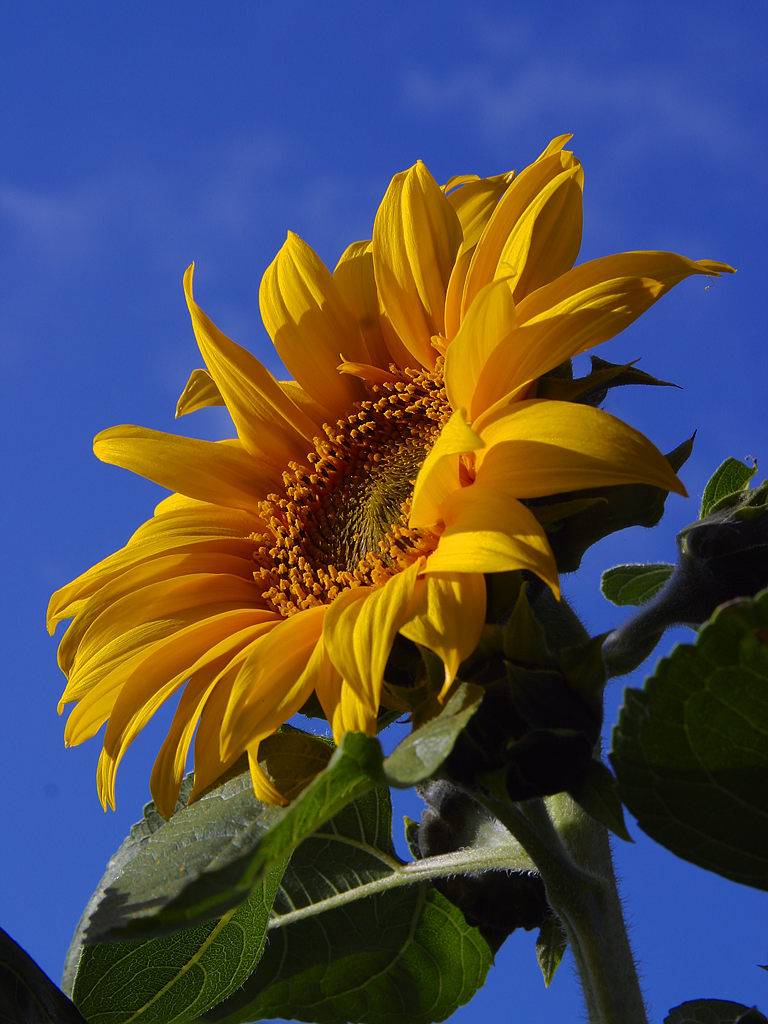 Common SunflowerHelianthus annuus
-
 Common YarrowAchillea millefolium
-
 LettuceLactuca sativa
-
 TarragonArtemisia dracunculus
Compare
Questions and answers
What is the scientific name of the False Yellowhead?
The scientific name of the False Yellowhead is Dittrichia viscosa. Written with its author, the full name is Dittrichia viscosa (L.) Greuter.
Which family does the False Yellowhead belong to?
Dittrichia viscosa belongs to the family Asteraceae, in the order Asterales and the class Magnoliopsida.
Where is the False Yellowhead found?
Checklists and occurrence records place Dittrichia viscosa in 36 countries, including France, Spain, Italy, Portugal, Israel and Greece.
What other names does the False Yellowhead have?
Dittrichia viscosa is also known in English as Woody Fleabane and Woody-fleabane.
Is fleabane useful for anything?
The essential oil of false yellowhead has been used in traditional medicine as an astringent. Fresh leaves are used on the skin to treat jellyfish, bee and wasp stings, and the roots have been used to produce a yellow dye.[7][8][9]
Is fleabane an invasive plant?
False yellowhead is considered invasive in Australia.[6]
Sources
Passages the profile rests on
- Dittrichia viscosa provides food for caterpillars of certain butterflies and moths, including Iolana iolas. Source passage: “It is important as food for the caterpillars of certain butterflies and moths, like Iolana iolas.” — English Wikipedia
- Dittrichia viscosa is highly branching and perennial. Source passage: “Dittrichia viscosa is a highly branching perennial” — English Wikipedia
- A single plant can produce numerous yellow flower heads. Source passage: “One plant can produce many yellow flower heads” — English Wikipedia
- Each flower head can contain up to 16 ray florets and 44 disc florets. Source passage: “each with as many as 16 ray florets and 44 disc florets.” — English Wikipedia
- Dittrichia viscosa is highly resistant to adverse conditions and degraded environments. Source passage: “The false yellowhead is a tough plant, very resistant to adverse conditions and degraded environments.” — English Wikipedia
- The species is considered invasive in Australia. Source passage: “It is considered an invasive species in Australia.” — English Wikipedia
- The plant's essential oil has been used in traditional medicine since ancient times, particularly in the Levant, as an astringent. Source passage: “It contains an essential oil and has been used in traditional medicine since ancient times, especially in the Levant, as an astringent.” — English Wikipedia
- Residents and tourists on Elba Island and Corsica use fresh leaves pressed onto the skin to treat jellyfish, bee and wasp stings. Source passage: “In Elba Island and Corsica it is now used by residents and tourists to heal stings from jellyfish, bees and wasps pressing fresh leaves on the skin with quick results.” — English Wikipedia
- The roots have been used to produce a yellow dye since ancient times. Source passage: “A yellow dye substance has, since ancient times, been produced from its roots.” — English Wikipedia
- Erigeron viscosus is listed as a synonym of Dittrichia viscosa. Source passage: “Synonyms Erigeron viscosus, Inula viscosa” — rhs.org.uk
- Inula viscosa is listed as a synonym of Dittrichia viscosa. Source passage: “Synonyms Erigeron viscosus, Inula viscosa” — rhs.org.uk
- Dittrichia viscosa has long, narrow leaves with pointed ends, toothed margins and glandular hairs on their surfaces. Source passage: “It has long, narrow leaves that are pointed at both ends and have teeth along the edges and glandular hairs on the surfaces.” — English Wikipedia
- The plant has sticky foliage and an odour that most people find unpleasant. Source passage: “this plant is sticky and has a certain smell that most people find unpleasant.” — English Wikipedia
- Dittrichia viscosa produces yellow flower heads. Source passage: “One plant can produce many yellow flower heads” — English Wikipedia
- The species originally occurred mainly in dry riverbeds and abandoned fields. Source passage: “Originally, the species was found mainly in dry riverbeds and abandoned fields” — English Wikipedia
- The species commonly occurs along roadsides and in ruderal habitats, including urban areas. Source passage: “Nowadays it is quite common in roadsides and ruderal habitats, even in urban areas.” — English Wikipedia
- Dittrichia viscosa occurs at elevations up to 1,500 metres in its originally described habitats. Source passage: “Originally, the species was found mainly in dry riverbeds and abandoned fields up to a 1500 m (5000 feet) elevation.” — English Wikipedia
- Dittrichia viscosa is common throughout the Mediterranean Basin. Source passage: “common throughout the Mediterranean Basin.” — English Wikipedia
Data
- Catalogue of Life, 2026-10-16 XR cc by
- Global Biodiversity Information Facility CC BY 4.0
- Wikidata CC0
- GeoNames CC BY 4.0
- Wikimedia Commons per image; credit shown with each image
- Within the Catalogue of Life, this name comes from Synonymic Checklists of the Vascular Plants of the World cc by
References
- (L.) Greuter. where the name was published
This species in other databases
- Catalogue of Life 36ZJB
- Wikidata Q311844
- iNaturalist 82646
- World Flora Online wfo-0000059214
- GRIN 104195
Page built on 29 November 2026. See how the catalog is made and all sources and licences.
Cite this page
ScientificNames.org. (2026). Dittrichia viscosa (False Yellowhead). Retrieved November 29, 2026, from https://scientificnames.org/species/dittrichia-viscosa
“Dittrichia viscosa (False Yellowhead).” ScientificNames.org, 2026, scientificnames.org/species/dittrichia-viscosa. Accessed 29 Nov. 2026.
ScientificNames.org. “Dittrichia viscosa (False Yellowhead).” Accessed November 29, 2026. https://scientificnames.org/species/dittrichia-viscosa.
@misc{scientificnames_dittrichia_viscosa_false_yellowhead,
  author = {{ScientificNames.org}},
  title = {Dittrichia viscosa (False Yellowhead)},
  year = {2026},
  url = {https://scientificnames.org/species/dittrichia-viscosa},
  note = {Accessed 2026-11-29}
}