Species · Reptiles
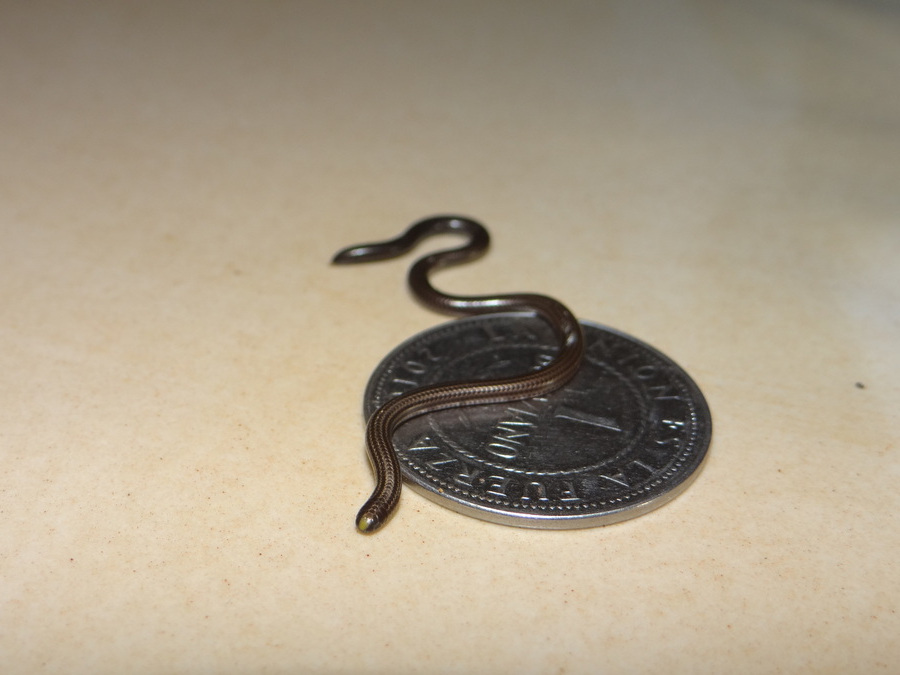
Tucuman Threadsnake Epictia albipuncta
The scientific name of the Tucuman Threadsnake is Epictia albipuncta. It is a species of reptile in the family Leptotyphlopidae (thread snakes), order Squamata. The name dates from 1861.
- Scientific name
- Epictia albipuncta (Burmeister, 1861)
- Common name
- Tucuman Threadsnake
- Genus
- Epictia
- Family
- Leptotyphlopidae (Thread Snakes)
- Order
- Squamata
- Class
- Reptilia
- Red List category
- LC Least Concern
- Recorded in
- 3 countries
- Name status
- accepted in the Catalogue of Life
Overview
Epictia albipuncta is a species of snake in the family Leptotyphlopidae. The species is endemic to South America.
Classification of the Tucuman Threadsnake
| Kingdom | Animalia |
|---|---|
| Phylum | Chordata |
| Subphylum | Vertebrata |
| Infraphylum | Gnathostomata |
| Parvphylum | Osteichthyes |
| Megaclass | Tetrapoda |
| Class | Reptilia (Reptile) |
| Order | Squamata (Snakes) |
| Suborder | Serpentes (Snakes) |
| Infraorder | Scolecophidia |
| Family | Leptotyphlopidae (Thread Snakes) |
| Subfamily | Epictinae |
| Genus | Epictia (Neotropical Thread Snakes) |
| Species | Epictia albipuncta (Burmeister, 1861) |
Where the Tucuman Threadsnake is found
Checklists and occurrence records place Epictia albipuncta in 3 countries across South America. GBIF holds 143 georeferenced records of it.
Countries
Regions and cities with the most records
- Cordoba, Argentina 34
- Santa Fe, Argentina 34
- Santa Fe, Argentina 23
- Santo Tomé, Argentina 22
- La Calera, Argentina 19
- Córdoba, Argentina 15
- Avellaneda, Argentina 8
- Banfield, Argentina 8
- Buenos Aires, Argentina 8
- Cosquín, Argentina 8
- Lanús, Argentina 8
- Monte Chingolo, Argentina 8
- Remedios de Escalada de San Martín, Argentina 8
- Santos Lugares, Argentina 8
- Sarandí, Argentina 8
- Valentín Alsina, Argentina 8
- Villa Sarmiento, Argentina 8
- El Palomar, Argentina 7
- Haedo, Argentina 7
- San Justo, Argentina 7
- Unquillo, Argentina 7
- Villa Carlos Paz, Argentina 7
- Gobernador Gálvez, Argentina 5
- Granadero Baigorria, Argentina 5
- Hurlingham, Argentina 5
- Lomas de Zamora, Argentina 5
- Pérez, Argentina 5
- Rosario, Argentina 5
- San Isidro, Argentina 5
- Santa Cruz Department, Bolivia 4
- Tucuman, Argentina 4
- Capitán Bermúdez, Argentina 3
- La Falda, Argentina 3
- La Paz Department, Bolivia 3
- La Rioja, Argentina 3
- Paraná, Argentina 3
Range as the checklists state it
Argentina (Tucumán, Salta, Catamarca, Chaco, Córdoba, Corrientes, Entre Ríos, Jujuy, Mendoza, Misiones, Neuquén, Santa Fe, Santiago del Estero, San Juan, Formosa), Bolivia (Beni)
A number beside a place is its count of GBIF occurrence records. A place without a number comes from a checklist alone. Records show where a species has been observed or collected, which can include escapes and vagrants.
Common names
English
- Tucuman Threadsnake
- Argentine Blind Snake
- Latin American Blind Snake
Names in 3 other languages
- Danish
- Hvidplettet Trådslange
- Russian
- Белопятнистая узкоротая змея
- Spanish
- Culebra Ciega, Culebra ciega panza clara
Synonyms
11 other scientific names have been used for this species and are now treated as synonyms of Epictia albipuncta.
- Leptotyphlops albipunctus (Jan, 1861)
- Leptotyphlops albipunctus (Burmeister, 1861)
- Leptotyphlops melanotermus (Cope, 1862)
- Leptotyphlops weyrauchi Orejas-Miranda, 1964
- Stenostoma albifrons albipuncta Burmeister, 1861
- Stenostoma albifrons var. albipuncta Burmeister, 1861
- Stenostoma albipuncta Burmeister, 1861
- Stenostoma flavifrons Weyenbergh ex Napp, 1876
- Stenostoma melanosterna Boulenger, 1893
- Stenostoma melanostoma Günther, 1893
- Stenostoma melanoterma Cope, 1862
Related species
-
 Black Blind SnakeEpictia goudotii
-
 Guyana Blind SnakeEpictia tenella
-
 Rio Grande Do Sul Blind SnakeEpictia munoai
- Guyana Blind SnakeEpictia albifrons
-
 Klauber's Blind SnakeEpictia subcrotilla
- Northern Blind SnakeEpictia teaguei
- Slinder ThreadsnakeEpictia phenops
-
 Epictia borapeliotes
Compare
Questions and answers
What is the scientific name of the Tucuman Threadsnake?
The scientific name of the Tucuman Threadsnake is Epictia albipuncta. Written with its author, the full name is Epictia albipuncta (Burmeister, 1861).
Which family does the Tucuman Threadsnake belong to?
Epictia albipuncta belongs to the family Leptotyphlopidae, in the order Squamata and the class Reptilia.
Where is the Tucuman Threadsnake found?
Checklists and occurrence records place Epictia albipuncta in 3 countries: Argentina, Bolivia and Paraguay.
What is the conservation status of the Tucuman Threadsnake?
The IUCN Red List category recorded for Epictia albipuncta is Least Concern (LC).
What other names does the Tucuman Threadsnake have?
Epictia albipuncta is also known in English as Argentine Blind Snake and Latin American Blind Snake.
Sources
Data
- Catalogue of Life, 2026-10-16 XR cc by
- Global Biodiversity Information Facility CC BY 4.0
- Wikidata CC0
- English Wikipedia CC BY-SA 4.0
- GeoNames CC BY 4.0
- Within the Catalogue of Life, this name comes from The Reptile Database cc by
References
- Burmeister, H. (1861). Reise durch die La Plata Staaten mit besonderer Rücksicht auf die physische Beschaffenheit und den Culturzustand der Argentinischen Republik. Ausgeführt in den Jahren 1857, 1858, 1859 und 1860. Halle, H.W. Schmidt, 2: Iv + 538 Pp.
- Cope, E. D. (1862). Catalogues of the reptiles obtained during the explorations of the Parana Paraguay, Vermejo and Uruguay rivers, by Capt. Thos. J. Page, U.S.N.; and of those procured by Lieut. N. Michier, U. S. Top. Eng., Commander of the expedition conducting the survey of the Atrato River. I. The Paraguay collection. Proc. Acad. Nat. Sci. Philadelphia 14: 346-359.
- Jan, G. (1863). Elenco Sistematico degli Ofidi descriti e disegnati per l’Iconografia Generale. Milano, A. Lombardi. Vii + 143 Pp.
- Weyenbergh in NAPP. (1876). Die Argentinische Republik (Buenos Aires): 164.
- Boulenger, G. A. (1893). Catalogue of the snakes in the British Museum (Nat. Hist.) I. London (Taylor & Francis), 448 Pp.
- Orejas-Miranda, B. R. (1964). Dos nuevos Leptotyphlopidae de Sur America. Comun. Zool. Mus. Hist. Nat. Montevideo, 8 (103): 1-7.
- Peters, James A.; Donoso-Barros, Roberto & Orejas-Miranda, Braulio. (1970). Catalogue of the Neotropical Squamata: Part I Snakes. Bull. US Natl. Mus. 297: 347 Pp.
- Freiberg, M. A. (1982). Snakes of South America. T.F.H. Publications, Neptune City, NJ, 189 Pp.
- Laurent R F. (1984). El genero Leptotyphlops en la coleccion de la Fundacion Miguel Lillo. Acta Zoologica Lilloana 38 (1): 29-34.
- Fabrezi, M., Marcus, A., & Scrocchi, G. (1985). Contribución al conocimiento de los Leptotyphlopidae de Argentina. I. Leptotyphlops weyrauchi y Leptotyphlops albipuncta. Cuadernos de Herpetología 1 (2): 1-20.
- Scrocchi, G. (1990). CONTRIBUTION TO THE STUDY OF THE LEPTOTYPHLOPIDAE OF ARGENTINA II. NEW DATA ON LEPTOTYPHLOPS-AUSTRALIS FREIBERG AND OREJAS MIRANDA 1968 [in Spanish]. Acta Zoologica Lilloana 39 (2): 113-114.
- Williams, J. D., & Francini, F. (1991). A checklist of the Argentine snakes. Boll. Mus. Reg. Sci. Nat. Torino 9 (1): 55-90.
- Cei, J. M. (1993). Reptiles del noroeste, nordeste y este de la Argentina. Museo Regionale Sci. Naturale Torino, Monografie 14: 1-949.
- McDiarmid, R.W.; Campbell, J.A. & Touré,T.A. (1999). Snake species of the world. Vol. 1. [type catalogue]. Herpetologists’ League, 511 Pp.
- Leynaud, Gerardo C. and Enrique H. Bucher. (1999). La fauna de serpientes del Chaco Sudamericano: diversidad, distribución geografica y estado de conservación. Academia Nacional de Ciencias Miscelanea (98):1-46.
- Giraudo, A. R., and G. J. Scrocchi. (2002). Argentinian Snakes: An Annotated Checklist. Smithsonian Herp. Inf. Serv. (132): 1-53.
- Kretzschmar, & Sonia. (2006). Revisión histórica y redescripción de Leptotyphlops albipunctus (Serpentes: Leptotyphlopidae). Cuadernos de Herpetologia 19 (2): 43-56.
- Kacoliris F.P.; Berkunsky I. & Williams J. (2006). Herpetofauna of Impenetrable, Argentinean Great Chaco. Phyllomedusa 5 (2): 149-158.
- Adalsteinsson, S.A.; Branch, W.R.; Trapé, S.; Vitt, L.J. & Hedges, S.B. (2009). Molecular phylogeny, classification, and biogeography of snakes of the Family Leptotyphlopidae (Reptilia, Squamata). Zootaxa 2244: 1-50.
- FRANCISCO, BÁRBARA CRISTINA S.; ROBERTA R. PINTO & DANIEL S. FERNANDES. (2012). Taxonomy of Epictia munoai (Orejas-Miranda, 1961) (Squamata: Serpentes: Leptotyphlopidae). Zootaxa 3512: 42–52.
- Wallach, Van; Kenneth L. Williams, Jeff Boundy. (2014). Snakes of the World: A Catalogue of Living and Extinct Species. [type catalogue]. Taylor and Francis, CRC Press, 1237 Pp.
- Natera-Mumaw, Marco; Luis Felipe Esqueda-González & Manuel Castelaín-Fernández. (2015). Atlas Serpientes de Venezuela. Santiago de Chile, Dimacofi Negocios Avanzados S.A., 456 Pp.
- Wallach, Van. (2016). Morphological review and taxonomic status of the Epictia phenops species group of Mesoamerica, with description of six new species and discussion of South American Epictia albifrons, E. goudotii, and E. tenella (Serpentes: Leptotyphlopidae: Epictinae). Mesoamerican Herpetology 3 (2): 216-374.
- Cacciali, Pier; Norman J. Scott, Aida Luz Aquino Ortíz, Lee A. Fitzgerald, and Paul Smith. (2016). The Reptiles of Paraguay: Literature, Distribution, and an Annotated Taxonomic Checklist. Special Publication of the Museum of Southwestern Biology, Number 11: 1–373.
- Peñaranda-Barrios, E.M. & J.M. Castro (Eds.). (2017). Huacareta, un área de exploración entre el bosque Tucumano boliviano, Chaco serrano y Chaqueño al sur de Bolivia. Historia Natural Y Guía Ilustrada de Flora Y Fauna. Shell Bolivia Corporation, Sucursal Bolivia-GeoAmbiente Ltda., Departamentos de Tarija Y Chuquisaca-Bolivia. 495 P.
This species in other databases
Page built on 26 November 2026. See how the catalog is made and all sources and licences.
Cite this page
ScientificNames.org. (2026). Epictia albipuncta (Tucuman Threadsnake). Retrieved November 26, 2026, from https://scientificnames.org/species/epictia-albipuncta
“Epictia albipuncta (Tucuman Threadsnake).” ScientificNames.org, 2026, scientificnames.org/species/epictia-albipuncta. Accessed 26 Nov. 2026.
ScientificNames.org. “Epictia albipuncta (Tucuman Threadsnake).” Accessed November 26, 2026. https://scientificnames.org/species/epictia-albipuncta.
@misc{scientificnames_epictia_albipuncta_tucuman_threadsnake,
  author = {{ScientificNames.org}},
  title = {Epictia albipuncta (Tucuman Threadsnake)},
  year = {2026},
  url = {https://scientificnames.org/species/epictia-albipuncta},
  note = {Accessed 2026-11-26}
}