Species · Fishes
Longspine Grouper Epinephelus longispinis
The scientific name of the Longspine Grouper is Epinephelus longispinis. It is a species of fish in the family Epinephelidae (groupers), order Perciformes. The name dates from 1864.
- Scientific name
- Epinephelus longispinis (Kner, 1864)
- Common name
- Longspine Grouper
- Genus
- Epinephelus
- Family
- Epinephelidae (Groupers)
- Order
- Perciformes
- Class
- Teleostei
- Red List category
- LC Least Concern
- Environment
- marine
- Recorded in
- 24 countries
- Name status
- accepted in the Catalogue of Life
Overview
The longspine grouper is a marine ray-finned fish belonging to the genus Epinephelus. It occurs primarily in the Indian Ocean and Western Pacific Ocean. It feeds primarily on crustaceans, particularly crabs and stomatopods.
Written 27 November 2026 from the sources listed below. Each statement was checked against the passage it cites; statements that could not be supported were removed.
Appearance
The longspine grouper is a marine ray-finned fish belonging to the genus Epinephelus.[1]
Habitat
The species occurs primarily in the Indian Ocean and Western Pacific Ocean.[2]
Diet
The longspine grouper feeds primarily on crustaceans, particularly crabs and stomatopods.[3]
Conservation
The species has a reported moderate vulnerability score of 44 out of 100. Its reported minimum population doubling time is 1.4 to 4.4 years.[4][5]
Uses
The acceptable market name for this species is Grouper.[6]
Classification of the Longspine Grouper
| Kingdom | Animalia |
|---|---|
| Phylum | Chordata |
| Subphylum | Vertebrata |
| Infraphylum | Gnathostomata |
| Parvphylum | Osteichthyes |
| Gigaclass | Actinopterygii |
| Superclass | Actinopteri |
| Class | Teleostei (Teleost) |
| Order | Perciformes |
| Suborder | Percoidei |
| Family | Epinephelidae (Groupers) |
| Genus | Epinephelus (Groupers) |
| Species | Epinephelus longispinis (Kner, 1864) |
Where the Longspine Grouper is found
Checklists and occurrence records place Epinephelus longispinis in 24 countries. GBIF holds 421 georeferenced records of it.
Countries
- China 4
- Faroe Islands 5
- Hong Kong 3
- Iceland 8
- India 38
- Indonesia 29
- Japan 4
- Kenya 8
- Madagascar 10
- Malaysia 11
- Maldives 7
- Mauritius 5
- Mayotte 5
- Mozambique 13
- Namibia 71
- Philippines 5
- Reunion 6
- Seychelles 10
- South Africa 133
- South Korea 9
- Sri Lanka 10
- Tanzania 4
- Thailand 12
- United Kingdom 11
Regions and cities with the most records
- Scottburgh, South Africa 11
- eMuziwezinto, South Africa 11
- Alloa, United Kingdom 10
- Andaman and Nicobar, India 10
- Port Blair, India 10
- Scotland, United Kingdom 10
- Stirling, United Kingdom 10
- Durban, South Africa 9
- Lüderitz, Namibia 9
- eMkhomazi, South Africa 9
- Gansbaai, South Africa 8
- Madhya Pradesh, India 8
- Port Shepstone, South Africa 8
- Aceh, Indonesia 6
- Margate, South Africa 6
- Ga-Malakhe, South Africa 5
- KwaZulu-Natal, South Africa 5
- Padang, Indonesia 5
- Alangad, India 4
- Alengād, India 4
- Aroor, India 4
- Arukutti, India 4
- Attimarappatti, India 4
- Cheranellūr, India 4
- Choornikkara, India 4
- Edattala, India 4
- Elamkunnapuzha, India 4
- Elūr, India 4
- Ezhupunna, India 4
- Hermanus, South Africa 4
- Kadamakudi, India 4
- Kadungalūr, India 4
- Kakkanad, India 4
- Kanayannur, India 4
- Karumālūr, India 4
- Kochi, India 4
1 more country has a few records outside this range
These countries hold a few records of Epinephelus longispinis but lie outside the range the checklists give for it. Such records are often zoo or garden specimens, museum material or vagrants, so the species is not counted as occurring there.
A number beside a place is its count of GBIF occurrence records. A place without a number comes from a checklist alone. Records show where a species has been observed or collected, which can include escapes and vagrants.
Common names
English
- Longspine Grouper
- Long-spine Rock Cod
- Long-spined Grouper
- Spotted Grouper
- Streaky Spot Rockcod
- Streakyspot Grouper
Names in 12 other languages
- Arabic
- Hamour
- Chinese
- 長棘石斑魚
- Czech
- kanic dlouhotrnný
- Danish
- Langpigget havaborre
- French
- Cabot Sale, Culotte De Singe, Merou Longues Epines, Mérou longues épines
- Gujarati
- Wekhali, Wekhru
- Japanese
- Nominokuchi
- Malay
- Kalava
- Marathi
- Gobra, Hekru, गोबरा, हीकरू
- Portuguese
- Garoupa-de-espinhos-longos
- Spanish
- Mero Espigon
- div
- ކޫރު ފާނަ
Synonyms
4 other scientific names have been used for this species and are now treated as synonyms of Epinephelus longispinis.
- Epinephelus fario (Thunberg, 1793)
- Epinephelus longispinnis (Kner, 1864)
- Epinephilus longispinis (Kner, 1864)
- Serranus longispinis Kner, 1864
Related species
-
 Atlantic Goliath GrouperEpinephelus itajara
-
 Giant GrouperEpinephelus lanceolatus
-
 Dusky GrouperEpinephelus marginatus
-
 Nassau GrouperEpinephelus striatus
-
 Red GrouperEpinephelus morio
-
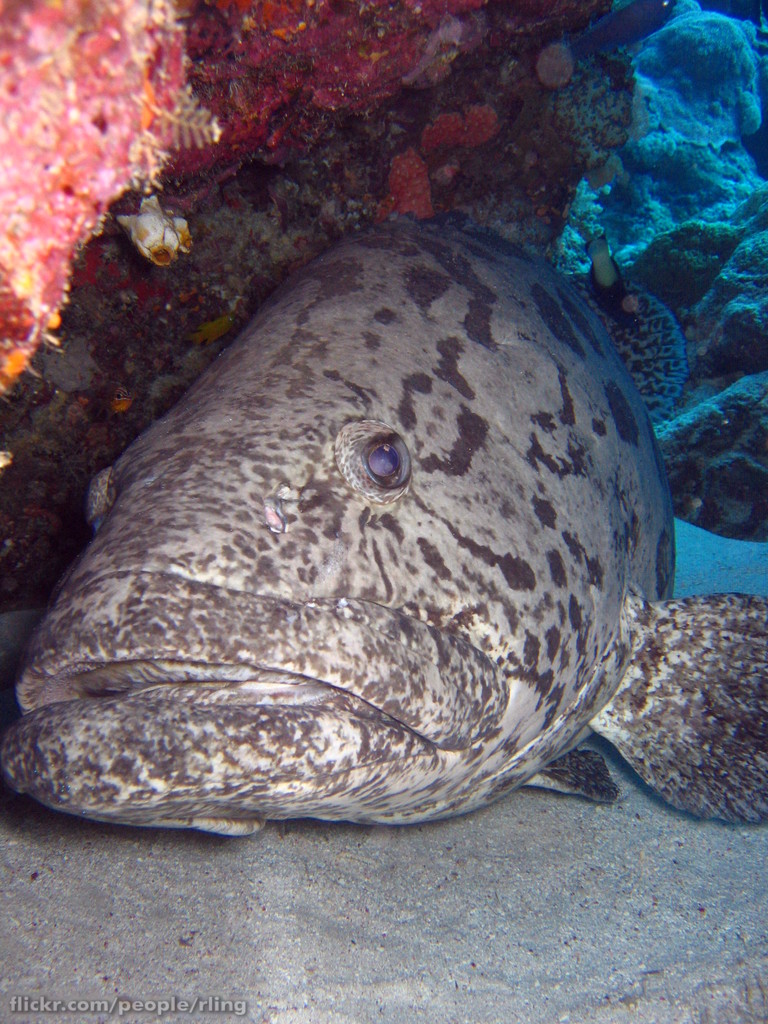 Potato GrouperEpinephelus tukula
-
 Pacific Goliath GrouperEpinephelus quinquefasciatus
-
 Orange-spotted GrouperEpinephelus coioides
Compare
Questions and answers
What is the scientific name of the Longspine Grouper?
The scientific name of the Longspine Grouper is Epinephelus longispinis. Written with its author, the full name is Epinephelus longispinis (Kner, 1864).
Which family does the Longspine Grouper belong to?
Epinephelus longispinis belongs to the family Epinephelidae, in the order Perciformes and the class Teleostei.
Where is the Longspine Grouper found?
Checklists and occurrence records place Epinephelus longispinis in 24 countries, including South Africa, Namibia, India, Indonesia, Mozambique and Thailand.
What is the conservation status of the Longspine Grouper?
The IUCN Red List category recorded for Epinephelus longispinis is Least Concern (LC).
What other names does the Longspine Grouper have?
Epinephelus longispinis is also known in English as Long-spine Rock Cod, Long-spined Grouper, Spotted Grouper, Streaky Spot Rockcod and Streakyspot Grouper.
What is the diet of a grouper?
The longspine grouper feeds primarily on crustaceans, particularly crabs and stomatopods.[3]
How do you describe grouper fish?
The longspine grouper is a marine ray-finned fish belonging to the genus Epinephelus.[1]
Sources
Passages the profile rests on
- The species is a marine ray-finned fish belonging to the genus Epinephelus. Source passage: “is a species of marine ray-finned fish from the Epinephelus genus.” — English Wikipedia
- The species occurs primarily in the Indian Ocean and Western Pacific Ocean. Source passage: “The species' range is primarily in the Indian and Western Pacific Oceans.” — English Wikipedia
- The species feeds primarily on crustaceans, particularly crabs and stomatopods. Source passage: “E. longispinis' diet consists primarily of crustaceans, "especially crabs and stomatopods."” — English Wikipedia
- The species has a reported moderate vulnerability score of 44 out of 100. Source passage: “Moderate vulnerability (44 of 100).” — fishbase.se
- The species has a reported minimum population doubling time of 1.4 to 4.4 years. Source passage: “Medium, minimum population doubling time 1.4 - 4.4 years” — fishbase.se
- The acceptable market name for this species is Grouper. Source passage: “Acceptable Market Name(s):, Grouper.” — hfpappexternal.fda.gov
Data
- Catalogue of Life, 2026-10-16 XR cc by
- Global Biodiversity Information Facility CC BY 4.0
- Wikidata CC0
- GeoNames CC BY 4.0
- Within the Catalogue of Life, this name comes from World Register of Marine Species cc by
This species in other databases
- Catalogue of Life 6G5QF
- Wikidata Q2793525
- iNaturalist 100114
- WoRMS urn:lsid:marinespecies.org:taxname:218221
- ITIS 643198
Page built on 28 November 2026. See how the catalog is made and all sources and licences.
Cite this page
ScientificNames.org. (2026). Epinephelus longispinis (Longspine Grouper). Retrieved November 28, 2026, from https://scientificnames.org/species/epinephelus-longispinis
“Epinephelus longispinis (Longspine Grouper).” ScientificNames.org, 2026, scientificnames.org/species/epinephelus-longispinis. Accessed 28 Nov. 2026.
ScientificNames.org. “Epinephelus longispinis (Longspine Grouper).” Accessed November 28, 2026. https://scientificnames.org/species/epinephelus-longispinis.
@misc{scientificnames_epinephelus_longispinis_longspine_grouper,
  author = {{ScientificNames.org}},
  title = {Epinephelus longispinis (Longspine Grouper)},
  year = {2026},
  url = {https://scientificnames.org/species/epinephelus-longispinis},
  note = {Accessed 2026-11-28}
}