Species · Fishes
Summan Grouper Epinephelus summana
The scientific name of the Summan Grouper is Epinephelus summana. It is a species of fish in the family Epinephelidae (groupers), order Perciformes. The name dates from 1775.
- Scientific name
- Epinephelus summana (Forsskål, 1775)
- Common name
- Summan Grouper
- Genus
- Epinephelus
- Family
- Epinephelidae (Groupers)
- Order
- Perciformes
- Class
- Teleostei
- Red List category
- LC Least Concern
- Environment
- brackish, marine
- Recorded in
- 11 countries
- Name status
- accepted in the Catalogue of Life

Overview
Epinephelus summana occurs in shallow lagoons, seaward reef slopes and brackish-water environments in the western Indian Ocean, including the Red Sea, the Gulf of Aden and waters off Socotra. It has a dark olive-brown to dark brownish-grey body with large pale blotches and numerous small white spots, and reaches a maximum standard length of 52 centimetres.
Written 27 November 2026 from the sources listed below. Each statement was checked against the passage it cites; statements that could not be supported were removed.
Appearance
The summan grouper has a dark olive-brown to dark brownish-grey body marked with large pale blotches and numerous small white spots. Its caudal fin is rounded, and its pectoral fins have small white spots restricted to their bases.[1][2][3]
The dorsal fin has 11 spines and 14–16 soft rays, with membranes notched between the spines. The anal fin has three spines and 8–9 rays, and the upper margin of the gill cover is highly convex.[4][5][6][7]
The species reaches a maximum standard length of 52 centimetres. Its standard length is approximately 2.7–3.1 times its body depth.[8][9]
Habitat
The summan grouper occurs in shallow lagoons and on seaward reef slopes. It also occurs in brackish-water environments.[10][11]
Its distribution is in the western Indian Ocean and includes the Red Sea, the Gulf of Aden and waters off Socotra.[12][13]
Reproduction and life cycle
The summan grouper exhibits protogynous hermaphroditism, with individuals initially maturing as females before changing into males. Males were larger than females in the studied population.[14][15]
The species has an extended spawning period and releases eggs in batches during different months. April and May constitute the main spawning season, when female gonadosomatic index values are highest.[16][17][18]
Gonadal maturation is divided into five stages in both sexes. In sampled landed fish, females represented approximately 64% and males approximately 36.2%, with an observed male-to-female sex ratio of approximately 1:3.3.[19][20][21]
Transitional-stage individuals represented approximately 3.4% of the sampled landed fish. A reproductive study sampled 217 individuals from the Red Sea near Jeddah, Saudi Arabia.[22][23]
Uses
The summan grouper is caught by small-scale local fisheries. It has been recorded in fish markets in Egypt and Sudan and occasionally enters the aquarium trade.[24][25][26]
Classification of the Summan Grouper
| Kingdom | Animalia |
|---|---|
| Phylum | Chordata |
| Subphylum | Vertebrata |
| Infraphylum | Gnathostomata |
| Parvphylum | Osteichthyes |
| Gigaclass | Actinopterygii |
| Superclass | Actinopteri |
| Class | Teleostei (Teleost) |
| Order | Perciformes |
| Suborder | Percoidei |
| Family | Epinephelidae (Groupers) |
| Genus | Epinephelus (Groupers) |
| Species | Epinephelus summana (Forsskål, 1775) |
Where the Summan Grouper is found
Checklists and occurrence records place Epinephelus summana in 11 countries. GBIF holds 247 georeferenced records of it.
Countries
- Djibouti 12
- Egypt 26
- Eritrea 21
- Indonesia 30
- Israel 6
- Japan 4
- Philippines 74
- Saudi Arabia 52
- Sudan 12
- Thailand 3
- Yemen 7
Regions and cities with the most records
- Thuwal, Saudi Arabia 10
- Djibouti, Djibouti 8
- Northern Red Sea, Eritrea 7
- Hurghada, Egypt 6
- Jazan Region, Saudi Arabia 5
- Massawa, Eritrea 5
- Safaga, Egypt 5
- Ciputat, Indonesia 4
- Jakarta, Indonesia 4
- Sepatan, Indonesia 4
- South Tangerang, Indonesia 4
- Tangerang, Indonesia 4
- Teluknaga, Indonesia 4
- Al Hudaydah, Yemen 3
- Bais, Philippines 3
- Balbala, Djibouti 3
- Tanjay, Philippines 3
1 more country has a few records outside this range
These countries hold a few records of Epinephelus summana but lie outside the range the checklists give for it. Such records are often zoo or garden specimens, museum material or vagrants, so the species is not counted as occurring there.
A number beside a place is its count of GBIF occurrence records. A place without a number comes from a checklist alone. Records show where a species has been observed or collected, which can include escapes and vagrants.
Common names
English
- Summan Grouper
- Edgeblack Grouper
- Suman Grouper
Names in 15 other languages
- Arabic
- Hamoor, Hamour
- Cebuano
- Pugapo
- Chinese
- 白星石斑
- Czech
- kanic summana
- French
- Merou Summan, Mérou summan, Vieille Plate
- Portuguese
- Garoupa-de-manchas-pardas
- Russian
- Групер-суммана
- Spanish
- Mero Suman
- Tagalog
- Kulapo
- agn
- Bulang
- bik
- Inid
- cbk
- Mantis
- ilo
- Kurapu
- sgd
- Lapu-lapu
- war
- Tingag
Synonyms
5 other scientific names have been used for this species and are now treated as synonyms of Epinephelus summana.
- Epinephalus summana (Forsskål, 1775)
- Epinephelus sunmana (Forsskål, 1775)
- Perca summana Forsskål, 1775
- Sebastes meleagris Peters, 1864
- Serranus leucostigma Valenciennes, 1828
Subspecies and varieties
- Perca summana sciaena subspecies
Related species
-
 Atlantic Goliath GrouperEpinephelus itajara
-
 Giant GrouperEpinephelus lanceolatus
-
 Dusky GrouperEpinephelus marginatus
-
 Nassau GrouperEpinephelus striatus
-
 Red GrouperEpinephelus morio
-
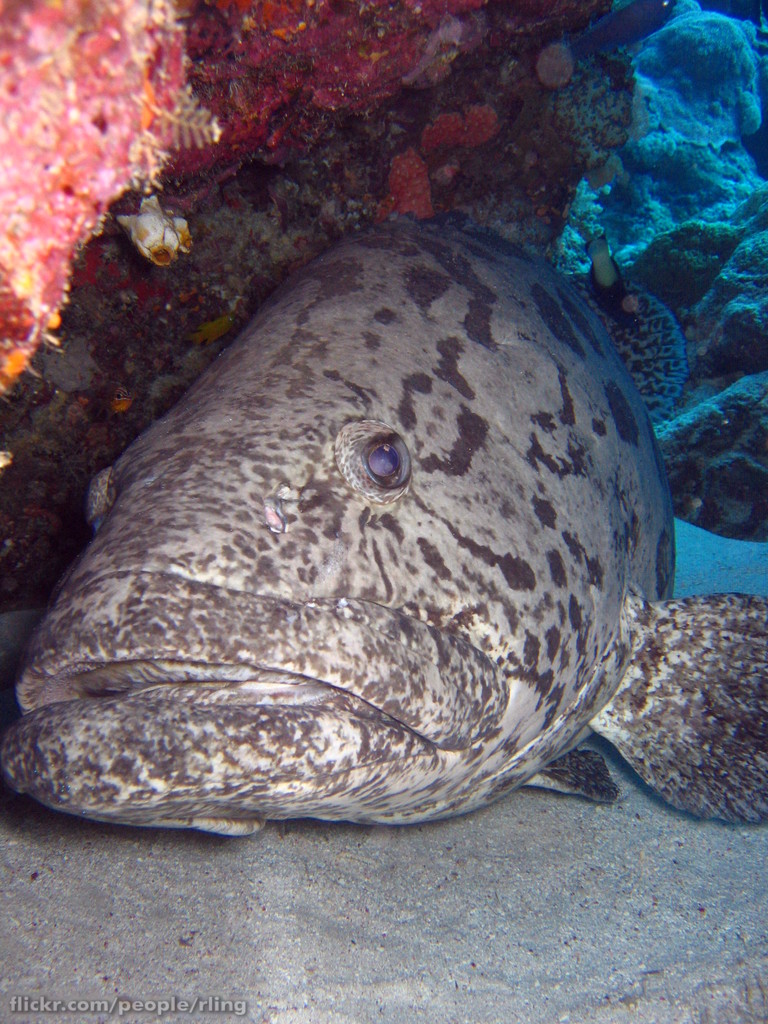 Potato GrouperEpinephelus tukula
-
 Pacific Goliath GrouperEpinephelus quinquefasciatus
-
 Orange-spotted GrouperEpinephelus coioides
Compare
Questions and answers
What is the scientific name of the Summan Grouper?
The scientific name of the Summan Grouper is Epinephelus summana. Written with its author, the full name is Epinephelus summana (Forsskål, 1775).
Which family does the Summan Grouper belong to?
Epinephelus summana belongs to the family Epinephelidae, in the order Perciformes and the class Teleostei.
Where is the Summan Grouper found?
Checklists and occurrence records place Epinephelus summana in 11 countries, including Philippines, Saudi Arabia, Indonesia, Egypt, Eritrea and Djibouti.
What is the conservation status of the Summan Grouper?
The IUCN Red List category recorded for Epinephelus summana is Least Concern (LC).
What other names does the Summan Grouper have?
Epinephelus summana is also known in English as Edgeblack Grouper and Suman Grouper.
Sources
Passages the profile rests on
- The species has a dark olive-brown to dark brownish-grey body marked with large pale blotches and numerous small white spots. Source passage: “The overall colour is dark olive-brown to dark brownish grey with large pale blotches, the majority being greater in size than the eyes, and abundant small white spots which lie over this pattern.” — English Wikipedia
- The caudal fin is rounded. Source passage: “The caudal fin is rounded.” — English Wikipedia
- The pectoral fins have small white spots restricted to their bases. Source passage: “The fins are covered with small white spots, apart for the pectoral fins where they are restricted to its base.” — English Wikipedia
- The dorsal fin has 11 spines and 14–16 soft rays. Source passage: “There are 11 spines and 14–16 soft rays in the dorsal fin” — English Wikipedia
- The anal fin has three spines and 8–9 rays. Source passage: “3 spines and 8–9 rays in the anal fin.” — English Wikipedia
- The dorsal fin membranes are notched between the spines. Source passage: “The membranes between the dorsal fin spines are notched.” — English Wikipedia
- The upper margin of the gill cover is highly convex. Source passage: “the gill cover has a highly convex upper margin.” — English Wikipedia
- The species reaches a maximum standard length of 52 centimetres. Source passage: “This species attains a maximum standard length of 52 centimetres (20 in).” — English Wikipedia
- Its standard length is approximately 2.7–3.1 times its body depth. Source passage: “Epinephelus summana has a standard length which is 2.7 to 3.1 times its depth.” — English Wikipedia
- The species occurs in shallow lagoons and seaward reef slopes. Source passage: “in shallow lagoons and seaward reef slopes” — English Wikipedia
- The species also occurs in brackish-water environments. Source passage: “or brackish-water environments.” — English Wikipedia
- The species occurs in the western Indian Ocean. Source passage: “Epinephelus summana is found in the western part of the Indian Ocean.” — English Wikipedia
- Its documented distribution includes the Red Sea, the Gulf of Aden and waters off Socotra. Source passage: “It is found in the Red Sea, the Gulf of Aden and off Socotra.” — English Wikipedia
- The species exhibits protogynous hermaphroditism, with individuals initially maturing as females before changing into males. Source passage: “individuals mature first as female and then change sex to male.” — pmc.ncbi.nlm.nih.gov
- Males were larger than females in the studied population. Source passage: “Furthermore, males were larger than females.” — pmc.ncbi.nlm.nih.gov
- The species has an extended spawning period and releases eggs in batches during different months. Source passage: “indicating that E. summana has extended spawning and spawns in batches during different months of the year.” — pmc.ncbi.nlm.nih.gov
- April and May constitute the main spawning season. Source passage: “April to May is the main spawning season” — pmc.ncbi.nlm.nih.gov
- Female gonadosomatic index values are highest during the main spawning season. Source passage: “with the highest female GSI recorded.” — pmc.ncbi.nlm.nih.gov
- The gonadal maturation process is divided into five stages in both sexes. Source passage: “the maturation process can be classified into five stages in both males and females.” — pmc.ncbi.nlm.nih.gov
- Females represented approximately 64% of the sampled landed fish, while males represented approximately 36.2%. Source passage: “landing consisted of 36.2 ± 4.7 % males, 64.0 ± 5.0 % females” — pmc.ncbi.nlm.nih.gov
- The observed male-to-female sex ratio was approximately 1:3.3. Source passage: “with an overall significantly different male-to-female sex ratio of 1:3.3.” — pmc.ncbi.nlm.nih.gov
- Transitional-stage individuals represented approximately 3.4% of the sampled landed fish. Source passage: “3.4 ± 1.8 % transitional-stage fish” — pmc.ncbi.nlm.nih.gov
- A reproductive study sampled 217 individuals from the Red Sea near Jeddah, Saudi Arabia. Source passage: “217 fish were collected from the Red Sea of Jeddah, Saudi Arabia.” — pmc.ncbi.nlm.nih.gov
- The species is caught by small-scale local fisheries. Source passage: “Epinephelus summana is caught by small, local fisheries” — English Wikipedia
- The species has been recorded in fish markets in Egypt and Sudan. Source passage: “has been recorded in fish markets in Egypt and Sudan.” — English Wikipedia
- The species occasionally enters the aquarium trade. Source passage: “It also sometimes appears in the aquarium trade.” — English Wikipedia
Data
- Catalogue of Life, 2026-10-16 XR cc by
- Global Biodiversity Information Facility CC BY 4.0
- Wikidata CC0
- GeoNames CC BY 4.0
- Wikimedia Commons per image; credit shown with each image
- Within the Catalogue of Life, this name comes from World Register of Marine Species cc by
References
- Forsskål, Peter. 1775. Descriptiones animalium avium, amphibiorum, piscium, insectorum, vermium; quae in itinere orientali observavit Petrus Forskål. Post mortem auctoris edidit Carsten Niebuhr. Adjuncta est materia medica kahirina atque tabula maris Rubri geographica. Mölleri apud Heineck et Faber, Hauniæ [= Copenhagen].: 1-20, i-xxxiv, 1-164, map. where the name was published
This species in other databases
- Catalogue of Life 6G62M
- Wikidata Q3505284
- iNaturalist 100140
- WoRMS urn:lsid:marinespecies.org:taxname:218238
- ITIS 551099
Page built on 28 November 2026. See how the catalog is made and all sources and licences.
Cite this page
ScientificNames.org. (2026). Epinephelus summana (Summan Grouper). Retrieved November 28, 2026, from https://scientificnames.org/species/epinephelus-summana
“Epinephelus summana (Summan Grouper).” ScientificNames.org, 2026, scientificnames.org/species/epinephelus-summana. Accessed 28 Nov. 2026.
ScientificNames.org. “Epinephelus summana (Summan Grouper).” Accessed November 28, 2026. https://scientificnames.org/species/epinephelus-summana.
@misc{scientificnames_epinephelus_summana_summan_grouper,
  author = {{ScientificNames.org}},
  title = {Epinephelus summana (Summan Grouper)},
  year = {2026},
  url = {https://scientificnames.org/species/epinephelus-summana},
  note = {Accessed 2026-11-28}
}