Species · Insects
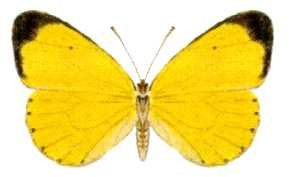
Common Grass Yellow Eurema hecabe
The scientific name of the Common Grass Yellow is Eurema hecabe. It is a species of insect in the family Pieridae (whites), order Lepidoptera. The name dates from 1758.
- Scientific name
- Eurema hecabe (Linnaeus, 1758)
- Common name
- Common Grass Yellow
- Genus
- Eurema
- Family
- Pieridae (Whites)
- Order
- Lepidoptera
- Class
- Insecta
- Red List category
- LC Least Concern
- Recorded in
- 69 countries
- Name status
- accepted in the Catalogue of Life

Overview
Eurema hecabe, the common grass yellow, is a small pierid butterfly species found in Asia, Africa and Australia. They are found flying close to the ground and are found in open grass and scrub habitats. It is simply known as "the grass yellow" in parts of its range; the general term otherwise refers to the entire genus Eurema.
Classification of the Common Grass Yellow
| Kingdom | Animalia |
|---|---|
| Phylum | Arthropoda |
| Subphylum | Hexapoda |
| Class | Insecta (Insect) |
| Order | Lepidoptera |
| Superfamily | Papilionoidea |
| Family | Pieridae (Whites) |
| Genus | Eurema (Grass Yellows) |
| Species | Eurema hecabe (Linnaeus, 1758) |
Where the Common Grass Yellow is found
Checklists and occurrence records place Eurema hecabe in 69 countries. GBIF holds 29,831 georeferenced records of it.
Countries
- Afghanistan 9
- American Samoa 3
- Angola 21
- Australia 6,247
- Bangladesh 93
- Benin 19
- Bhutan 10
- Botswana 6
- Burkina Faso 11
- Cabo Verde 38
- Cambodia 167
- Cameroon 14
- China 321
- Democratic Republic of the Congo 37
- Eswatini 107
- Ethiopia 8
- Fiji 84
- Gabon 10
- Gambia 194
- Ghana 37
- Guam 50
- Guinea 22
- Hong Kong 1,500
- India 7,529
- Indonesia 2,040
- Japan 3,422
- Kenya 94
- Laos 40
- Liberia 13
- Macao 41
- Madagascar 7
- Malawi 60
- Malaysia 417
- Maldives 59
- Mali 5
- Mauritius 4
- Micronesia 9
- Mozambique 40
- Myanmar 79
- Namibia 24
- Nepal 150
- New Caledonia 61
- Nigeria 100
- Oman 51
- Pakistan 91
- Palau 7
- Papua New Guinea 318
- Philippines 388
- Republic of the Congo 4
- Rwanda 14
- Samoa 13
- Senegal 16
- Sierra Leone 6
- Singapore 1,211
- Solomon Islands 32
- South Africa 1,343
- South Korea 856
- South Sudan 12
- Sri Lanka 228
- Sudan 25
- Taiwan 945
- Tanzania 42
- Thailand 348
- Tonga 4
- Uganda 67
- Vanuatu 33
- Vietnam 225
- Zambia 282
- Zimbabwe 68
Regions and cities with the most records
- Queensland, Australia 4,596
- Maharashtra, India 2,201
- Novena, Singapore 1,196
- Ang Mo Kio New Town, Singapore 1,195
- Yishun New Town, Singapore 1,188
- Sengkang New Town, Singapore 1,178
- Sembawang Estate, Singapore 1,177
- Bukit Timah, Singapore 1,173
- Queenstown Estate, Singapore 1,171
- Woodlands, Singapore 1,148
- Matilda Estate, Singapore 1,139
- Singapore, Singapore 1,138
- Bukit Panjang New Town, Singapore 1,101
- Choa Chu Kang New Town, Singapore 1,096
- Jurong East, Singapore 1,073
- Punggol, Singapore 1,069
- Marine Parade, Singapore 1,068
- Tsuen Wan, Hong Kong 1,056
- Jurong Town, Singapore 1,051
- Jurong West, Singapore 1,048
- Tsing Yi Town, Hong Kong 1,033
- Kampong Pasir Ris, Singapore 1,024
- Kampung Pasir Gudang Baru, Malaysia 1,021
- Kwai Chung, Hong Kong 1,012
- Sha Tin, Hong Kong 1,001
- Sha Tin Wai, Hong Kong 1,001
- Ulu Bedok, Singapore 996
- Johor Bahru, Malaysia 985
- Tai Po, Hong Kong 984
- Bedok New Town, Singapore 983
- Siu Lek Yuen, Hong Kong 972
- Ma On Shan, Hong Kong 970
- Pasir Gudang, Malaysia 964
- Wong Tai Sin, Hong Kong 925
- Masai, Malaysia 924
- Mei Foo, Hong Kong 910
2 more countries have a few records outside this range
These countries hold a few records of Eurema hecabe but lie outside the range the checklists give for it. Such records are often zoo or garden specimens, museum material or vagrants, so the species is not counted as occurring there.
A number beside a place is its count of GBIF occurrence records. A place without a number comes from a checklist alone. Records show where a species has been observed or collected, which can include escapes and vagrants.
Common names
English
- Common Grass Yellow
- Common Grass-yellow
- Grass Yellow
- Large Grass Yellow
- Large Grass-yellow
- Pale Grass Yellow
Names in 12 other languages
- Afrikaans
- Laeveldgeletjie
- Bengali
- হলুদ (প্রজাপতি)
- Chinese
- 寬邊黃粉蝶, 合歡粉蝶, 宽边黄粉蝶, 寬邊黃蝶, 荷氏黃粉蝶, 荷氏黃蝶, 銀歡粉蝶, 黃蝶
- Dutch
- Gewoon grasgeeltje
- French
- Coliade Hécabé, Piéride citron
- Japanese
- キチョウ, ミナミキチョウ, ミナミキチョウ(南黄蝶)
- Korean
- 남방노랑나비
- Marathi
- तृण पिलाती
- Spanish
- Mariposa amarilla Agave
- Tamil
- மஞ்சள் புல்வெளியான்
- Telugu
- పసుపు చిలుక
- Thai
- ผีเสื้อเณรธรรมดา
Synonyms
28 other scientific names have been used for this species and are now treated as synonyms of Eurema hecabe.
- Eurema hecabe novaecaledoniae (Corbet & Pendlebury, 1932)
- Eurema hecabe subdecorata (Moore)
- Eurema hecabe sulphurata (Butler, 1876)
- Eurema hecabe var. kerawara Ribbe, 1898
- Eurema hecabe var. magna Ribbe, 1898
- Eurema jacouleti Nakahara, 1941
- Eurema paroeana Strand, 1922
- Papilio hecabe Linnaeus, 1758
- Papilio luzonicus Linnaeus, 1764
- Terias apicalis Moore, 1882
- Terias arcuata Moore, 1878
- Terias attenuata Moore, 1878
- Terias excavata Moore, 1882
- Terias fraterna Moore, 1886
- Terias hecabe (Linnaeus, 1758)
- Terias hecabe f. apicalis Moore
- Terias hecabe f. paroeana Strand, 1922
- Terias hecabe subdecorata Moore, 1878
- Terias irregularis Moore, 1882
- Terias latimargo Hopffer, 1874
- Terias maroensis Butler, 1883
- Terias mbriata Wallace, 1867
- Terias merguiana Moore, 1886
- Terias patruelis Moore, 1886
- Terias purreea Moore, 1882
- Terias simulata Moore, 1881
- Terias subdecorata Moore, 1878
- Terias subdecorata f. attenuata Moore, 1878
Subspecies and varieties
- Eurema hecabe hecabe (Oriental Common Grass Yellow) subspecies
- Terias hecabe novaecaledoniae subspecies
- Terias hecabe solifera (Common Grass Yellow) subspecies
- Terias hecabe sulphurata subspecies
Related species
-
 Small Grass YellowEurema brigitta
-
 Three-spot Grass YellowEurema blanda
- Fairy YellowEurema daira
- Mexican YellowEurema mexicana
-
 Small Grass YellowEurema smilax
-
 Spotless Grass YellowEurema laeta
- Changeable Grass YellowEurema simulatrix
- Malagasy Grass YellowEurema floricola
Compare
Questions and answers
What is the scientific name of the Common Grass Yellow?
The scientific name of the Common Grass Yellow is Eurema hecabe. Written with its author, the full name is Eurema hecabe (Linnaeus, 1758).
Which family does the Common Grass Yellow belong to?
Eurema hecabe belongs to the family Pieridae, in the order Lepidoptera and the class Insecta.
Where is the Common Grass Yellow found?
Checklists and occurrence records place Eurema hecabe in 69 countries, including India, Australia, Japan, Indonesia, Hong Kong and South Africa.
What is the conservation status of the Common Grass Yellow?
The IUCN Red List category recorded for Eurema hecabe is Least Concern (LC).
What other names does the Common Grass Yellow have?
Eurema hecabe is also known in English as Common Grass-yellow, Grass Yellow, Large Grass Yellow, Large Grass-yellow and Pale Grass Yellow.
Sources
Data
- Catalogue of Life, 2026-10-16 XR cc by
- Global Biodiversity Information Facility CC BY 4.0
- Wikidata CC0
- English Wikipedia CC BY-SA 4.0
- GeoNames CC BY 4.0
- Wikimedia Commons per image; credit shown with each image
- Within the Catalogue of Life, this name comes from Global Butterfly Information System cc by
References
- Linnaeus, C. (1758) Systema naturae per regna tria naturae, secundum classes, ordines, genera, species, cum characteribus, differentiis, symonymis, locis. Vol. 1. Editio Decima, reformata. L. Salvius, Holmiae, iv + 823 + [1] pp. https://doi.org/10.5962/bhl.title.542 where the name was published
This species in other databases
Page built on 25 November 2026. See how the catalog is made and all sources and licences.
Cite this page
ScientificNames.org. (2026). Eurema hecabe (Common Grass Yellow). Retrieved November 25, 2026, from https://scientificnames.org/species/eurema-hecabe
“Eurema hecabe (Common Grass Yellow).” ScientificNames.org, 2026, scientificnames.org/species/eurema-hecabe. Accessed 25 Nov. 2026.
ScientificNames.org. “Eurema hecabe (Common Grass Yellow).” Accessed November 25, 2026. https://scientificnames.org/species/eurema-hecabe.
@misc{scientificnames_eurema_hecabe_common_grass_yellow,
  author = {{ScientificNames.org}},
  title = {Eurema hecabe (Common Grass Yellow)},
  year = {2026},
  url = {https://scientificnames.org/species/eurema-hecabe},
  note = {Accessed 2026-11-25}
}