Species · Amphibians
Frost's Toad Frostius pernambucensis
The scientific name of the Frost's Toad is Frostius pernambucensis. It is a species of amphibian in the family Bufonidae (true toad), order Anura. The name dates from 1962.

Overview
The species is endemic to eastern Brazil and inhabits primary and secondary forests, bromeliads, and leaf litter. It is distinguished by long, laterally expanded digits with developed discs and long, pulsed advertisement calls.
Written 27 November 2026 from the sources listed below. Each statement was checked against the passage it cites; statements that could not be supported were removed.
Appearance
Adults have a small, vertically elliptical tympanum. Their digits are long, laterally expanded, and bear developed discs.[1][2]
Both dorsal and ventral surfaces are brown to light brown.[3]
Calling adult males from Santa Teresinha, Bahia, had an average snout–vent length of 27.8 mm in 2008 and 36.8 mm in 2009.[4][5]
Habitat
The species inhabits primary and secondary forests at elevations up to 800 metres above sea level. It occurs in both terrestrial and arboreal bromeliads and also inhabits leaf litter on the forest floor.[6][7][8][9]
The species is endemic to eastern Brazil and is recorded from the Brazilian states of Paraíba, Pernambuco, Alagoas, and eastern Bahia.[10][11]
Behaviour
Males produce long, pulsed advertisement calls lasting approximately eight seconds. The calls have a pulse rate of seven pulses per second and are repeated approximately twice per minute.[12][13][14][15]
Males call while perched in vegetation between 0.2 and 2.5 metres above the ground. They may perform visual displays and engage in contests with other males.[16][17][18]
Reproduction and life cycle
Reproduction depends on the presence of bromeliads. The species lays its eggs in bromeliads.[19][20]
Conservation
Habitat loss caused by agricultural expansion and human settlement threatens the species. Collection of bromeliads is another identified threat.[21][22][23]
The species occurs in several protected areas. It was most recently assessed for the IUCN Red List in 2021.[24][25]
Classification of the Frost's Toad
| Kingdom | Animalia |
|---|---|
| Phylum | Chordata |
| Subphylum | Vertebrata |
| Infraphylum | Gnathostomata |
| Parvphylum | Osteichthyes |
| Megaclass | Tetrapoda |
| Class | Amphibia (Amphibians) |
| Order | Anura (Frogs) |
| Family | Bufonidae (True Toad) |
| Genus | Frostius (Frosts Toads) |
| Species | Frostius pernambucensis (Bokermann, 1962) |
Where the Frost's Toad is found
Checklists and occurrence records place Frostius pernambucensis in 1 country across South America. GBIF holds 51 georeferenced records of it.
Countries
Regions and cities with the most records
- Alagoas, Brazil 29
- Messias, Brazil 27
- Joaquim Gomes, Brazil 22
- Murici, Brazil 22
- União dos Palmares, Brazil 20
- Pernambuco, Brazil 13
- Abreu e Lima, Brazil 9
- Camaragibe, Brazil 9
- Jaboatão dos Guararapes, Brazil 9
- Olinda, Brazil 9
- Paulista, Brazil 9
- Recife, Brazil 9
- São Lourenço da Mata, Brazil 9
- Bahia, Brazil 5
- Rio Largo, Brazil 5
- Castro Alves, Brazil 4
- São Luís do Quitunde, Brazil 4
Range as the checklists state it
South America
A number beside a place is its count of GBIF occurrence records. A place without a number comes from a checklist alone. Records show where a species has been observed or collected, which can include escapes and vagrants.
Common names
English
- Frost's Toad
- Frosts Toad
- Frost’s Toad
Names in 3 other languages
- Czech
- ropucha Frostova
- Portuguese
- Sapo das bromélias
- Russian
- Пернамбукский арлекин
Synonyms
One other scientific name has been used for this species and is now treated as a synonym of Frostius pernambucensis.
- Atelopus pernambucensis Bokermann, 1962
Related species
-
 Frostius erythrophthalmus
- Cane ToadRhinella marina
-
 Colorado River ToadIncilius alvarius
-
 Common ToadBufo bufo
-
 American ToadAnaxyrus americanus
-
 Panamanian Golden FrogAtelopus zeteki
-
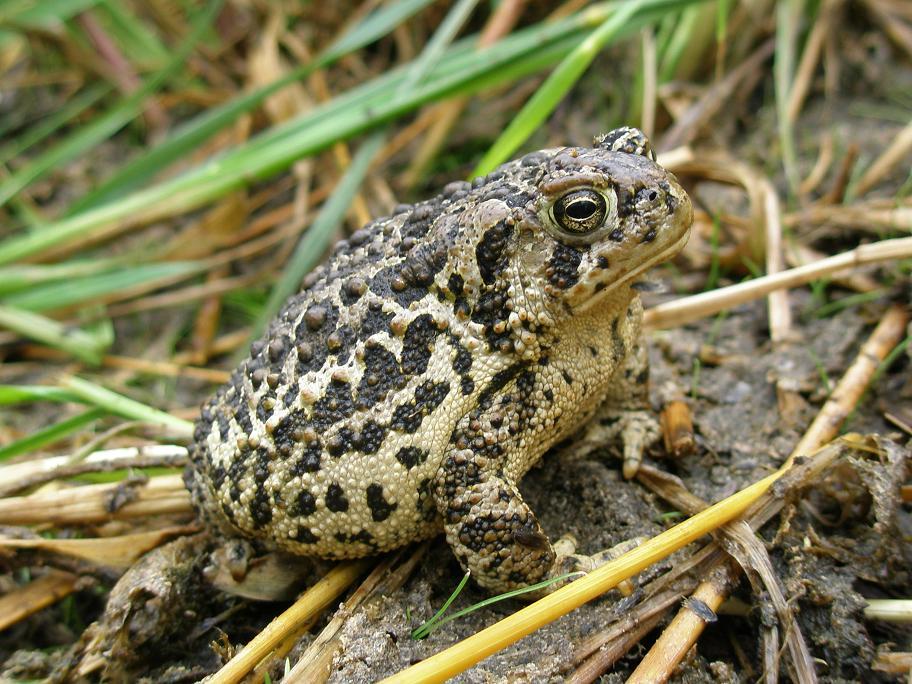 Wyoming ToadAnaxyrus baxteri
-
 Kihansi Spray ToadNectophrynoides asperginis
Compare
Questions and answers
What is the scientific name of the Frost's Toad?
The scientific name of the Frost's Toad is Frostius pernambucensis. Written with its author, the full name is Frostius pernambucensis (Bokermann, 1962).
Which family does the Frost's Toad belong to?
Frostius pernambucensis belongs to the family Bufonidae, in the order Anura and the class Amphibia.
Where is the Frost's Toad found?
Checklists and occurrence records place Frostius pernambucensis in 1 country: Brazil.
What is the conservation status of the Frost's Toad?
The IUCN Red List category recorded for Frostius pernambucensis is Least Concern (LC).
What other names does the Frost's Toad have?
Frostius pernambucensis is also known in English as Frosts Toad and Frost’s Toad.
Sources
Passages the profile rests on
- Adults have a small, vertically elliptical tympanum. Source passage: “The tympanum is small and vertically elliptical.” — English Wikipedia
- The digits are long, laterally expanded, and bear developed discs. Source passage: “The digits are long, laterally expanded, and have developed discs.” — English Wikipedia
- Both dorsal and ventral surfaces are brown to light brown. Source passage: “Coloration of both dorsal and ventral surfaces is brown to light brown.” — English Wikipedia
- Calling adult males from Santa Teresinha, Bahia, had an average snout–vent length of 27.8 mm in 2008. Source passage: “Calling adult males from Santa Teresinha, Bahia had an average snout–vent length of 27.8” — English Wikipedia
- Calling adult males from Santa Teresinha, Bahia, had an average snout–vent length of 36.8 mm in 2009. Source passage: “and 36.8 mm (1.09 and 1.45 in) in 2008 and 2009, respectively.” — English Wikipedia
- The species inhabits primary and secondary forests. Source passage: “Frostius pernambucensis occurs in primary and secondary forests” — English Wikipedia
- The species occurs at elevations up to 800 metres above sea level. Source passage: “at elevations up to 800 m (2,600 ft) above sea level.” — English Wikipedia
- The species lives in both terrestrial and arboreal bromeliads. Source passage: “It lives in terrestrial and arboreal bromeliads” — English Wikipedia
- The species also inhabits leaf litter on the forest floor. Source passage: “and in leaf-litter of the forest-floor.” — English Wikipedia
- The species is endemic to eastern Brazil. Source passage: “It is endemic to the eastern Brazil” — English Wikipedia
- The species is recorded from the Brazilian states of Paraíba, Pernambuco, Alagoas, and eastern Bahia. Source passage: “where it is known from the Paraíba, Pernambuco, Alagoas, and eastern Bahia states.” — English Wikipedia
- Males produce long, pulsed advertisement calls. Source passage: “The male advertisement call is a long, pulsed call” — English Wikipedia
- The male advertisement call lasts approximately eight seconds. Source passage: “lasting about eight seconds” — English Wikipedia
- The advertisement call has a pulse rate of seven pulses per second. Source passage: “having pulse rate of seven per second.” — English Wikipedia
- Males repeat their advertisement calls approximately twice per minute. Source passage: “The call is repeated about twice every minute.” — English Wikipedia
- Males call while perched in vegetation between 0.2 and 2.5 metres above the ground. Source passage: “Males call perched in vegetation some 0.2 and 2.5 m (7.9 in and 8 ft 2.4 in) above ground.” — English Wikipedia
- Males may perform visual displays. Source passage: “Males may also engage in visual displays” — English Wikipedia
- Males may engage in contests with other males. Source passage: “and male-male contests.” — English Wikipedia
- Reproduction depends on the presence of bromeliads. Source passage: “Reproduction requires bromeliads” — English Wikipedia
- The species lays its eggs in bromeliads. Source passage: “where the eggs are laid.” — English Wikipedia
- Habitat loss caused by agricultural expansion threatens the species. Source passage: “habitat loss caused by agricultural expansion” — English Wikipedia
- Human settlement contributes to habitat loss threatening the species. Source passage: “and human settlement” — English Wikipedia
- Collection of bromeliads is another identified threat to the species. Source passage: “and by collection of bromeliads.” — English Wikipedia
- The species occurs in several protected areas. Source passage: “It can be found in several protected areas.” — English Wikipedia
- The species was most recently assessed for the IUCN Red List in 2021. Source passage: “Frost's Toad Frostius pernambucensis has most recently been assessed for The IUCN Red List of Threatened Species in 2021.” — iucnredlist.org
Data
- Catalogue of Life, 2026-10-16 XR cc by
- Global Biodiversity Information Facility CC BY 4.0
- Wikidata CC0
- GeoNames CC BY 4.0
- Wikimedia Commons per image; credit shown with each image
- Within the Catalogue of Life, this name comes from The Integrated Taxonomic Information System cc0
This species in other databases
Page built on 29 November 2026. See how the catalog is made and all sources and licences.
Cite this page
ScientificNames.org. (2026). Frostius pernambucensis (Frost's Toad). Retrieved November 29, 2026, from https://scientificnames.org/species/frostius-pernambucensis
“Frostius pernambucensis (Frost's Toad).” ScientificNames.org, 2026, scientificnames.org/species/frostius-pernambucensis. Accessed 29 Nov. 2026.
ScientificNames.org. “Frostius pernambucensis (Frost's Toad).” Accessed November 29, 2026. https://scientificnames.org/species/frostius-pernambucensis.
@misc{scientificnames_frostius_pernambucensis_frosts_toad,
  author = {{ScientificNames.org}},
  title = {Frostius pernambucensis (Frost's Toad)},
  year = {2026},
  url = {https://scientificnames.org/species/frostius-pernambucensis},
  note = {Accessed 2026-11-29}
}