Species · Birds
Common Moorhen Gallinula chloropus
The scientific name of the Common Moorhen is Gallinula chloropus. It is a species of bird in the family Rallidae (rail), order Gruiformes. The name dates from 1758.
- Scientific name
- Gallinula chloropus (Linnaeus, 1758)
- Common name
- Common Moorhen
- Genus
- Gallinula
- Family
- Rallidae (Rail)
- Order
- Gruiformes
- Class
- Aves
- Red List category
- LC Least Concern
- Environment
- freshwater, terrestrial
- Recorded in
- 182 countries
- Name status
- accepted in the Catalogue of Life

Overview
The species occurs across Africa, Europe, and Asia. Adults have predominantly black and brown plumage, a white undertail, white flank streaks, yellow legs, and a red frontal shield.
Written 26 November 2026 from the sources listed below. Each statement was checked against the passage it cites; statements that could not be supported were removed.
Appearance
Adults have predominantly black and brown plumage, a white undertail, white flank streaks, yellow legs, and a red frontal shield. The adult's bill is red with a yellow tip.[1][2]
The adult frontal shield has a rounded upper edge, approximately parallel sides, and a smoothly waving rear margin. Juveniles are browner than adults and lack the red frontal shield.[3][4]
The species has dark grey to almost black plumage with a duller chin and throat. Its wings and rump have white markings, and its legs are bright yellow-green.[5][6]
The subspecies G. c. meridionalis has slaty blue-grey upperwing coverts and lacks the olive wash. The subspecies G. c. pyrrhorrhoa is darker than the nominate subspecies and has buff undertail coverts.[7][8]
Adults measure approximately 30–38 cm in length, with a wingspan of approximately 50 to 62 cm. Body mass ranges from approximately 192 to 500 g.[9][10][11]
Habitat
The Common Moorhen inhabits well-vegetated marshes, ponds, canals, and other wetlands. It also breeds and resides in marshes, rivers, well-vegetated lakes, and urban parks.[12][13]
The species occupies natural and artificial aquatic environments with still or moving water. It favors aquatic environments containing emergent vegetation that provides shelter and generally occurs in lowland habitats.[14][15][16]
During passage through Nepal, the species has been recorded at elevations up to 4,575 m.[17]
Diet
The Common Moorhen consumes a variety of plant material and small aquatic animals. Its diet includes insects, vegetation, cereals, and fruits.[18][19]
The species is an opportunistic feeder that consumes the most abundant available foods.[20]
Behaviour
The Common Moorhen forages beside and within water. It sometimes walks on lily pads or upends itself while feeding.[21]
The species swims well, dives, and propels itself through water using its legs. It roosts at dusk in low trees or bushes.[22][23]
The species produces a wide range of gargling calls and loud hisses when threatened.[24]
Individuals are territorial during the breeding season and fight other moorhens and waterbirds to defend their territories. When threatened by a predator, adults may charge the intruder with their heads lowered.[25][26]
Reproduction and life cycle
Nests are constructed as baskets on the ground within dense vegetation. In temperate Northern Hemisphere regions, egg laying generally begins between mid-March and mid-May.[27][28]
Females generally lay about eight eggs early in the breeding season. Later broods generally contain five to eight eggs or fewer, and recorded clutch sizes range from two to seventeen eggs.[29][30][31]
Both parents incubate the eggs and feed the young. Incubation lasts approximately three weeks, or between 17 and 22 days.[32][33][34]
Young birds fledge approximately 40–50 days after hatching. Both parents care for and feed the chicks after hatching.[35][36]
In tropical regions, breeding can occur throughout the year.[37]
Conservation
The species is globally classified as Least Concern by the IUCN. The United Kingdom's Royal Society for the Protection of Birds classifies it as being of moderate conservation concern.[38][39]
The Palau population has fewer than 100 adult birds, with surveys usually recording fewer than 50. The species is classified as endangered in Hawaii, Guam, and the Northern Mariana Islands.[40][41]
The Hawaiian population formerly occurred on all five major islands but is now restricted to two.[42]
Uses
In some regions, the species is considered an agricultural pest because it feeds on crops.[43]
Classification of the Common Moorhen
| Kingdom | Animalia |
|---|---|
| Phylum | Chordata |
| Subphylum | Vertebrata |
| Infraphylum | Gnathostomata |
| Parvphylum | Osteichthyes |
| Megaclass | Tetrapoda |
| Class | Aves (Bird) |
| Order | Gruiformes (Rails) |
| Family | Rallidae (Rail) |
| Genus | Gallinula (Moorhen) |
| Species | Gallinula chloropus (Linnaeus, 1758) |
Where the Common Moorhen is found
Checklists and occurrence records place Gallinula chloropus in 182 countries across Africa, Asia, North America and Oceania. GBIF holds 4,413,583 georeferenced records of it.
Countries
- Afghanistan 119
- Aland Islands 50
- Albania 851
- Algeria 771
- Angola 126
- Antigua and Barbuda 7
- Armenia 1,096
- Australia 7
- Austria 17,452
- Azerbaijan 650
- Bahamas 4
- Bahrain 363
- Bangladesh 850
- Belarus 971
- Belgium 230,477
- Belize 3
- Benin 154
- Bermuda 4
- Bhutan 67
- Bosnia and Herzegovina 280
- Botswana 1,065
- British Indian Ocean Territory 126
- Brunei 27
- Bulgaria 9,385
- Burkina Faso 129
- Burundi 8
- Cabo Verde 454
- Cambodia 811
- Cameroon 183
- Canada 774
- Central African Republic 4
- Chad 45
- China 61,760
- Cocos Islands 9
- Colombia 921
- Comoros 29
- Costa Rica 7
- Croatia 4,229
- Cuba 16
- Cyprus 6,499
- Czechia 21,790
- Democratic Republic of the Congo 108
- Denmark 169,967
- Djibouti 18
- Dominican Republic 6
- Egypt 4,703
- Equatorial Guinea 9
- Eritrea 13
- Estonia 3,780
- Eswatini 387
- Ethiopia 882
- Faroe Islands 26
- Finland 6,244
- France 353,491
- Gabon 46
- Gambia 579
- Georgia 1,877
- Germany 148,524
- Ghana 891
- Greece 14,951
- Grenada 3
- Guadeloupe 226
- Guam 502
- Guernsey 527
- Guinea 4
- Guinea-Bissau 31
- Haiti 21
- Honduras 4
- Hong Kong 9,059
- Hungary 5,291
- Iceland 112
- India 164,876
- Indonesia 2,237
- Iran 2,613
- Iraq 591
- Ireland 29,086
- Isle of Man 8,073
- Israel 51,703
- Italy 78,256
- Ivory Coast 147
- Jamaica 4
- Japan 15,395
- Jersey 579
- Jordan 591
- Kazakhstan 744
- Kenya 7,640
- Kosovo 240
- Kuwait 2,397
- Kyrgyzstan 379
- Laos 265
- Latvia 330
- Lebanon 465
- Lesotho 295
- Liberia 45
- Libya 46
- Liechtenstein 86
- Lithuania 706
- Luxembourg 4,626
- Macao 840
- Madagascar 2,805
- Malawi 152
- Malaysia 2,559
- Maldives 20
- Mali 9
- Malta 682
- Mauritania 94
- Mauritius 390
- Mayotte 129
- Mexico 95
- Micronesia 26
- Moldova 773
- Monaco 35
- Mongolia 222
- Montenegro 515
- Montserrat 5
- Morocco 3,993
- Mozambique 469
- Myanmar 623
- Namibia 4,649
- Nepal 3,487
- Niger 41
- Nigeria 622
- North Korea 10
- North Macedonia 988
- Northern Mariana Islands 702
- Norway 40,727
- Oman 3,860
- Pakistan 1,162
- Palau 140
- Palestinian Territory 674
- Panama 9
- Philippines 7,314
- Poland 19,981
- Portugal 82,622
- Puerto Rico 18
- Qatar 979
- Reunion 1,939
- Romania 4,218
- Russia 17,624
- Rwanda 870
- Saint Helena 12
- Saint Lucia 3
- Sao Tome and Principe 191
- Saudi Arabia 3,377
- Senegal 1,134
- Serbia 5,593
- Seychelles 1,477
- Sierra Leone 3
- Singapore 923
- Slovakia 3,047
- Slovenia 2,988
- South Africa 177,988
- South Korea 5,823
- Spain 353,532
- Sri Lanka 4,183
- Sudan 26
- Svalbard and Jan Mayen 3
- Sweden 256,381
- Switzerland 80,446
- Syria 59
- Taiwan 245,169
- Tajikistan 128
- Tanzania 2,809
- Thailand 12,185
- The Netherlands 623,795
- Timor Leste 44
- Togo 96
- Tunisia 466
- Turkey 23,971
- Turkmenistan 17
- U.S. Virgin Islands 7
- Uganda 981
- Ukraine 8,319
- United Arab Emirates 16,580
- United Kingdom 904,596
- United States 5,759
- Uzbekistan 215
- Vietnam 1,701
- Western Sahara 79
- Yemen 59
- Zambia 1,277
- Zimbabwe 3,799
Regions and cities with the most records
- England, United Kingdom 814,959
- Taiwan, Taiwan 119,877
- Bergschenhoek, The Netherlands 90,972
- Berkel en Rodenrijs, The Netherlands 90,131
- Pijnacker, The Netherlands 84,394
- Stepney, United Kingdom 83,838
- Shadwell, United Kingdom 83,653
- Harlesden, United Kingdom 83,235
- Brockley, United Kingdom 81,920
- Acton, United Kingdom 81,658
- Capelle aan den IJssel, The Netherlands 81,226
- Willesden, United Kingdom 80,719
- Stratford, United Kingdom 80,488
- City of Westminster, United Kingdom 79,703
- London, United Kingdom 79,658
- Shepherds Bush, United Kingdom 79,460
- Islington, United Kingdom 79,376
- Canning Town, United Kingdom 79,228
- Chalk Farm, United Kingdom 79,205
- Benthuizen, The Netherlands 78,990
- Camden Town, United Kingdom 78,977
- Highbury, United Kingdom 78,899
- Fulham, United Kingdom 78,476
- Nootdorp, The Netherlands 77,819
- Zoetermeer, The Netherlands 77,506
- Barnes, United Kingdom 77,217
- Catford, United Kingdom 77,185
- Rotterdam, The Netherlands 77,020
- Waddinxveen, The Netherlands 76,671
- Streatham, United Kingdom 76,515
- Blackheath, United Kingdom 75,872
- Earlsfield, United Kingdom 74,445
- Gelderland, The Netherlands 73,972
- Krimpen aan den IJssel, The Netherlands 73,537
- Cricklewood, United Kingdom 73,293
- Beckenham, United Kingdom 73,018
12 more countries have a few records outside this range
These countries hold a few records of Gallinula chloropus but lie outside the range the checklists give for it. Such records are often zoo or garden specimens, museum material or vagrants, so the species is not counted as occurring there.
Range as the checklists state it
Europe & Northern Asia (excluding China)
North America
Southern Asia
Oceania
A number beside a place is its count of GBIF occurrence records. A place without a number comes from a checklist alone. Records show where a species has been observed or collected, which can include escapes and vagrants.
Common names
English
- Common Moorhen
- Common Gallinule
- Eurasian Moorhen
- Moorhen
Names in 52 other languages
- Afrikaans
- Grootwaterhoender
- Albanian
- bariu, pula e ujit
- Arabic
- دجاجة الماء, دجاجة الماء الاوراسية, دجاجة الماء خضراء الأقدام
- Asturian
- gallineta
- Belarusian
- Чаротніца (або зялёнаножка)
- Breton
- Douryar voutin
- Bulgarian
- Зеленоножка
- Catalan
- polla d'aigua comuna
- Chinese
- 紅冠水雞〔黑水雞〕, 黑水鸡
- Croatian
- mlakuša
- Czech
- slípka zelenonohá
- Danish
- Rørhøne, Rørhøne (Grønbenet), grønbenet rørhøne
- Dutch
- waterhoen
- Esperanto
- ordinara galinolo
- Estonian
- tait
- Faroese
- Sevhøna
- Finnish
- liejukana
- French
- Gallinule poule-d’eau, gallinule poule-d'eau
- German
- Teichhuhn, Teichralle
- Greek
- Κοινή Νερόκοτα, Νερόκοτα
- Hebrew
- סופית
- Hungarian
- vízityúk
- Icelandic
- Sefhæna
- Indonesian
- Mandar batu
- Italian
- gallinella d'acqua
- Japanese
- バン
- Korean
- 쇠물닭
- Latvian
- ūdensvistiņa
- Lithuanian
- nendrinė vištelė
- Macedonian
- зеленонога блатна кокошка
- Malagasy
- Akohondrano, Aretaka
- Malayalam
- പട്ടക്കോഴി
- Northern Sami
- Láttovuonccis
- Norwegian Nynorsk
- sivhøne
- Persian
- چنگر نوک سرخ
- Polish
- kokoszka (zwyczajna), kokoszka wodna, kokoszka zwyczajna
- Portuguese
- galinha-d'água-comum, galinha-de-água-comum
- Romanian
- găinuşă de apă, găinuşă de baltă
- Russian
- камышница
- Scottish Gaelic
- cearc uisce, cearc-uisge, cearcan-uisge
- Serbian
- Barska kokica
- Slovak
- sliepočka vodná
- Slovenian
- zelenonoga tukalica
- Spanish
- Gallineta común, Gallineta frente roja
- Swedish
- rörhöna
- Tagalog
- uwis
- Thai
- นกอีล้ำ
- Turkish
- Sutavuğu, saz tavugu, saz tavuğu
- Ukrainian
- Курочка водяна
- Welsh
- Ieir Dwr, iar ddwr, iâr ddŵr
- cor
- Lagyar
- glv
- Kiark ushtey
Synonyms
5 other scientific names have been used for this species and are now treated as synonyms of Gallinula chloropus.
- Fulica chloropus Linnaeus, 1758
- Gallinula brodkorbi McCoy, JJ, 1963
- Gallinula chloropus turkestanica Zarudny,1918
- Gallinula ochropus (Linnaeus, 1758)
- Gallinula parvifrons Blyth
Subspecies and varieties
- Gallinula chloropus chloropus (Eurasian Common Moorhen) subspecies
- Gallinula chloropus guami (Mariana Common Moorehen) subspecies
- Gallinula chloropus meridionalis (African Moorhen) subspecies
- Gallinula chloropus orientalis (Indo-Pacific Common Moorhen) subspecies
- Gallinula chloropus pyrrhorrhoa (Madagascan Common Moorhen) subspecies
Related species
-
 Common GallinuleGallinula galeata
-
 Dusky MoorhenGallinula tenebrosa
-
 Gough MoorhenGallinula comeri
-
 Tristan MoorhenGallinula nesiotis
- Makira WoodhenGallinula silvestris
-
 Samoan MoorhenGallinula pacifica
-
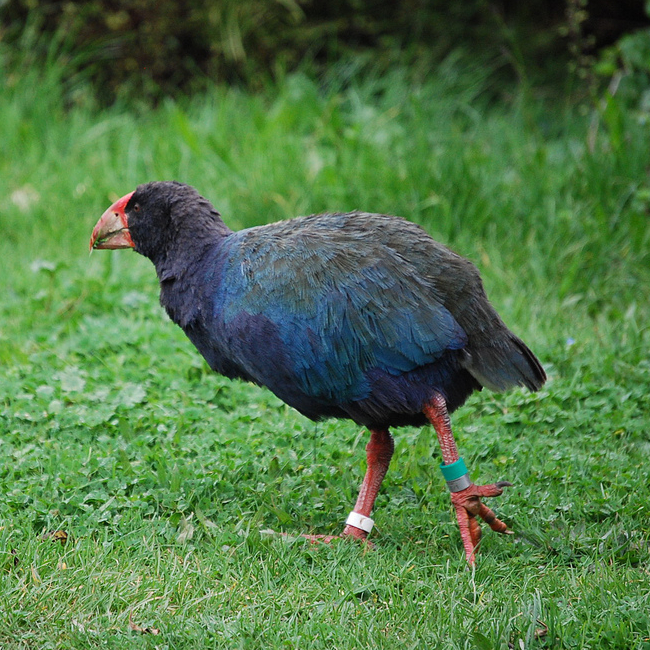 TakahēPorphyrio hochstetteri
-
 Australasian SwamphenPorphyrio melanotus
Compare
Questions and answers
What is the scientific name of the Common Moorhen?
The scientific name of the Common Moorhen is Gallinula chloropus. Written with its author, the full name is Gallinula chloropus (Linnaeus, 1758).
Which family does the Common Moorhen belong to?
Gallinula chloropus belongs to the family Rallidae, in the order Gruiformes and the class Aves.
Where is the Common Moorhen found?
Checklists and occurrence records place Gallinula chloropus in 182 countries, including United Kingdom, The Netherlands, Spain, France, Sweden and Taiwan.
What is the conservation status of the Common Moorhen?
The IUCN Red List category recorded for Gallinula chloropus is Least Concern (LC).
What other names does the Common Moorhen have?
Gallinula chloropus is also known in English as Common Gallinule, Eurasian Moorhen and Moorhen.
Are common moorhen aggressive?
Common Moorhens are territorial during the breeding season and fight other moorhens and waterbirds to defend their territories. When threatened, adults may charge an intruder with their heads lowered.[25][26]
What does the common moorhen eat?
The Common Moorhen eats plant material, small aquatic animals, insects, vegetation, cereals, and fruits. It consumes the most abundant available foods.[18][19][20]
Sources
Passages the profile rests on
- Adults have predominantly black and brown plumage, a white undertail, white flank streaks, yellow legs, and a red frontal shield. Source passage: “with predominantly black and brown plumage, with the exception of a white under-tail, white streaks on the flanks, yellow legs and a red frontal shield.” — English Wikipedia
- The adult's bill is red with a yellow tip. Source passage: “The bill is red with a yellow tip.” — English Wikipedia
- Juveniles are browner than adults and lack the red frontal shield. Source passage: “The young are browner and lack the red shield.” — English Wikipedia
- The adult frontal shield has a rounded upper edge, approximately parallel sides, and a smoothly waving rear margin. Source passage: “The frontal shield of the adult has a rounded top and fairly parallel sides; the tailward margin of the red unfeathered area is a smooth waving line.” — English Wikipedia
- The species has dark grey to almost black plumage with a duller chin and throat. Source passage: “Dark gray to almost black in color, with a duller chin and throat.” — animaldiversity.org
- The wings and rump have white markings, and the legs are bright yellow-green. Source passage: “This species has white on the edges of the wings and rump. Legs are bright yellow-green.” — animaldiversity.org
- The subspecies G. c. meridionalis has slaty blue-grey upperwing coverts and lacks the olive wash. Source passage: “has slaty blue-grey upperwing coverts and lacks the olive wash.” — English Wikipedia
- The subspecies G. c. pyrrhorrhoa is darker than the nominate subspecies and has buff undertail coverts. Source passage: “G. c. pyrrhorrhoa is darker than the nominate; subspecies G. c. pyrrhorrhoa has buff undertail coverts.” — English Wikipedia
- Adults measure approximately 30–38 cm in length. Source passage: “it can range from 30 to 38 cm (12 to 15 in) in length” — English Wikipedia
- The wingspan ranges from approximately 50 to 62 cm. Source passage: “span 50 to 62 cm (20 to 24 in) across the wings.” — English Wikipedia
- Body mass ranges from approximately 192 to 500 g. Source passage: “The body mass of this species can range from 192 to 500 g” — English Wikipedia
- The species inhabits well-vegetated marshes, ponds, canals, and other wetlands. Source passage: “It lives around well-vegetated marshes, ponds, canals and other wetlands.” — English Wikipedia
- The species breeds and resides in marshes, rivers, well-vegetated lakes, and urban parks. Source passage: “This is a common breeding and resident bird in marsh environments, rivers, well-vegetated lakes and even in city parks.” — English Wikipedia
- The species occupies both natural and artificial aquatic environments with still or moving water. Source passage: “Common moorhens are found in many aquatic environments- man-made or natural, and in still or moving water.” — animaldiversity.org
- The species favors aquatic environments containing emergent vegetation that provides shelter. Source passage: “This species is partial to emergent aquatic vegetation which gives it adequate shelter.” — animaldiversity.org
- The species generally occurs in lowland habitats. Source passage: “They are generally found in lowlands” — animaldiversity.org
- During passage through Nepal, the species has been recorded at elevations up to 4,575 m. Source passage: “up to 4575 m on passage though Nepal.” — animaldiversity.org
- The species consumes a variety of plant material and small aquatic animals. Source passage: “This species will consume a wide variety of vegetable material and small aquatic creatures.” — English Wikipedia
- The species feeds on insects, vegetation, cereals, and fruits. Source passage: “gleaning insects or grazing for vegetation, cereals, or fruits.” — animaldiversity.org
- The species is an opportunistic feeder that consumes the most abundant available foods. Source passage: “It is an opportunistic feeder, which means that it eats the most abundant foods available.” — animaldiversity.org
- The species forages both beside and within water and sometimes walks on lily pads or upends itself while feeding. Source passage: “They forage beside or in the water, sometimes walking on lilypads or upending in the water to feed.” — English Wikipedia
- The species swims well, dives, and propels itself through water using its legs. Source passage: “They also swim well and are able to dive and propel themselves with their legs.” — animaldiversity.org
- The species roosts at dusk in low trees or bushes. Source passage: “This species roosts at dusk in low trees or bushes.” — animaldiversity.org
- The species produces a wide range of gargling calls and loud hisses when threatened. Source passage: “The common moorhen gives a wide range of gargling calls and will emit loud hisses when threatened.” — English Wikipedia
- Individuals are territorial during the breeding season and fight other moorhens and waterbirds to defend their territories. Source passage: “The birds are territorial during breeding season, and will fight with other members of their species, as well as other water birds such as ducks, to drive them out of their territory.” — English Wikipedia
- When threatened by a predator, adults may charge the intruder with their heads lowered. Source passage: “The adult charges an intruder with its head held down.” — animaldiversity.org
- Nests are constructed as baskets on the ground within dense vegetation. Source passage: “The nest is a basket built on the ground in dense vegetation.” — English Wikipedia
- In temperate Northern Hemisphere regions, egg laying generally begins between mid-March and mid-May. Source passage: “Laying starts in spring, between mid-March and mid-May in Northern hemisphere temperate regions.” — English Wikipedia
- Females generally lay about eight eggs early in the breeding season. Source passage: “About 8 eggs are usually laid per female early in the season” — English Wikipedia
- Later broods generally contain five to eight eggs or fewer. Source passage: “a brood later in the year usually has only 5–8 or fewer eggs.” — English Wikipedia
- Clutch sizes have been recorded ranging from two to seventeen eggs. Source passage: “Incubation takes from 17 to 22 days, with a clutch size of 2 to 17.” — animaldiversity.org
- Both parents incubate the eggs and feed the young. Source passage: “Both parents incubate and feed the young.” — English Wikipedia
- Incubation lasts approximately three weeks. Source passage: “Incubation lasts about three weeks.” — English Wikipedia
- Incubation lasts between 17 and 22 days. Source passage: “Incubation takes from 17 to 22 days” — animaldiversity.org
- Young birds fledge approximately 40–50 days after hatching. Source passage: “These fledge after 40–50 days” — English Wikipedia
- Both parents care for and feed the chicks after hatching. Source passage: “These chicks are cared for and fed by both parents.” — animaldiversity.org
- In tropical regions, breeding can occur throughout the year. Source passage: “Breeding occurs at any time in tropical regions” — animaldiversity.org
- The species is globally classified as Least Concern by the IUCN. Source passage: “It is therefore considered a species of Least Concern by the IUCN.” — English Wikipedia
- The United Kingdom's Royal Society for the Protection of Birds classifies the species as being of moderate conservation concern. Source passage: “The Royal Society for the Protection of Birds in the United Kingdom has the common moorhen classified as one of its 103 species whose conservation status is of moderate concern” — English Wikipedia
- The Palau population has fewer than 100 adult birds, with surveys usually recording fewer than 50. Source passage: “fewer than 100 adult birds (usually fewer than 50) have been encountered in any survey.” — English Wikipedia
- The species is classified as endangered in Hawaii, Guam, and the Northern Mariana Islands. Source passage: “Common moorhens are currently endangered in Hawaii (Hawaiian common moorhen, Gallinula chloropus sandvicensis ), Guam, and the Northern Mariana Islands (Mariana common moorhen, Gallinula chloropus guami ).” — animaldiversity.org
- The Hawaiian population formerly occurred on all five major islands but is now restricted to two. Source passage: “In Hawaii this species was present on all five of the major islands, but is now only present on two.” — animaldiversity.org
- In some regions, the species is considered an agricultural pest because it feeds on crops. Source passage: “In some areas of the world the common moorhens are seen as a pest to crops.” — animaldiversity.org
- The species occurs across Africa, Europe, and Asia. Source passage: “It is distributed across many parts of the Old World, across Africa, Europe, and Asia.” — English Wikipedia
Data
- Catalogue of Life, 2026-10-16 XR cc by
- Global Biodiversity Information Facility CC BY 4.0
- Wikidata CC0
- GeoNames CC BY 4.0
- Wikimedia Commons per image; credit shown with each image
- Within the Catalogue of Life, this name comes from The Integrated Taxonomic Information System cc0
References
- Syst. Nat. ed. 10 p. 152 where the name was published
- Banks, R. C., R. W. McDiarmid, and A. L. Gardner. (1987). Checklist of Vertebrates of the United States, the U.S. Territories, and Canada. Resource Publication, No. 166.
- Gill, Frank, & and Minturn Wright. (2006). Birds of the World: Recommended English Names.
- Dickinson, E. C., and J. V. Remsen Jr., eds. (2013). The Howard and Moore Complete Checklist of the Birds of the World, 4th Edition, Vol. 1 Non-Passerines.
- Howell, Steve N. G., Ian Lewington, and Will Russell. (2014). Rare Birds of North America.
This species in other databases
- Catalogue of Life 3F6VX
- Wikidata Q18847
- WoRMS urn:lsid:marinespecies.org:taxname:159009
- Avibase commoo3
Page built on 26 November 2026. See how the catalog is made and all sources and licences.
Cite this page
ScientificNames.org. (2026). Gallinula chloropus (Common Moorhen). Retrieved November 26, 2026, from https://scientificnames.org/species/gallinula-chloropus
“Gallinula chloropus (Common Moorhen).” ScientificNames.org, 2026, scientificnames.org/species/gallinula-chloropus. Accessed 26 Nov. 2026.
ScientificNames.org. “Gallinula chloropus (Common Moorhen).” Accessed November 26, 2026. https://scientificnames.org/species/gallinula-chloropus.
@misc{scientificnames_gallinula_chloropus_common_moorhen,
  author = {{ScientificNames.org}},
  title = {Gallinula chloropus (Common Moorhen)},
  year = {2026},
  url = {https://scientificnames.org/species/gallinula-chloropus},
  note = {Accessed 2026-11-26}
}