Species · Crustaceans
Noel's Amphipod Gammarus desperatus
The scientific name of the Noel's Amphipod is Gammarus desperatus. It is a species of crustacean in the family Gammaridae (scuds), order Amphipoda. The name dates from 1981.
- Scientific name
- Gammarus desperatus Cole, 1981
- Common name
- Noel's Amphipod
- Genus
- Gammarus
- Family
- Gammaridae (Scuds)
- Order
- Amphipoda
- Class
- Malacostraca
- Red List category
- CR Critically Endangered
- Environment
- freshwater
- Recorded in
- 1 country
- Name status
- accepted in the Catalogue of Life

Overview
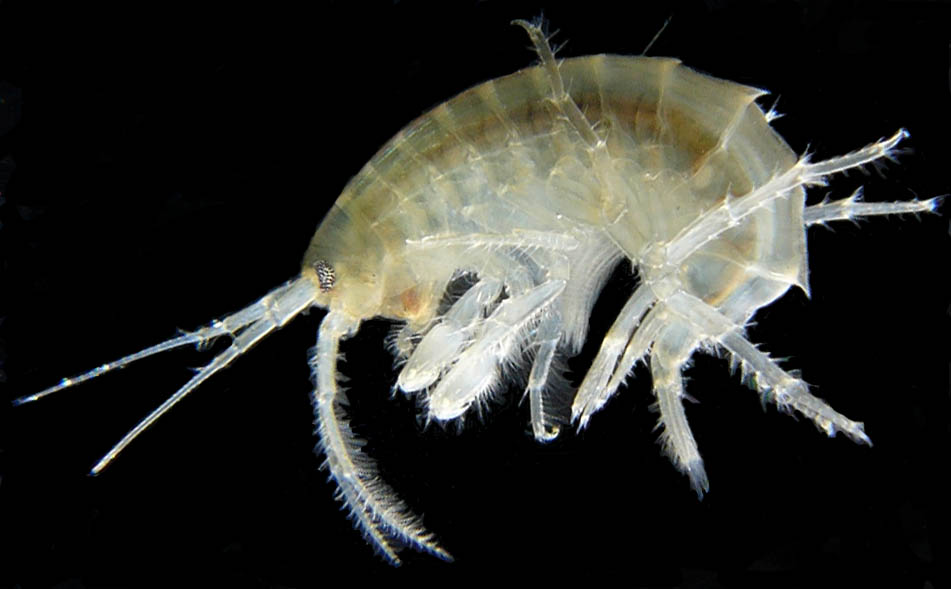
Noel's amphipod (Gammarus desperatus Cole, 1981) is a crustacean in the family Gammaridae, order Amphipoda, and class Malacostraca. It has brown-green coloration, red bands along its thoracic and abdominal segments, and a laterally flattened body covered in bristles.
Written 27 November 2026 from the sources listed below. Each statement was checked against the passage it cites; statements that could not be supported were removed.
Appearance
Noel's amphipod has brown-green coloration with red bands along its thoracic and abdominal segments. These bands often form a dorsal stripe.[1][2]
Its body is laterally flattened and covered in bristles. It has long, kidney-shaped eyes, lacks a carapace, and primarily respires through gills.[3][4]
Adult males typically measure between 9.45 and 14.8 millimeters in length, while adult females typically measure between 8.5 and 12.6 millimeters. Males are generally larger than females.[5][6][7]
Individuals shorter than 8.5 millimeters have been regularly observed during monitoring at Bitter Lake National Wildlife Refuge.[8]
Habitat
Its aquatic habitat consists of cool, shallow, well-oxygenated freshwater to moderately saline water. The water is permanently flowing, with slow to moderate velocity, and typically has a pH between 6 and 8.[9][10][11]
Associated vegetation ranges from dense emergent aquatic plant beds to vegetated banks and submerged aquatic vegetation. Individuals are frequently sheltered by beds of submerged aquatic plants.[12][13]
The species is sensitive to water contamination and requires consistently flowing water of suitable quality.[14]
Diet
Noel's amphipod is omnivorous and consumes plant material, animal matter, and detritus. Its likely diet includes algae, diatoms, bacteria, and fungi.[15][16]
Young individuals depend on microbial foods such as algae and bacteria associated with aquatic plants.[17]
Behaviour
Noel's amphipod is typically nocturnal and sensitive to light. Individuals are strongly oriented toward their substrate.[18][19]
Individuals use their appendages for clutching, pushing, stabilizing, crawling, and swimming. Cannibalism occurs in gammarid amphipod populations with high densities and limited food supplies.[20][21]
Reproduction and life cycle
The breeding season commonly extends from February through October and depends on water temperature. Males and females pair for one to seven days before copulation while feeding and swimming together.[22][23]
Copulation and sperm transfer last less than one minute. Females retain an average of 15 to 50 fertilized eggs in their marsupium.[24][25]
Eggs are incubated in the female's brood pouch for one to three weeks. Young remain in the marsupium for another one to eight days before being released.[26][27]
Conservation
Noel's amphipod is federally endangered. A total of 75.9 acres of critical habitat has been designated across three units.[28][29]
Groundwater pumping and contaminants in the surrounding aquifer are identified as challenges to the species.[30]
The species and its parts are not available for import or export.[31]
Classification of the Noel's Amphipod
| Kingdom | Animalia |
|---|---|
| Phylum | Arthropoda |
| Subphylum | Crustacea |
| Class | Malacostraca |
| Order | Amphipoda |
| Suborder | Senticaudata |
| Infraorder | Gammarida |
| Parvorder | Gammaridira |
| Superfamily | Gammaroidea |
| Family | Gammaridae (Scuds) |
| Genus | Gammarus (Scuds) |
| Species | Gammarus desperatus Cole, 1981 |
Where the Noel's Amphipod is found
Checklists and occurrence records place Gammarus desperatus in 1 country. GBIF holds 105 georeferenced records of it.
Countries
Regions and cities with the most records
A number beside a place is its count of GBIF occurrence records. A place without a number comes from a checklist alone. Records show where a species has been observed or collected, which can include escapes and vagrants.
Common names
English
- Noel's Amphipod
- Bitter Lakes Amphipod
Related species
-
 Common Freshwater AmphipodGammarus pulex
-
 Lacustrine ScudGammarus lacustris
-
 Trench ScudGammarus fossarum
- Illinois Cave AmphipodGammarus acherondytes
-
 Roeseli's ScudGammarus roeselii
-
 Locust AmphipodGammarus locusta
-
 Pecos AmphipodGammarus pecos
-
 Gammarus mucronatus
Compare
Questions and answers
What is the scientific name of the Noel's Amphipod?
The scientific name of the Noel's Amphipod is Gammarus desperatus. Written with its author, the full name is Gammarus desperatus Cole, 1981.
Which family does the Noel's Amphipod belong to?
Gammarus desperatus belongs to the family Gammaridae, in the order Amphipoda and the class Malacostraca.
Where is the Noel's Amphipod found?
Checklists and occurrence records place Gammarus desperatus in 1 country: United States.
What is the conservation status of the Noel's Amphipod?
The IUCN Red List category recorded for Gammarus desperatus is Critically Endangered (CR).
What other names does the Noel's Amphipod have?
Gammarus desperatus is also known in English as Bitter Lakes Amphipod.
Sources
Passages the profile rests on
- The species has a brown-green coloration. Source passage: “Noel’s amphipods are brown-green in color” — fws.gov
- The species has red bands along its thoracic and abdominal segments, often forming a dorsal stripe. Source passage: “flanked with red bands along their thoracic and abdominal segments, often with a red dorsal stripe.” — fws.gov
- Individuals have laterally flattened bodies covered in bristles and long, kidney-shaped eyes. Source passage: “They are laterally-flattened and covered in bristles, with long, kidney-shaped eyes.” — fws.gov
- The species lacks a carapace and primarily respires through gills. Source passage: “has no carapace, respires primarily through gills” — fws.gov
- Adult males typically measure between 9.45 and 14.8 millimeters in length. Source passage: “Males typically range from 9.45 to 14.8 millimeters (0.37 to 0.58 inches) in length.” — fws.gov
- Adult females typically measure between 8.5 and 12.6 millimeters in length. Source passage: “Females typically range from 8.5 to 12.6 millimeters (0.34 to 0.50 inches) in length.” — fws.gov
- Males are generally larger than females. Source passage: “Noel’s amphipod males are generally larger than females.” — fws.gov
- Individuals shorter than 8.5 millimeters have been regularly observed during monitoring at Bitter Lake National Wildlife Refuge. Source passage: “Noel’s amphipods that measure smaller than 8.5 millimeters in length have been observed with regularity during monitoring efforts at Bitter Lake National Wildlife Refuge.” — fws.gov
- Typical aquatic habitat includes cool, shallow, well-oxygenated freshwater to moderately saline water. Source passage: “cool, shallow, well-oxygenated water that is fresh to moderately saline” — fws.gov
- The species' aquatic habitat is permanently flowing, with slow to moderate water velocity. Source passage: “permanently flowing with slow to moderate velocity” — fws.gov
- Typical habitat water has a pH between 6 and 8. Source passage: “specific acidity thresholds of pH generally between 6 and 8.” — fws.gov
- Associated vegetation ranges from dense emergent aquatic plant beds to vegetated banks and submerged aquatic vegetation. Source passage: “Vegetation associated with Noel's amphipod habitat ranges from dense beds of emergent macrophytes, or aquatic plants, to clear, spring-fed flows with vegetated banks and submerged aquatic vegetation.” — fws.gov
- Individuals are frequently sheltered by beds of submerged aquatic plants. Source passage: “Beds of submerged aquatic plants are frequent shelter for Noel's amphipod” — fws.gov
- The species is sensitive to water contamination and requires consistently flowing water of suitable quality. Source passage: “their need for consistently flowing water of a certain quality and the impacts of groundwater pumping and contaminants in their surrounding aquifer” — fws.gov
- The species is omnivorous and consumes plant material, animal matter, and detritus. Source passage: “Amphipods are omnivorous, feeding on a variety of plant material, animal matter and detritus.” — fws.gov
- Its likely diet includes algae, diatoms, bacteria, and fungi. Source passage: “where they likely consume a diet of algae, diatoms, bacteria and fungi.” — fws.gov
- Young individuals depend on microbial foods such as algae and bacteria associated with aquatic plants. Source passage: “Young amphipods depend on microbial foods, such as algae and bacteria associated with aquatic plants.” — fws.gov
- The species is typically nocturnal and sensitive to light. Source passage: “They are typically nocturnal, light-sensitive” — fws.gov
- Individuals are strongly oriented toward their substrate. Source passage: “strongly oriented to their substrate.” — fws.gov
- Individuals use their appendages for clutching, pushing, stabilizing, crawling, and swimming. Source passage: “They use various appendages to clutch, push, stabilize, crawl and swim.” — fws.gov
- Cannibalism occurs in gammarid amphipod populations with high densities and limited food supplies. Source passage: “Cannibalism is common in gammarid amphipod populations with high densities and limited food supplies.” — fws.gov
- The species' breeding season commonly extends from February through October and depends on water temperature. Source passage: “The breeding season for most amphipods is dependent on water temperature and commonly occurs from February through October.” — fws.gov
- Males and females pair for one to seven days before copulation while feeding and swimming together. Source passage: “Gammarus males and females pair for one to seven days, feeding and swimming together prior to copulation.” — fws.gov
- Copulation and sperm transfer last less than one minute. Source passage: “Copulation and sperm transfer lasts less than one minute.” — fws.gov
- Females retain an average of 15 to 50 fertilized eggs in their marsupium. Source passage: “An average of 15 to 50 fertilized eggs are retained in the female’s brood pouch, also called a marsupium” — fws.gov
- Eggs are incubated in the female's brood pouch for one to three weeks. Source passage: “where they are incubated for one to three weeks.” — fws.gov
- Young remain in the marsupium for another one to eight days before being released. Source passage: “Young remain in the marsupium for another one to eight days before being released into the aquatic environment” — fws.gov
- The species is federally endangered. Source passage: “Noel's amphipod (Gammarus desperatus) is a federally endangered invertebrate species” — fws.gov
- A total of 75.9 acres of critical habitat has been designated for the species across three units. Source passage: “there are a total of 75.9 acres (30.7 hectares) of critical habitat designated for Noel's amphipod in three units” — fws.gov
- Groundwater pumping and contaminants in the surrounding aquifer are identified as challenges to the species. Source passage: “the impacts of groundwater pumping and contaminants in their surrounding aquifer” — fws.gov
- The species and its parts are not available for import or export. Source passage: “This species and its parts are not available to import or export.” — fws.gov
Data
- Catalogue of Life, 2026-10-16 XR cc by
- Global Biodiversity Information Facility CC BY 4.0
- Wikidata CC0
- GeoNames CC BY 4.0
- Wikimedia Commons per image; credit shown with each image
- Within the Catalogue of Life, this name comes from World Register of Marine Species cc by
References
- Cole, G. A. (1981). Gammarus desperatus, a new species from New Mexico (Crustacea: Amphipoda). Hydrobiologia, 76, 27–32. https://doi.org/10.1007/bf00014030 Link where the name was published
This species in other databases
Page built on 27 November 2026. See how the catalog is made and all sources and licences.
Cite this page
ScientificNames.org. (2026). Gammarus desperatus (Noel's Amphipod). Retrieved November 27, 2026, from https://scientificnames.org/species/gammarus-desperatus
“Gammarus desperatus (Noel's Amphipod).” ScientificNames.org, 2026, scientificnames.org/species/gammarus-desperatus. Accessed 27 Nov. 2026.
ScientificNames.org. “Gammarus desperatus (Noel's Amphipod).” Accessed November 27, 2026. https://scientificnames.org/species/gammarus-desperatus.
@misc{scientificnames_gammarus_desperatus_noels_amphipod,
  author = {{ScientificNames.org}},
  title = {Gammarus desperatus (Noel's Amphipod)},
  year = {2026},
  url = {https://scientificnames.org/species/gammarus-desperatus},
  note = {Accessed 2026-11-27}
}