Species · Flowering plants
Kokum Garcinia indica
The scientific name of the Kokum is Garcinia indica. It is a species of flowering plant in the family Clusiaceae (clusoids), order Malpighiales.
- Scientific name
- Garcinia indica (Thouars) Choisy
- Common name
- Kokum
- Genus
- Garcinia
- Family
- Clusiaceae (Clusoids)
- Order
- Malpighiales
- Class
- Magnoliopsida
- Red List category
- VU Vulnerable
- Recorded in
- 3 countries
- Name status
- accepted in the Catalogue of Life

Overview
Kokum (Garcinia indica) is a medium-sized evergreen flowering tree in the family Clusiaceae, order Malpighiales and class Magnoliopsida. It grows primarily in the Western Ghats states of Maharashtra, Goa, Karnataka and Kerala. It produces spherical purple berries containing acidic pulp and five to eight seeds.
Written 26 November 2026 from the sources listed below. Each statement was checked against the passage it cites; statements that could not be supported were removed.
Appearance
Kokum is a medium-sized evergreen tree with drooping branches and a pyramid-shaped crown at maturity. Its canopy is dense, with green leaves and young leaves tinged with red.[1][2][3]
Its berries are spherical, with indentations at the top, stalk and bottom. They change from green to red as they ripen and are described as orange-sized purple berries with a fleshy endocarp.[4][5][6]
The tree can reach approximately 18 metres in height, and its berries have a diameter of approximately 5 centimetres. Each fruit contains between five and eight seeds, which account for approximately 20–23% of the fruit's weight; the kernels constitute approximately 61% of seed weight.[7][8][9][10][11]
Habitat
Kokum grows in coastal and foothill moist forests at elevations of up to 1,000 metres. Its recorded forest habitat receives more than 2,500 millimetres of average annual rainfall.[12][13]
The species favors lateritic alluvial soils with a depth of at least one metre and a pH of 6.7. It occurs in forest lands, riversides and wastelands, preferring evergreen forests but also growing in areas receiving relatively little rainfall.[14][15][16]
Reproduction and life cycle
Kokum is a monoecious tree. Its berries ripen during summer, and the seeds are embedded in an acidic pulp.[17][18][19]
Uses
The dried outer fruit covering is used as a souring ingredient in regional Indian cuisines and as an alternative to tamarind in curries and other South Indian dishes. Kokum adds flavor and tartness to dal in Gujarati cuisine and is an ingredient in Assamese dishes including masor tenga and tenga dali.[20][21][22][23]
Fresh kokum fruit is preserved with sugar to produce a red squash beverage called Kokum Sarbat. Its fruit extract, called aagul in Konkani and Marathi, is used in preparing solkadhi.[24][25]
Kokum seeds contain approximately 23–26% butter that remains solid at room temperature. Kokum butter is used in making chocolate and sugar confectionery, ointments, suppositories, skin and hair products, acne products and skin tonics.[26][27][28][29]
The fruit rind contains hydroxycitric acid. The fruits, rinds and seeds are used in culinary, industrial and pharmaceutical applications.[30][31]
Kokum has traditional medicinal uses for treating inflammation, dermatitis and diarrhea and promoting digestion. The species has also been reported to exhibit antioxidant and anti-inflammatory activities.[32][33]
Classification of the Kokum
| Kingdom | Plantae |
|---|---|
| Subkingdom | Pteridobiotina |
| Phylum | Tracheophyta |
| Class | Magnoliopsida |
| Order | Malpighiales |
| Family | Clusiaceae (Clusoids) |
| Tribe | Garcinieae |
| Genus | Garcinia (Mangosteen Genus) |
| Species | Garcinia indica (Thouars) Choisy |
Where the Kokum is found
Checklists and occurrence records place Garcinia indica in 3 countries across Africa, Asia and North America. GBIF holds 204 georeferenced records of it.
Countries where it is native or its origin is not stated
Countries where it has been introduced
Regions and cities with the most records
- Maharashtra, India 95
- Karnataka, India 47
- Sāvantvādi, India 12
- Kerala, India 9
- Bengaluru, India 8
- Bommasandra Industrial Area, India 8
- Electronic City Phase I, India 8
- Hebbagodi, India 8
- Jigani, India 8
- Yelahanka, India 8
- koppana Agrahara, India 8
- Goa, India 5
- Kankauli, India 5
- Ratnagiri, India 5
- Bicholim, India 4
- Ajara, India 3
- Alandi, India 3
- Calangute, India 3
- Curchorem, India 3
- Khadki, India 3
- Kharakvasla, India 3
- Kudāl, India 3
- Mapusa, India 3
- Mālvan, India 3
- Panvel, India 3
- Pimpri, India 3
- Pimpri-Chinchwad, India 3
- Pune, India 3
- Vagholi, India 3
- Tamil Nadu, India 2
1 more country has a few records outside this range
These countries hold a few records of Garcinia indica but lie outside the range the checklists give for it. Such records are often zoo or garden specimens, museum material or vagrants, so the species is not counted as occurring there.
Range as the checklists state it
Cameroon [I]; India (Goa, Karnataka, Kerala, Maharashtra, Tamil Nadu); Trinidad & Tobago [I]
A number beside a place is its count of GBIF occurrence records. A place without a number comes from a checklist alone. Records show where a species has been observed or collected, which can include escapes and vagrants.
Common names
English
- Kokum
- Goa-butter
- Indian Gamboge
- Kokam
Names in 6 other languages
- Chinese
- 印度藤黃, 印度鳳果
- Czech
- mangostana indická
- Marathi
- कोकम, रातंबा
- Russian
- Гарциния индийская
- Slovak
- garcínia indická
- Telugu
- కొకుంబ
Synonyms
10 other scientific names have been used for this species and are now treated as synonyms of Garcinia indica.
- Brindonia indica Thouars
- Brindonia oxycarpa Thouars
- Garcinia oxycarpa (Thouars) P.W.Sweeney
- Stalagmitis indica (Thouars) G.Don
- Stalagmitis purpurea (Roxb.) G.Don
- Xanthochymus purpureus Lodd. ex G.Don
- Brindonia celebica Thouars ambiguous synonym
- Garcinia celebica (Thouars) Desr. ambiguous synonym
- Garcinia purpurea (G.Don) Roxb. ambiguous synonym
- Oxycarpus indica (Thouars) Poir. ambiguous synonym
Related species
-
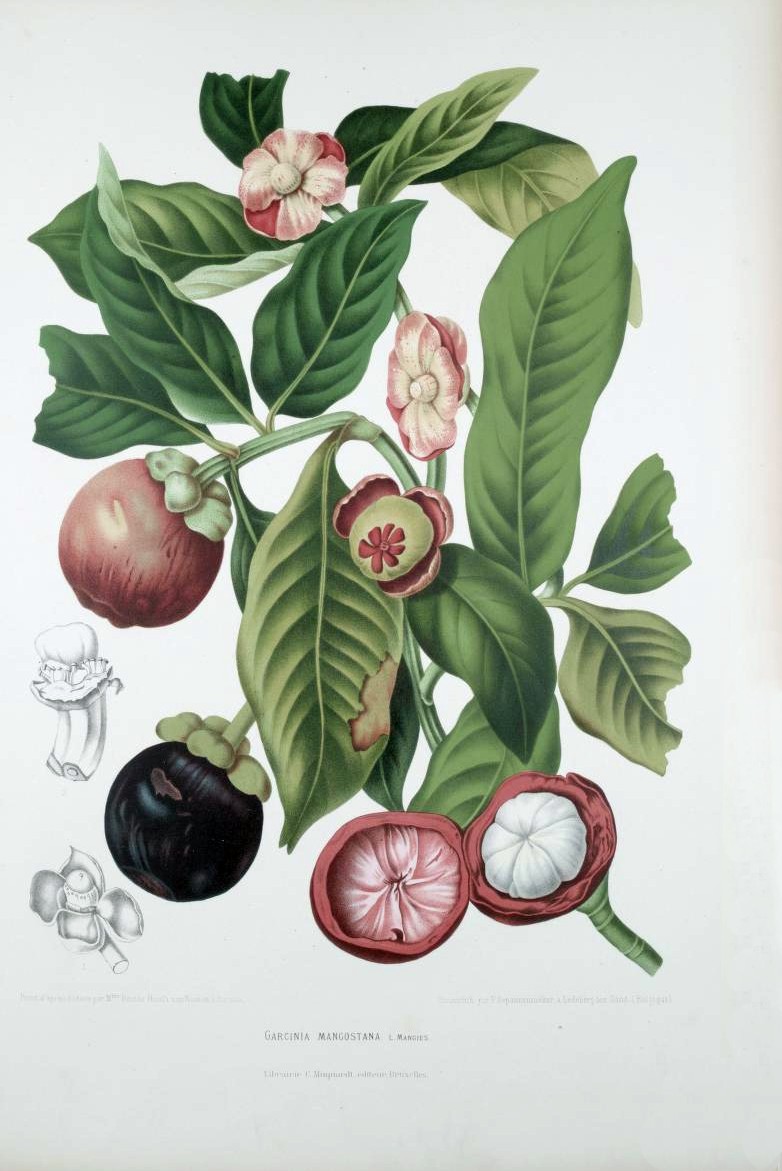 MangosteenGarcinia mangostana
-
 Malabar TamarindGarcinia gummi-gutta
-
 Bitter KolaGarcinia kola
-
 AchachaGarcinia gardneriana
-
 False MangosteenGarcinia xanthochymus
- African MangosteenGarcinia livingstonei
-
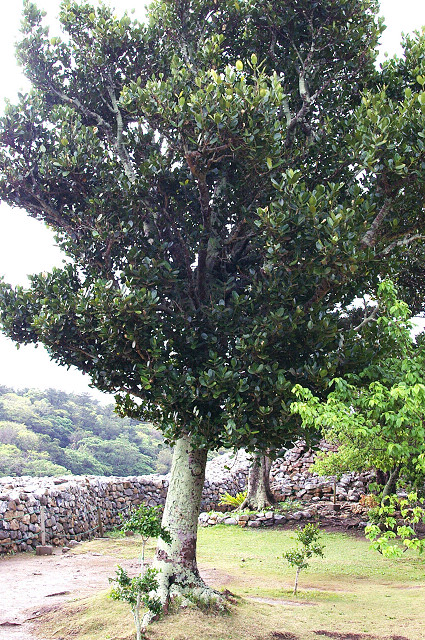 Common GarciniaGarcinia subelliptica
-
 Lemon Drop MangosteenGarcinia intermedia
Compare
Questions and answers
What is the scientific name of the Kokum?
The scientific name of the Kokum is Garcinia indica. Written with its author, the full name is Garcinia indica (Thouars) Choisy.
Which family does the Kokum belong to?
Garcinia indica belongs to the family Clusiaceae, in the order Malpighiales and the class Magnoliopsida.
Where is the Kokum found?
Checklists and occurrence records place Garcinia indica in 3 countries, including India.
What is the conservation status of the Kokum?
The IUCN Red List category recorded for Garcinia indica is Vulnerable (VU).
What other names does the Kokum have?
Garcinia indica is also known in English as Goa-butter, Indian Gamboge and Kokam.
What is kokum fruit good for?
Kokum fruit is used as a souring and flavoring ingredient in various regional Indian dishes and to prepare Kokum Sarbat and solkadhi. Its traditional medicinal uses include treating inflammation, dermatitis and diarrhea and promoting digestion.[20][21][22][23][24][25][32]
Sources
Passages the profile rests on
- Garcinia indica is a medium-sized evergreen tree with drooping branches. Source passage: “Garcinia indica is a medium-sized evergreen tree. It grows to a height of about 18 m. The tree has drooping branches.” — English Wikipedia
- The mature tree develops a pyramid-shaped crown. Source passage: “Garcinia indica is an evergreen, monoecious tree, which can grow up to 18 meters high, on maturity attaining a pyramid shape.” — English Wikipedia
- The tree has a dense canopy of green leaves and young leaves tinged with red. Source passage: “The tree is ornamental, with a dense canopy of green leaves and red-tinged, tender, young leaves.” — English Wikipedia
- Its berries are spherical and have indentations at the top, stalk and bottom. Source passage: “They are spherical with a diameter of about 5 cm. They have indentations on the top, on the stalk, and on the bottom.” — English Wikipedia
- The berries change from green to red as they ripen. Source passage: “They are initially green, but turn red as they ripen.” — English Wikipedia
- The fruit is described as an orange-sized purple berry with a fleshy endocarp. Source passage: “The fruit, an orange-sized purple berry with fleshy endocarp, contains five to eight seeds” — English Wikipedia
- The tree can reach approximately 18 metres in height. Source passage: “It grows to a height of about 18 m.” — English Wikipedia
- The berries have a diameter of approximately 5 centimetres. Source passage: “They are spherical with a diameter of about 5 cm.” — English Wikipedia
- Each fruit contains between five and eight seeds. Source passage: “Each berry has 5 to 8 seeds surrounded by a sweet and sour pulp that contains some fibers.” — English Wikipedia
- The seeds account for approximately 20–23% of the fruit's weight. Source passage: “The fruit, an orange-sized purple berry with fleshy endocarp, contains five to eight seeds, which account for 20–23% of the fruit's weight.” — English Wikipedia
- The kernels constitute approximately 61% of seed weight. Source passage: “The kernels account for 61 percent of the weight of the seed and about 44% of its oil.” — English Wikipedia
- The species grows in coastal and foothill moist forests at elevations of up to 1,000 metres. Source passage: “It grows in coastal and foothill moist forests up to 1,000 metres elevation” — English Wikipedia
- Its recorded forest habitat receives more than 2,500 millimetres of average annual rainfall. Source passage: “with more than 2,500 mm of average annual rainfall.” — English Wikipedia
- The species favors lateritic alluvial soils with a depth of at least one metre and a pH of 6.7. Source passage: “It favors lateritic alluvial soils with a depth of one or more metres and pH of 6.7.” — English Wikipedia
- The species occurs in forest lands, riversides and wastelands. Source passage: “Garcinia indica is found in forest lands, riversides and wastelands.” — English Wikipedia
- The species prefers evergreen forests but can also grow in areas receiving relatively little rainfall. Source passage: “These plants prefer evergreen forests, but sometimes they also thrive in areas with relatively low rainfall.” — English Wikipedia
- Garcinia indica is a monoecious tree. Source passage: “Garcinia indica is an evergreen, monoecious tree” — English Wikipedia
- The berries ripen during summer. Source passage: “The berries ripen in the summer.” — English Wikipedia
- The seeds are embedded in an acidic pulp. Source passage: “The seeds are compressed and embedded in an acidic pulp.” — English Wikipedia
- The dried outer fruit covering is used as a souring ingredient in regional Indian cuisines. Source passage: “The outer cover of fruit is dried in the sun to get aamsul or kokam. It is used as a souring agent” — English Wikipedia
- The dried fruit covering is used as an alternative to tamarind in curries and other South Indian dishes. Source passage: “As a souring agent, it is used as an alternative to tamarind in curries and other dishes from south India.” — English Wikipedia
- Kokum is used to add flavor and tartness to dal in Gujarati cuisine. Source passage: “It is also used in cuisine from Gujarat, where it is frequently used to add flavor and tartness to dal (lentil soup) for flavor balance.” — English Wikipedia
- Kokum is an ingredient in Assamese dishes including masor tenga and tenga dali. Source passage: “It is extensively used in Assamese cuisine in many dishes like masor tenga (sour fish curry) and tenga dali (sour dal).” — English Wikipedia
- Fresh kokum fruit is preserved with sugar to produce a red squash beverage called Kokum Sarbat. Source passage: “The fresh fruit is preserved with sugar to make bright-red squash that is diluted with water and bottled for sale as a beverage called Kokum Sarbat.” — English Wikipedia
- Kokum fruit extract, called aagul in Konkani and Marathi, is used in preparing solkadhi. Source passage: “The extract of the fruit is called aagul in Konkani and Marathi. It is added during the preparation of solkadhi” — English Wikipedia
- Kokum seed contains approximately 23–26% butter that remains solid at room temperature. Source passage: “The seed of Garcinia indica contains 23–26% Kokum butter, which remains solid at room temperature.” — English Wikipedia
- Kokum butter is used in making chocolate and sugar confectionery. Source passage: “It is used in the preparation of chocolate and sugar confectionery.” — English Wikipedia
- Kokum butter is used in ointments and suppositories. Source passage: “The oily extract called Kukum butter is used in ointments and suppositories.” — English Wikipedia
- Kokum butter is used in skin and hair products, acne products and skin tonics. Source passage: “It has application in skin and hair products, acne products and skin tonics.” — English Wikipedia
- The fruit rind contains hydroxycitric acid. Source passage: “The rind of the fruit is a good source of hydroxycitric acid” — English Wikipedia
- The fruits, rinds and seeds are used in culinary, industrial and pharmaceutical applications. Source passage: “All parts of G. indica, i.e., fruits, rind, seeds, etc., have been used in various culinary, industrial and pharmaceutical applications, as well as fruit drinks and food” — pmc.ncbi.nlm.nih.gov
- The species has traditional medicinal uses for treating inflammation, dermatitis and diarrhea and promoting digestion. Source passage: “G. indica has been used in traditional medicine to treat inflammation, dermatitis, and diarrhea, and to promote digestion.” — pmc.ncbi.nlm.nih.gov
- The species has been reported to exhibit antioxidant and anti-inflammatory activities. Source passage: “These studies reported that G. indica has antioxidant, anti-obesity, anti-arthritic, anti-inflammatory, antibacterial, hepatoprotective, cardioprotective, antidepressant and anxiolytic effects both in vitro and in vivo.” — pmc.ncbi.nlm.nih.gov
Data
- Catalogue of Life, 2026-10-16 XR cc by
- Global Biodiversity Information Facility CC BY 4.0
- Wikidata CC0
- GeoNames CC BY 4.0
- Wikimedia Commons per image; credit shown with each image
- Within the Catalogue of Life, this name comes from Synonymic Checklists of the Vascular Plants of the World cc by
References
- Choisy. (1824). Prodr. [A.P. de Candolle] 1: 561 (1824). where the name was published
This species in other databases
- Catalogue of Life 3F9WX
- Wikidata Q2095514
- iNaturalist 500380
- World Flora Online wfo-0000694375
- GRIN 311275
Page built on 28 November 2026. See how the catalog is made and all sources and licences.
Cite this page
ScientificNames.org. (2026). Garcinia indica (Kokum). Retrieved November 28, 2026, from https://scientificnames.org/species/garcinia-indica
“Garcinia indica (Kokum).” ScientificNames.org, 2026, scientificnames.org/species/garcinia-indica. Accessed 28 Nov. 2026.
ScientificNames.org. “Garcinia indica (Kokum).” Accessed November 28, 2026. https://scientificnames.org/species/garcinia-indica.
@misc{scientificnames_garcinia_indica_kokum,
  author = {{ScientificNames.org}},
  title = {Garcinia indica (Kokum)},
  year = {2026},
  url = {https://scientificnames.org/species/garcinia-indica},
  note = {Accessed 2026-11-28}
}