Species · Flowering plants
Bitter Kola Garcinia kola
The scientific name of the Bitter Kola is Garcinia kola. It is a species of flowering plant in the family Clusiaceae (clusoids), order Malpighiales.
- Scientific name
- Garcinia kola Heckel
- Common name
- Bitter Kola
- Genus
- Garcinia
- Family
- Clusiaceae (Clusoids)
- Order
- Malpighiales
- Class
- Magnoliopsida
- Red List category
- VU Vulnerable
- Recorded in
- 15 countries
- Name status
- accepted in the Catalogue of Life

Overview
Garcinia kola occurs in subtropical and tropical moist lowland forests and is indigenous to West and Central Africa. Its seeds have a bitter, astringent taste and stimulating effect and are traditionally chewed during cultural and social ceremonies.
Written 26 November 2026 from the sources listed below. Each statement was checked against the passage it cites; statements that could not be supported were removed.
Habitat
Bitter kola occurs in subtropical and tropical moist lowland forests. It is commonly found in these forests in Nigeria and Cameroon.[1][2]
Its recorded distribution includes Benin, Cameroon, The Gambia, the Democratic Republic of the Congo, Ivory Coast, Guinea, Mali, Gabon, Ghana, Liberia, Nigeria, Senegal and Sierra Leone.[3]
Uses
The seeds are consumed orally and have a bitter, astringent taste and stimulating effect. They are traditionally chewed during cultural and social ceremonies and offered to guests and unfamiliar people as gestures of friendship and respect.[4][5][6]
The seeds and other plant parts are traditionally used to address gastric disorders, liver disorders, diarrhoea, bronchial diseases, throat infections, colds, fever and malaria. Other traditional uses include treating bronchitis, colic, coughs and chest colds.[7][8]
Traditional uses include treating hypertension, asthma, gastroenteritis, food and alcohol poisoning, and serving as a poison antidote. The plant is also traditionally used as an antimicrobial, antiviral and antiparasitic agent.[9][10][11]
The plant is traditionally used as an aphrodisiac and to produce stimulating effects. It is also used traditionally to treat inflammation and heal wounds.[12][13][14]
The plant is traditionally used as a chewing stick. Oil pressed from the seeds is used externally.[15][16]
The fruit, seeds and bark have historically been used in folk medicine for ailments including coughs and fever. Seeds can be consumed raw or processed into an infusion for traditional treatment of bronchitis, laryngitis and throat infections.[17][18]
Trade in bitter kola remains important to indigenous communities and villages in Nigeria.[19]
Reproduction and life cycle
Seed germination is hindered by seed coat dormancy and physiological dormancy. Removing the seed coat before sowing can reduce seed coat dormancy, while soaking seeds in water for 72 hours can reduce physiological dormancy.[20][21][22]
Conservation
Bitter kola is recorded as vulnerable on the IUCN Red List of Threatened Species. Deforestation and relatively intensive harvesting from the wild are identified as possible reasons for its vulnerable status.[23][24]
Cultivation remains limited despite the species' socioeconomic importance. Difficulties with seed germination reduce seedling availability and discourage cultivation.[25][26]
Similar species
Cola acuminata produces true kola nuts but is not related to Garcinia kola.[27]
Classification of the Bitter Kola
| Kingdom | Plantae |
|---|---|
| Subkingdom | Pteridobiotina |
| Phylum | Tracheophyta |
| Class | Magnoliopsida |
| Order | Malpighiales |
| Family | Clusiaceae (Clusoids) |
| Tribe | Garcinieae |
| Genus | Garcinia (Mangosteen Genus) |
| Species | Garcinia kola Heckel |
Where the Bitter Kola is found
Checklists and occurrence records place Garcinia kola in 15 countries across Africa. GBIF holds 796 georeferenced records of it.
Countries
- Angola 3
- Benin 85
- Cameroon 115
- Central African Republic 17
- Democratic Republic of the Congo 148
- Equatorial Guinea 9
- Gabon 131
- Ghana 29
- Guinea 82
- Ivory Coast 49
- Liberia 59
- Nigeria 62
- Republic of the Congo 4
- Sierra Leone 3
- Togo
Regions and cities with the most records
- Nzérékoré Region, Guinea 78
- Littoral, Cameroon 37
- Nkongsamba, Cameroon 35
- Dogbo, Benin 29
- Lokossa, Benin 29
- Mono, Benin 29
- Athiémé, Benin 25
- Sé, Benin 25
- Woleu-Ntem, Gabon 24
- Adjarra, Benin 21
- Avrankou, Benin 21
- Lofa County, Liberia 21
- Missérété, Benin 21
- Ogooué-Ivindo, Gabon 21
- Ouémé, Benin 21
- Porto-Novo, Benin 21
- Semi, Benin 21
- South-West, Cameroon 21
- Centre, Cameroon 20
- Ekpé, Benin 19
- Tshopo, Democratic Republic of the Congo 16
- Sanniquellie, Liberia 15
- Yaoundé, Cameroon 15
- Atlantique, Benin 14
- Grand Cape Mount County, Liberia 14
- Yangambi, Democratic Republic of the Congo 14
- East, Cameroon 13
- Estuaire, Gabon 13
- Agege, Nigeria 12
- Akowonjo, Nigeria 12
- Alimosho, Nigeria 12
- Ebute Ikorodu, Nigeria 12
- Haut-Ogooué, Gabon 12
- Ikeja, Nigeria 12
- Lagos, Nigeria 12
- Lagunes District, Ivory Coast 12
Range as the checklists state it
Sierra Leone; Liberia; Ivory Coast; Ghana; Togo; Benin; Nigeria; Cameroon; Bioko Isl. [Fernando Poo]; Equatorial Guinea; Gabon; Congo [Brazzaville]; Central African Republic; D. R. Congo [Zaire]; NW-Angola
A number beside a place is its count of GBIF occurrence records. A place without a number comes from a checklist alone. Records show where a species has been observed or collected, which can include escapes and vagrants.
Common names
English
- Bitter Kola
- Bitter-kola
- False Kola
Names in 3 other languages
- French
- Petit cola
- Slovak
- garcínia liečivá
- ewe
- Aloti
Synonyms
7 other scientific names have been used for this species and are now treated as synonyms of Garcinia kola.
- Garcinia akawaensis Spirlet
- Garcinia autraniana Pierre
- Garcinia bergheana Spirlet
- Garcinia dinklagei Engl.
- Garcinia giadidii De Wild.
- Garcinia ndongensis Engl.
- Garcinia nitidula Engl.
Related species
-
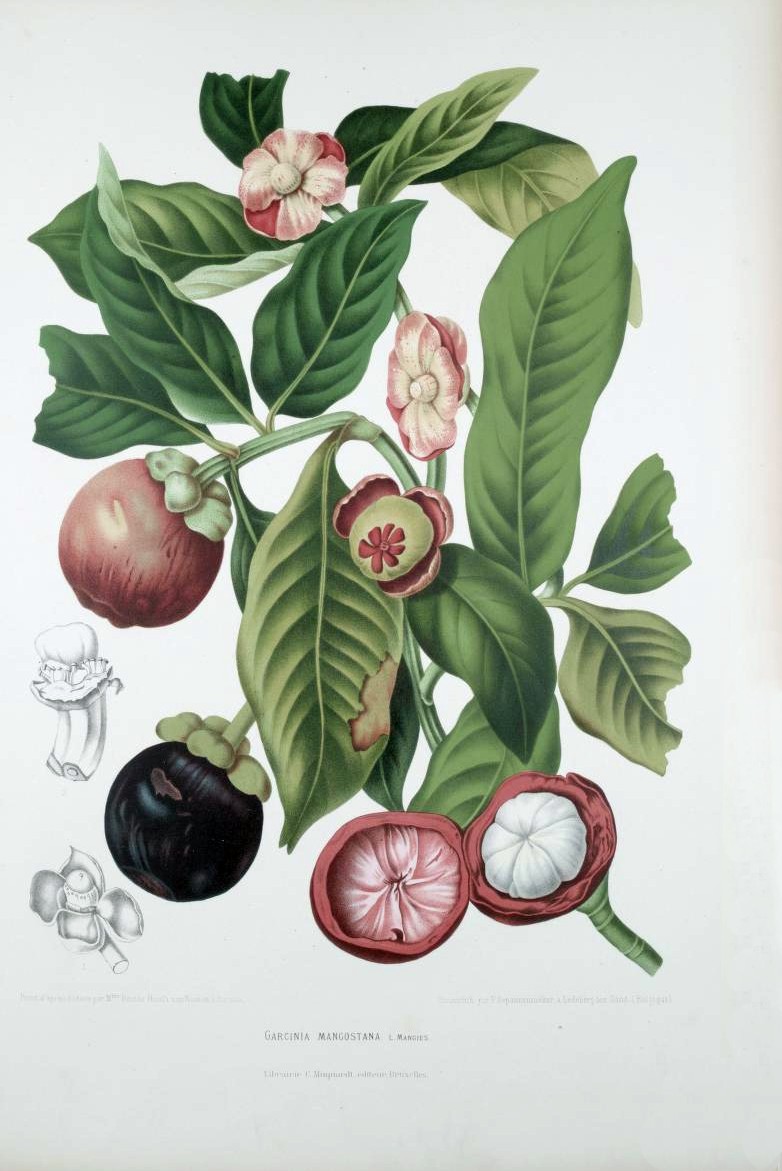 MangosteenGarcinia mangostana
-
 Malabar TamarindGarcinia gummi-gutta
-
 KokumGarcinia indica
-
 AchachaGarcinia gardneriana
-
 False MangosteenGarcinia xanthochymus
- African MangosteenGarcinia livingstonei
-
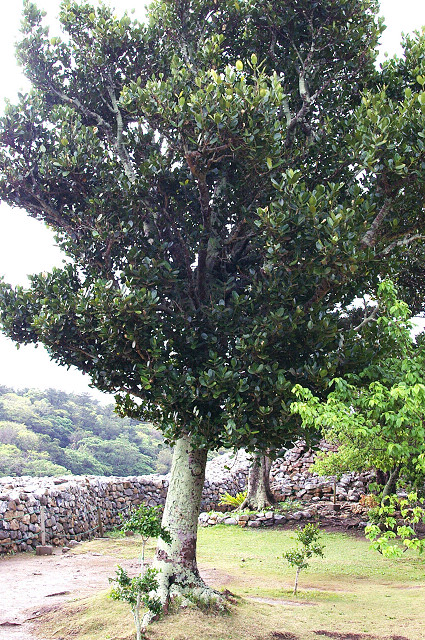 Common GarciniaGarcinia subelliptica
-
 Lemon Drop MangosteenGarcinia intermedia
Compare
Questions and answers
What is the scientific name of the Bitter Kola?
The scientific name of the Bitter Kola is Garcinia kola. Written with its author, the full name is Garcinia kola Heckel.
Which family does the Bitter Kola belong to?
Garcinia kola belongs to the family Clusiaceae, in the order Malpighiales and the class Magnoliopsida.
Where is the Bitter Kola found?
Checklists and occurrence records place Garcinia kola in 15 countries, including Democratic Republic of the Congo, Gabon, Cameroon, Benin, Guinea and Nigeria.
What is the conservation status of the Bitter Kola?
The IUCN Red List category recorded for Garcinia kola is Vulnerable (VU).
What other names does the Bitter Kola have?
Garcinia kola is also known in English as Bitter-kola and False Kola.
What does Garcinia kola do to the body?
The seeds have a bitter, astringent taste and a stimulating effect. The plant is traditionally used to produce stimulating and aphrodisiac effects and as an antimicrobial, antiviral and antiparasitic agent.[4][13][11]
What is Garcinia kola used for?
Bitter kola is traditionally used for gastric disorders, liver disorders, diarrhoea, bronchial diseases, throat infections, colds, fever and malaria. Other traditional uses include treating inflammation, healing wounds, addressing hypertension and asthma, and serving as an aphrodisiac. Its seeds are also chewed during cultural and social ceremonies and offered as gestures of friendship and respect.[5][6][7][12][14][9]
Sources
Passages the profile rests on
- The species occurs in subtropical and tropical moist lowland forests. Source passage: “Its natural habitat is subtropical or tropical moist lowland forests.” — English Wikipedia
- The tree is commonly found in subtropical and tropical moist lowland forests in Nigeria and Cameroon. Source passage: “Garcinia kola Heckel (Clusiaceae), a multipurpose tree commonly found in subtropical and tropical moist lowland forests of Nigeria, Cameroon and other countries in sub-Saharan Africa.” — pmc.ncbi.nlm.nih.gov
- The species occurs in Benin, Cameroon, The Gambia, the Democratic Republic of the Congo, Ivory Coast, Guinea, Mali, Gabon, Ghana, Liberia, Nigeria, Senegal and Sierra Leone. Source passage: “It is found in Benin, Cameroon, The Gambia, Democratic Republic of the Congo, Ivory Coast, Guinea, Mali, Gabon, Ghana, Liberia, Nigeria, Senegal and Sierra Leone.” — English Wikipedia
- The seeds are valued as an orally chewed substance with a bitter, astringent taste and stimulating effect. Source passage: “The seeds are highly valued as oral masticatory agent with bitter astringent taste and stimulant effect.” — pmc.ncbi.nlm.nih.gov
- The seeds are traditionally chewed during cultural and social ceremonies. Source passage: “The seeds are habitually chewed as a part of traditional, cultural and social ceremonies” — pmc.ncbi.nlm.nih.gov
- The seeds are offered to guests and unfamiliar people as a gesture of friendship and respect. Source passage: “It is often given to guests and unfamiliar persons as sign of friendship and respect.” — pmc.ncbi.nlm.nih.gov
- The seeds and other plant parts are traditionally used to address gastric disorders, liver disorders, diarrhoea, bronchial diseases, throat infections, colds, fever and malaria. Source passage: “They (as well as other plant parts) are used to treat wide range of diseases, including as gastric and liver disorders, diarrhoea, bronchial diseases, throat infections, colds, fever, malaria” — pmc.ncbi.nlm.nih.gov
- The seeds are traditionally used to treat liver disorders, bronchitis, throat infections, colic, head or chest colds and coughs. Source passage: “The seeds are used for liver disorders, bronchitis, throat infections, colic, head or chest colds, and cough.” — English Wikipedia
- Traditional uses include treating hypertension, malaria, liver diseases, asthma and gastroenteritis. Source passage: “Hypertension, malaria, liver diseases, asthma and gastroenteritis” — pmc.ncbi.nlm.nih.gov
- Traditional uses include treating food and alcohol poisoning and serving as a poison antidote. Source passage: “Food and alcohol poisoning, and as a poison antidote” — pmc.ncbi.nlm.nih.gov
- The plant is traditionally used as an antimicrobial, antiviral and antiparasitic agent. Source passage: “As an antimicrobial, antiviral, and antiparasitic agent” — pmc.ncbi.nlm.nih.gov
- The seeds and other plant parts are traditionally used as an aphrodisiac. Source passage: “and as an aphrodisiac” — pmc.ncbi.nlm.nih.gov
- The plant is traditionally used to induce stimulating effects and an aphrodisiac effect. Source passage: “Garcinia kola is used in treatment of numerous diseases, including gastric disorders, bronchial diseases, fever, malaria and is used to induce a stimulating and aphrodisiac effect.” — pmc.ncbi.nlm.nih.gov
- The plant is traditionally used for treating inflammation and healing wounds. Source passage: “Treatment of inflammation and for healing of wounds” — pmc.ncbi.nlm.nih.gov
- The plant is traditionally used as a chewing stick. Source passage: “It is also used as a chewing stick.” — English Wikipedia
- Oil pressed from the seeds is used externally. Source passage: “Oil pressed form the seeds used externally” — pmc.ncbi.nlm.nih.gov
- The fruit, seeds and bark have historically been used in folk medicine for ailments including coughs and fever. Source passage: “The fruit, seeds ("bitter kola nuts") and bark of the plant have been used for centuries in folk medicine to treat ailments from coughs to fever.” — English Wikipedia
- The seeds can be consumed raw or processed into an infusion for traditional treatment of bronchitis, laryngitis and throat infections. Source passage: “Bronchitis, laryngitis and throat infections Raw seed chewed or processed into infusion” — pmc.ncbi.nlm.nih.gov
- Trade in Garcinia kola remains important to indigenous communities and villages in Nigeria. Source passage: “Garcinia kola trade is still important to the indigenous communities and villages in Nigeria.” — English Wikipedia
- Seed germination is hindered by both seed coat dormancy and physiological dormancy. Source passage: “G. kola seeds have both seed coat dormancy and physiological dormancy” — English Wikipedia
- Removing the seed coat before sowing can reduce seed coat dormancy. Source passage: “Seed coat dormancy of Garcinia kola can be reduced by removing the seed coat before sowing” — English Wikipedia
- Soaking the seeds in water for 72 hours can reduce physiological dormancy. Source passage: “while physiological dormancy can be reduced by soaking in water for 72 hours.” — English Wikipedia
- The species is recorded as vulnerable on the IUCN Red List of Threatened Species. Source passage: “Currently, G. kola is recorded as “vulnerable” in IUCN’s Red List of Threatened Species” — pmc.ncbi.nlm.nih.gov
- Deforestation and relatively intensive harvesting from the wild are identified as possible reasons for the species' vulnerable status. Source passage: “possibly due to deforestation practices and relatively intensive collection from the wild” — pmc.ncbi.nlm.nih.gov
- Cultivation of the species is limited despite its socioeconomic importance. Source passage: “Despite the socio-economic importance of Garcinia kola, cultivation of the species is limited.” — English Wikipedia
- Difficulties with seed germination reduce the availability of seedlings and discourage cultivation. Source passage: “Factors that have discouraged farmers from growing Garcinia kola include difficulties in germination that reduces seedling availability.” — English Wikipedia
- Cola acuminata, which produces true kola nuts, is not related to Garcinia kola. Source passage: “Cola acuminata, source of the true kola nut, is not related to Garcinia kola” — English Wikipedia
Data
- Catalogue of Life, 2026-10-16 XR cc by
- Global Biodiversity Information Facility CC BY 4.0
- Wikidata CC0
- GeoNames CC BY 4.0
- Wikimedia Commons per image; credit shown with each image
- Within the Catalogue of Life, this name comes from Synonymic Checklists of the Vascular Plants of the World cc by
References
- Heckel. (1883). J. Pharm. Chim. 8: 88 (1883). where the name was published
This species in other databases
- Catalogue of Life 3F9XF
- Wikidata Q5233099
- iNaturalist 192553
- World Flora Online wfo-0000694394
- GRIN 71007
Page built on 29 November 2026. See how the catalog is made and all sources and licences.
Cite this page
ScientificNames.org. (2026). Garcinia kola (Bitter Kola). Retrieved November 29, 2026, from https://scientificnames.org/species/garcinia-kola
“Garcinia kola (Bitter Kola).” ScientificNames.org, 2026, scientificnames.org/species/garcinia-kola. Accessed 29 Nov. 2026.
ScientificNames.org. “Garcinia kola (Bitter Kola).” Accessed November 29, 2026. https://scientificnames.org/species/garcinia-kola.
@misc{scientificnames_garcinia_kola_bitter_kola,
  author = {{ScientificNames.org}},
  title = {Garcinia kola (Bitter Kola)},
  year = {2026},
  url = {https://scientificnames.org/species/garcinia-kola},
  note = {Accessed 2026-11-29}
}