Species · Flowering plants
False Mangosteen Garcinia xanthochymus
The scientific name of the False Mangosteen is Garcinia xanthochymus. It is a species of flowering plant in the family Clusiaceae (clusoids), order Malpighiales.
- Scientific name
- Garcinia xanthochymus Hook.fil. ex J.Anderson
- Common name
- False Mangosteen
- Genus
- Garcinia
- Family
- Clusiaceae (Clusoids)
- Order
- Malpighiales
- Class
- Magnoliopsida
- Red List category
- LC Least Concern
- Recorded in
- 18 countries
- Name status
- accepted in the Catalogue of Life

Overview
False mangosteen is a tree with gray-brown bark. It grows in humid forests in valleys and on hills and is native to India, Nepal, Bangladesh, Indochina, and southern China. Its yellow fruits contain yellow flesh.
Written 26 November 2026 from the sources listed below. Each statement was checked against the passage it cites; statements that could not be supported were removed.
Appearance
False mangosteen is a tree with gray-brown bark. Its leaves are oblong to lanceolate.[1][2]
Its flowers are greenish-white, monoecious, and grow in dense clusters of four to ten. They have a diameter of approximately 1.3 cm.[3][4][5]
Its fruits are yellow and contain yellow flesh. They measure 5–8.9 cm in diameter.[6][7][8]
Its seeds are brown and oblong or ovoid.[9]
The tree reaches a height of 8–15 meters. Its leaves measure 15.4–30.5 cm long and 4–12 cm wide, and its petioles are 1.5–2.5 cm long.[10][11][12]
Habitat
False mangosteen grows in humid forests in valleys and on hills.[13]
It is native to India, Nepal, Bangladesh, Indochina, and southern China. It occurs at elevations ranging from 0 to 1,400 meters.[14][15]
Reproduction and life cycle
False mangosteen is monoecious. It flowers between March and May.[16][17]
Its fruits develop approximately between August and November.[18]
Classification of the False Mangosteen
| Kingdom | Plantae |
|---|---|
| Subkingdom | Pteridobiotina |
| Phylum | Tracheophyta |
| Class | Magnoliopsida |
| Order | Malpighiales |
| Family | Clusiaceae (Clusoids) |
| Tribe | Garcinieae |
| Genus | Garcinia (Mangosteen Genus) |
| Species | Garcinia xanthochymus Hook.fil. ex J.Anderson |
Where the False Mangosteen is found
Checklists and occurrence records place Garcinia xanthochymus in 18 countries across Asia, North America and Oceania. GBIF holds 359 georeferenced records of it.
Countries where it is native or its origin is not stated
- Bangladesh 10
- Bhutan 3
- Cambodia
- China 143
- India 76
- Indonesia 4
- Laos
- Malaysia 5
- Myanmar 15
- Nepal 2
- Singapore 4
- Sri Lanka 25
- Taiwan 4
- Thailand 62
- Vietnam 5
Countries where it has been introduced
Regions and cities with the most records
- Yunnan, China 121
- Yunjinghong, China 50
- Chiang Mai, Thailand 15
- Andaman and Nicobar, India 10
- Hekou, China 10
- Lào Cai, Vietnam 10
- Guangxi, China 8
- Kanchanaburi, Thailand 8
- Mengla, China 8
- Ban Ang Sila, Thailand 6
- Ban Bueng, Thailand 6
- Chon Buri, Thailand 6
- Chon Buri, Thailand 6
- Si Racha, Thailand 6
- Chittagong, Bangladesh 5
- Donghui, China 4
- Guangdong, China 4
- Lincang, China 4
- Menglang, China 4
- Nanling, China 4
- Nongzhang, China 4
- Shan State, Myanmar 4
- Taiping, China 4
- Yingjiang, China 4
- Assam, India 3
- Bukit Indah, Malaysia 3
- Chiang Rai, Thailand 3
- Horizon Hills, Malaysia 3
- Johor Jaya, Malaysia 3
- Kampung Kangkar Teberau, Malaysia 3
- Karnataka, India 3
- Lampang, Thailand 3
- Lamphun, Thailand 3
- Luolong, China 3
- Mae Chan, Thailand 3
- Nanxi, China 3
15 more countries have a few records outside this range
These countries hold a few records of Garcinia xanthochymus but lie outside the range the checklists give for it. Such records are often zoo or garden specimens, museum material or vagrants, so the species is not counted as occurring there.
Range as the checklists state it
China (Guangxi, Yunnan); Taiwan; Nepal; Bhutan; India (Andhra Pradesh, Assam, Goa, Karnataka, Kerala, Maharashtra, Meghalaya, Odisha, Sikkim, Tamil Nadu, Tripura); Sri Lanka; Bangladesh; Andaman Isl. (Middle Andaman Isl., South Andaman Isl.); Myanmar; Thailand; Laos; Cambodia; Vietnam; peninsular Malaysia; Rotuma Isl. [I]; Fiji [I]; Cook Isl. [I] (Rarotonga [I]); Society Isl. [I] (Tahiti [I]); Fed. States of Micronesia [I] (Pohnpei [I]); Honduras [I]; Trinidad & Tobago [I]
A number beside a place is its count of GBIF occurrence records. A place without a number comes from a checklist alone. Records show where a species has been observed or collected, which can include escapes and vagrants.
Common names
English
- False Mangosteen
- Mysore Gamboge
- Gambogetree
- Sour Mangosteen
Names in 13 other languages
- Bengali
- ডেফল
- Chinese
- 人面果, 仁稔, 蛋樹
- Finnish
- keltamangostani
- Hindi
- Dampel, Tamal
- Japanese
- タマゴノキ
- Kannada
- Deavkai, Devagarige, Gansargi, Jaarige
- Malay
- asam kandis
- Malayalam
- Anavaya, Andoor mavu, Bhaviyam, Monthanpuli, Thamalam, Vayirapuli
- Marathi
- Dharambo, Jharambi, Ota
- Portuguese
- Mangostão-amarelo
- Russian
- Гарциния красильная
- Tamil
- Kulavi, Malaippachai, Mukki, Tamalam
- asm
- টেপৰটেঙা
Synonyms
9 other scientific names have been used for this species and are now treated as synonyms of Garcinia xanthochymus.
- Garcinia pictoria (Roxb.) Dunn
- Garcinia tinctoria Dunn
- Garcinia tinctoria (Choisy) W.Wight
- Stalagmitis pictoria (Roxb.) G.Don
- Stalagmitis tinctoria (Choisy) Paxton
- Xanthochymus pictorius Roxb.
- Xanthochymus tinctorius DC.
- Xanthochymus tinctorius Choisy
- Garcinia roxburghii Kurz ambiguous synonym
Related species
-
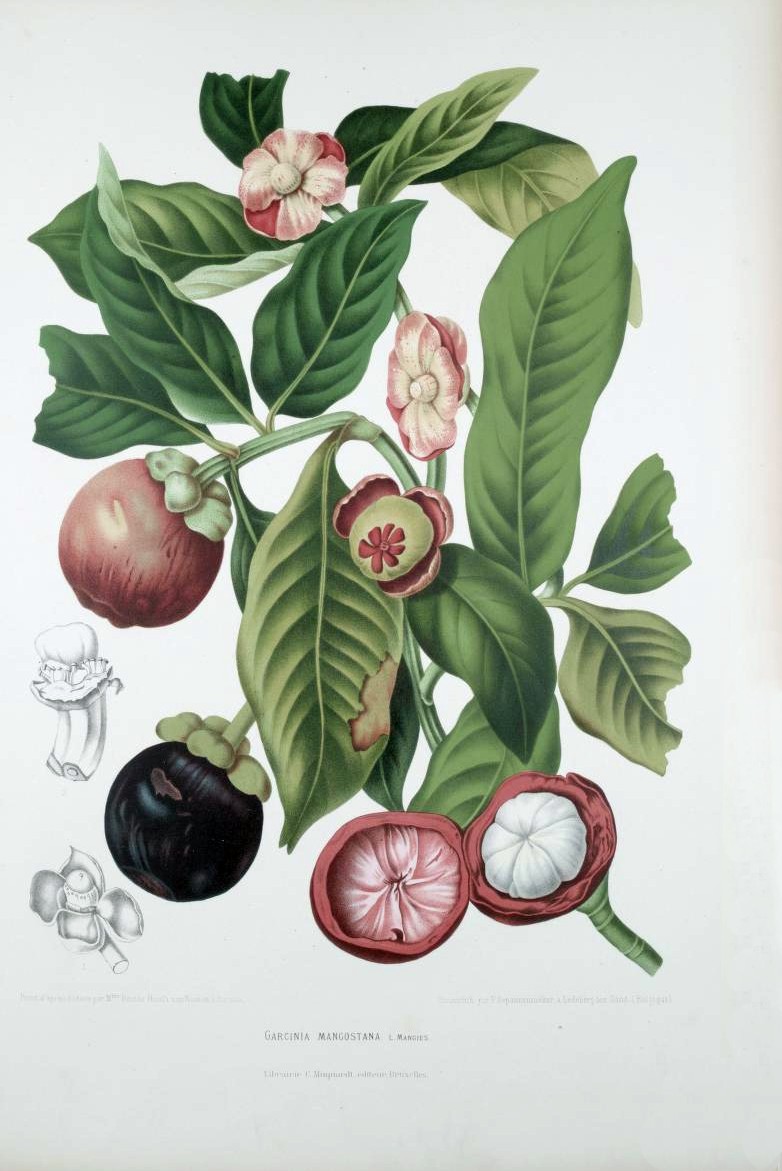 MangosteenGarcinia mangostana
-
 Malabar TamarindGarcinia gummi-gutta
-
 KokumGarcinia indica
-
 Bitter KolaGarcinia kola
-
 AchachaGarcinia gardneriana
- African MangosteenGarcinia livingstonei
-
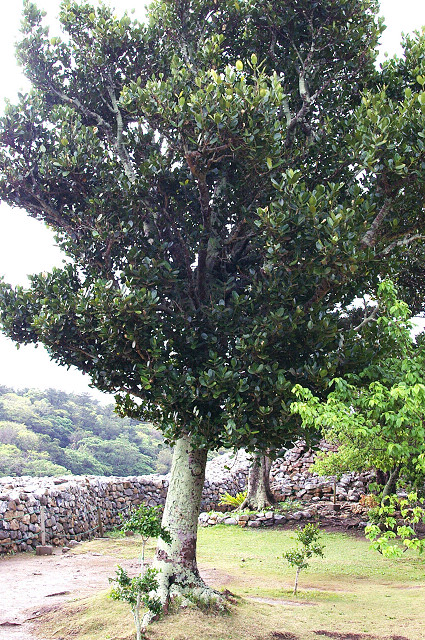 Common GarciniaGarcinia subelliptica
-
 Lemon Drop MangosteenGarcinia intermedia
Compare
Questions and answers
What is the scientific name of the False Mangosteen?
The scientific name of the False Mangosteen is Garcinia xanthochymus. Written with its author, the full name is Garcinia xanthochymus Hook.fil. ex J.Anderson.
Which family does the False Mangosteen belong to?
Garcinia xanthochymus belongs to the family Clusiaceae, in the order Malpighiales and the class Magnoliopsida.
Where is the False Mangosteen found?
Checklists and occurrence records place Garcinia xanthochymus in 18 countries, including China, India, Thailand, Sri Lanka, Myanmar and Bangladesh.
What is the conservation status of the False Mangosteen?
The IUCN Red List category recorded for Garcinia xanthochymus is Least Concern (LC).
What other names does the False Mangosteen have?
Garcinia xanthochymus is also known in English as Mysore Gamboge, Gambogetree and Sour Mangosteen.
Sources
Passages the profile rests on
- The species is a tree with gray-brown bark. Source passage: “Tree growing up to 8–15 meters with gray brown bark.” — English Wikipedia
- Its leaves are oblong to lanceolate in shape. Source passage: “Leaves are oblong to lanceolate” — English Wikipedia
- Its flowers are greenish-white. Source passage: “Flowers are greenish white” — English Wikipedia
- Its flowers are monoecious and grow in dense clusters of four to ten. Source passage: “monoecious in a dense cluster of 4–10” — English Wikipedia
- Its flowers have a diameter of approximately 1.3 cm. Source passage: “with a diameter of 1.3 cm.” — English Wikipedia
- Its fruits are yellow. Source passage: “Fruits are yellow 5 cm to 8.9 cm in diameter” — English Wikipedia
- Its fruits contain yellow flesh. Source passage: “containing yellow flesh” — English Wikipedia
- Its fruits measure 5–8.9 cm in diameter. Source passage: “Fruits are yellow 5 cm to 8.9 cm in diameter” — English Wikipedia
- Its seeds are brown and oblong or ovoid. Source passage: “Seeds are oblong or ovoid and brown.” — English Wikipedia
- The tree reaches a height of 8–15 meters. Source passage: “Tree growing up to 8–15 meters” — English Wikipedia
- Its leaves measure 15.4–30.5 cm long and 4–12 cm wide. Source passage: “Leaves are oblong to lanceolate, 15.4-30.5 cm x (4-)6–12 cm.” — English Wikipedia
- Its petioles are 1.5–2.5 cm long. Source passage: “Petioles are robust 1.5-2.5 cm long.” — English Wikipedia
- The species grows in humid forests in valleys and on hills. Source passage: “Plants are found growing in humid forests of valleys or on hills.” — English Wikipedia
- The species is native to India, Nepal, Bangladesh, Indochina, and southern China. Source passage: “native to India, Nepal, Bangladesh, Indochina, and southern China” — English Wikipedia
- The species occurs at elevations ranging from 0 to 1,400 meters. Source passage: “at elevations of 0 – 1400 meters.” — English Wikipedia
- The species is monoecious. Source passage: “monoecious in a dense cluster of 4–10” — English Wikipedia
- The species flowers between March and May. Source passage: “Plants bloom from March to May” — English Wikipedia
- Its fruits develop approximately between August and November. Source passage: “with fruits forming around August to November.” — English Wikipedia
Data
- Catalogue of Life, 2026-10-16 XR cc by
- Global Biodiversity Information Facility CC BY 4.0
- Wikidata CC0
- GeoNames CC BY 4.0
- Wikimedia Commons per image; credit shown with each image
- Within the Catalogue of Life, this name comes from Synonymic Checklists of the Vascular Plants of the World cc by
References
- Hook.fil. ex J.Anderson. (1874). Fl. Brit. India [J.D.Hooker] 1: 269 (1874). where the name was published
This species in other databases
- Catalogue of Life 6JWRP
- Wikidata Q3095353
- iNaturalist 346368
- World Flora Online wfo-0000694747
- GRIN 70312
Page built on 27 November 2026. See how the catalog is made and all sources and licences.
Cite this page
ScientificNames.org. (2026). Garcinia xanthochymus (False Mangosteen). Retrieved November 27, 2026, from https://scientificnames.org/species/garcinia-xanthochymus
“Garcinia xanthochymus (False Mangosteen).” ScientificNames.org, 2026, scientificnames.org/species/garcinia-xanthochymus. Accessed 27 Nov. 2026.
ScientificNames.org. “Garcinia xanthochymus (False Mangosteen).” Accessed November 27, 2026. https://scientificnames.org/species/garcinia-xanthochymus.
@misc{scientificnames_garcinia_xanthochymus_false_mangosteen,
  author = {{ScientificNames.org}},
  title = {Garcinia xanthochymus (False Mangosteen)},
  year = {2026},
  url = {https://scientificnames.org/species/garcinia-xanthochymus},
  note = {Accessed 2026-11-27}
}