Species · Insects
Whitemark Goliath Beetle Goliathus albosignatus
The scientific name of the Whitemark Goliath Beetle is Goliathus albosignatus. It is a species of insect in the family Scarabaeidae (dung beetles), order Coleoptera. The name dates from 1857.
- Scientific name
- Goliathus albosignatus Boheman, 1857
- Common name
- Whitemark Goliath Beetle
- Genus
- Goliathus
- Family
- Scarabaeidae (Dung Beetles)
- Order
- Coleoptera
- Class
- Insecta
- Recorded in
- 6 countries
- Name status
- accepted in the Catalogue of Life

Overview
The Whitemark Goliath Beetle is Goliathus albosignatus, described by Carl Henrik Boheman in 1857. It exclusively inhabits subtropical regions of Africa. It is the smallest member of the Goliathus genus.
Written 26 November 2026 from the sources listed below. Each statement was checked against the passage it cites; statements that could not be supported were removed.
Similar species
The species has two recognized subspecies, Goliathus albosignatus albosignatus and Goliathus albosignatus kirkianus. Goliathus albosignatus albosignatus occurs in central to southern Zimbabwe and northeastern South Africa, while Goliathus albosignatus kirkianus occurs in Malawi, Mozambique and Tanzania.[1][2][3]
Appearance
Males have distinctive non-uniform horizontal black bands across their elytra. They possess a Y-shaped horn protruding from their heads, hammer-shaped post-clypeal horns, elongated tarsi and cretaceous marks on the pygidium.[4][5][6]
Females lack a horn and have wedge-shaped heads. Males can reach approximately 45–70 mm in length, while females can reach approximately 40–50 mm.[5][7][8]
Habitat
The Whitemark Goliath Beetle exclusively inhabits subtropical regions of Africa.[9]
Diet
Larvae consume a high-protein diet. Adults have been observed feeding on sap from Acacia trees.[10][11]
Behaviour
Individuals gather specifically on marula trees.[12]
Reproduction and life cycle
Female beetles use their wedge-shaped heads to dig burrows where eggs are laid. The species develops in hyrax dung.[13][14]
Classification of the Whitemark Goliath Beetle
| Kingdom | Animalia |
|---|---|
| Phylum | Arthropoda |
| Subphylum | Hexapoda |
| Class | Insecta (Insect) |
| Order | Coleoptera (Beetle) |
| Suborder | Polyphaga |
| Series | Staphyliniformia |
| Superfamily | Scarabaeoidea |
| Family | Scarabaeidae (Dung Beetles) |
| Subfamily | Cetoniinae |
| Tribe | Goliathini |
| Subtribe | Goliathina |
| Genus | Goliathus (Goliath Beetles) |
| Species | Goliathus albosignatus Boheman, 1857 |
Where the Whitemark Goliath Beetle is found
Checklists and occurrence records place Goliathus albosignatus in 6 countries across Africa. GBIF holds 192 georeferenced records of it.
Countries
Regions and cities with the most records
- Lukuledi, Tanzania 17
- Masasi, Tanzania 17
- Mtwara, Tanzania 17
- Limpopo, South Africa 12
- Gauteng, South Africa 5
- Monkey Bay, Malawi 5
- Matabeleland South Province, Zimbabwe 4
- Pretoria, South Africa 4
- Singida, Tanzania 4
- Centurion, South Africa 3
- Mulanje, Malawi 3
- Zomba, Malawi 3
A number beside a place is its count of GBIF occurrence records. A place without a number comes from a checklist alone. Records show where a species has been observed or collected, which can include escapes and vagrants.
Common names
English
- Whitemark Goliath Beetle
Names in 1 other language
- Japanese
- サザナミオオツノハナムグリ, シンジュオオツノハナムグリ
Subspecies and varieties
- Goliathus albosignatus albosignatus subspecies
- Goliathus albosignatus kirkianus subspecies
Related species
-
 Goliath BeetleGoliathus goliatus
-
 Royal Goliath BeetleGoliathus regius
-
 Eastern Goliath BeetleGoliathus orientalis
-
 Chief Goliath BeetleGoliathus cacicus
-
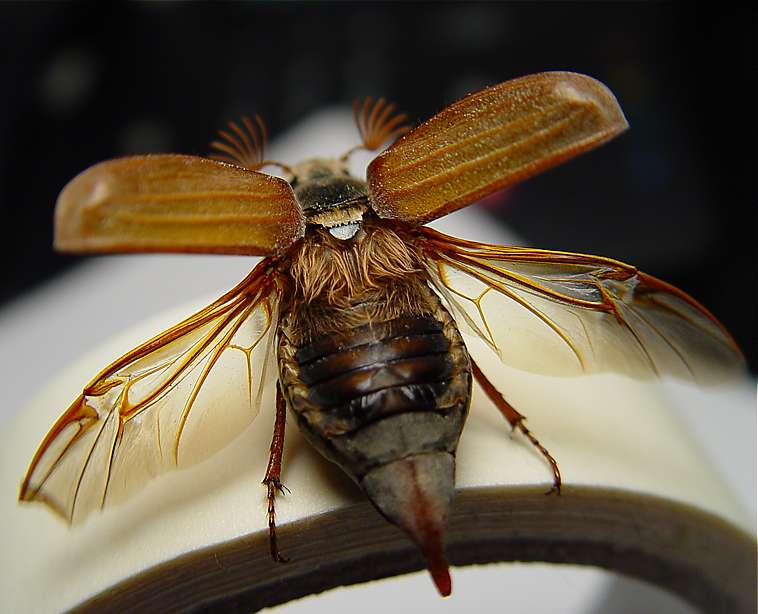 CockchaferMelolontha melolontha
-
 Hercules BeetleDynastes (Dynastes) hercules
-
 Japanese BeetlePopillia japonica
-
 Japanese Rhinoceros BeetleTrypoxylus dichotomus
Compare
Questions and answers
What is the scientific name of the Whitemark Goliath Beetle?
The scientific name of the Whitemark Goliath Beetle is Goliathus albosignatus. Written with its author, the full name is Goliathus albosignatus Boheman, 1857.
Which family does the Whitemark Goliath Beetle belong to?
Goliathus albosignatus belongs to the family Scarabaeidae, in the order Coleoptera and the class Insecta.
Where is the Whitemark Goliath Beetle found?
Checklists and occurrence records place Goliathus albosignatus in 6 countries: Malawi, Zimbabwe, South Africa, Tanzania, Zambia and Mozambique.
What is the scientific name for the Goliath beetle?
The scientific name of the Whitemark Goliath Beetle is Goliathus albosignatus Boheman, 1857.[15]
How big is the biggest Goliath beetle?
Male Whitemark Goliath Beetles can reach approximately 45–70 mm in length. Females can reach approximately 40–50 mm.[7][8]
Sources
Passages the profile rests on
- The species has two recognized subspecies, Goliathus albosignatus albosignatus and Goliathus albosignatus kirkianus. Source passage: “There are 2 subspecies: Goliathus albosignatus albosignatus Boheman 1857 Goliathus albosignatus kirkianus Gray, 1864” — English Wikipedia
- Goliathus albosignatus albosignatus occurs in central to southern Zimbabwe and northeastern South Africa. Source passage: “Distribution: Middle to South Zimbabwe and North-Eastern South Africa” — English Wikipedia
- Goliathus albosignatus kirkianus occurs in Malawi, Mozambique and Tanzania. Source passage: “Distribution: Malawi, Mozambique and Tanzania” — English Wikipedia
- Males have distinctive non-uniform horizontal black bands across their elytra. Source passage: “There are distinctive non-uniform bands of black that stretch horizontally across their elytra to differentiate it from other species.” — English Wikipedia
- Males possess a Y-shaped horn protruding from their heads, whereas females lack a horn and have wedge-shaped heads. Source passage: “males having a Y-shaped horn protruding from their head to assist with confrontation between males, while in females the horn is absent and their wedge-shaped head is fit for digging the burrows where eggs are to be laid.” — English Wikipedia
- Males have hammer-shaped post-clypeal horns, elongated tarsi and cretaceous marks on the pygidium. Source passage: “hammer-shaped post-clypeal horns of the male, the elongated tarsi, and the presence of cretaceous marks on the pygidium” — English Wikipedia
- Males can reach approximately 45–70 mm in length. Source passage: “about 45–70 mm (1.8–2.8 in) in males” — English Wikipedia
- Females can reach approximately 40–50 mm in length. Source passage: “about 40–50 mm (1.6–2.0 in) in females.” — English Wikipedia
- The species exclusively inhabits subtropical regions of Africa. Source passage: “it is the only one exclusively found in subtropical sections of the continent.” — English Wikipedia
- Larvae consume a high-protein diet. Source passage: “Their diet consists of high protein as larvae” — English Wikipedia
- Adults have been observed feeding on sap from Acacia trees. Source passage: “after pupating into adulthood, they have been known to feed on sap from Acacia.” — English Wikipedia
- Individuals gather specifically on marula trees. Source passage: “they will gather specifically on marula trees.” — English Wikipedia
- Female beetles use their wedge-shaped heads to dig burrows where eggs are laid. Source passage: “their wedge-shaped head is fit for digging the burrows where eggs are to be laid.” — English Wikipedia
- The species develops in hyrax dung. Source passage: “Development of Goliathus albosignatus is carried out in hyrax dung” — English Wikipedia
- The species was described by Carl Henrik Boheman in 1857. Source passage: “described by Carl Henrik Boheman in 1857.” — English Wikipedia
Data
- Catalogue of Life, 2026-10-16 XR cc by
- Global Biodiversity Information Facility CC BY 4.0
- Wikidata CC0
- GeoNames CC BY 4.0
- Wikimedia Commons per image; credit shown with each image
- Within the Catalogue of Life, this name comes from World Scarabaeidae Database cc by
References
- Boheman, C. H. (1857). Insecta Caffraria annis 1838-1845 a J.A.Wahlberg collecta amici auxilios sultus descripsit. Coleoptera (Scarabaeides). Officina Norstedtiana. Holmiae 2:1-395. http://www.archive.org/download/insectacaffariaa02bohem/insectacaffariaa02bohem.pdf Link where the name was published
This species in other databases
Page built on 28 November 2026. See how the catalog is made and all sources and licences.
Cite this page
ScientificNames.org. (2026). Goliathus albosignatus (Whitemark Goliath Beetle). Retrieved November 28, 2026, from https://scientificnames.org/species/goliathus-albosignatus
“Goliathus albosignatus (Whitemark Goliath Beetle).” ScientificNames.org, 2026, scientificnames.org/species/goliathus-albosignatus. Accessed 28 Nov. 2026.
ScientificNames.org. “Goliathus albosignatus (Whitemark Goliath Beetle).” Accessed November 28, 2026. https://scientificnames.org/species/goliathus-albosignatus.
@misc{scientificnames_goliathus_albosignatus_whitemark_goliath_beetle,
  author = {{ScientificNames.org}},
  title = {Goliathus albosignatus (Whitemark Goliath Beetle)},
  year = {2026},
  url = {https://scientificnames.org/species/goliathus-albosignatus},
  note = {Accessed 2026-11-28}
}