Species · Flowering plants
Downy Rattlesnake Plantain Goodyera pubescens
The scientific name of the Downy Rattlesnake Plantain is Goodyera pubescens. It is a species of flowering plant in the family Orchidaceae (orchid), order Asparagales.
- Scientific name
- Goodyera pubescens (Willd.) R.Br.
- Common name
- Downy Rattlesnake Plantain
- Genus
- Goodyera
- Family
- Orchidaceae (Orchid)
- Order
- Asparagales
- Class
- Liliopsida
- Recorded in
- 2 countries
- Name status
- accepted in the Catalogue of Life

Overview
Goodyera pubescens is distinguished by its dark green leaves with contrasting silver veins and a densely reticulated network of lighter green veins, as well as fine downy hairs covering the plant.
Written 26 November 2026 from the sources listed below. Each statement was checked against the passage it cites; statements that could not be supported were removed.
Appearance
Downy rattlesnake plantain is an evergreen terrestrial herb with variegated leaves arranged in a circular basal rosette. The leaves are broadly elliptic to broadly ovate, with acute or obtuse tips.[1][2][3]
The leaves are dark green with silver veins, a prominent white central vein, and a densely reticulated network of lighter green veins. They measure 2.1–6.2 cm long and 1.3–3 cm wide.[4][5][6]
The plant produces small white flowers with a pouch-shaped lip measuring 2.5–4.2 mm by 2.2–3.5 mm. Fine downy hairs cover all parts of the plant, particularly the flowering spike.[7][8][9]
The flowering stalk measures 11–35 cm in length, and each flowering spike bears between 10 and 57 cylindrical flowers.[10][11]
Habitat
Downy rattlesnake plantain grows in mesic to dry forests, including both deciduous and coniferous forests. It prefers well-drained, slightly acidic soils with relatively high sand content.[12][13][14]
The species can grow in sandy, acidic soils and sometimes occurs on moss. It can also grow on rock shelves as an occasional epipetric plant.[15][16]
It grows in light conditions ranging from partial shade to sun and can occur in decaying wood of tulip trees and white oaks.[17][18]
Behaviour
The plant creeps along the ground and produces short stolons. It grows through a rhizome in a colonial pattern.[19][20]
White-tailed deer consume its leaves, rosettes, and inflorescences. Its germination rate exceeds 90% even in very cold climates.[21][22]
Reproduction and life cycle
Downy rattlesnake plantain flowers in late summer, particularly from July to August, with flowering occurring from mid-July to early September. Its flowers are densely arranged along the upper portion of a terminal raceme.[23][24][25]
The species generally flowers once annually after reaching maturity at four to eight years of age. Flowering in mature rosettes is triggered by a dry spring period, usually in May, accompanied by above-average temperatures.[26][27]
After flowering, the root produces one to three offshoots that develop into new rosettes.[28]
Conservation
Downy rattlesnake plantain is classified as endangered in Florida and exploitably vulnerable in New York.[29][30]
Uses
Downy rattlesnake plantain is cultivated in wildflower plantings for its ornamental leaves and resilience.[31]
Historically, Native Americans used its roots to prepare tea for treating lung inflammation, breathing pain, and snakebites. Its leaves were used for appetite improvement and treatments involving colds, kidney problems, joint pain, and toothaches.[32][33]
Similar species
Downy rattlesnake plantain can be distinguished from Goodyera tesselata by its more strongly contrasting leaf venation. Goodyera oblongifolia has only one primary leaf vein, unlike the dense venation network of downy rattlesnake plantain.[34][35]
Classification of the Downy Rattlesnake Plantain
| Kingdom | Plantae |
|---|---|
| Subkingdom | Pteridobiotina |
| Phylum | Tracheophyta |
| Class | Liliopsida |
| Order | Asparagales |
| Family | Orchidaceae (Orchid) |
| Genus | Goodyera (Rattlesnake Orchid) |
| Species | Goodyera pubescens (Willd.) R.Br. |
Where the Downy Rattlesnake Plantain is found
Checklists and occurrence records place Goodyera pubescens in 2 countries across North America. GBIF holds 32,510 georeferenced records of it.
Countries
Regions and cities with the most records
- North Carolina, United States 4,802
- Virginia, United States 3,652
- Tennessee, United States 2,177
- Pennsylvania, United States 2,110
- Massachusetts, United States 1,797
- Ohio, United States 1,426
- Maryland, United States 1,389
- Wisconsin, United States 1,261
- West Virginia, United States 1,078
- Georgia, United States 1,066
- Connecticut, United States 1,001
- Kentucky, United States 966
- New Hampshire, United States 940
- Ontario, Canada 570
- Maine, United States 507
- New Jersey, United States 459
- South Carolina, United States 450
- Asheville, United States 439
- Michigan, United States 424
- Chapel Hill, United States 401
- Carrboro, United States 391
- Illinois, United States 383
- New York, United States 368
- Durham, United States 362
- Boone, United States 321
- Minnesota, United States 269
- Alabama, United States 242
- Amherst, United States 242
- Germantown, United States 241
- Montgomery Village, United States 240
- Gaithersburg, United States 237
- Amherst Center, United States 236
- Arkansas, United States 236
- Vermont, United States 228
- Blacksburg, United States 219
- Damascus, United States 213
2 more countries have a few records outside this range
These countries hold a few records of Goodyera pubescens but lie outside the range the checklists give for it. Such records are often zoo or garden specimens, museum material or vagrants, so the species is not counted as occurring there.
A number beside a place is its count of GBIF occurrence records. A place without a number comes from a checklist alone. Records show where a species has been observed or collected, which can include escapes and vagrants.
Common names
English
- Downy Rattlesnake Plantain
- Downy Rattlesnake-plantain
Names in 2 other languages
- French
- goodyérie pubescente
- Ukrainian
- Гудієра пухнаста
Synonyms
11 other scientific names have been used for this species and are now treated as synonyms of Goodyera pubescens.
- Epipactis willdenovii House
- Goodyera pubescens var. minor Sims
- Neottia pubescens Willd.
- Neottia repens Pursh
- Orchiodes pubescens (Willd.) Kuntze
- Peramium pubescens (Willd.) MacMaster
- Peramium pubescens (Willd.) Curtiss ex Small & Vail
- Peramium tesselatum A.Heller
- Tussaca reticulata Raf.
- Epipactis pubescens (Willd.) A.A.Eaton ambiguous synonym
- Satyrium repens Michx. ambiguous synonym
Related species
-
 Broad-leaved HelleborineEpipactis helleborine
-
 Western Rattlesnake PlantainGoodyera oblongifolia
-
 Marsh HelleborineEpipactis palustris
-
 Creeping Lady's-tressesGoodyera repens
-
 Giant HelleborineEpipactis gigantea
-
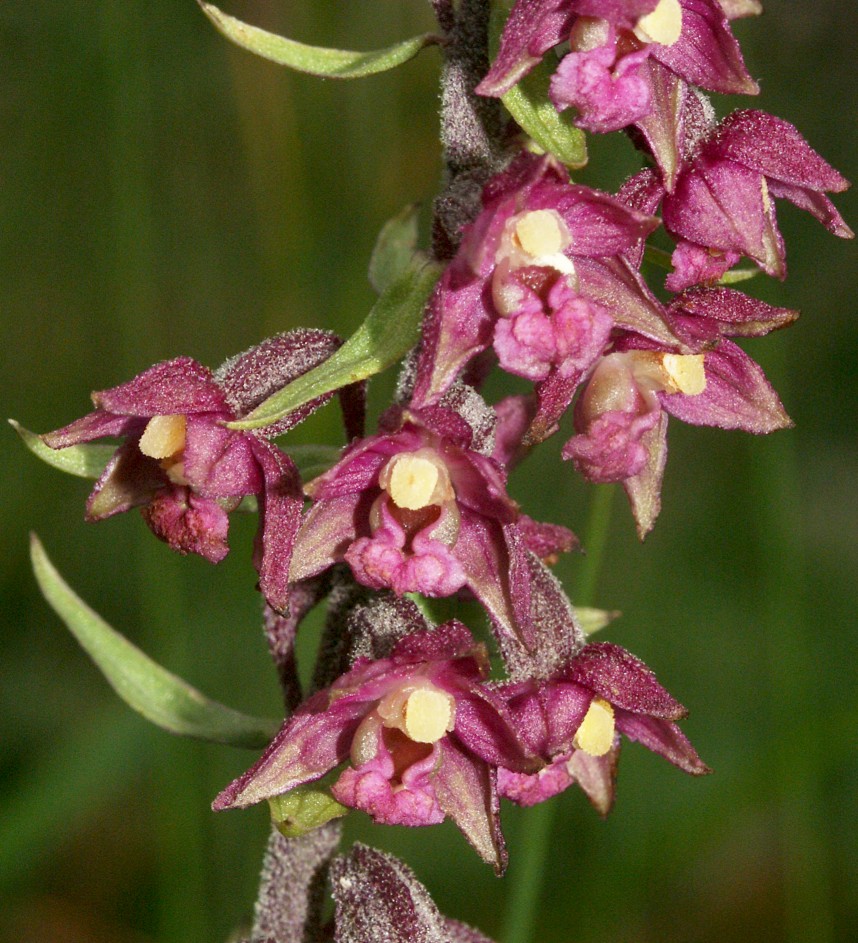 Dark Red HelleborineEpipactis atrorubens
-
 Violet HelleborineEpipactis purpurata
-
 Dune HelleborineEpipactis dunensis
Compare
Questions and answers
What is the scientific name of the Downy Rattlesnake Plantain?
The scientific name of the Downy Rattlesnake Plantain is Goodyera pubescens. Written with its author, the full name is Goodyera pubescens (Willd.) R.Br..
Which family does the Downy Rattlesnake Plantain belong to?
Goodyera pubescens belongs to the family Orchidaceae, in the order Asparagales and the class Liliopsida.
Where is the Downy Rattlesnake Plantain found?
Checklists and occurrence records place Goodyera pubescens in 2 countries: United States and Canada.
What other names does the Downy Rattlesnake Plantain have?
Goodyera pubescens is also known in English as Downy Rattlesnake-plantain.
Is downy rattlesnake plantain rare?
It is classified as endangered in Florida and exploitably vulnerable in New York.[29][30]
Sources
Passages the profile rests on
- The species is an evergreen terrestrial herb with variegated leaves. Source passage: “Goodyera pubescens is an evergreen terrestrial herb with variegated leaves.” — English Wikipedia
- The leaves are broadly elliptic to broadly ovate, with either acute or obtuse tips. Source passage: “The leaves have the white-green marbling in the form of veins throughout, broadly elliptic to broadly ovate (2.1-6.2 x 1.3–3 cm), with either an acute or obtuse apex.” — English Wikipedia
- The leaves are dark green, oval, and arranged in a circular basal rosette. Source passage: “Its dark-green, oval leaves (4 to 8 in number and 1½ to 2½ inches long) lay low to the ground in a circular arrangement around a central growing point (basal rosette)” — fs.usda.gov
- Its leaves have a densely reticulated network of veins that are lighter green than the surrounding leaf tissue. Source passage: “The variegation is in the form of a densely reticulated network of veins that are a much lighter green than the rest of the leaf tissue.” — English Wikipedia
- The leaves have silver veins and a prominent white central vein. Source passage: “striking silver veins and a thick, white central vein mark the leaves” — fs.usda.gov
- The leaves measure 2.1–6.2 cm long and 1.3–3 cm wide. Source passage: “broadly elliptic to broadly ovate (2.1-6.2 x 1.3–3 cm)” — English Wikipedia
- The plant produces small white flowers with a pouch-shaped lip. Source passage: “The white flowers are usually atop a leafless stalk.” — English Wikipedia
- Its flowers have a pouch-shaped lip measuring 2.5–4.2 mm by 2.2–3.5 mm. Source passage: “The petals lip is scrotiform (pouch shaped) 2.5 - 4.2 x 2.2 - 3.5mm in size” — English Wikipedia
- Fine downy hairs cover all parts of the plant, particularly the flowering spike. Source passage: “very fine downy hairs cover all parts of the plant, especially on the bloom spike” — fs.usda.gov
- The flowering stalk measures 11–35 cm in length. Source passage: “The peduncle (stem that connects the stalk to a floret) is 11–35 cm long.” — English Wikipedia
- Each flowering spike bears between 10 and 57 cylindrical flowers. Source passage: “with a small spike inflorescence of between 10 and 57 cylindric flowers.” — English Wikipedia
- The species grows in mesic to dry forests. Source passage: “Goodyera pubescens thrives in mesic to dry forests.” — English Wikipedia
- It occurs in both deciduous and coniferous forests. Source passage: “It can also be found in deciduous or coniferous forests since they provide the necessary partial shade.” — English Wikipedia
- It prefers well-drained, slightly acidic soils with relatively high sand content. Source passage: “This species prefers well drained, slightly acidic soil with a somewhat high sand content.” — English Wikipedia
- The species can grow on rock shelves as an occasional epipetric plant. Source passage: “It may be terrestrial or, occasionally, epipetric, growing on rock shelves.” — English Wikipedia
- It can grow in sandy, acidic soils and sometimes occurs on moss. Source passage: “usually in sandy, acidic soils, and sometimes growing on moss.” — fs.usda.gov
- The species can grow in light conditions ranging from partial shade to sun. Source passage: “Light conditions may range from partial shade to sun.” — fs.usda.gov
- It can grow in decaying wood of tulip trees and white oaks. Source passage: “it will also grow into decaying wood of Liriodendron tulipifera or Quercus alba” — English Wikipedia
- The species grows through a rhizome in a colonial pattern. Source passage: “Goodyera pubescens grows via a rhizome in a colonial pattern” — English Wikipedia
- The plant creeps along the ground and produces short stolons. Source passage: “It is a creeping plant that divides on the ground surface and sends out short stolons.” — English Wikipedia
- White-tailed deer consume its leaves, rosettes, and inflorescences. Source passage: “White-tailed deer (Odocoileus virginianus) have a preference towards eating the leaves, rosettes, and inflorescences.” — English Wikipedia
- Its germination rate exceeds 90% even in very cold climates. Source passage: “Goodyera pubescens has a germination rate of over 90% even in very cold climates” — English Wikipedia
- The species flowers from mid-July to early September. Source passage: “Goodyera pubescens flowers in mid July-early September” — English Wikipedia
- The species flowers in late summer, particularly from July to August. Source passage: “Downy rattlesnake plantain flowers in late summer (July to August)” — fs.usda.gov
- Its flowers are densely arranged along the upper portion of a terminal raceme. Source passage: “produces small, white inflorescence densely packed along the top portion of the bloom spike (terminal raceme).” — fs.usda.gov
- It generally flowers once annually after reaching maturity at four to eight years of age. Source passage: “flowering only once a year at maturity of 4–8 years of age.” — English Wikipedia
- Flowering in mature rosettes is triggered by a dry spring period, usually in May, accompanied by above-average temperatures. Source passage: “The mature rosettes flower after being triggered by a dry period in the spring (usually in May) when there is higher than average temperatures.” — English Wikipedia
- After flowering, the root produces one to three offshoots that develop into new rosettes. Source passage: “After flowering the root will have one to three offshoots which then generate new rosettes” — English Wikipedia
- The species is classified as endangered in Florida. Source passage: “In Florida this species is considered endangered.” — English Wikipedia
- The species is classified as exploitably vulnerable in New York. Source passage: “Despite being listed as endangered in Florida and exploitably vulnerable in New York” — fs.usda.gov
- The species is cultivated in wildflower plantings for its ornamental leaves and resilience. Source passage: “a plant kept for visual aesthetic reasons in wildflower plantings due to its interesting leaf structure and resilience.” — English Wikipedia
- Historically, Native Americans used its roots to prepare tea for treating lung inflammation, breathing pain, and snakebites. Source passage: “The roots were made into a tea for treating lung inflammation/breathing pain and for snakebites.” — English Wikipedia
- Historically, its leaves were used for appetite improvement and treatments involving colds, kidney problems, joint pain, and toothaches. Source passage: “The leaves were used to improve appetite, cold treatment, kidney problems, joint pain reducer, or even for toothaches.” — English Wikipedia
- The species can be distinguished from Goodyera tesselata by its more strongly contrasting leaf venation. Source passage: “striking silver veins and a thick, white central vein mark the leaves and distinguish it from the similar-looking checkered rattlesnake plantain (Goodyera tesselata).” — fs.usda.gov
- Goodyera oblongifolia has only one primary leaf vein, unlike the dense venation network of Goodyera pubescens. Source passage: “G. oblongifolia leaves only have one primary vein compared to the more dense network of veins of G. pubescens.” — English Wikipedia
Data
- Catalogue of Life, 2026-10-16 XR cc by
- Global Biodiversity Information Facility CC BY 4.0
- Wikidata CC0
- GeoNames CC BY 4.0
- Wikimedia Commons per image; credit shown with each image
- Within the Catalogue of Life, this name comes from The World Checklist of Vascular Plants (WCVP) cc by
References
- W.T.Aiton, Hortus Kew., ed. 2. 5: 198 (1813) where the name was published
This species in other databases
- Catalogue of Life 3H2JB
- Wikidata Q3773416
- iNaturalist 62406
- World Flora Online wfo-0000974748
- GRIN 456485
Page built on 28 November 2026. See how the catalog is made and all sources and licences.
Cite this page
ScientificNames.org. (2026). Goodyera pubescens (Downy Rattlesnake Plantain). Retrieved November 28, 2026, from https://scientificnames.org/species/goodyera-pubescens
“Goodyera pubescens (Downy Rattlesnake Plantain).” ScientificNames.org, 2026, scientificnames.org/species/goodyera-pubescens. Accessed 28 Nov. 2026.
ScientificNames.org. “Goodyera pubescens (Downy Rattlesnake Plantain).” Accessed November 28, 2026. https://scientificnames.org/species/goodyera-pubescens.
@misc{scientificnames_goodyera_pubescens_downy_rattlesnake_plantain,
  author = {{ScientificNames.org}},
  title = {Goodyera pubescens (Downy Rattlesnake Plantain)},
  year = {2026},
  url = {https://scientificnames.org/species/goodyera-pubescens},
  note = {Accessed 2026-11-28}
}