Species · Birds
Blue-faced Rail Gymnocrex rosenbergii
The scientific name of the Blue-faced Rail is Gymnocrex rosenbergii. It is a species of bird in the family Rallidae (rail), order Gruiformes. The name dates from 1866.
- Scientific name
- Gymnocrex rosenbergii (Schlegel, 1866)
- Common name
- Blue-faced Rail
- Genus
- Gymnocrex
- Family
- Rallidae (Rail)
- Order
- Gruiformes
- Class
- Aves
- Red List category
- LC Least Concern
- Recorded in
- 1 country
- Name status
- accepted in the Catalogue of Life

Overview
The Blue-faced Rail is endemic to Sulawesi, Indonesia. The Blue-faced Rail is distinguished by a conspicuous patch of bare cobalt-blue skin surrounding its eye.
Written 26 November 2026 from the sources listed below. Each statement was checked against the passage it cites; statements that could not be supported were removed.
Appearance
The Blue-faced Rail has a conspicuous patch of bare cobalt-blue skin surrounding its eye. It measures approximately 30 cm in length.[1][2]
Habitat
The Blue-faced Rail inhabits subtropical or tropical moist lowland forests, moist shrublands, and rivers. It is endemic to Sulawesi, Indonesia.[3][4]
Diet
The Blue-faced Rail feeds on insects and snails.[5]
Behaviour
The Blue-faced Rail produces a snoring sound resembling that of the snoring rail. It also produces a quiet clucking sound when alarmed.[6][7]
Conservation
The Blue-faced Rail's population size was unknown as of 2025. A previous population estimate placed the species at 3,500–15,000 individuals, although this estimate may be too low because the species is difficult to survey due to its cryptic nature.[8][9][10]
The species had an estimated population ranging from the low 2,000s to the high 9,000s by 2000. Its population has steadily declined since 2000.[11][12]
The Blue-faced Rail is believed to have a decreasing population because of forest habitat loss. It is suspected to be declining slowly in response to habitat loss.[13][14]
The species was evaluated as threatened by the IUCN Red List beginning October 1, 2016, due to habitat loss and pollution.[15]
Classification of the Blue-faced Rail
| Kingdom | Animalia |
|---|---|
| Phylum | Chordata |
| Subphylum | Vertebrata |
| Infraphylum | Gnathostomata |
| Parvphylum | Osteichthyes |
| Megaclass | Tetrapoda |
| Class | Aves (Bird) |
| Order | Gruiformes (Rails) |
| Family | Rallidae (Rail) |
| Genus | Gymnocrex (Bare-faced Rails) |
| Species | Gymnocrex rosenbergii (Schlegel, 1866) |
Where the Blue-faced Rail is found
Checklists and occurrence records place Gymnocrex rosenbergii in 1 country across Asia. GBIF holds 152 georeferenced records of it.
Countries
Regions and cities with the most records
- Manado, Indonesia 15
- Airmadidi, Indonesia 13
- Bitung, Indonesia 12
- Gorontalo, Indonesia 11
- Tondano, Indonesia 9
- Tomohon, Indonesia 8
- Gorontalo, Indonesia 4
Range as the checklists state it
Southern Asia
A number beside a place is its count of GBIF occurrence records. A place without a number comes from a checklist alone. Records show where a species has been observed or collected, which can include escapes and vagrants.
Common names
English
- Blue-faced Rail
- Bald-faced Rail
- Bare-faced Rail
- Schlegel's Rail
Names in 28 other languages
- Arabic
- مرعة عارية الوجه
- Catalan
- rascló de Rosenberg
- Chinese
- 蓝脸秧鸡, 蘇拉裸臉秧雞
- Croatian
- modrolica kokošica
- Czech
- chřástal Rosenbergův, chřástal modrolící
- Danish
- Blåmasket Rikse
- Dutch
- Sulawesinaaktoogral
- Esperanto
- blumaska ralo
- Estonian
- sulawesi maskruik
- Finnish
- celebesinmangrovekana
- French
- Râle de Rosenberg
- German
- Blaumaskenralle, Nacktaugenralle, Rosenberg-Ralle, Rosenbergralle
- Hungarian
- celebeszi mangroveguvat
- Indonesian
- Mandar muka-biru
- Italian
- Rallo di Rosenberg, Rallo faccianuda
- Japanese
- アオメクイナ
- Lithuanian
- Rozenbergo plikaakė vištelė
- Norwegian
- brillerikse
- Polish
- derkaczak gołolicy
- Portuguese
- frango-d'água-de-celebes, frango-d'água-de-faces-azuis, frango-de-água-de-faces-azuis, saracura-de-cara-pelada
- Russian
- Синелицый туа, Сулавесский гологлазый пастушок
- Serbian
- Plavoliki petlovan sa Celebesa
- Slovak
- chriašteľ naholíci
- Spanish
- Cotara cariazul
- Swedish
- sulawesirall
- Turkish
- Mavi Gözlüklü Kılavuz
- Ukrainian
- пастушок-голоок синьошкірий
- Welsh
- Rhegen goed wynepfoel
Synonyms
3 other scientific names have been used for this species and are now treated as synonyms of Gymnocrex rosenbergii.
- Aramides rosenbergii Schlegel, H, 1866
- Eulabeornis rosenbergii Schlegel, H, 1866
- Rallina rosenbergii Schlegel, 1866
Related species
-
 Bare-eyed RailGymnocrex plumbeiventris
- Talaud RailGymnocrex talaudensis
-
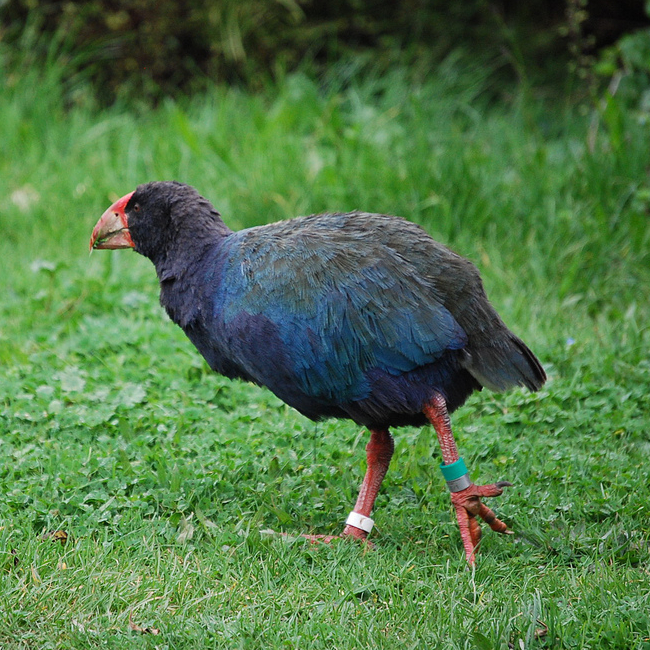 TakahēPorphyrio hochstetteri
-
 Australasian SwamphenPorphyrio melanotus
-
 American CootFulica americana
-
 Eurasian CootFulica atra
-
 Common MoorhenGallinula chloropus
-
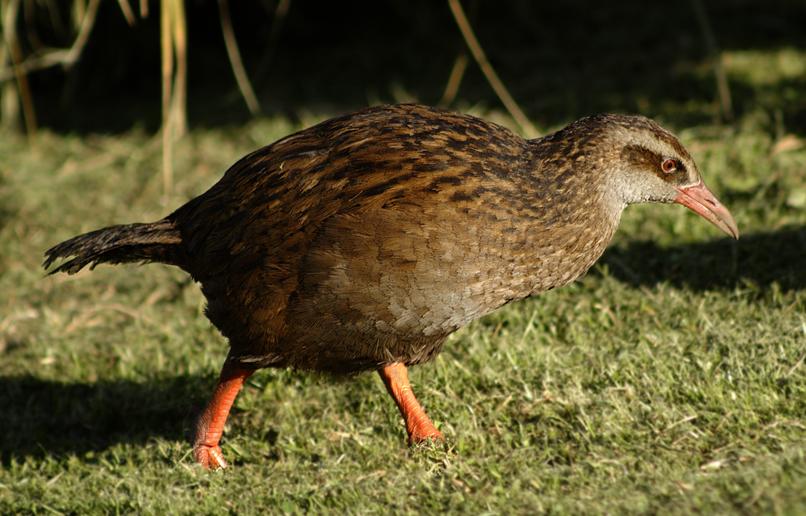 WekaGallirallus australis
Compare
Questions and answers
What is the scientific name of the Blue-faced Rail?
The scientific name of the Blue-faced Rail is Gymnocrex rosenbergii. Written with its author, the full name is Gymnocrex rosenbergii (Schlegel, 1866).
Which family does the Blue-faced Rail belong to?
Gymnocrex rosenbergii belongs to the family Rallidae, in the order Gruiformes and the class Aves.
Where is the Blue-faced Rail found?
Checklists and occurrence records place Gymnocrex rosenbergii in 1 country: Indonesia.
What is the conservation status of the Blue-faced Rail?
The IUCN Red List category recorded for Gymnocrex rosenbergii is Least Concern (LC).
What other names does the Blue-faced Rail have?
Gymnocrex rosenbergii is also known in English as Bald-faced Rail, Bare-faced Rail and Schlegel's Rail.
What are some examples of blue bird species?
The Blue-faced Rail is an example of a bird with blue coloration, distinguished by a conspicuous patch of bare cobalt-blue skin surrounding its eye.[1]
Sources
Passages the profile rests on
- The species has a conspicuous patch of bare cobalt-blue skin surrounding its eye. Source passage: “It has a conspicuous patch of bare cobalt-blue skin around the eye” — English Wikipedia
- The species measures approximately 30 cm in length. Source passage: “The blue-faced rail is a 30 cm, medium-sized, secretive, forest rail.” — English Wikipedia
- The species inhabits subtropical or tropical moist lowland forests, moist shrublands, and rivers. Source passage: “Its natural habitats are subtropical or tropical moist lowland forest, subtropical or tropical moist shrubland, and rivers.” — English Wikipedia
- The species is endemic to Sulawesi, Indonesia. Source passage: “It is endemic to Sulawesi, Indonesia.” — English Wikipedia
- The species feeds on insects and snails. Source passage: “The blue-faced rail feeds on insects and snails.” — English Wikipedia
- The species produces a snoring sound resembling that of the snoring rail. Source passage: “The blue-faced rail makes a snoring sound apparently similar to that of the snoring rail” — English Wikipedia
- The species produces a quiet clucking sound when alarmed. Source passage: “it also gives off a quiet clucking sound in alarm.” — English Wikipedia
- The species' population size was unknown as of 2025. Source passage: “As of 2025, the species population size is unknown” — English Wikipedia
- A previous population estimate placed the species at 3,500–15,000 individuals. Source passage: “Previously, population has been estimated as 3,500-15,000 individuals” — English Wikipedia
- The previous population estimate may be too low because the species is difficult to survey due to its cryptic nature. Source passage: “this is a likely underestimate due to difficulties surveying cryptic species.” — English Wikipedia
- The species had an estimated population ranging from the low 2,000s to the high 9,000s by 2000. Source passage: “By 2000, the estimated population of the blue-faced rail was in the low 2000's to the high 9000's” — birdnet.cornell.edu
- The species' population has steadily declined since 2000. Source passage: “however it has steadily declined since then.” — birdnet.cornell.edu
- The species is believed to have a decreasing population because of forest habitat loss. Source passage: “believed to be decreasing due to loss of its forest habitat.” — English Wikipedia
- The species is suspected to be declining slowly in response to habitat loss. Source passage: “As a forest-dependent species, it is suspected to be declining slowly in response to habitat loss.” — datazone.birdlife.org
- The species was evaluated as threatened by the IUCN Red List beginning October 1, 2016, due to habitat loss and pollution. Source passage: “It has been evaluated as a threatened species since October 1, 2016, by the IUCN Red List due to habitat loss and pollution.” — birdnet.cornell.edu
Data
- Catalogue of Life, 2026-10-16 XR cc by
- Global Biodiversity Information Facility CC BY 4.0
- Wikidata CC0
- GeoNames CC BY 4.0
- Wikimedia Commons per image; credit shown with each image
- Within the Catalogue of Life, this name comes from The Integrated Taxonomic Information System cc0
References
- Gill, Frank, & and Minturn Wright. (2006). Birds of the World: Recommended English Names.
- Dickinson, E. C., and J. V. Remsen Jr., eds. (2013). The Howard and Moore Complete Checklist of the Birds of the World, 4th Edition, Vol. 1 Non-Passerines.
This species in other databases
Page built on 29 November 2026. See how the catalog is made and all sources and licences.
Cite this page
ScientificNames.org. (2026). Gymnocrex rosenbergii (Blue-faced Rail). Retrieved November 29, 2026, from https://scientificnames.org/species/gymnocrex-rosenbergii
“Gymnocrex rosenbergii (Blue-faced Rail).” ScientificNames.org, 2026, scientificnames.org/species/gymnocrex-rosenbergii. Accessed 29 Nov. 2026.
ScientificNames.org. “Gymnocrex rosenbergii (Blue-faced Rail).” Accessed November 29, 2026. https://scientificnames.org/species/gymnocrex-rosenbergii.
@misc{scientificnames_gymnocrex_rosenbergii_blue_faced_rail,
  author = {{ScientificNames.org}},
  title = {Gymnocrex rosenbergii (Blue-faced Rail)},
  year = {2026},
  url = {https://scientificnames.org/species/gymnocrex-rosenbergii},
  note = {Accessed 2026-11-29}
}