Species · Molluscs
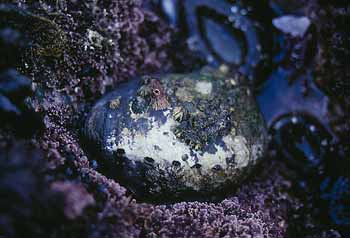
Most Beautiful Abalone Haliotis pulcherrima
The scientific name of the Most Beautiful Abalone is Haliotis pulcherrima. It is a species of mollusc in the family Haliotidae (abalone), order Lepetellida. The name dates from 1791.
- Scientific name
- Haliotis pulcherrima Gmelin, 1791
- Common name
- Most Beautiful Abalone
- Genus
- Haliotis
- Family
- Haliotidae (Abalone)
- Order
- Lepetellida
- Class
- Gastropoda
- Red List category
- DD Data Deficient
- Environment
- marine
- Recorded in
- 6 countries
- Name status
- accepted in the Catalogue of Life

Overview
Haliotis pulcherrima is a species of sea snail, a marine gastropod mollusk in the family Haliotidae, the abalone.
Classification of the Most Beautiful Abalone
| Kingdom | Animalia |
|---|---|
| Phylum | Mollusca |
| Class | Gastropoda (Gastropod) |
| Subclass | Vetigastropoda |
| Order | Lepetellida |
| Superfamily | Haliotoidea |
| Family | Haliotidae (Abalone) |
| Genus | Haliotis (Abalone) |
| Species | Haliotis pulcherrima Gmelin, 1791 |
Where the Most Beautiful Abalone is found
Checklists and occurrence records place Haliotis pulcherrima in 6 countries. GBIF holds 169 georeferenced records of it.
Countries
Regions and cities with the most records
- Îles du Vent, French Polynesia 8
- Papeete, French Polynesia 5
- Faaa, French Polynesia 4
- Punaauia, French Polynesia 4
1 more country has a few records outside this range
These countries hold a few records of Haliotis pulcherrima but lie outside the range the checklists give for it. Such records are often zoo or garden specimens, museum material or vagrants, so the species is not counted as occurring there.
A number beside a place is its count of GBIF occurrence records. A place without a number comes from a checklist alone. Records show where a species has been observed or collected, which can include escapes and vagrants.
Common names
English
- Most Beautiful Abalone
Names in 1 other language
- Japanese
- アザミアワビ
Related species
-
 Green OrmerHaliotis tuberculata
-
 Donkey's Ear AbaloneHaliotis asinina
-
 Red AbaloneHaliotis rufescens
-
 Blackfoot PauaHaliotis iris
-
 Black AbaloneHaliotis cracherodii
-
 AbaloneHaliotis midae
-
 Pinto AbaloneHaliotis kamtschatkana
-
 White AbaloneHaliotis sorenseni
Compare
Questions and answers
What is the scientific name of the Most Beautiful Abalone?
The scientific name of the Most Beautiful Abalone is Haliotis pulcherrima. Written with its author, the full name is Haliotis pulcherrima Gmelin, 1791.
Which family does the Most Beautiful Abalone belong to?
Haliotis pulcherrima belongs to the family Haliotidae, in the order Lepetellida and the class Gastropoda.
Where is the Most Beautiful Abalone found?
Checklists and occurrence records place Haliotis pulcherrima in 6 countries: French Polynesia, Pitcairn, Australia, New Zealand, American Samoa and Samoa.
What is the conservation status of the Most Beautiful Abalone?
The IUCN Red List category recorded for Haliotis pulcherrima is Data Deficient (DD).
Sources
Data
- Catalogue of Life, 2026-10-16 XR cc by
- Global Biodiversity Information Facility CC BY 4.0
- Wikidata CC0
- English Wikipedia CC BY-SA 4.0
- GeoNames CC BY 4.0
- Wikimedia Commons per image; credit shown with each image
- Within the Catalogue of Life, this name comes from World Register of Marine Species cc by
References
- Gmelin, J. F. (1791). Caroli a Linné Systema Naturae, ed. 13. Tome 1(6). Vermes. G. E. Beer, Lipsiae [Leipzig]. pp. 3021-3910. Tom. I. Pars VI.: pp. 3021–3910. where the name was published
This species in other databases
Page built on 26 November 2026. See how the catalog is made and all sources and licences.
Cite this page
ScientificNames.org. (2026). Haliotis pulcherrima (Most Beautiful Abalone). Retrieved November 26, 2026, from https://scientificnames.org/species/haliotis-pulcherrima
“Haliotis pulcherrima (Most Beautiful Abalone).” ScientificNames.org, 2026, scientificnames.org/species/haliotis-pulcherrima. Accessed 26 Nov. 2026.
ScientificNames.org. “Haliotis pulcherrima (Most Beautiful Abalone).” Accessed November 26, 2026. https://scientificnames.org/species/haliotis-pulcherrima.
@misc{scientificnames_haliotis_pulcherrima_most_beautiful_abalone,
  author = {{ScientificNames.org}},
  title = {Haliotis pulcherrima (Most Beautiful Abalone)},
  year = {2026},
  url = {https://scientificnames.org/species/haliotis-pulcherrima},
  note = {Accessed 2026-11-26}
}