Species · Reptiles
African Fat-tailed Gecko Hemitheconyx caudicinctus
The scientific name of the African Fat-tailed Gecko is Hemitheconyx caudicinctus. It is a species of reptile in the family Eublepharidae (eublepharid geckos), order Squamata. The name dates from 1851.
- Scientific name
- Hemitheconyx caudicinctus (Duméril, 1851)
- Common name
- African Fat-tailed Gecko
- Genus
- Hemitheconyx
- Family
- Eublepharidae (Eublepharid Geckos)
- Order
- Squamata
- Class
- Reptilia
- Red List category
- LC Least Concern
- Recorded in
- 14 countries
- Name status
- accepted in the Catalogue of Life

Overview
The native range extends across West Africa from Senegal to northern Cameroon. It is distinguished by its bulbous tail, movable eyelids, vertical pupils and lack of adhesive toe pads.
Written 26 November 2026 from the sources listed below. Each statement was checked against the passage it cites; statements that could not be supported were removed.
Appearance
The African Fat-tailed Gecko typically has brown and tan or beige stripes, sometimes accompanied by a thin white stripe along its back. Its underbelly is pale pink or off-white.[1][2]
It has movable eyelids and vertical pupils, and lacks adhesive toe pads. Its jaw shape gives it the appearance of a permanent smile.[3][4][5]
Its tail is bulbous and can have a teardrop shape resembling its head. Healthy individuals with adequate prey availability can have tails approximately 1.25 inches thick or more.[6][7]
Adults typically measure approximately 7–8 inches in length and can weigh up to 75 grams. Females are generally slightly smaller than males.[8][9][10][11]
Selective breeding in the reptile trade has produced numerous color variants of the species.[12]
Habitat
The African Fat-tailed Gecko inhabits dry Sahel environments, wet and dry savannahs, rocky woodlands and savannas. Its habitats have an average elevation of approximately 1,000 metres, and it favors dry and hot or tropical climates.[13][14][15][16]
Diet
The African Fat-tailed Gecko has a primarily insectivorous diet. Recorded food items include worms and crickets.[17][18]
Behaviour
The African Fat-tailed Gecko is nocturnal and emerges at night to forage. During the daytime, individuals shelter from hot and dry environmental conditions.[19][20]
The species is territorial and defends its inhabited shelter areas against other geckos.[21]
Individuals can detach their tails when threatened or attacked. Lost tails can regenerate, although regenerated tails are smoother and more bulbous than the originals.[22][23]
The species stores fat in its tail as an energy reserve during periods of food scarcity. Individuals can survive several consecutive days without food using stored tail fat.[24][25]
Reproduction and life cycle
The breeding season generally extends from November through March. Males may mate with multiple females during this period, and females can produce up to five egg clutches during a breeding season.[26][27][28]
Egg incubation typically lasts approximately six to twelve weeks. Higher incubation temperatures shorten the time required for eggs to hatch.[29][30]
Incubation temperatures of approximately 24–28 degrees Celsius predominantly produce female offspring, while temperatures of approximately 31–32 degrees Celsius predominantly produce male offspring. Temperatures between approximately 29 and 30.5 degrees Celsius produce roughly equal numbers of males and females.[31][32][33]
Hatchlings can reach sexual maturity in approximately eight to eleven months.[34]
Uses
The African Fat-tailed Gecko is kept as a popular reptile pet. It has gained popularity in the pet trade, although it remains less popular than the leopard gecko.[35][36]
Captive-bred individuals are distributed internationally as pets.[37]
Classification of the African Fat-tailed Gecko
| Kingdom | Animalia |
|---|---|
| Phylum | Chordata |
| Subphylum | Vertebrata |
| Infraphylum | Gnathostomata |
| Parvphylum | Osteichthyes |
| Megaclass | Tetrapoda |
| Class | Reptilia (Reptile) |
| Order | Squamata (Snakes) |
| Suborder | Gekkota |
| Family | Eublepharidae (Eublepharid Geckos) |
| Genus | Hemitheconyx (African Fat-tailed Geckos) |
| Species | Hemitheconyx caudicinctus (Duméril, 1851) |
Where the African Fat-tailed Gecko is found
Checklists and occurrence records place Hemitheconyx caudicinctus in 14 countries across Africa. GBIF holds 210 georeferenced records of it.
Countries
- Benin 52
- Burkina Faso 3
- Cameroon 11
- Gambia 9
- Ghana 47
- Guinea 12
- Ivory Coast 8
- Liberia 2
- Mali 14
- Niger
- Nigeria 17
- Senegal 27
- Sierra Leone
- Togo 8
Regions and cities with the most records
- Zou, Benin 17
- Bohicon, Benin 12
- Kpozoun, Benin 12
- Atakora, Benin 8
- Kedougou, Senegal 6
- Upper West, Ghana 6
- Wa, Ghana 6
- Kédougou, Senegal 4
- Oti, Ghana 4
- Savannah, Ghana 4
- Farafenni, Gambia 3
- Soma, Gambia 3
- Conakry, Guinea
1 more country has a few records outside this range
These countries hold a few records of Hemitheconyx caudicinctus but lie outside the range the checklists give for it. Such records are often zoo or garden specimens, museum material or vagrants, so the species is not counted as occurring there.
Range as the checklists state it
Cameroon, Nigeria, Senegal, Togo, Mali, Ivory Coast, Gambia, Benin, Burkina Faso, Niger, Ghana ?, Liberia ?, Guinea (Conakry), Sierra Leone ?
A number beside a place is its count of GBIF occurrence records. A place without a number comes from a checklist alone. Records show where a species has been observed or collected, which can include escapes and vagrants.
Common names
English
- African Fat-tailed Gecko
- Fat-tail Gecko
- West African Fat-tailed Gecko
Names in 9 other languages
- Chinese
- 肥尾守宮
- Czech
- gekončík africký
- Danish
- Vestafrikansk Fedthalegekko
- French
- Gecko à queue grasse africain
- German
- (West-) Afrikanischer Krallengecko, Afrikanischer Krallengecko
- Japanese
- ニシアフリカトカゲモドキ
- Polish
- Eublefar gruboogonowy
- Russian
- Поясохвостый векоподвижный геккон, Поясохвостый эублефар
- Spanish
- Geco africano de cola gorda
Synonyms
One other scientific name has been used for this species and is now treated as a synonym of Hemitheconyx caudicinctus.
- Stenodactylus caudi-cinctus Duméril ex Duméril & Duméril, 1851
Related species
- Taylor's Fat-tailed GeckoHemitheconyx taylori
-
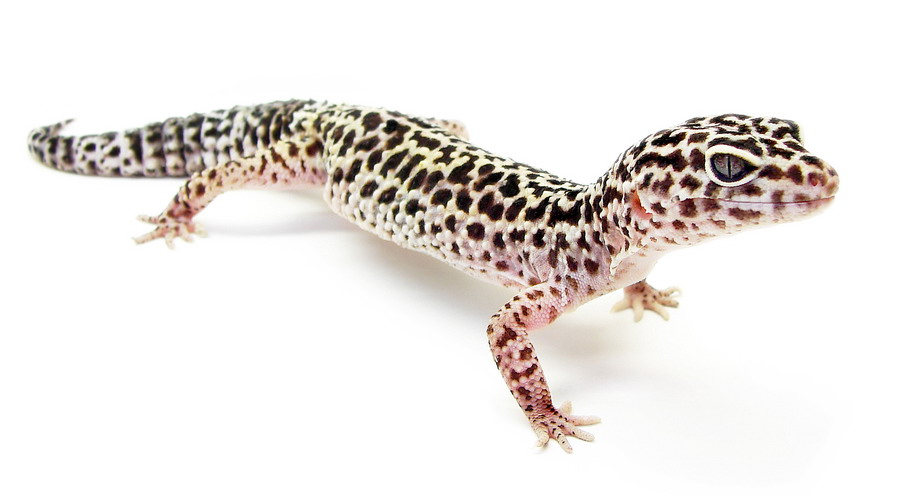 Leopard GeckoEublepharis macularius
-
 Western Banded GeckoColeonyx variegatus
-
 Chinese Cave GeckoGoniurosaurus hainanensis
-
 Cat GeckoAeluroscalabotes felinus
-
 Iranian Fat Tailed GeckoEublepharis angramainyu
-
 Texas Banded GeckoColeonyx brevis
-
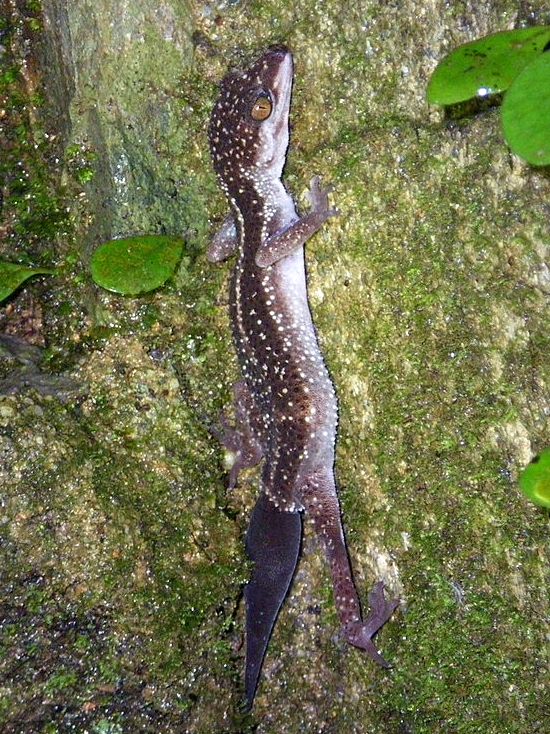 Kuroiwa's Ground GeckoGoniurosaurus kuroiwae
Compare
Questions and answers
What is the scientific name of the African Fat-tailed Gecko?
The scientific name of the African Fat-tailed Gecko is Hemitheconyx caudicinctus. Written with its author, the full name is Hemitheconyx caudicinctus (Duméril, 1851).
Which family does the African Fat-tailed Gecko belong to?
Hemitheconyx caudicinctus belongs to the family Eublepharidae, in the order Squamata and the class Reptilia.
Where is the African Fat-tailed Gecko found?
Checklists and occurrence records place Hemitheconyx caudicinctus in 14 countries, including Benin, Ghana, Senegal, Nigeria, Mali and Guinea.
What is the conservation status of the African Fat-tailed Gecko?
The IUCN Red List category recorded for Hemitheconyx caudicinctus is Least Concern (LC).
What other names does the African Fat-tailed Gecko have?
Hemitheconyx caudicinctus is also known in English as Fat-tail Gecko and West African Fat-tailed Gecko.
Sources
Passages the profile rests on
- The species typically has brown and tan or beige stripes, sometimes accompanied by a thin white stripe running along its back. Source passage: “Normal coloring is brown and tan/beige stripes, with a possible thin white stripe along the length of the back.” — English Wikipedia
- Its underbelly is pale pink or off-white. Source passage: “The underbelly is pale pink or off-white.” — English Wikipedia
- The species has movable eyelids and vertical pupils. Source passage: “They are terrestrial, and have moveable eyelids, vertical pupils, and no adhesive lamellae.” — English Wikipedia
- The species lacks adhesive toe pads. Source passage: “they lack toe pads, and unlike so-called "true" gecko species (gekkoninae), they have true eyelids.” — animaldiversity.org
- Its jaw shape gives it the appearance of a permanent smile. Source passage: “Another key feature of this species is that they seem to wear a permanent "smile" due to the shape of their jaw.” — animaldiversity.org
- Its tail is bulbous and can have a teardrop shape resembling the gecko's head. Source passage: “Another unique characteristic of Fat-tailed Geckos is their bulbous "fat" tails. The tails can also possess differing forms; a common variation is a teardrop shaped tail that seems to mimic the shape of the gecko's head” — animaldiversity.org
- Healthy individuals with adequate prey availability can have tails approximately 1.25 inches thick or more. Source passage: “the gecko's tails can be around 1.25 inches thick or more.” — animaldiversity.org
- Adults typically measure approximately 7–8 inches in length. Source passage: “The African fat-tailed gecko is typically around 7–8 inches in length” — English Wikipedia
- Individuals can weigh up to 75 grams. Source passage: “and up to 75 grams in weight” — English Wikipedia
- Females are generally slightly smaller than males. Source passage: “with females being slightly smaller than males.” — English Wikipedia
- Males are generally larger than females. Source passage: “Fat-tailed geckos are a species in which males are larger than females” — animaldiversity.org
- Selective breeding in the reptile trade has produced numerous color variants of the species. Source passage: “Through selective breeding, the reptile trade has produced numerous color variants of the African fat-tailed gecko.” — English Wikipedia
- The species inhabits dry Sahel environments and both wet and dry savannahs. Source passage: “these geckos are found in the dry Sahel habitat, as well as in wet or dry savannah habitat.” — English Wikipedia
- The species inhabits rocky woodlands and savannas. Source passage: “They live in rocky woodlands and savannas” — animaldiversity.org
- Its habitats have an average elevation of approximately 1,000 metres. Source passage: “The elevation of the habitats inhabited by these geckos averages 1000 m” — animaldiversity.org
- The species favors dry and hot or tropical climates. Source passage: “Dry and hot/tropical climates are favored by this small terrestrial gecko.” — animaldiversity.org
- The species has a primarily insectivorous diet. Source passage: “African fat-tailed geckos have a primarily insectivorous diet” — English Wikipedia
- Its recorded food items include worms and crickets. Source passage: “such as worms, crickets, possibly beetles or cockroaches, etc.” — English Wikipedia
- The species is nocturnal and emerges at night to forage. Source passage: “African fat-tailed geckos are reportedly strictly nocturnal” — English Wikipedia
- During the daytime, individuals shelter from hot and dry environmental conditions. Source passage: “taking shelter from their generally hot and dry environment during the day” — English Wikipedia
- The species is territorial and defends its inhabited shelter areas against other geckos. Source passage: “they are territorial, thus this gives them a specific territory to inhabit and defend against other geckos.” — animaldiversity.org
- Individuals can detach their tails when threatened or attacked. Source passage: “The African fat-tailed gecko is equipped with the ability to lose its tail when threatened or attacked.” — English Wikipedia
- The species can regenerate lost tails, although regenerated tails are smoother and more bulbous than the originals. Source passage: “Instead of having ridges like the original tail, the regenerated tail will be smooth and more bulbous in comparison.” — English Wikipedia
- The species stores fat in its tail as an energy reserve during periods of food scarcity. Source passage: “The tail is also where they store their fat, an important energy reserve.” — English Wikipedia
- Individuals can survive several consecutive days without food using stored tail fat. Source passage: “With its tail, an African fat tailed gecko can go days on end without food.” — English Wikipedia
- The breeding season generally extends from November through March. Source passage: “Mating begins at the start of their breeding season (from November-March).” — animaldiversity.org
- Females can produce up to five egg clutches during a breeding season. Source passage: “During this time, female geckos can lay up to five clutches of eggs” — animaldiversity.org
- Males may mate with multiple females during the breeding season. Source passage: “males tend to dominate and mate with several females throughout their breeding season.” — animaldiversity.org
- Egg incubation typically lasts approximately six to twelve weeks. Source passage: “The average incubation period is around 6-12 weeks” — animaldiversity.org
- Higher incubation temperatures shorten the time required for eggs to hatch. Source passage: “with higher temperatures rresulting in shorter times to hatching.” — animaldiversity.org
- Lower incubation temperatures of approximately 24–28 degrees Celsius predominantly produce female offspring. Source passage: “If the incubation temperatures are low (around 24 to 28 degrees C), the offspring produced will be predominately female.” — animaldiversity.org
- Incubation temperatures of approximately 31–32 degrees Celsius predominantly produce male offspring. Source passage: “Higher temperatures (31-32 degrees C) produce mostly males” — animaldiversity.org
- Incubation temperatures between approximately 29 and 30.5 degrees Celsius produce roughly equal numbers of males and females. Source passage: “temperatures of 29 to 30.5 degrees C will result in both sexes in roughly equal numbers.” — animaldiversity.org
- Hatchlings can reach sexual maturity in approximately eight to eleven months. Source passage: “starting with a mass around 4 grams once they hatch) regardless of gender until they being to reach maturity around 8-11 months after hatching.” — animaldiversity.org
- The species is kept as a popular reptile pet. Source passage: “African Fat-tailed Geckos are one of the most popular reptile pets today.” — animaldiversity.org
- The species has gained popularity in the pet trade, although it remains less popular than the leopard gecko. Source passage: “In the pet trade the African fat-tailed gecko has gained some popularity though is still not as popular as the closely related leopard gecko.” — English Wikipedia
- Captive-bred individuals are distributed internationally as pets. Source passage: “Thus, they are widely distributed throughout the world as captive-bred pets.” — animaldiversity.org
- The species' native range extends across West Africa from Senegal to Nigeria and marginally into northern Cameroon. Source passage: “The African fat-tailed gecko is found in West Africa, from Senegal to Nigeria, extending marginally to Central Africa (northern Cameroon).” — English Wikipedia
Data
- Catalogue of Life, 2026-10-16 XR cc by
- Global Biodiversity Information Facility CC BY 4.0
- Wikidata CC0
- GeoNames CC BY 4.0
- Wikimedia Commons per image; credit shown with each image
- Within the Catalogue of Life, this name comes from The Reptile Database cc by
References
- Duméril, A.M.C. & A. H. A. Duméril. (1851). Catalogue méthodique de la collection des reptiles du Muséum d’Histoire Naturelle de Paris. Gide et Baudry/Roret, Paris, 224 Pp.
- Gray, J. E. (1864). Notes on some new lizards from south—eastern Africa, with the descriptions of several new species. Ann. Mag. Nat. Hist. (3) 14: 380-384.
- Boulenger, G. A. (1883). Remarks on the Nyctisaura. Ann. Mag. Nat. Hist. (5) 12: 308.
- Boulenger, G. A. (1885). Catalogue of the lizards in the British Museum (Nat. Hist.) I. Geckonidae, Eublepharidae, Uroplatidae, Pygopodidae, Agamidae. London: 450 Pp.
- Stejneger, L. H. (1893). Annotated list of the reptiles and batrachians collected by the Death Valley Expedition in 1891, with descriptions of new species. North American Fauna, No. 7: 159-228 (+ 14 Plates + 4 Maps).
- Werner, F. (1897). Über Reptilien und Batrachier aus Togoland, Kamerun und Tunis aus dem Kgl. Museum für Naturkunde in Berlin. Verh. Zool.-Bot. Ges., Wien 47: 395-407.
- Loveridge, A. (1936). African reptiles and amphibians in the Field Museum of Natural History. Zool. Ser. Field Mus. Nat. Hist., Chicago, 22 (1): 1-122.
- Loveridge, A. (1947). Revision of the African lizards of the family Gekkondiae. Bull. Mus. Comp. Zool. Harvard 98: 1-469.
- Werner, Y. L. (1972). Observations on eggs of eublepharid lizards, with comments on the evolution of the Gekkonoidea. Zoologische Mededelingen 47: 211-224.
- Abraham, G. (1983). Pflege und Zucht verschiedener Bodengeckoarten unter gleichen Haltungsbedingungen. Sauria 5 (2): 5-11.
- Kugler, H., & Kugler, R. (1984). Nachzucht in zweiter Generation bei Hemitheconyx caudicinctus (DUMÉRIL 1851) (Sauria: Gekkonidae: Eublepharinae). Salamandra 20 (4): 270-272.
- Böhme, W. (1985). Zoogeographical patterns of the lizard fauna of the African subsaharan savanna belt, with preliminary description of a new chameleon. In: Schuchmann, Karl-L. (Hrsg.): Proceedings of the International Symposium on African Vertebrates. Systematics, Phylogeny and Evolutionary Ecology. - Museum A. Koenig (Bonn), Vol. 4: 471-478.
- Ineich, Ivan. (1993). Hemitheconyx caudicinctus (African Gecko). Cameroon: Garoua. Herpetological Review 24 (2): 67.
- Rösler, & Herbert. (1995). Geckos der Welt - Alle Gattungen. Urania, Leipzig, 256 Pp.
- Grismer, L. L. (1997). Eublepharid Geckos - Living Relics of Gekkotan Evolution. Fauna 1 (1): 26-33.
- Rödel, M. O., Grabow, K., Hallermann, J., & Böckheler, C. (1997). Die Echsen des Comoé-Nationalparks, Elfenbeinküste. Salamandra 33 (4): 225-240.
- Knietsch, & Verena. (2000). Der Westafrikanische Krallengecko (Hemitheconyx caudicinctus) sowie seine bunte Farbvariante. Elaphe 8 (2): 13-15.
- Bonetti, & Mathilde. (2002). 100 Sauri. Mondadori (Milano), 192 Pp.
- Schlüter, U. (2004). Ein ungewöhnliches Schwanzregenerat bei Hemitheconyx caudicinctus (DUMÉRIL 1851). Elaphe 12 (3): 54--55.
- Barnett, Linda K. & Emms, Craig. (2005). Common reptiles of The Gambia. Rare Repro, Hailsham, East Sussex, 24 Pp.
- Seufer, H.; Y. Kaverkin & A. Kirschner (eds.). (2005). Die Lidgeckos. Kirschner Und Seufer Verlag, 238 Pp.
- BAUER,A.M.; S. TCHIBOZO, O.S.G. PAUWELS & G. LENGLET. (2006). A review of the gekkotan lizards of Bénin, with the description of a new species of Hemidactylus (Squamata: Gekkonidae). Zootaxa 1242: 1-20.
- Leaché, Adam D.; Mark-Oliver Rödel, Charles W. Linkem, Raul E. Diaz, Annika Hillers, and Matthew K. Fujita. (2006). Biodiversity in a forest island: reptiles and amphibians of the Togo Hills, Kyabobo National Park, Ghana. Amphibian & Reptile Conservation 4 (1): 22-45.
- Chirio, L., & Lebreton, M. (2007). Atlas des reptiles du Cameroun. MNHN, IRD, Paris 688 Pp.
- Chirio, L. (2009). Inventaire des reptiles de la région de la Réserve de Biosphère Transfrontalière du W (Niger/Bénin/Burkina Faso: Afrique de l’Ouest). [Herpetological survey of the W Transfrontier Biosphere Reserve area (Niger/Benin/Burkina Faso: West Africa]. Bull. Soc. Herp. France (132): 13-41.
This species in other databases
Page built on 27 November 2026. See how the catalog is made and all sources and licences.
Cite this page
ScientificNames.org. (2026). Hemitheconyx caudicinctus (African Fat-tailed Gecko). Retrieved November 27, 2026, from https://scientificnames.org/species/hemitheconyx-caudicinctus
“Hemitheconyx caudicinctus (African Fat-tailed Gecko).” ScientificNames.org, 2026, scientificnames.org/species/hemitheconyx-caudicinctus. Accessed 27 Nov. 2026.
ScientificNames.org. “Hemitheconyx caudicinctus (African Fat-tailed Gecko).” Accessed November 27, 2026. https://scientificnames.org/species/hemitheconyx-caudicinctus.
@misc{scientificnames_hemitheconyx_caudicinctus_african_fat_tailed_gecko,
  author = {{ScientificNames.org}},
  title = {Hemitheconyx caudicinctus (African Fat-tailed Gecko)},
  year = {2026},
  url = {https://scientificnames.org/species/hemitheconyx-caudicinctus},
  note = {Accessed 2026-11-27}
}