Species · Flowering plants
Roundleaf Leather-root Hoita orbicularis
The scientific name of the Roundleaf Leather-root is Hoita orbicularis. It is a species of flowering plant in the family Fabaceae (bean), order Fabales.
- Scientific name
- Hoita orbicularis (Lindl.) Rydb.
- Common name
- Roundleaf Leather-root
- Genus
- Hoita
- Family
- Fabaceae (Bean)
- Order
- Fabales
- Class
- Magnoliopsida
- Recorded in
- 2 countries
- Name status
- accepted in the Catalogue of Life

Overview
Hoita orbicularis is endemic to California and relatively widespread across California's mountain ranges. It grows prostrate or nearly horizontally, with three rounded leaflets on each leaf and erect racemes of generally purple flowers.
Written 27 November 2026 from the sources listed below. Each statement was checked against the passage it cites; statements that could not be supported were removed.
Appearance
The roundleaf leather-root grows prostrate or nearly horizontally at ground level. Each leaf consists of three rounded leaflets, and the herbage is glandular and frequently hairy.[1][2][3]
Its inflorescence is an erect raceme that can reach 35 centimetres in length. The flowers resemble pea flowers and are generally light to medium purple, measuring approximately one to two centimetres in length.[4][5][6][7]
The rounded leaflets can reach 11 centimetres in length. The fruit is a hairy, veiny legume pod that is slightly shorter than one centimetre.[8][9][10]
Habitat
The roundleaf leather-root grows most frequently in moist habitats.[11]
Reproduction and life cycle
The species produces numerous flowers in its racemose inflorescence.[12]
Classification of the Roundleaf Leather-root
| Kingdom | Plantae |
|---|---|
| Subkingdom | Pteridobiotina |
| Phylum | Tracheophyta |
| Class | Magnoliopsida |
| Order | Fabales |
| Family | Fabaceae (Bean) |
| Genus | Hoita (Leather-root) |
| Species | Hoita orbicularis (Lindl.) Rydb. |
Where the Roundleaf Leather-root is found
Checklists and occurrence records place Hoita orbicularis in 2 countries across North America. GBIF holds 944 georeferenced records of it.
Countries
Regions and cities with the most records
- California, United States 586
- San Luis Obispo, United States 48
- Baja California, Mexico 28
- San Rafael, United States 27
- Burlingame, United States 25
- Belmont, United States 24
- Daly City, United States 24
- Foster City, United States 24
- Millbrae, United States 24
- Redwood City, United States 24
- San Carlos, United States 24
- San Mateo, United States 24
- Pacifica, United States 22
- San Bruno, United States 22
- South San Francisco, United States 22
- Menlo Park, United States 21
- Arroyo Grande, United States 17
- Live Oak, United States 15
- Watsonville, United States 14
- Wildomar, United States 14
- Yucaipa, United States 14
- Gilroy, United States 13
- Morgan Hill, United States 13
- Paradise, United States 13
- Atascadero, United States 12
- Bloomington, United States 12
- Fontana, United States 12
- Rialto, United States 12
- Novato, United States 10
- Prunedale, United States 10
- San Bernardino, United States 10
- San Francisco, United States 10
- Bayview-Hunters Point, United States 9
- Colton, United States 9
- Highland, United States 9
- Ladera Ranch, United States 9
A number beside a place is its count of GBIF occurrence records. A place without a number comes from a checklist alone. Records show where a species has been observed or collected, which can include escapes and vagrants.
Common names
English
- Roundleaf Leather-root
- Roundleaf Leatherroot
Names in 1 other language
- Slovak
- hojta okrúhla
Synonyms
2 other scientific names have been used for this species and are now treated as synonyms of Hoita orbicularis.
- Lotodes orbiculare (Lindl.) Kuntze
- Psoralea orbicularis Lindl.
Related species
-
 California HempHoita macrostachya
- Loma Prieta HoitaHoita strobilina
-
 PeanutArachis hypogaea
-
 LiquoriceGlycyrrhiza glabra
-
 TamarindTamarindus indica
-
 ChickpeaCicer arietinum
-
 SoybeanGlycine max
-
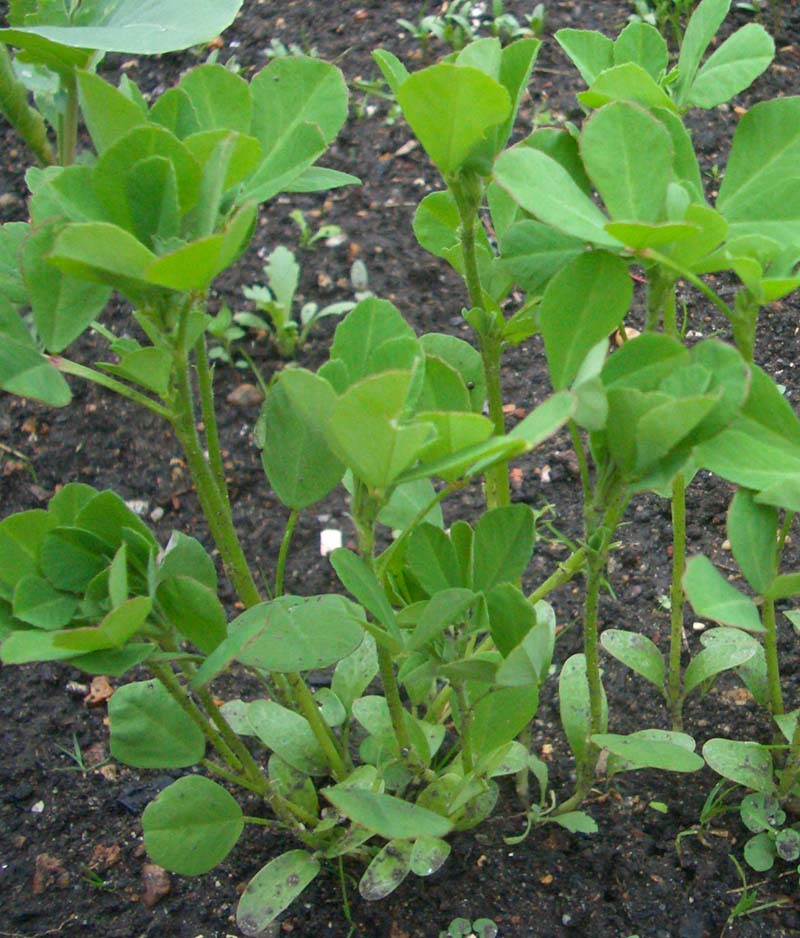 FenugreekTrigonella foenum-graecum
Compare
Questions and answers
What is the scientific name of the Roundleaf Leather-root?
The scientific name of the Roundleaf Leather-root is Hoita orbicularis. Written with its author, the full name is Hoita orbicularis (Lindl.) Rydb..
Which family does the Roundleaf Leather-root belong to?
Hoita orbicularis belongs to the family Fabaceae, in the order Fabales and the class Magnoliopsida.
Where is the Roundleaf Leather-root found?
Checklists and occurrence records place Hoita orbicularis in 2 countries: United States and Mexico.
What other names does the Roundleaf Leather-root have?
Hoita orbicularis is also known in English as Roundleaf Leatherroot.
Where is the roundleaf leather-root found?
It is endemic to California and relatively widespread across California's mountain ranges.[13][14]
What habitats does the roundleaf leather-root grow in?
It grows most frequently in moist habitats.[11]
What do its flowers look like?
Its flowers resemble pea flowers and are generally light to medium purple. Individual flowers measure approximately one to two centimetres in length.[5][7]
Sources
Passages the profile rests on
- The plant grows prostrate or nearly horizontally at ground level. Source passage: “It is a perennial herb growing prostrate or nearly so at ground level” — English Wikipedia
- Each leaf consists of three rounded leaflets. Source passage: “large leaves each made up of three round leaflets” — English Wikipedia
- The plant's herbage is glandular and frequently hairy. Source passage: “The herbage is glandular and often hairy.” — English Wikipedia
- Its inflorescence is an erect raceme. Source passage: “The inflorescence is an erect raceme” — English Wikipedia
- Its flowers resemble pea flowers and are generally light to medium purple. Source passage: “pealike, and generally a shade of light to medium purple in color.” — English Wikipedia
- Its inflorescence can reach 35 centimetres in length. Source passage: “which may be up to 35 centimetres (13+2⁄3 in) long.” — English Wikipedia
- Individual flowers measure approximately one to two centimetres in length. Source passage: “Each of the many flowers is one or two centimeters long” — English Wikipedia
- Its fruit is a hairy, veiny legume pod. Source passage: “The fruit is a hairy, veiny legume pod” — English Wikipedia
- The plant's rounded leaflets can reach 11 centimetres in length. Source passage: “round leaflets up to 11 centimetres” — English Wikipedia
- Its legume pods are slightly shorter than one centimetre. Source passage: “just under 1 centimetre” — English Wikipedia
- The species grows most frequently in moist habitats. Source passage: “growing most often in moist habitat.” — English Wikipedia
- The species produces numerous flowers in its racemose inflorescence. Source passage: “The inflorescence is an erect raceme which may be up to 35 centimetres (13+2⁄3 in) long. Each of the many flowers” — English Wikipedia
- The species is endemic to California. Source passage: “It is endemic to California” — English Wikipedia
- The species is relatively widespread across California's mountain ranges. Source passage: “relatively widespread throughout the state's mountain ranges” — English Wikipedia
Data
- Catalogue of Life, 2026-10-16 XR cc by
- Global Biodiversity Information Facility CC BY 4.0
- Wikidata CC0
- GeoNames CC BY 4.0
- Wikimedia Commons per image; credit shown with each image
- Within the Catalogue of Life, this name comes from The World Checklist of Vascular Plants (WCVP): Fabaceae cc by
References
- N.L.Britton & al. (eds.), N. Amer. Fl. 24: 11 (1919) where the name was published
This species in other databases
- Catalogue of Life 3M6ZB
- Wikidata Q5877821
- iNaturalist 77425
- World Flora Online wfo-0000184634
- GRIN 436253
Page built on 28 November 2026. See how the catalog is made and all sources and licences.
Cite this page
ScientificNames.org. (2026). Hoita orbicularis (Roundleaf Leather-root). Retrieved November 28, 2026, from https://scientificnames.org/species/hoita-orbicularis
“Hoita orbicularis (Roundleaf Leather-root).” ScientificNames.org, 2026, scientificnames.org/species/hoita-orbicularis. Accessed 28 Nov. 2026.
ScientificNames.org. “Hoita orbicularis (Roundleaf Leather-root).” Accessed November 28, 2026. https://scientificnames.org/species/hoita-orbicularis.
@misc{scientificnames_hoita_orbicularis_roundleaf_leather_root,
  author = {{ScientificNames.org}},
  title = {Hoita orbicularis (Roundleaf Leather-root)},
  year = {2026},
  url = {https://scientificnames.org/species/hoita-orbicularis},
  note = {Accessed 2026-11-28}
}