Species · Reptiles
African Whole-toed Gecko Holodactylus africanus
The scientific name of the African Whole-toed Gecko is Holodactylus africanus. It is a species of reptile in the family Eublepharidae (eublepharid geckos), order Squamata. The name dates from 1893.
- Scientific name
- Holodactylus africanus Boettger, 1893
- Common name
- African Whole-toed Gecko
- Genus
- Holodactylus
- Family
- Eublepharidae (Eublepharid Geckos)
- Order
- Squamata
- Class
- Reptilia
- Red List category
- LC Least Concern
- Recorded in
- 4 countries
- Name status
- accepted in the Catalogue of Life

Overview
The African Whole-toed Gecko is commonly found in Eastern Africa. It has a large head, a thin body, a short, stumpy tail, and tan and brown bands.
Written 27 November 2026 from the sources listed below. Each statement was checked against the passage it cites; statements that could not be supported were removed.
Appearance
The African Whole-toed Gecko has a large head, a thin body, and a short, stumpy tail. Its body has tan and brown bands.[1][2]
Adult individuals measure between 8.9 and 10.2 cm in length.[3]
Habitat
The African Whole-toed Gecko is commonly found in Eastern Africa.[4]
Classification of the African Whole-toed Gecko
| Kingdom | Animalia |
|---|---|
| Phylum | Chordata |
| Subphylum | Vertebrata |
| Infraphylum | Gnathostomata |
| Parvphylum | Osteichthyes |
| Megaclass | Tetrapoda |
| Class | Reptilia (Reptile) |
| Order | Squamata (Snakes) |
| Suborder | Gekkota |
| Family | Eublepharidae (Eublepharid Geckos) |
| Genus | Holodactylus (African Clawed Geckos) |
| Species | Holodactylus africanus Boettger, 1893 |
Where the African Whole-toed Gecko is found
Checklists and occurrence records place Holodactylus africanus in 4 countries across Africa. GBIF holds 66 georeferenced records of it.
Countries
Regions and cities with the most records
- Marsabit County, Kenya 12
- Kajiado, Kenya 6
- Kajiado County, Kenya 6
- Arusha, Tanzania 5
- Nugaal, Somalia 3
Range as the checklists state it
S/E Ethiopia, Kenya, Somalia, NE Tanzania (Webi Shebeli/Abdulla)
A number beside a place is its count of GBIF occurrence records. A place without a number comes from a checklist alone. Records show where a species has been observed or collected, which can include escapes and vagrants.
Common names
English
- African Whole-toed Gecko
- Boettger's Strong-clawed Gecko
- Boettger’s Strong-clawed Gecko
Names in 4 other languages
- Czech
- gekončík východoafrický
- German
- Afrikanischer Krallengecko, Ganzfinger-Lidgecko
- Japanese
- ヒガシアフリカトカゲモドキ
- Russian
- Африканский векоподвижный геккон, Восточноафриканский эублефар
Synonyms
One other scientific name has been used for this species and is now treated as a synonym of Holodactylus africanus.
- Holodactylus aculeatus Calabresi, 1915
Related species
- Somalia Whole-toed GeckoHolodactylus cornii
-
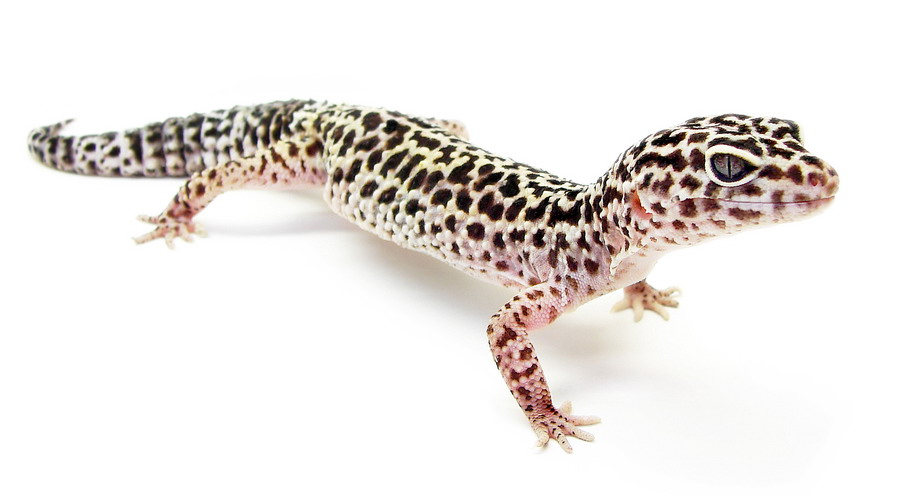 Leopard GeckoEublepharis macularius
-
 African Fat-tailed GeckoHemitheconyx caudicinctus
-
 Western Banded GeckoColeonyx variegatus
-
 Chinese Cave GeckoGoniurosaurus hainanensis
-
 Cat GeckoAeluroscalabotes felinus
-
 Iranian Fat Tailed GeckoEublepharis angramainyu
-
 Texas Banded GeckoColeonyx brevis
Compare
Questions and answers
What is the scientific name of the African Whole-toed Gecko?
The scientific name of the African Whole-toed Gecko is Holodactylus africanus. Written with its author, the full name is Holodactylus africanus Boettger, 1893.
Which family does the African Whole-toed Gecko belong to?
Holodactylus africanus belongs to the family Eublepharidae, in the order Squamata and the class Reptilia.
Where is the African Whole-toed Gecko found?
Checklists and occurrence records place Holodactylus africanus in 4 countries: Kenya, Somalia, Tanzania and Ethiopia.
What is the conservation status of the African Whole-toed Gecko?
The IUCN Red List category recorded for Holodactylus africanus is Least Concern (LC).
What other names does the African Whole-toed Gecko have?
Holodactylus africanus is also known in English as Boettger's Strong-clawed Gecko and Boettger’s Strong-clawed Gecko.
Sources
Passages the profile rests on
- The species has a large head, a thin body, and a short, stumpy tail. Source passage: “The gecko has a big head, thin body, stumpy tail, and has tan and brown bands.” — English Wikipedia
- The species has tan and brown bands on its body. Source passage: “has tan and brown bands.” — English Wikipedia
- Adult individuals measure between 8.9 and 10.2 cm in length. Source passage: “The adults are 3.5 to 4 in (8.9 to 10.2 cm) long.” — English Wikipedia
- The species is commonly found in Eastern Africa. Source passage: “is a species of gecko that is commonly found in Eastern Africa.” — English Wikipedia
Data
- Catalogue of Life, 2026-10-16 XR cc by
- Global Biodiversity Information Facility CC BY 4.0
- Wikidata CC0
- GeoNames CC BY 4.0
- Wikimedia Commons per image; credit shown with each image
- Within the Catalogue of Life, this name comes from The Reptile Database cc by
References
- Boettger, O. (1893). Übersicht der von Prof. C. Keller anlässlich der Ruspoli’schen Expedition nach den Somaliländern gesammelten Reptilien und Batrachier. Zool. Anz. 16 (416): 113-119.
- Boulenger, G. A. (1895). On the reptiles and batrachians obtained by Mr. E. Lort-Phillips in Somaliland. Ann. Mag. Nat. Hist. (6) 16: 165-169.
- Boulenger, G. A. (1896). A list of the reptiles and batrachians collected by the late Prince Eugenio Ruspoli in Somaliland and Gallaland in 1893. Annali Mus. Civ. Stor. Nat. Genova, Giacomo Doria, (2) 17: 5-14 [11].
- Calabresi, & Enrica. (1915). Contributo alla conoscenza dei rettili della Somalia. Monitore Zoologico Italiano (Supplemento), 28:234—247.
- Scortecci, G. (1930). Secondo contributo alla conoscenza dei rettili della Somalia Italiana. Atti Della Società Italiana Di Scienze Naturali E Del Museo Civico Di Storia Naturale in Milano, 69:127—152. [1931].
- Parker, H. W. (1942). The lizards of British Somaliland. Bull. Mus. Comp. Zool. Harvard 91: 1—101.
- Loveridge, A. (1947). Revision of the African lizards of the family Gekkondiae. Bull. Mus. Comp. Zool. Harvard 98: 1-469.
- Mertens, R. (1967). Die herpetologische Sektion des Natur-Museums und Forschungs-Institutes Senckenberg in Frankfurt am Main nebst einem Verzeichnis ihrer Typen. Senckenbergiana Biologica 48: 1-106.
- Drewes, R. C. (1971). Notes on the Distribution of Holodactylus africanus. Jour. East Afr. Nat. Hist. Soc. 126 (28): 1-3.
- Lanza, B. (1990). Amphibians and reptiles of the Somali Democratic Republic: check list and biogeography. Biogeographia, 14: 407-465 [1988].
- Broadley, D. G., & HOWELL, K. M. (1991). A check list of the reptiles of Tanzania, with synoptic keys. Syntarsus 1: 1—70.
- Rösler, & Herbert. (1995). Geckos der Welt - Alle Gattungen. Urania, Leipzig, 256 Pp.
- Grismer, L. L. (1997). Eublepharid Geckos - Living Relics of Gekkotan Evolution. Fauna 1 (1): 26-33.
- Spawls, S., & Rotich, D. (1997). An annotated checklist of the lizards of Kenya. J. East African Nat. Hist. 86: 61-83.
- Rösler, H. (2000). Kommentierte Liste der rezent, subrezent und fossil bekannten Geckotaxa (Reptilia: Gekkonomorpha). Gekkota 2: 28-153.
- Spawls, S.; Howell, K.; Drewes, R.C. & Ashe, J. (2002). A field guide to the reptiles of East Africa. Academic Press, 543 Pp. [Reviews in HR 34: 396 and Afr. J. Herp. 51; 147].
- Seufer, H.; Y. Kaverkin & A. Kirschner (eds.). (2005). Die Lidgeckos. Kirschner Und Seufer Verlag, 238 Pp.
- Largen, M. J., & Spawls, S. (2006). Lizards of Ethiopia (Reptilia Sauria): an annotated checklist, bibliography, gazetteer and identification. Tropical Zoology 19 (1): 21-109.
- Largen, M. J., & Spawls, S. (2010). Amphibians and Reptiles of Ethiopia and Eritrea. Edition Chimaira, Frankfurt, 694 Pp.
- Mazuch, & Tomáš. (2013). Amphibians and Reptiles of Somaliland and Eastern Ethiopia. Tomáš Mazuch Publishing, 80 Pp. ISBN: 978-80-905439-0-4.
- Spawls, Steve; Kim Howell, Harald Hinkel, Michele Menegon. (2018). Field Guide to East African Reptiles. Bloomsbury, 624 Pp.
- Kirchhof S, Wasonga V, Mazuch T, Spawls S, Malonza KP. (2023). An annotated checklist of the herpetofauna of the Sibiloi National Park in northern Kenya based on field surveys. Amphibian & Reptile Conservation 17(1/2) [General Section]: 1–18 (E324).
- Spawls, Stephen; Tomáš Mazuch & Abubakr Mohammad. (2023). Handbook of Amphibians and Reptiles of North-east Africa. Bloomsbury, 640 Pp.
- Uetz, P. H., Patel, M., Gbadamosi, Z., Nguyen, A., & Shoope, S. (2024). A Reference Database of Reptile Images. Taxonomy 4: 723–732.
This species in other databases
Page built on 28 November 2026. See how the catalog is made and all sources and licences.
Cite this page
ScientificNames.org. (2026). Holodactylus africanus (African Whole-toed Gecko). Retrieved November 28, 2026, from https://scientificnames.org/species/holodactylus-africanus
“Holodactylus africanus (African Whole-toed Gecko).” ScientificNames.org, 2026, scientificnames.org/species/holodactylus-africanus. Accessed 28 Nov. 2026.
ScientificNames.org. “Holodactylus africanus (African Whole-toed Gecko).” Accessed November 28, 2026. https://scientificnames.org/species/holodactylus-africanus.
@misc{scientificnames_holodactylus_africanus_african_whole_toed_gecko,
  author = {{ScientificNames.org}},
  title = {Holodactylus africanus (African Whole-toed Gecko)},
  year = {2026},
  url = {https://scientificnames.org/species/holodactylus-africanus},
  note = {Accessed 2026-11-28}
}