Species · Fishes
Garibaldi Hypsypops rubicundus
The scientific name of the Garibaldi is Hypsypops rubicundus. It is a species of fish in the family Pomacentridae (damselfishes), order Perciformes. The name dates from 1854.
- Scientific name
- Hypsypops rubicundus (Girard, 1854)
- Common name
- Garibaldi
- Genus
- Hypsypops
- Family
- Pomacentridae (Damselfishes)
- Order
- Perciformes
- Class
- Teleostei
- Red List category
- LC Least Concern
- Environment
- marine
- Recorded in
- 2 countries
- Name status
- accepted in the Catalogue of Life

Overview
Adult Garibaldi have uniformly bright orange coloration, while juveniles have reddish-orange coloration with iridescent blue markings.
Written 26 November 2026 from the sources listed below. Each statement was checked against the passage it cites; statements that could not be supported were removed.
Appearance
Adult Garibaldi have uniformly bright orange coloration. Their bodies are deep and laterally compressed, with coarse scales.[1][2]
The species has a single dorsal fin containing approximately 12 spines and 16 rays.[3]
Juveniles have reddish-orange coloration with numerous iridescent blue stripes and spots. Their tail and dorsal fins are more translucent than those of adults, and the blue markings gradually disappear as the fish mature.[4][5][6]
Adult Garibaldi typically measure approximately 28–34 cm in length and can reach a maximum recorded length of 35.6 cm. Adult males average approximately 25 mm longer than adult females.[7][8][9]
Habitat
Garibaldi inhabit marine waters at depths reaching approximately 30 metres. They typically occupy rocky seabeds and associate with rock reefs.[10][11]
The species prefers exposed or semi-protected rocky coasts with clear water and crevices. It occupies shallow rocky reefs near the boundary between intertidal and subtidal zones.[12][13]
Juvenile Garibaldi can inhabit tide pools at depths reaching approximately 12 metres.[14]
Kelp forests provide shelter from predators and contribute to the species' food supply and reproductive success.[15]
Diet
Garibaldi are generalist omnivores that primarily consume invertebrates removed from rocks. They also consume algae and occasionally eat their own eggs.[16][17]
Common dietary items include fleshy red algae, polychaete worms, anemones and sponge fragments. Other foods include bryozoans, hydroids, mollusks and brown algae.[18][19]
In kelp forests, the species feeds primarily on small sessile sponges, bryozoans and plankton.[20]
Behaviour
Adult male and female Garibaldi defend territories throughout the year. Adult territories generally cover approximately 3–10 square metres.[21][22]
Male Garibaldi aggressively defend their nests while their eggs develop. They may bite divers who approach their egg-deposition areas.[23][24]
Juvenile Garibaldi generally do not defend territories or behave aggressively toward one another.[25]
Males perform a looping swimming display called dipping to attract females to their nests. The display can be accompanied by a loud sound produced through grinding the pharyngeal teeth.[26][27]
Reproduction and life cycle
The breeding season generally extends from mid-March through July. Male Garibaldi spend approximately a month preparing algal nests for breeding.[28][29]
Female Garibaldi prefer males that have prepared dense algal nesting mats. Females produce clutches containing approximately 15,000–80,000 eggs.[30][31]
Garibaldi embryos hatch within two hours after sunset and before early morning. Newly hatched Garibaldi disperse as planktonic larvae.[32][33]
Garibaldi reach sexual maturity at approximately six years of age.[34]
Conservation
The IUCN Red List classifies Garibaldi as Least Concern. The species has experienced increasing pressure from the commercial saltwater aquarium trade.[35][36]
Garibaldi are protected from recreational and commercial fishing in California coastal waters. California law prohibits their collection for recreational or commercial purposes.[37][38]
Garibaldi became California's official marine state fish in 1995.[39]
Uses
California law prohibits the collection of Garibaldi for recreational or commercial purposes.[38]
Classification of the Garibaldi
| Kingdom | Animalia |
|---|---|
| Phylum | Chordata |
| Subphylum | Vertebrata |
| Infraphylum | Gnathostomata |
| Parvphylum | Osteichthyes |
| Gigaclass | Actinopterygii |
| Superclass | Actinopteri |
| Class | Teleostei (Teleost) |
| Order | Perciformes |
| Family | Pomacentridae (Damselfishes) |
| Genus | Hypsypops |
| Species | Hypsypops rubicundus (Girard, 1854) |
Where the Garibaldi is found
Checklists and occurrence records place Hypsypops rubicundus in 2 countries. GBIF holds 115,394 georeferenced records of it.
Countries
Regions and cities with the most records
- Monterey, United States 16,805
- Pacific Grove, United States 16,805
- Seaside, United States 16,805
- California, United States 12,062
- Marina, United States 10,436
- Torrance, United States 6,082
- West Carson, United States 6,066
- Lomita, United States 6,065
- Carson, United States 6,063
- Rancho Palos Verdes, United States 6,062
- Hermosa Beach, United States 6,009
- Redondo Beach, United States 6,008
- Gardena, United States 5,899
- Lawndale, United States 5,898
- Laguna Niguel, United States 5,566
- Laguna Beach, United States 5,524
- Aliso Viejo, United States 5,521
- Mission Viejo, United States 5,521
- Laguna Woods, United States 5,519
- Laguna Hills, United States 5,517
- Manhattan Beach, United States 5,476
- Lake Forest, United States 5,326
- Newport Beach, United States 5,141
- Irvine, United States 5,122
- Costa Mesa, United States 5,085
- Dana Point, United States 4,429
- San Juan Capistrano, United States 4,425
- Ladera Ranch, United States 4,376
- El Segundo, United States 3,729
- Hawthorne, United States 3,296
- Long Beach, United States 2,780
- San Diego, United States 2,687
- Isla Vista, United States 2,415
- Goleta, United States 2,409
- Coronado, United States 1,865
- Santa Barbara, United States 1,859
A number beside a place is its count of GBIF occurrence records. A place without a number comes from a checklist alone. Records show where a species has been observed or collected, which can include escapes and vagrants.
Common names
English
- Garibaldi
- Garibaldi Damselfish
Names in 6 other languages
- Chinese
- 高歡雀鯛
- French
- Chauffet Garibaldi, Demoiselle Garibaldi
- German
- Garibaldifisch
- Italian
- Castagnola Garibaldi, Damigella Garibaldi, Pesce Garibaldi
- Russian
- Гарибальдия
- Spanish
- Damisela de Garibaldi, Jaqueta vistosa, jaqueta garibaldi
Synonyms
2 other scientific names have been used for this species and are now treated as synonyms of Hypsypops rubicundus.
- Glyphisodon rubicundus Girard, 1854
- Hypsypops rubicunda (Girard, 1854)
Related species
-
 Ocellaris ClownfishAmphiprion ocellaris
-
 Sergeant MajorAbudefduf saxatilis
-
 Blacktail HumbugDascyllus melanurus
-
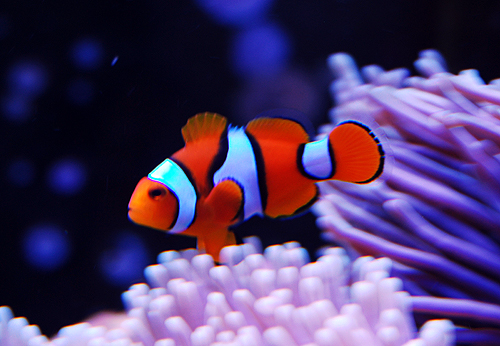 Orange ClownfishAmphiprion percula
-
 Green ChromisChromis viridis
-
 Threespot DascyllusDascyllus trimaculatus
-
 Clark's AnemonefishAmphiprion clarkii
-
 Mediterranean ChromisChromis chromis
Compare
Questions and answers
What is the scientific name of the Garibaldi?
The scientific name of the Garibaldi is Hypsypops rubicundus. Written with its author, the full name is Hypsypops rubicundus (Girard, 1854).
Which family does the Garibaldi belong to?
Hypsypops rubicundus belongs to the family Pomacentridae, in the order Perciformes and the class Teleostei.
Where is the Garibaldi found?
Checklists and occurrence records place Hypsypops rubicundus in 2 countries: United States and Mexico.
What is the conservation status of the Garibaldi?
The IUCN Red List category recorded for Hypsypops rubicundus is Least Concern (LC).
What other names does the Garibaldi have?
Hypsypops rubicundus is also known in English as Garibaldi Damselfish.
Why is the fish called Garibaldi?
The common name refers to Italian political and military leader Giuseppe Garibaldi. It refers to the red shirts worn by his followers.[40][41]
What do Garibaldi fish eat?
Garibaldi are generalist omnivores that primarily consume invertebrates removed from rocks. Their diet includes fleshy red algae, polychaete worms, anemones, sponge fragments, bryozoans, hydroids, mollusks, brown algae and plankton. They occasionally eat their own eggs.[16][17][18][19][20]
Are Garibaldi fish endangered?
The IUCN Red List classifies Garibaldi as Least Concern.[35]
Sources
Passages the profile rests on
- Adult Garibaldi have a uniformly bright orange coloration. Source passage: “Adult fish of this species are uniformly bright orange in color.” — English Wikipedia
- Garibaldi have deep, laterally compressed bodies covered with coarse scales. Source passage: “Garibaldi are deep-bodied or laterally compressed fish, and covered in coarse scales.” — English Wikipedia
- The species has a single dorsal fin containing approximately 12 spines and 16 rays. Source passage: “They have a single dorsal fin with about 12 spines and 16 rays.” — English Wikipedia
- Juveniles have reddish-orange coloration with numerous iridescent blue stripes and spots. Source passage: “Juveniles are a deeper, more reddish shade of orange than adults. They are covered in many small iridescent blue stripes and spots” — English Wikipedia
- Juvenile Garibaldi have more translucent tail and dorsal fins than adults. Source passage: “Their tail (caudal fin) and dorsal fins are more translucent compared to their adult counterparts.” — English Wikipedia
- Juvenile blue markings gradually disappear as the fish mature. Source passage: “This coloration gradually fades as the young reach full maturity at around six inches” — animaldiversity.org
- Garibaldi can reach a maximum recorded length of 35.6 cm. Source passage: “growing up to 35.6 cm (14 inches) in length.” — English Wikipedia
- Adult Garibaldi typically measure approximately 28–34 cm in length. Source passage: “Adults grow to a size of approximately 12-14 inches (28-34 cm).” — animaldiversity.org
- Adult males average approximately 25 mm longer than adult females. Source passage: “average adult males measuring 25 mm (1 inch) larger than females” — English Wikipedia
- Garibaldi inhabit marine waters at depths reaching approximately 30 metres. Source passage: “Garibaldis are found in marine waters up to 30 metres (98 ft) in depth.” — English Wikipedia
- Garibaldi typically occupy rocky seabeds and associate with rock reefs. Source passage: “They usually nest in association with rock reefs and typically over rocky sea-bottoms.” — English Wikipedia
- The species prefers exposed or semi-protected rocky coasts with clear water and crevices. Source passage: “They prefer to live over rocky bottoms on exposed or semi-protected coasts with clear water and plenty of crevices” — English Wikipedia
- Garibaldi occupy shallow rocky reefs near the boundary between intertidal and subtidal zones. Source passage: “H. rubicundus occupies shallow rocky reefs near where the intertidal and subtidal zones meet.” — animaldiversity.org
- Juvenile Garibaldi can inhabit tide pools at depths reaching approximately 12 metres. Source passage: “Juveniles can be found in tide pools up to depths of 40 feet (just over 12 m).” — English Wikipedia
- Kelp forests provide shelter from predators and contribute to the species' food supply and reproductive success. Source passage: “These kelp forests are a critical habitat element as they provide potential protection from predators, are a source of food for H. rubicundus , and are important for reproductive success” — animaldiversity.org
- Garibaldi are generalist omnivores that primarily consume invertebrates removed from rocks. Source passage: “Classified as generalist omnivores, Garibaldi feed mainly on invertebrates, which they remove from the rocks.” — English Wikipedia
- Garibaldi also consume algae and occasionally eat their own eggs. Source passage: “Their diet also includes a variety of algae and occasionally their own eggs.” — English Wikipedia
- Common dietary items include fleshy red algae, polychaete worms, anemones, and sponge fragments. Source passage: “Garibaldi are found to most commonly feed upon fleshy red algae, polychaete worms, anemones, and sponge fragments.” — English Wikipedia
- Garibaldi also consume bryozoans, hydroids, mollusks, and brown algae. Source passage: “But they have also been found to eat encrusting bryozoans, hydroids, branching bryozoans, mollusks, and brown algae.” — English Wikipedia
- The species feeds primarily on small sessile sponges, bryozoans, and plankton in kelp forests. Source passage: “H. rubicundus feeds primarily on small sessile sponges, bryozoans, and plankton that are found in and around the kelp forests that serve as its home” — animaldiversity.org
- Adult male and female Garibaldi defend territories throughout the year. Source passage: “both male and female adult Garibaldi tend to defend year-round territories” — English Wikipedia
- Adult territories generally cover approximately 3–10 square metres. Source passage: “year-round territories of about 3-10 square meters” — English Wikipedia
- Male Garibaldi aggressively defend their nests while their eggs develop. Source passage: “During the time period that the eggs are developing, the male Garibaldi aggressively tries to keep all other fish away from the eggs” — English Wikipedia
- Male Garibaldi may bite divers who approach their egg-deposition areas. Source passage: “including humans, to the point of biting divers” — English Wikipedia
- Juvenile Garibaldi generally do not defend territories or behave aggressively toward one another. Source passage: “Juvenile Garibaldi don't tend to be territorial or aggressive toward each other unless they are confined in an aquarium.” — English Wikipedia
- Males perform a looping swimming display called dipping to attract females to their nests. Source passage: “The male will swim loops in and around its nest in a behavior called “dipping” in order to attract the female.” — animaldiversity.org
- The dipping display can be accompanied by a loud sound produced through grinding the pharyngeal teeth. Source passage: “This dipping behavior is often accompanied by a loud “thumping” noise. This noise is a function of the H. rubicundus grinding its pharyngeal teeth.” — animaldiversity.org
- The breeding season generally extends from mid-March through July. Source passage: “H. rubicundus spawn from mid-March through July.” — animaldiversity.org
- Male Garibaldi spend approximately a month preparing algal nests for breeding. Source passage: “the male H. rubicundus spends an inordinate amount of time and energy (approximately an entire month) cleaning and preparing an inviting algal mat” — animaldiversity.org
- Female Garibaldi prefer males that have prepared dense algal nesting mats. Source passage: “research has shown that females prefer to mate with those males which have done the best job of “farming” their mats.” — animaldiversity.org
- Female Garibaldi produce clutches containing approximately 15,000–80,000 eggs. Source passage: “he deposits his spermatozoa over her huge clutch of eggs (15,000-80,000).” — animaldiversity.org
- Garibaldi embryos hatch within two hours after sunset and before early morning. Source passage: “Embryos hatch within 2 hours after sunset and before early morning” — English Wikipedia
- Newly hatched Garibaldi disperse as planktonic larvae. Source passage: “The embryos hatch and disperse as planktonic larvae” — English Wikipedia
- Garibaldi reach sexual maturity at approximately six years of age. Source passage: “and reach sexual maturity at 6 years.” — English Wikipedia
- The IUCN Red List classifies Garibaldi as Least Concern. Source passage: “The IUCN Red List of Threatened Species lists Garibaldi as Least Concern.” — English Wikipedia
- The species has experienced increasing pressure from the commercial saltwater aquarium trade. Source passage: “recently there has been increasing pressure on the population from the commercial salt water aquarium trade.” — animaldiversity.org
- Garibaldi are protected from recreational and commercial fishing in California coastal waters. Source passage: “has since been protected in California coastal waters from recreation and commercial fishing.” — English Wikipedia
- California law prohibits the collection of Garibaldi for recreational or commercial purposes. Source passage: “California law now protects the fish and prohibits taking for either sport or commercial purposes” — animaldiversity.org
- Garibaldi became California's official marine state fish in 1995. Source passage: “The Garibaldi was named the official marine state fish of California in 1995” — English Wikipedia
- The common name Garibaldi refers to Italian political and military leader Giuseppe Garibaldi. Source passage: “The English name is a reference to the 19th-century Italian general and political figure Giuseppe Garibaldi” — English Wikipedia
- The species' common name refers to the red shirts worn by Giuseppe Garibaldi's followers. Source passage: “whose followers often wore a characteristic scarlet or red shirt.” — English Wikipedia
Data
- Catalogue of Life, 2026-10-16 XR cc by
- Global Biodiversity Information Facility CC BY 4.0
- Wikidata CC0
- GeoNames CC BY 4.0
- Wikimedia Commons per image; credit shown with each image
- Within the Catalogue of Life, this name comes from World Register of Marine Species cc by
This species in other databases
- Catalogue of Life 3P4S9
- Wikidata Q1338609
- iNaturalist 53693
- WoRMS urn:lsid:marinespecies.org:taxname:281130
- ITIS 170120
Page built on 27 November 2026. See how the catalog is made and all sources and licences.
Cite this page
ScientificNames.org. (2026). Hypsypops rubicundus (Garibaldi). Retrieved November 27, 2026, from https://scientificnames.org/species/hypsypops-rubicundus
“Hypsypops rubicundus (Garibaldi).” ScientificNames.org, 2026, scientificnames.org/species/hypsypops-rubicundus. Accessed 27 Nov. 2026.
ScientificNames.org. “Hypsypops rubicundus (Garibaldi).” Accessed November 27, 2026. https://scientificnames.org/species/hypsypops-rubicundus.
@misc{scientificnames_hypsypops_rubicundus_garibaldi,
  author = {{ScientificNames.org}},
  title = {Hypsypops rubicundus (Garibaldi)},
  year = {2026},
  url = {https://scientificnames.org/species/hypsypops-rubicundus},
  note = {Accessed 2026-11-27}
}