Species · Fishes
Rio Verde Catfish Ictalurus mexicanus
The scientific name of the Rio Verde Catfish is Ictalurus mexicanus. It is a species of fish in the family Ictaluridae (bullhead catfishes), order Siluriformes. The name dates from 1904.
- Scientific name
- Ictalurus mexicanus (Meek, 1904)
- Common name
- Rio Verde Catfish
- Genus
- Ictalurus
- Family
- Ictaluridae (Bullhead Catfishes)
- Order
- Siluriformes
- Class
- Teleostei
- Red List category
- VU Vulnerable
- Environment
- freshwater
- Recorded in
- 1 country
- Name status
- accepted in the Catalogue of Life
Overview
The Rio Verde Catfish is a freshwater catfish native to North America. It occurs in the upper Rio Gallinas drainage within the Rio Panuco basin, on the Atlantic Slope of Mexico. It has a dorsal spine longer than its fleshy interorbital distance, and juveniles have 2–3 very small serrae on the pectoral spine.
Written 27 November 2026 from the sources listed below. Each statement was checked against the passage it cites; statements that could not be supported were removed.
Appearance
The dorsal spine is longer than the fleshy interorbital distance. The supraoccipital spine does not contact the supraneural.[1][2]
Juveniles have 2–3 very small serrae on the pectoral spine.[3]
Habitat
The species inhabits creeks and small rivers with rocky or sandy substrates. It occurs in quiet to moderately flowing water.[4][5][6]
Similar species
Ictalurus lupus, Ictalurus pricei and Ictalurus dugesii differ from the Rio Verde Catfish by having a dorsal spine shorter than or equal to their fleshy interorbital distance and 5–14 large serrae on the juvenile pectoral spine.[7][8][9]
Ictalurus punctatus differs by having 26–32 anal rays and a supraoccipital spine that contacts the supraneural.[10]
Classification of the Rio Verde Catfish
| Kingdom | Animalia |
|---|---|
| Phylum | Chordata |
| Subphylum | Vertebrata |
| Infraphylum | Gnathostomata |
| Parvphylum | Osteichthyes |
| Gigaclass | Actinopterygii |
| Superclass | Actinopteri |
| Class | Teleostei (Teleost) |
| Order | Siluriformes (Catfish) |
| Family | Ictaluridae (Bullhead Catfishes) |
| Genus | Ictalurus (Channel Catfishes) |
| Species | Ictalurus mexicanus (Meek, 1904) |
Where the Rio Verde Catfish is found
Checklists and occurrence records place Ictalurus mexicanus in 1 country. GBIF holds 121 georeferenced records of it.
Countries
Regions and cities with the most records
- San Luis Potosí, Mexico 42
- Hidalgo, Mexico 36
- Querétaro, Mexico 27
- Ciudad Fernández, Mexico 19
- Rioverde, Mexico 19
- Zacualtipán, Mexico 15
- Huejutla de Reyes, Mexico 11
- Tamaulipas, Mexico 8
- Tamazunchale, Mexico 7
- Ciudad Victoria, Mexico 3
A number beside a place is its count of GBIF occurrence records. A place without a number comes from a checklist alone. Records show where a species has been observed or collected, which can include escapes and vagrants.
Common names
English
- Rio Verde Catfish
- Río Verde Catfish
Names in 2 other languages
- Czech
- sumeček východomexický
- Spanish
- Bagre de Rio Verde, bagre del Verde
Synonyms
One other scientific name has been used for this species and is now treated as a synonym of Ictalurus mexicanus.
- Amiurus mexicanus Meek, 1904
Related species
-
 Channel CatfishIctalurus punctatus
-
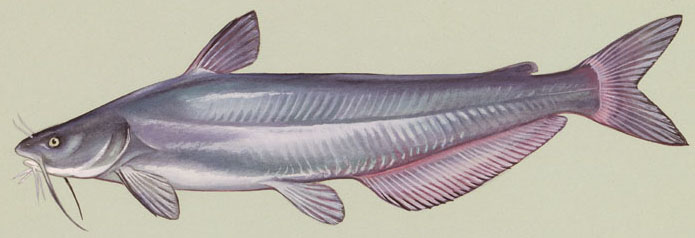 Blue CatfishIctalurus furcatus
-
 Yaqui CatfishIctalurus pricei
-
 Headwater CatfishIctalurus lupus
- Panuco CatfishIctalurus australis
-
 Balsas CatfishIctalurus balsanus
- Lerma CatfishIctalurus dugesii
- Ictalurus nazas
Compare
Questions and answers
What is the scientific name of the Rio Verde Catfish?
The scientific name of the Rio Verde Catfish is Ictalurus mexicanus. Written with its author, the full name is Ictalurus mexicanus (Meek, 1904).
Which family does the Rio Verde Catfish belong to?
Ictalurus mexicanus belongs to the family Ictaluridae, in the order Siluriformes and the class Teleostei.
Where is the Rio Verde Catfish found?
Checklists and occurrence records place Ictalurus mexicanus in 1 country: Mexico.
What is the conservation status of the Rio Verde Catfish?
The IUCN Red List category recorded for Ictalurus mexicanus is Vulnerable (VU).
What other names does the Rio Verde Catfish have?
Ictalurus mexicanus is also known in English as Río Verde Catfish.
Sources
Passages the profile rests on
- The species has a dorsal spine longer than its fleshy interorbital distance. Source passage: “The Rio Verde Catfish has the dorsal spine longer than the fleshy interorbital distance” — floridamuseum.ufl.edu
- The supraoccipital spine does not contact the supraneural. Source passage: “The supraoccipital spine is not in contact with supraneural.” — floridamuseum.ufl.edu
- Juveniles have 2–3 very small serrae on the pectoral spine. Source passage: “2-3 very small serrae on the pectoral spine of the juvenile” — floridamuseum.ufl.edu
- The species inhabits rocky or sandy substrates. Source passage: “lives over rocky or sandy substrates” — floridamuseum.ufl.edu
- The species inhabits quiet to moderately flowing water. Source passage: “in quiet to moderate-flowing water” — floridamuseum.ufl.edu
- The species occurs in creeks and small rivers. Source passage: “of creeks and small rivers.” — floridamuseum.ufl.edu
- Ictalurus lupus differs from this species by having a dorsal spine shorter than or equal to its fleshy interorbital distance and 5–14 large serrae on the juvenile pectoral spine. Source passage: “The Headwater Catfish, I. lupus, Yaqui Catfish, I. pricei, and Lerma Catfish, I. dugesii, have the dorsal spine shorter or equal in length to the fleshy interorbital distance and 5-14 large serrae on the pectoral spine of the juvenile.” — floridamuseum.ufl.edu
- Ictalurus pricei differs from this species by having a dorsal spine shorter than or equal to its fleshy interorbital distance and 5–14 large serrae on the juvenile pectoral spine. Source passage: “The Headwater Catfish, I. lupus, Yaqui Catfish, I. pricei, and Lerma Catfish, I. dugesii, have the dorsal spine shorter or equal in length to the fleshy interorbital distance and 5-14 large serrae on the pectoral spine of the juvenile.” — floridamuseum.ufl.edu
- Ictalurus dugesii differs from this species by having a dorsal spine shorter than or equal to its fleshy interorbital distance and 5–14 large serrae on the juvenile pectoral spine. Source passage: “The Headwater Catfish, I. lupus, Yaqui Catfish, I. pricei, and Lerma Catfish, I. dugesii, have the dorsal spine shorter or equal in length to the fleshy interorbital distance and 5-14 large serrae on the pectoral spine of the juvenile.” — floridamuseum.ufl.edu
- Ictalurus punctatus differs from this species by having 26–32 anal rays and a supraoccipital spine that contacts the supraneural. Source passage: “The Channel Catfish, I. punctatus, has 26-32 anal rays and the supraoccipital spine in contact with the supraneural.” — floridamuseum.ufl.edu
Data
- Catalogue of Life, 2026-10-16 XR cc by
- Global Biodiversity Information Facility CC BY 4.0
- Wikidata CC0
- GeoNames CC BY 4.0
- Within the Catalogue of Life, this name comes from World Register of Marine Species cc by
This species in other databases
- Catalogue of Life 3PB7Z
- Wikidata Q302494
- iNaturalist 103278
- WoRMS urn:lsid:marinespecies.org:taxname:1018617
- ITIS 681491
Page built on 27 November 2026. See how the catalog is made and all sources and licences.
Cite this page
ScientificNames.org. (2026). Ictalurus mexicanus (Rio Verde Catfish). Retrieved November 27, 2026, from https://scientificnames.org/species/ictalurus-mexicanus
“Ictalurus mexicanus (Rio Verde Catfish).” ScientificNames.org, 2026, scientificnames.org/species/ictalurus-mexicanus. Accessed 27 Nov. 2026.
ScientificNames.org. “Ictalurus mexicanus (Rio Verde Catfish).” Accessed November 27, 2026. https://scientificnames.org/species/ictalurus-mexicanus.
@misc{scientificnames_ictalurus_mexicanus_rio_verde_catfish,
  author = {{ScientificNames.org}},
  title = {Ictalurus mexicanus (Rio Verde Catfish)},
  year = {2026},
  url = {https://scientificnames.org/species/ictalurus-mexicanus},
  note = {Accessed 2026-11-27}
}