Species · Fishes
Yaqui Catfish Ictalurus pricei
The scientific name of the Yaqui Catfish is Ictalurus pricei. It is a species of fish in the family Ictaluridae (bullhead catfishes), order Siluriformes. The name dates from 1896.
- Scientific name
- Ictalurus pricei (Rutter, 1896)
- Common name
- Yaqui Catfish
- Genus
- Ictalurus
- Family
- Ictaluridae (Bullhead Catfishes)
- Order
- Siluriformes
- Class
- Teleostei
- Red List category
- EN Endangered
- Environment
- freshwater
- Recorded in
- 2 countries
- Name status
- accepted in the Catalogue of Life

Overview
The species currently occurs only in the Rio Yaqui drainage of Sonora, Mexico. It is the only native catfish found west of the Continental Divide.
Written 26 November 2026 from the sources listed below. Each statement was checked against the passage it cites; statements that could not be supported were removed.
Appearance
The Yaqui Catfish has a dark gray to black dorsal surface and a white to grayish underside. It is usually profusely speckled and has reddish coloration beneath its head and on its fins and tail.[1][2][3]
Its barbels are jet-black except for those on the chin, which are gray to whitish. Wild individuals have cylindrical, scaleless bodies.[4][5]
The species has shorter pectoral and dorsal fin spines than a similarly sized channel catfish. Compared with the channel catfish, it also has a shorter anal fin base and a broadly rounded distal anal fin margin with 23 to 25 soft rays.[6][7]
Similar species
The Yaqui Catfish resembles the channel catfish in appearance. The two species frequently produce hybrid offspring through interbreeding.[8][9]
Habitat
The Yaqui Catfish inhabits ponds and streams, particularly larger rivers and quiet, clear pools. It is most common in larger rivers with medium to slow currents over sandy or rocky bottoms.[10][11]
The species inhabits moderate to large streams at elevations between 4,000 and 5,000 feet. During the dry season, it takes refuge in permanent pools, which are often spring-fed.[12][13]
Diet
The Yaqui Catfish feeds on insects, snails, crawfish, green algae, aquatic plants, and small fish.[14]
Behaviour
The species feeds during both daytime and nighttime, generally near the bottom of the water.[15][16]
Outside the breeding season, individuals generally live alone in dark, shaded areas of deeper pools. The species migrates considerably through streams within its range and returns to areas that periodically dry out.[17][18]
Reproduction and life cycle
Yaqui Catfish reproduce by spawning in cavities. Males construct or use holes in banks, hollow logs, rocks, and other submerged materials as nests.[19][20]
Females are attracted to male-built nests, where spawning takes place, and lay their eggs on the bottom of the nest. Males guard their nests until the young fish leave them.[21][22][23]
Conservation
The species historically occurred in the Rio Yaqui drainage in Sonora, Mexico, including San Bernardino Creek and the Black Draw tributary in Cochise County, Arizona. It also occurred in San Bernardino Creek as far upstream as San Bernardino Ranch in Arizona.[24][25]
An introduced population occurred in the Monkey Springs Reservoir system near Patagonia, Arizona, from 1899 until the 1950s. In November 1997, a population of 350 fish was reintroduced into the Rio Yaqui within the San Bernardino National Wildlife Refuge.[26][27]
Yaqui Catfish were also reintroduced to San Bernardino National Wildlife Refuge and West Turkey Creek in Cochise County, Arizona, in 1997. These reintroductions did not establish self-sustaining populations, and the species is considered extirpated from the United States.[28][29][30]
Groundwater pumping reduced spring flows and caused San Bernardino Creek to dry up, resulting in the loss of the species there. Livestock trampling severely degraded the remaining habitat in the creek.[31][32]
Threats to the species include aquifer pumping, reduced stream flows, water diversion, drought, hybridization, and competition and predation from non-native fishes.[33]
Habitat-damaging activities include stream impoundment, channelization, livestock grazing, timber harvesting, mining, road construction, and pollution.[34]
Classification of the Yaqui Catfish
| Kingdom | Animalia |
|---|---|
| Phylum | Chordata |
| Subphylum | Vertebrata |
| Infraphylum | Gnathostomata |
| Parvphylum | Osteichthyes |
| Gigaclass | Actinopterygii |
| Superclass | Actinopteri |
| Class | Teleostei (Teleost) |
| Order | Siluriformes (Catfish) |
| Family | Ictaluridae (Bullhead Catfishes) |
| Genus | Ictalurus (Channel Catfishes) |
| Species | Ictalurus pricei (Rutter, 1896) |
Where the Yaqui Catfish is found
Checklists and occurrence records place Ictalurus pricei in 2 countries. GBIF holds 443 georeferenced records of it.
Countries
Regions and cities with the most records
- Chihuahua, Mexico 83
- Texas, United States 77
- Uvalde, United States 73
- Arizona, United States 68
- Sonora, Mexico 61
- Madera, Mexico 59
- Durango, Mexico 29
- Sinaloa, Mexico 19
- Lerdo, Mexico 5
- Culiacán, Mexico 3
- Gómez Palacio, Mexico 3
- Santiago Papasquiaro, Mexico 3
- Torreón, Mexico 3
A number beside a place is its count of GBIF occurrence records. A place without a number comes from a checklist alone. Records show where a species has been observed or collected, which can include escapes and vagrants.
Common names
English
- Yaqui Catfish
Names in 3 other languages
- Chinese
- 普氏真鮰
- Czech
- sumeček chihuahuanský
- Spanish
- Bagre de Yaqui, bagre yaqui
Synonyms
2 other scientific names have been used for this species and are now treated as synonyms of Ictalurus pricei.
- Amiurus meeki Regan, 1907
- Villarius pricei Rutter, 1896
Related species
-
 Channel CatfishIctalurus punctatus
-
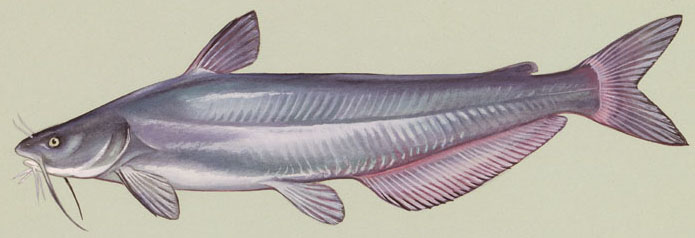 Blue CatfishIctalurus furcatus
-
 Headwater CatfishIctalurus lupus
- Panuco CatfishIctalurus australis
-
 Balsas CatfishIctalurus balsanus
- Lerma CatfishIctalurus dugesii
- Ictalurus nazas
- Rio Verde CatfishIctalurus mexicanus
Compare
Questions and answers
What is the scientific name of the Yaqui Catfish?
The scientific name of the Yaqui Catfish is Ictalurus pricei. Written with its author, the full name is Ictalurus pricei (Rutter, 1896).
Which family does the Yaqui Catfish belong to?
Ictalurus pricei belongs to the family Ictaluridae, in the order Siluriformes and the class Teleostei.
Where is the Yaqui Catfish found?
Checklists and occurrence records place Ictalurus pricei in 2 countries: United States and Mexico.
What is the conservation status of the Yaqui Catfish?
The IUCN Red List category recorded for Ictalurus pricei is Endangered (EN).
What is the diet of a catfish?
The Yaqui Catfish feeds on insects, snails, crawfish, green algae, aquatic plants, and small fish.[14]
Sources
Passages the profile rests on
- The Yaqui catfish has a dark gray to black dorsal surface and a white to grayish underside. Source passage: “The coloration of the Yaqui catfish is dark gray to black dorsally, and white to grayish beneath.” — English Wikipedia
- The Yaqui catfish is usually profusely speckled. Source passage: “The Yaqui catfish body is usually profusely speckled.” — English Wikipedia
- The species has reddish coloration beneath its head and on its fins and tail. Source passage: “A reddish coloration on the catfish is prominent beneath the head, as well as on the fins and tail.” — English Wikipedia
- Its barbels are jet-black except for those on the chin, which are gray to whitish. Source passage: “The barbels of the catfish are jet-black except on the chin, where they are gray to whitened.” — English Wikipedia
- Wild individuals have cylindrical bodies and lack scales. Source passage: “and are cylindrically shaped, lacking scales.” — fws.gov
- The Yaqui catfish has shorter pectoral and dorsal fin spines than a similarly sized channel catfish. Source passage: “The spines on the pectoral and dorsal fins are shorter than those of a channel catfish (Ictalurus punctatus) of similar size.” — English Wikipedia
- The species has a shorter anal fin base and a broadly rounded distal anal fin margin with 23 to 25 soft rays compared with the channel catfish. Source passage: “the anal fin base is shorter and the distal margin of the anal fin is broadly rounded with 23 to 25 soft rays.” — fws.gov
- The Yaqui catfish resembles the channel catfish in appearance. Source passage: “The species is similar to the channel catfish (Ictalurus punctatus) in appearance” — fws.gov
- Yaqui catfish and channel catfish frequently produce hybrid offspring through interbreeding. Source passage: “Yaqui catfish and channel catfish often breed resulting in hybridized offspring” — fws.gov
- The species inhabits ponds and streams, particularly larger rivers and quiet, clear pools. Source passage: “Yaqui catfish are found primarily in ponds or streams, primarily in larger rivers, but also in small streams, where they prefer quiet, clear pools.” — English Wikipedia
- The species is most common in larger rivers with medium to slow currents over sandy or rocky bottoms. Source passage: “The catfish are most common in larger rivers in areas of medium to slow currents over sand/rock bottoms.” — English Wikipedia
- During the dry season, the species takes refuge in permanent pools, which are often spring-fed. Source passage: “Streams flow intermittently in the dry season, and the catfish seeks refuge in permanent, often spring fed pools.” — English Wikipedia
- The species inhabits moderate to large streams at elevations between 4,000 and 5,000 feet. Source passage: “Yaqui catfish inhabit moderate to large streams in areas of medium to slow current with sandy or rocky bottoms, at elevations between 4,000 to 5,000 feet (1,219 to 1,425 meters).” — fws.gov
- The Yaqui catfish feeds on insects, snails, crawfish, green algae, aquatic plants, and small fish. Source passage: “Diets can consist of plant and animal material like: insects, snails, crawfish, green algae, aquatic plants and small fish.” — fws.gov
- The species feeds during both daytime and nighttime. Source passage: “Catfish will feed during the day or night” — fws.gov
- The Yaqui catfish generally feeds near the bottom of the water. Source passage: “and tend to feed near the water bottom.” — fws.gov
- Outside the breeding season, individuals generally live alone in dark, shaded areas of deeper pools. Source passage: “Outside of breeding season, Yaqui catfish live relatively solitary lives in dark shady areas in deeper pools.” — fws.gov
- The species migrates considerably through streams within its range and returns to areas that periodically dry out. Source passage: “T. Hafen and others published evidence in 2021 that suggests that this species migrates significantly throughout streams in its range, and reoccupies areas that seasonally go dry.” — fws.gov
- Yaqui catfish reproduce by spawning in cavities. Source passage: “Yaqui catfish are cavity spawners” — fws.gov
- Males construct or use holes in banks, hollow logs, rocks, and other submerged materials as nests. Source passage: “males will create or utilize holes in banks, hollow logs, rocks and other submerged material to build a nest.” — fws.gov
- Females are attracted to male-built nests, where spawning takes place. Source passage: “Females are attracted to the nests where spawning occurs” — fws.gov
- Females lay their eggs on the bottom of the nest. Source passage: “eggs are laid on the bottom of the nest.” — fws.gov
- Males guard their nests until the young fish leave them. Source passage: “Males will stay and protect the nest until the young fish, known as fry, leave the nest.” — fws.gov
- The species historically occurred in the Rio Yaqui drainage in Sonora, Mexico, including San Bernardino Creek and the Black Draw tributary in Cochise County, Arizona. Source passage: “The Yaqui catfish historically occurred in the Rio Yaqui Drainage in Sonora Mexico, including San Bernardino Creek, Black Draw tributary, in Cochise County, Arizona.” — fws.gov
- Historically, the species occurred in San Bernardino Creek as far upstream as San Bernardino Ranch in Arizona. Source passage: “The Yaqui catfish historically occurred in San Bernardino Creek as far up as San Bernardino Ranch, Arizona.” — English Wikipedia
- An introduced population occurred in the Monkey Springs Reservoir system near Patagonia, Arizona, from 1899 until the 1950s. Source passage: “An introduced population of catfish existed in the Monkey Springs Reservoir system near Patagonia, Arizona, from 1899 until the 1950s.” — English Wikipedia
- A population of 350 fish was reintroduced into the Rio Yaqui within the San Bernardino National Wildlife Refuge in November 1997. Source passage: “A small population of 350 fish has been reintroduced into the Rio Yaqui on the northernmost portion of the San Bernardino National Wildlife Refuge in November 1997.” — English Wikipedia
- Yaqui catfish were reintroduced to San Bernardino National Wildlife Refuge and West Turkey Creek in Cochise County, Arizona, in 1997. Source passage: “in 1997, the Yaqui catfish was reintroduced to San Bernardino National Wildlife Refuge and West Turkey Creek in Cochise County, Arizona.” — fws.gov
- The reintroductions in Arizona did not establish self-sustaining populations. Source passage: “However, these introductions did not produce sustained populations” — fws.gov
- The species is considered extirpated from the United States. Source passage: “the Yaqui catfish is again considered extirpated from the United States” — fws.gov
- Groundwater pumping reduced spring flows and caused San Bernardino Creek to dry up, resulting in the loss of the species there. Source passage: “Yaqui catfish survived in San Bernardino Creek until spring flows diminished because of groundwater pumping causing the creek to dry up.” — English Wikipedia
- Livestock trampling severely degraded the remaining habitat in San Bernardino Creek. Source passage: “The remaining habitat at San Bernardino Creek was severely trampled by livestock, making it uninhabitable.” — English Wikipedia
- Threats to the species include aquifer pumping, reduced stream flows, water diversion, drought, hybridization, and competition and predation from non-native fishes. Source passage: “Threats: aquifer pumping, reduction in stream flows, water diversion, drought, hybridization, and competition and predation by non-native fishes” — English Wikipedia
- Habitat-damaging activities include stream impoundment, channelization, livestock grazing, timber harvesting, mining, road construction, and pollution. Source passage: “Activities known to be detrimental to the Yaqui catfish populations are the dewatering of habitats through stream usage and rerouting, stream impoundment, channelization, domestic livestock grazing, timber harvesting, mining, road construction, polluting, and stocking non-native species.” — English Wikipedia
Data
- Catalogue of Life, 2026-10-16 XR cc by
- Global Biodiversity Information Facility CC BY 4.0
- Wikidata CC0
- GeoNames CC BY 4.0
- Wikimedia Commons per image; credit shown with each image
- Within the Catalogue of Life, this name comes from World Register of Marine Species cc by
This species in other databases
- Catalogue of Life 3PB87
- Wikidata Q302514
- iNaturalist 103279
- WoRMS urn:lsid:marinespecies.org:taxname:1259209
- ITIS 164000
Page built on 29 November 2026. See how the catalog is made and all sources and licences.
Cite this page
ScientificNames.org. (2026). Ictalurus pricei (Yaqui Catfish). Retrieved November 29, 2026, from https://scientificnames.org/species/ictalurus-pricei
“Ictalurus pricei (Yaqui Catfish).” ScientificNames.org, 2026, scientificnames.org/species/ictalurus-pricei. Accessed 29 Nov. 2026.
ScientificNames.org. “Ictalurus pricei (Yaqui Catfish).” Accessed November 29, 2026. https://scientificnames.org/species/ictalurus-pricei.
@misc{scientificnames_ictalurus_pricei_yaqui_catfish,
  author = {{ScientificNames.org}},
  title = {Ictalurus pricei (Yaqui Catfish)},
  year = {2026},
  url = {https://scientificnames.org/species/ictalurus-pricei},
  note = {Accessed 2026-11-29}
}