Species · Flowering plants
Moonflower Ipomoea alba
The scientific name of the Moonflower is Ipomoea alba. It is a species of flowering plant in the family Convolvulaceae (bindweed family), order Solanales.
- Scientific name
- Ipomoea alba L.
- Common name
- Moonflower
- Genus
- Ipomoea
- Family
- Convolvulaceae (Bindweed Family)
- Order
- Solanales
- Class
- Magnoliopsida
- Red List category
- LC Least Concern
- Recorded in
- 81 countries
- Name status
- accepted in the Catalogue of Life

Overview
Ipomoea alba, known in English as white tropical morning glory, evening glory, moonflower or moonvine, is a species of night-blooming morning glory, native to tropical and subtropical regions of North and South America, from Argentina to northern Mexico, Arizona, Florida and the West Indies.
Classification of the Moonflower
| Kingdom | Plantae |
|---|---|
| Subkingdom | Pteridobiotina |
| Phylum | Tracheophyta |
| Class | Magnoliopsida |
| Order | Solanales |
| Family | Convolvulaceae (Bindweed Family) |
| Subfamily | Convolvuloideae |
| Tribe | Ipomoeeae |
| Genus | Ipomoea (Morning Glory) |
| Species | Ipomoea alba L. |
Where the Moonflower is found
Checklists and occurrence records place Ipomoea alba in 81 countries across Africa, Asia, North America, Oceania and South America. GBIF holds 10,013 georeferenced records of it.
Countries where it is native or its origin is not stated
- Argentina 808
- Bahamas 14
- Belize 26
- Bermuda 9
- Bolivia 152
- Brazil 1,463
- Cayman Islands 29
- Chile 8
- Colombia 82
- Costa Rica 147
- Cuba 88
- Dominica 8
- Dominican Republic 25
- Ecuador 171
- El Salvador 28
- French Guiana 6
- Guadeloupe 8
- Guatemala 31
- Guyana 2
- Haiti 9
- Honduras 33
- Jamaica 25
- Martinique 5
- Mexico 1,339
- Nicaragua 92
- Panama 51
- Paraguay 161
- Peru 209
- Puerto Rico 59
- Reunion 374
- Saint Barthelemy 4
- Suriname 13
- Trinidad and Tobago 19
- Uruguay 74
- Venezuela 49
Countries where it has been introduced
- American Samoa 2
- Angola 4
- Bangladesh 5
- Benin 41
- Bhutan 2
- Cameroon 88
- Central African Republic 3
- China 89
- Equatorial Guinea 9
- Ethiopia 9
- Fiji 19
- Ghana 14
- Guam 6
- Guinea 5
- India 152
- Ivory Coast 4
- Kenya 16
- Liberia 18
- Madagascar 41
- Mauritius 13
- Mozambique 3
- Myanmar 14
- New Caledonia 24
- New Zealand 11
- Nigeria 29
- Pakistan 2
- Philippines 41
- Samoa 22
- Sao Tome and Principe 2
- Seychelles 1
- Sierra Leone 25
- South Africa 239
- South Korea
- Sri Lanka 14
- Sudan 1
- Taiwan 67
- Tanzania 14
- Thailand 55
- Togo 3
- Tonga 19
- Uganda 5
- United States 3,237
- Uzbekistan
- Vanuatu 7
- Vietnam 9
- Zimbabwe 8
Regions and cities with the most records
- Florida, United States 2,207
- Veracruz, Mexico 240
- Buenos Aires, Argentina 225
- Buenos Aires, Argentina 193
- Saint-Paul, Reunion 182
- KwaZulu-Natal, South Africa 180
- Saint-Louis, Reunion 178
- Avellaneda, Argentina 168
- Sarasota, United States 168
- Quilmes, Argentina 160
- Sarandí, Argentina 142
- Bradenton, United States 138
- Lanús, Argentina 138
- Monte Chingolo, Argentina 135
- Santa Fe, Argentina 134
- Remedios de Escalada de San Martín, Argentina 133
- Banfield, Argentina 131
- Lomas de Zamora, Argentina 131
- Jalisco, Mexico 128
- Saint-Pierre, Reunion 127
- Le Tampon, Reunion 119
- Sinaloa, Mexico 111
- São Paulo, Brazil 108
- Apopka, United States 104
- Hurlingham, Argentina 100
- Campeche, Mexico 99
- Kendall, United States 99
- Pinellas Park, United States 98
- San Isidro, Argentina 97
- St. Petersburg, United States 97
- El Palomar, Argentina 96
- Flagami, United States 96
- Bonita Springs, United States 94
- Wellington, United States 91
- Don Torcuato, Argentina 90
- Coral Gables, United States 89
27 more countries have a few records outside this range
These countries hold a few records of Ipomoea alba but lie outside the range the checklists give for it. Such records are often zoo or garden specimens, museum material or vagrants, so the species is not counted as occurring there.
- Afghanistan 12
- Australia 240
- Comoros 10
- Democratic Republic of the Congo 127
- Eswatini 10
- French Polynesia 25
- Gabon 9
- Germany 4
- Guinea-Bissau 6
- Hong Kong 6
- Hungary 3
- Indonesia 100
- Japan 34
- Malawi 5
- Malaysia 9
- Marshall Islands 37
- Mayotte 46
- Micronesia 3
- Mongolia 4
- Nepal 7
- Norfolk Island 20
- Papua New Guinea 24
- Portugal 64
- Spain 29
- Sweden 7
- Timor Leste 4
- United Kingdom 36
Range as the checklists state it
Guinea [I]; Sierra Leone [I]; Liberia [I]; Ivory Coast [I]; Ghana [I]; Togo [I]; Benin [I]; Nigeria [I]; Cameroon [I]; Bioko Isl. [Fernando Poo] [I]; Principe Isl. [I]; São Tomé[I]; Annobon Isl. [I]; Congo [Brazzaville] [I]; Central African Republic [I]; Sudan [I]; Ethiopia [I]; Uganda [I]; Kenya [I]; Tanzania [I]; Angola [I]; Zimbabwe [I]; Mozambique [I]; South Africa [I]; Madagascar [I]; Mauritius [I]; La Réunion [I]; Seychelles [I]; Uzbekistan [I]; China [I] (Guangdong [I], Guangxi [I], Hainan [I], Jiangsu [I], Jiangxi [I], Shaanxi [I], Sichuan [I], Yunnan [I], Zhejiang [I]); South Korea [I]; Ogasawara Isl. [I] (Chichijima [I]); Taiwan [I]; Pakistan [I]; Bhutan [I]; India [I] (throughout); Lakshadweep Isl. [Laccadives] [I]; Sri Lanka [I]; Bangladesh [I]; Andaman Isl. [I]; Nicobar Isl. [I]; Myanmar [I]; Myanmar [I]; Thailand [I]; Vietnam [I]; peninsular Malaysia [I]; Philippines [I]; Sulawesi [I]; Jawa [I]; Lesser Sunda Isl. [I]; Moluccas [I]; New Guinea [I]; Solomon Isl. [I]; Lord Howe Isl. [I]; Norfolk Isl. [I]; New Zealand [I]; New Caledonia [I]; Vanuatu [I]; Rotuma Isl. [I]; Tonga [I] (Tongatapu [I], Vava'u [I]); Fiji [I]; [Western] Samoa [I] ('Upolu [I], Savai'i [I]); American Samoa [I] (Tutuila [I]); Marquesas Isl. [I] (Nuku Hiva [I], Hiva Oa [I], Fatu Hiva [I]); Tuamotu Arch. (Makatea Isl. [I]); Austral Isl. [I] (Tubuai [I], Rapa Iti [I]); Guam [I]; Fed. States of Micronesia [I] (Pohnpei [I]); Hawaii [I] (Kauai [I], Oahu [I], Molokai [I], Lanai [I], Maui [I], Hawaii Isl. [I]); USA [I] (District of Columbia [I], Florida, Kansas [I], Louisiana [I], Texas [I]) Australia [I] (Queensland [I]); Mexico (Baja California Sur, Campeche, Chiapas, Colima, Guanajuato, Guerrero, Hidalgo, Jalisco, México State, Michoacán, Morelos, Nayarit, Oaxaca, Puebla, Queretaro, Quintana Roo, San Luis Potosí, Sinaloa, Sonora, Tabasco, Tamaulipas, Veracruz, Yucatán); Guatemala; Belize; El Salvador; Honduras; Nicaragua; Costa Rica; Isla del Coco; Panama; Bahamas; Turks & Caicos Isl.; Cuba; Jamaica; Hispaniola; Puerto Rico; Virgin Isl. (St. Croix, St. John, St. Thomas, Tortola); Guadeloupe; Dominica; Martinique; Grenadines; St. Vincent; Trinidad; Colombia (Amazonas, Antioquia, Bolívar, Cesar, Chocó, Cundinamarca, Huila, Magdalena, Meta, Putumayo, Quindío, Santander, Valle); Venezuela (Apure, Aragua, Barinas, Bolívar, Cojedes, Delta Amacuro, Venezuela Distrito Federal, Falcón, Lara, Mérida, Miranda, Monagas, Portuguesa, Sucre, Táchira, Yaracuy, Zulia); Guyana; Surinam; French Guiana; Ecuador; Bolivia (Beni, Cochabamba, La Paz, Pando, Santa Cruz, Tarija); N-Brazil (Roraima, Amapá, Pará, Amazonas, Tocantins, Acre, Rondônia); NE-Brazil (Maranhão, Piauí, Ceará, Rio Grande do Norte, Paraíba, Pernambuco, Bahia, Alagoas, Sergipe); WC-Brazil (Mato Grosso, Goiás, Brazília Distrito Federal, Mato Grosso do Sul); SE-Brazil (Minas Gerais, Espírito Santo, São Paulo, Rio de Janeiro); S-Brazil (Paraná, Rio Grande do Sul, Santa Catarina); Paraguay (Central, Cordillera, Paraguari); Uruguay (Montevideo); Argentina (Buenos Aires, Catamarca, Chaco, Córdoba, Corrientes, Argentina Distrito Federal, Entre Rios, Formosa, Jujuy, Misiones, Salta, Santa Fe, Tucumán)
A number beside a place is its count of GBIF occurrence records. A place without a number comes from a checklist alone. Records show where a species has been observed or collected, which can include escapes and vagrants.
Common names
English
- Moonflower
- Lilac Bell
- Moonflower Or Moon Vine
- White Moonflower
- Tropical White Morning-glory
Names in 10 other languages
- Afrikaans
- maanblom
- Chinese
- yue guang hua, 夜花薯藤, 天茄兒, 月光花, 月光花种子
- Dutch
- Maanbloem
- Estonian
- Kuu-lehtertapp
- German
- Mondblüte, weiße Prunkwinde
- Japanese
- yakai-sō, yoru-gao
- Portuguese
- Dama-da-noite
- Spanish
- Quiebra-cajete, Viviu
- Swedish
- månvinda
- Vietnamese
- Bìm trắng hay tịch nhan
Synonyms
66 other scientific names have been used for this species and are now treated as synonyms of Ipomoea alba.
- Bonanox indica Raf.
- Bonanox riparia Raf.
- Calonyction aculeatum (L.) House
- Calonyction aculeatum f. apopetalum Allard
- Calonyction aculeatum var. lobatum (Hallier fil.) C.Y.Wu
- Calonyction album (L.) House
- Calonyction bona-nox (Spreng.) Bojer
- Calonyction bona-nox subvar. calvum Hallier fil.
- Calonyction bona-nox subvar. calvum Hallier
- Calonyction bona-nox subvar. glabrum Hallier fil.
- Calonyction bona-nox subvar. hirsutum Hallier fil.
- Calonyction bona-nox subvar. pubescens Hallier fil.
- Calonyction bona-nox var. lobatum Hallier fil.
- Calonyction bona-nox var. lobatum Hallier
- Calonyction macrantholeucon Colla
- Calonyction macrantholeucum Colla
- Calonyction megalocarpum Sagra, Hist. Fis.
- Calonyction megalocarpum A.Rich.
- Calonyction noctilucum (Herb.) Sweet
- Calonyction pulcherrimum D.Parodi
- Calonyction rheedei Colla
- Calonyction roxburghii G.Don
- Calonyction speciosum Choisy
- Calonyction speciosum var. macrantholeucon (Colla) Choisy in A. P. de Candolle
- Calonyction speciosum var. macrantholeucum (Colla) Choisy
- Calonyction speciosum var. vulgare Choisy in A. P. de Candolle, Prodr.
- Chonemorpha convolvuloides G.Don
- Convolvulus aculeatus var. bona-nox (Spreng.) Kuntze
- Convolvulus bona-nox Spreng.
- Convolvulus duartinus Mure
- Convolvulus latiflorus Desr.
- Convolvulus macrosolen Spreng.
- Convolvulus pulcherrimus Vell.
- Diatrema alba (L.) Raf.
- Euryloma grandiflora Raf.
- Euryloma latiflora (Desr.) Raf.
- Ipomoea aculeata f. bona-nox (Spreng.) Voss
- Ipomoea aculeata var. bona-nox (Spreng.) Kuntze
- Ipomoea aculeata var. heterophylla Kuntze
- Ipomoea ambigua Endl.
Showing 40 of 66.
Related species
-
 Sweet PotatoIpomoea batatas
-
 Water Morning GloryIpomoea aquatica
- Garden Morning GloryIpomoea tricolor
-
 Oceanblue Morning GloryIpomoea indica
-
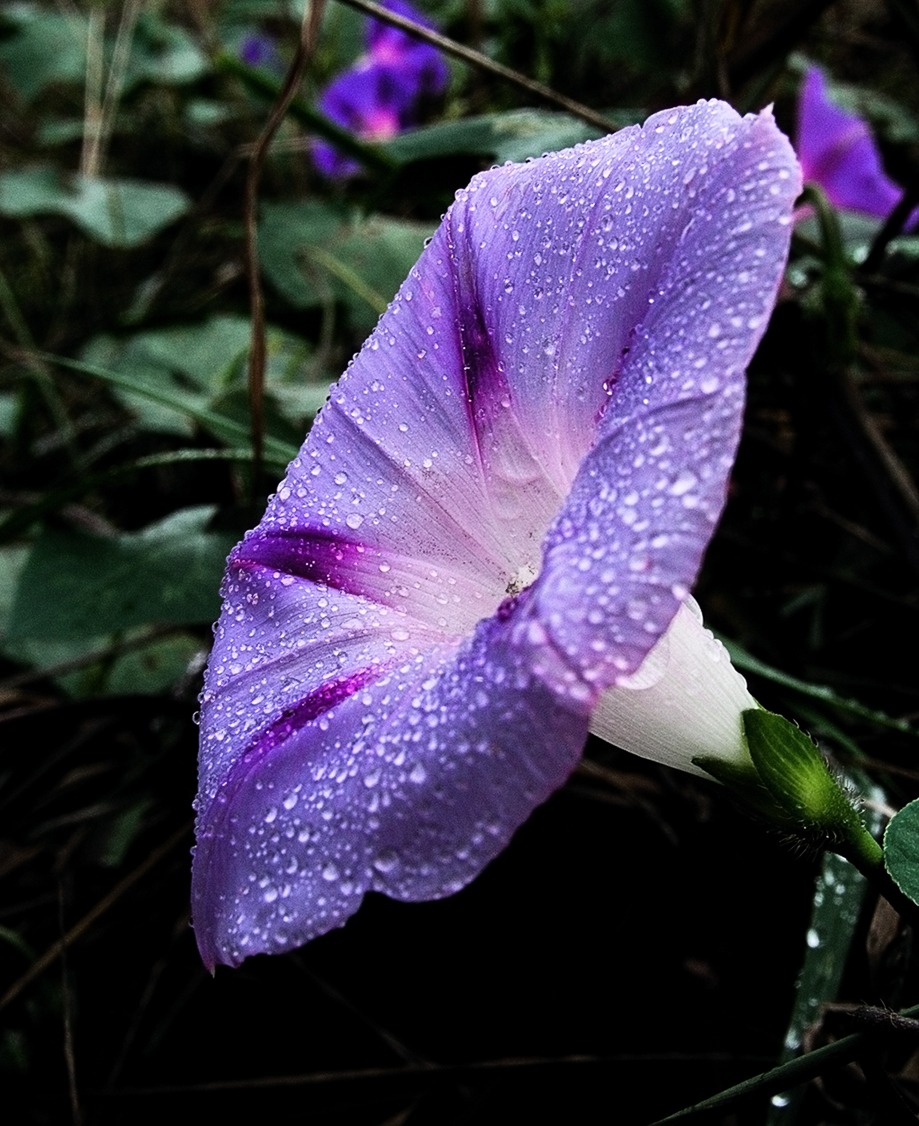 Common Morning-gloryIpomoea purpurea
-
 Star-gloryIpomoea quamoclit
-
 Goat's FootIpomoea pes-caprae
- Japanese Morning GloryIpomoea nil
Compare
Questions and answers
What is the scientific name of the Moonflower?
The scientific name of the Moonflower is Ipomoea alba. Written with its author, the full name is Ipomoea alba L..
Which family does the Moonflower belong to?
Ipomoea alba belongs to the family Convolvulaceae, in the order Solanales and the class Magnoliopsida.
Where is the Moonflower found?
Checklists and occurrence records place Ipomoea alba in 81 countries, including Brazil, Mexico, Argentina, Reunion, Peru and Ecuador.
What is the conservation status of the Moonflower?
The IUCN Red List category recorded for Ipomoea alba is Least Concern (LC).
What other names does the Moonflower have?
Ipomoea alba is also known in English as Lilac Bell, Moonflower Or Moon Vine, White Moonflower and Tropical White Morning-glory.
Sources
Data
- Catalogue of Life, 2026-10-16 XR cc by
- Global Biodiversity Information Facility CC BY 4.0
- Wikidata CC0
- English Wikipedia CC BY-SA 4.0
- GeoNames CC BY 4.0
- Wikimedia Commons per image; credit shown with each image
- Within the Catalogue of Life, this name comes from Synonymic Checklists of the Vascular Plants of the World cc by
References
- L. (1753). Sp. Pl. [Linnaeus] 1: 161 (1753). where the name was published
This species in other databases
Page built on 24 November 2026. See how the catalog is made and all sources and licences.
Cite this page
ScientificNames.org. (2026). Ipomoea alba (Moonflower). Retrieved November 24, 2026, from https://scientificnames.org/species/ipomoea-alba
“Ipomoea alba (Moonflower).” ScientificNames.org, 2026, scientificnames.org/species/ipomoea-alba. Accessed 24 Nov. 2026.
ScientificNames.org. “Ipomoea alba (Moonflower).” Accessed November 24, 2026. https://scientificnames.org/species/ipomoea-alba.
@misc{scientificnames_ipomoea_alba_moonflower,
  author = {{ScientificNames.org}},
  title = {Ipomoea alba (Moonflower)},
  year = {2026},
  url = {https://scientificnames.org/species/ipomoea-alba},
  note = {Accessed 2026-11-24}
}