Species · Flowering plants
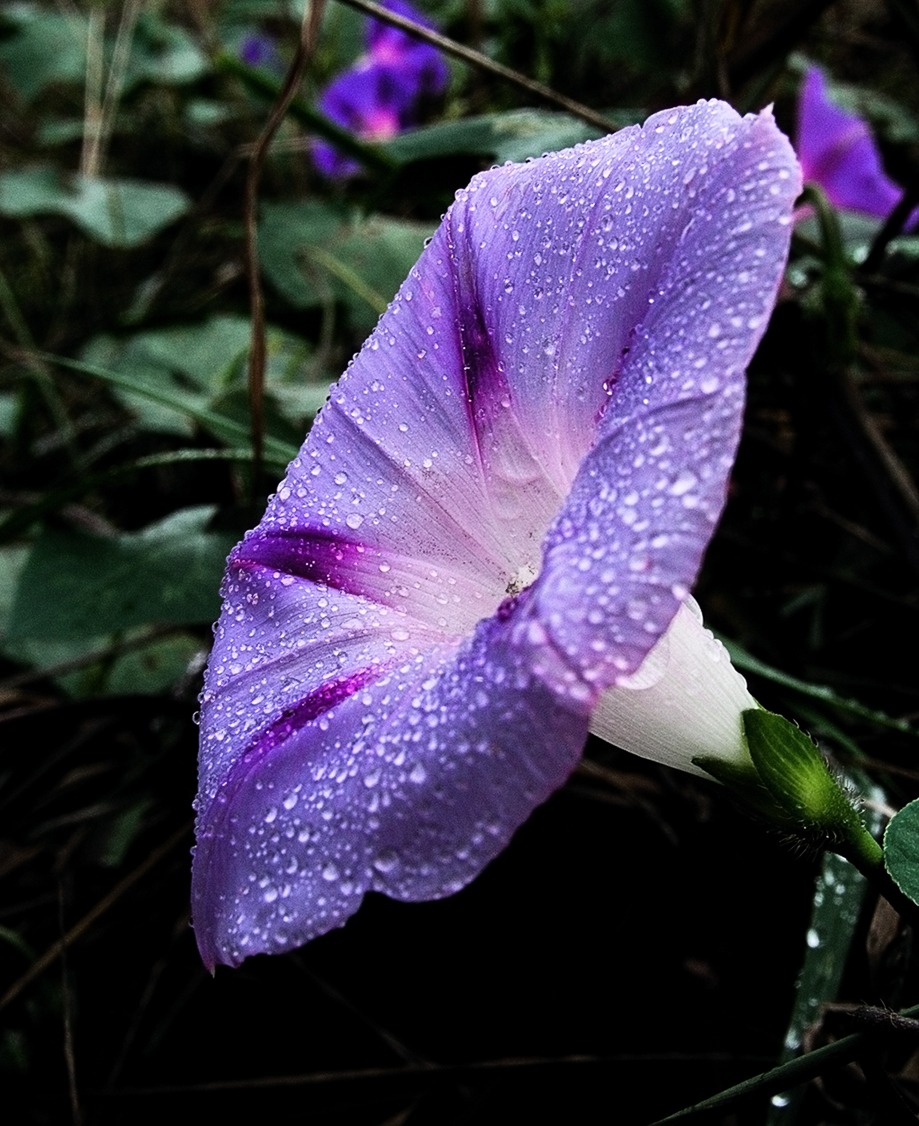
Japanese Morning Glory Ipomoea nil
The scientific name of the Japanese Morning Glory is Ipomoea nil. It is a species of flowering plant in the family Convolvulaceae (bindweed family), order Solanales.
- Scientific name
- Ipomoea nil (L.) Roth
- Common name
- Japanese Morning Glory
- Genus
- Ipomoea
- Family
- Convolvulaceae (Bindweed Family)
- Order
- Solanales
- Class
- Magnoliopsida
- Recorded in
- 82 countries
- Name status
- accepted in the Catalogue of Life
Overview
Ipomoea nil is a species of Ipomoea morning glory known by several common names, including picotee morning glory, ivy morning glory, ivy-leaf morning glory, and Japanese morning glory (although it is not native to Japan). It is native to the tropical Americas, and has been introduced widely across the world.
Classification of the Japanese Morning Glory
| Kingdom | Plantae |
|---|---|
| Subkingdom | Pteridobiotina |
| Phylum | Tracheophyta |
| Class | Magnoliopsida |
| Order | Solanales |
| Family | Convolvulaceae (Bindweed Family) |
| Subfamily | Convolvuloideae |
| Tribe | Ipomoeeae |
| Genus | Ipomoea (Morning Glory) |
| Species | Ipomoea nil (L.) Roth |
Where the Japanese Morning Glory is found
Checklists and occurrence records place Ipomoea nil in 82 countries across Africa, Asia, North America, Oceania and South America. GBIF holds 11,480 georeferenced records of it.
Countries where it is native or its origin is not stated
- Argentina 556
- Aruba 18
- Barbados 2
- Belize 3
- Bolivia 175
- Bonaire, Saint Eustatius and Saba 15
- Brazil 1,996
- Colombia 137
- Costa Rica 342
- Cuba 34
- Curacao 114
- Dominica 2
- Dominican Republic 32
- Ecuador 190
- El Salvador 73
- French Guiana 8
- Grenada 2
- Guadeloupe 11
- Guatemala 29
- Guyana 9
- Haiti 14
- Honduras 65
- Jamaica 33
- Japan 453
- Martinique 6
- Mexico 2,204
- Montserrat 6
- Nicaragua 155
- Panama 21
- Paraguay 122
- Peru 223
- Puerto Rico 66
- Saint Barthelemy 4
- Saint Martin 5
- Suriname 10
- Trinidad and Tobago 12
- U.S. Virgin Islands 25
- United States 273
- Uruguay 3
- Venezuela 129
Countries where it has been introduced
- Australia 806
- Bangladesh 2
- Benin 112
- Bhutan 9
- Burkina Faso 2
- Cambodia 6
- Cameroon 30
- Chad 1
- China 956
- Equatorial Guinea 13
- Eritrea 1
- Ethiopia 42
- Gambia 1
- Ghana 17
- Guinea 4
- India 376
- Ivory Coast 17
- Laos 1
- Madagascar 25
- Mali 1
- Mauritius 3
- Myanmar 11
- Namibia 1
- Nepal 62
- New Caledonia 8
- Oman 18
- Pakistan 6
- Philippines 31
- Senegal 8
- Seychelles 5
- Sierra Leone 4
- South Korea 561
- Sri Lanka 19
- Sudan 11
- Taiwan 572
- Tanzania 13
- Thailand 115
- Uganda
- Vietnam 5
- Yemen 14
- Zambia 5
- Zimbabwe 9
Regions and cities with the most records
- Taiwan, Taiwan 364
- Oaxaca, Mexico 295
- Queensland, Australia 294
- Northern Territory, Australia 283
- Yucatán, Mexico 267
- Baja California Sur, Mexico 244
- Sinaloa, Mexico 205
- Santa Fe, Argentina 171
- Jalisco, Mexico 156
- Douliu, Taiwan 145
- Guerrero, Mexico 131
- Pernambuco, Brazil 122
- Wufeng, Taiwan 121
- Puntarenas Province, Costa Rica 120
- Taichung, Taiwan 120
- Kanagawa, Japan 117
- Bahia, Brazil 113
- Nuevo León, Mexico 111
- Gyeonggi-do, South Korea 109
- Western Australia, Australia 103
- Ceará, Brazil 101
- Culiacán, Mexico 100
- Chang-hua, Taiwan 98
- Caotun, Taiwan 97
- Guanacaste Province, Costa Rica 96
- Changhua, Taiwan 92
- Kanasín, Mexico 84
- Yamato, Japan 84
- Mérida, Mexico 83
- Chiapas, Mexico 81
- Guangdong, China 81
- Minamirinkan, Japan 81
- Campeche, Mexico 80
- Zama, Japan 80
- Ayase, Japan 78
- Paraíba, Brazil 78
29 more countries have a few records outside this range
These countries hold a few records of Ipomoea nil but lie outside the range the checklists give for it. Such records are often zoo or garden specimens, museum material or vagrants, so the species is not counted as occurring there.
- Afghanistan 4
- Belgium 20
- Cabo Verde 6
- Christmas Island 21
- Finland 4
- France 3
- Hong Kong 110
- Indonesia 70
- Iran 4
- Israel 4
- Kenya 4
- Lebanon 3
- Macao 3
- Malaysia 5
- Mayotte 13
- Niger 4
- Nigeria 44
- North Korea 3
- Norway 51
- Papua New Guinea 28
- Portugal 39
- Reunion 180
- Singapore 4
- South Africa 21
- Spain 13
- Sweden 19
- Switzerland 19
- Syria 3
- The Netherlands 4
Range as the checklists state it
European Russia [I]; Senegal [I]; Gambia [I]; Guinea [I]; Sierra Leone [I]; Mali [I]; Burkina Faso [I]; Ivory Coast [I]; Ghana [I]; Benin [I]; Cameroon [I]; Bioko Isl. [Fernando Poo] [I]; Annobon Isl. [I]; SW-Chad [I]; Sudan [I]; Ethiopia [I]; Eritrea [I]; Soqotra [I]; Uganda [I]; Tanzania [I]; Zambia [I]; Zimbabwe [I]; Namibia [I]; Madagascar [I]; Mauritius [I]; La Réunion [I]; Rodrigues [I]; Seychelles [I]; Oman [I] (Dhofar [I]); Yemen [I] (W-Yemen [I]); China [I] (Anhui [I], Fujian [I], Guangdong [I], Guangxi [I], Guizhou [I], Hainan [I], Hebei [I], Henan [I], Hubei [I], Hunan [I], Jiangsu [I], Jiangxi [I], Nei Mongol [I], Ningxia [I], Shaanxi [I], Shandong [I], Shanxi [I], Sichuan [I], Yunnan [I], Zhejiang [I]); Tibet [I]; South Korea [I]; Taiwan [I]; Pakistan [I]; Nepal [I]; Bhutan [I]; India [I] (throughout); Sri Lanka [I]; Bangladesh [I]; Myanmar [I]; Thailand [I]; Laos [I]; Cambodia [I]; Vietnam [I]; South China Sea Isl. [I]; peninsular Malaysia [I] (Penang [I], Perak [I], Terengganu [I]); Borneo [I]; Philippines [I]; Sulawesi [I]; Jawa [I]; Lesser Sunda Isl. [I]; Christmas Isl. [Austr.] [I]; Moluccas [I]; New Guinea [I]; Australia [I] (Western Australia [I], Northern Territory [I], Queensland [I]); New Caledonia [I]; USA (California, Louisiana, Maryland, Mississippi, Oklahoma, Texas); Mexico (Baja California Sur, Campeche, Chiapas, Chihuahua, Coahuila, Colima, Ciudad de Mexico, Durango, Guanajuato, Guerrero, Jalisco, México State, Michoacán, Morelos, Nayarit, Nuevo León, Oaxaca, Puebla, Queretaro, Quintana Roo, San Luis Potosí, Sinaloa, Sonora, Tamaulipas, Veracruz, Yucatán, Zacatecas); Guatemala; Belize; El Salvador; Honduras; Nicaragua; Costa Rica; Panama; Cuba; Jamaica; Hispaniola; Puerto Rico; Virgin Isl. (St. Croix, St. John, St. Thomas, Tortola); St. Martin/St. Maarten; St. Barthélémy; Saba; St. Eustatius; Antigua; Montserrat; Guadeloupe; Dominica; Martinique; St. Lucia; Grenadines; St. Vincent; Grenada; Barbados; Trinidad; Aruba; Bonaire; Curacao; Colombia (Antioquia, Atlántico, Bolívar, Cundinamarca, Huila, Magdalena, Meta, Nariño, Norte de Santander, Sucre, Tolima, Valle); Venezuela (Amazonas, Anzoátegui, Aragua, Bolívar, Carabobo, Venezuela Distrito Federal, Falcón, Guárico, Lara, Miranda, Portuguesa, Sucre, Táchira, Trujillo, Yaracuy); Guyana; Surinam; French Guiana; Ecuador; Galápagos; Bolivia (Beni, Chuquisaca, Cochabamba, La Paz, Santa Cruz, Tarija); N-Brazil (Pará, Acre, Rondônia); NE-Brazil (Ceará, Rio Grande do Norte, Pernambuco, Bahia, Alagoas, Sergipe); WC-Brazil (Mato Grosso, Goiás, Brazília Distrito Federal, Mato Grosso do Sul); SE-Brazil (Minas Gerais, Espírito Santo, São Paulo, Rio de Janeiro); Paraguay (Central, Cordillera, Paraguari); Uruguay (Salto); Argentina (Catamarca, Chaco, Córdoba, Corrientes, Entre Rios, Formosa, Jujuy, La Rioja, Misiones, Salta, Santiago del Estero, Santa Fe, Tucumán)
A number beside a place is its count of GBIF occurrence records. A place without a number comes from a checklist alone. Records show where a species has been observed or collected, which can include escapes and vagrants.
Common names
English
- Japanese Morning Glory
- Annua Morning Glory
- Ivy Morning Glory
- Japanese Morning-glory
- Morning Glory
- Blue Morning-glory
- Ivy Morning-glory
- White-edge Morning-glory
Names in 20 other languages
- Afrikaans
- Japanse purperwinde
- Chinese
- qian niu, 牵牛, 牵牛子, 牵牛(裂叶牵牛), 牽牛, 牽牛花, 红鬼笔
- Dutch
- Japanse pronkwinde
- Finnish
- keisarinelämänlanka
- French
- liseron bleu, liseron hallier
- German
- blaue Prunkwinde
- Hungarian
- Japán hajnalka
- Japanese
- アサガオ, アサガオ(朝顔), コアサガオ, 朝顔
- Korean
- 나팔꽃
- Lithuanian
- Blakstienotasis sukutis
- Marathi
- निळी पुंगळी
- Norwegian Bokmål
- lodne-praktvindel, lodnepraktvindel
- Papiamento
- Trompet, Trompèt
- Polish
- wilec japoński
- Portuguese
- Café-de-rama, amarra-amarra, campainha, corda-de-viola, corriola, jetirana
- Russian
- Ипомея
- Slovak
- povojník indigový
- Spanish
- Bejuco de vaca, Campanilla, Campanilla azul, amol
- Swedish
- kejsarvinda
- Thai
- ว่านผักบุ้ง
Synonyms
72 other scientific names have been used for this species and are now treated as synonyms of Ipomoea nil.
- Convolvuloides triloba Moench
- Convolvulus caeruleus (Roxb. ex Ker-Gawl.) Spreng.
- Convolvulus coelestis G.Forst.
- Convolvulus dillenii Desr.
- Convolvulus hederaceus var. zeta L. Sp. Pl.
- Convolvulus lindleyi Steud.
- Convolvulus nil L.
- Convolvulus peruvianus Syst. Veg.
- Convolvulus peruvianus Spreng.
- Convolvulus variifolius Steud.
- Gomphipus setosus (Ker Gawl.) Raf.
- Ipomoea caerulescens Roxb.
- Ipomoea dillenii (Desr.) Roem. & Schult.
- Ipomoea githaginea Hochst. ex A.Rich.
- Ipomoea githaginea var. inaequalis Beck
- Ipomoea hederacea var. hederacea
- Ipomoea hederacea var. himalaica C.B.Clarke
- Ipomoea hederacea var. inaequalis Baker & Rendle
- Ipomoea hederacea var. limbata (Lindl.) Benth.
- Ipomoea hederacea var. paichou J.R.Wu
- Ipomoea longicuspis Meisn.
- Ipomoea longicuspis var. brevipes Meisn.
- Ipomoea nil var. himalaica (C.B.Clarke) S.C.Johri
- Ipomoea nil var. inaequalis (Beck) Cufod.
- Ipomoea nil var. japonica Hallier fil.
- Ipomoea nil var. limbata (Lindl.) L. H. Bailey
- Ipomoea nil var. limbata (Lindl.) Meisn.
- Ipomoea nil var. nil
- Ipomoea nil var. setosa (Blume) Boerl.
- Ipomoea setosa Blume Bijdr.
- Ipomoea vaniotiana H.Lév.
- Pharbitis albomarginata Lindl. ex Meisn.
- Pharbitis albomarginata Lindl. ex Hook.fil.
- Pharbitis caerulea (J.Koenig ex Roxb.) Peterm.
- Pharbitis caerulea (Roxb.) O'Shaugnessy
- Pharbitis caerulea (J.Koenig ex Roxb.) G.Don ex Sweet
- Pharbitis caerulescens (Roxb.) Sweet
- Pharbitis cuspidata (Ruiz & Pav.) G.Don
- Pharbitis dillenii (Desr.) G.Don
- Pharbitis forskoeli G.Don
Showing 40 of 72.
Related species
-
 Sweet PotatoIpomoea batatas
-
 Water Morning GloryIpomoea aquatica
-
 MoonflowerIpomoea alba
- Garden Morning GloryIpomoea tricolor
-
 Oceanblue Morning GloryIpomoea indica
-
 Common Morning-gloryIpomoea purpurea
-
 Star-gloryIpomoea quamoclit
-
 Goat's FootIpomoea pes-caprae
Compare
Questions and answers
What is the scientific name of the Japanese Morning Glory?
The scientific name of the Japanese Morning Glory is Ipomoea nil. Written with its author, the full name is Ipomoea nil (L.) Roth.
Which family does the Japanese Morning Glory belong to?
Ipomoea nil belongs to the family Convolvulaceae, in the order Solanales and the class Magnoliopsida.
Where is the Japanese Morning Glory found?
Checklists and occurrence records place Ipomoea nil in 82 countries, including Mexico, Brazil, Argentina, Japan, Costa Rica and United States.
What other names does the Japanese Morning Glory have?
Ipomoea nil is also known in English as Annua Morning Glory, Ivy Morning Glory, Japanese Morning-glory, Morning Glory, Blue Morning-glory and Ivy Morning-glory.
Sources
Data
- Catalogue of Life, 2026-10-16 XR cc by
- Global Biodiversity Information Facility CC BY 4.0
- Wikidata CC0
- English Wikipedia CC BY-SA 4.0
- GeoNames CC BY 4.0
- Within the Catalogue of Life, this name comes from Synonymic Checklists of the Vascular Plants of the World cc by
References
- Roth. (1797). Catal. Bot. 1: 36 (1797). where the name was published
This species in other databases
- Catalogue of Life 3PWL6
- Wikidata Q162117
- iNaturalist 164091
- World Flora Online wfo-0000747940
- GRIN 20196
Page built on 24 November 2026. See how the catalog is made and all sources and licences.
Cite this page
ScientificNames.org. (2026). Ipomoea nil (Japanese Morning Glory). Retrieved November 24, 2026, from https://scientificnames.org/species/ipomoea-nil
“Ipomoea nil (Japanese Morning Glory).” ScientificNames.org, 2026, scientificnames.org/species/ipomoea-nil. Accessed 24 Nov. 2026.
ScientificNames.org. “Ipomoea nil (Japanese Morning Glory).” Accessed November 24, 2026. https://scientificnames.org/species/ipomoea-nil.
@misc{scientificnames_ipomoea_nil_japanese_morning_glory,
  author = {{ScientificNames.org}},
  title = {Ipomoea nil (Japanese Morning Glory)},
  year = {2026},
  url = {https://scientificnames.org/species/ipomoea-nil},
  note = {Accessed 2026-11-24}
}