Species · Flowering plants
Sweet Potato Ipomoea batatas
The scientific name of the Sweet Potato is Ipomoea batatas. It is a species of flowering plant in the family Convolvulaceae (bindweed family), order Solanales.
- Scientific name
- Ipomoea batatas (L.) Lam.
- Common name
- Sweet Potato
- Genus
- Ipomoea
- Family
- Convolvulaceae (Bindweed Family)
- Order
- Solanales
- Class
- Magnoliopsida
- Red List category
- DD Data Deficient
- Recorded in
- 157 countries
- Name status
- accepted in the Catalogue of Life

Overview
Sweet Potato (Ipomoea batatas (L.) Lam.) is a flowering plant in the Convolvulaceae family, order Solanales, and class Magnoliopsida. The species is native to South-Central America and was domesticated in Central America at least 5,000 years ago.
Written 24 November 2026 from the sources listed below. Each statement was checked against the passage it cites; statements that could not be supported were removed.
Appearance
The leaves can be green or purple, with purple pigmentation sometimes concentrated along the veins. The flowers have five fused petals and range in coloration from light pink to deep purple.[1][2]
The storage roots have smooth skin and can be beige, yellow, orange, red, brown, or purple. Their flesh ranges from beige and white to red, pink, violet, yellow, orange, and purple.[3][4]
The leaf stalks measure between 13 and 51 centimetres in length, and the leaf blades measure between 5 and 13 centimetres long. Leaf dimensions can range from 5 to 15 centimetres in both length and width.[5][6][7]
The stems typically measure between 0.5 and 4 metres in total length, although some cultivars produce shoots reaching 16 metres. The flowers have corollas measuring approximately 4 to 7 centimetres in length.[8][9]
Habitat
Sweet Potato cultivation is suitable for tropical and warm temperate regions where sufficient water is available. The plant grows best at an average temperature of approximately 24 °C.[10][11]
Annual rainfall between 750 and 1,000 millimetres is considered most suitable for cultivation. The plant grows favorably in well-drained, light- to medium-textured soils with a pH between 4.5 and 7.0.[12][13]
The species does not tolerate frost. It is sensitive to waterlogging, which can cause storage-root rot and restrict root development.[14][15]
Diet
The storage roots contain substantial amounts of starch and have a sweet taste. The young shoots and leaves are consumed as leafy vegetables.[16][17]
The leaves and vines can be eaten raw or cooked. The entire Sweet Potato plant, including its vines, is edible.[18][19]
Behaviour
The trailing stems develop roots when their nodes come into contact with soil.[20]
The flowers open before sunrise, remain open for several hours, and close again in the morning.[21]
Reproduction and life cycle
Sweet Potato produces hermaphroditic flowers. Seed production occurs only through cross-pollination.[22][23]
Uses
The storage roots are used as a staple root vegetable in various parts of the world. They can be processed into flour, dried chips, juice, bread, noodles, candy, and pectin.[24][25]
The entire vine can be used as animal feed. Sweet Potato leaves and vines can serve as an alternative leafy vegetable to spinach.[26][27]
Similar species
Ipomoea trifida is identified as the closest wild relative of Sweet Potato.[28]
Classification of the Sweet Potato
| Kingdom | Plantae |
|---|---|
| Subkingdom | Pteridobiotina |
| Phylum | Tracheophyta |
| Class | Magnoliopsida |
| Order | Solanales |
| Family | Convolvulaceae (Bindweed Family) |
| Subfamily | Convolvuloideae |
| Tribe | Ipomoeeae |
| Genus | Ipomoea (Morning Glory) |
| Species | Ipomoea batatas (L.) Lam. |
Where the Sweet Potato is found
Checklists and occurrence records place Ipomoea batatas in 157 countries across Africa, Asia, Europe, North America, Oceania and South America. GBIF holds 30,016 georeferenced records of it.
Countries
- Afghanistan 2,139
- Algeria 6
- Angola 19
- Antigua and Barbuda 10
- Argentina 536
- Australia 254
- Azerbaijan
- Bahamas 43
- Bangladesh 10
- Barbados 23
- Belarus 4
- Belize 51
- Benin 101
- Bermuda 8
- Bhutan 6
- Bolivia 386
- Bonaire, Saint Eustatius and Saba 4
- Brazil 1,841
- Burkina Faso 5
- Burundi 19
- Cabo Verde 11
- Cambodia 2
- Cameroon 97
- Canada 10
- Central African Republic 15
- Chad 2
- Chile 22
- China 407
- Christmas Island 6
- Colombia 1,317
- Cook Islands 32
- Costa Rica 471
- Croatia 1
- Cuba 279
- Democratic Republic of the Congo 131
- Dominica 17
- Dominican Republic 161
- Ecuador 1,095
- Egypt 12
- El Salvador 36
- Equatorial Guinea 37
- Ethiopia 41
- Fiji 25
- France 43
- French Guiana 23
- French Polynesia 136
- Gabon 20
- Gambia 1
- Georgia 20
- Germany 11
- Ghana 188
- Greece 6
- Grenada 12
- Guadeloupe 38
- Guam 16
- Guatemala 626
- Guinea 9
- Guinea-Bissau 5
- Guyana 52
- Haiti 8
- Honduras 82
- Hong Kong 127
- India 251
- Indonesia 387
- Italy 5
- Ivory Coast 36
- Jamaica 223
- Japan 167
- Kenya 107
- Kiribati 4
- Kuwait 4
- Kyrgyzstan
- Laos 12
- Liberia 59
- Macao 12
- Madagascar 40
- Malawi 7
- Malaysia 104
- Maldives 4
- Mali 6
- Marshall Islands 25
- Martinique 27
- Mauritania 1
- Mauritius 5
- Mayotte 19
- Mexico 2,040
- Micronesia 91
- Morocco 26
- Mozambique 29
- Myanmar 9
- Namibia 5
- Nepal 6
- New Caledonia 43
- New Zealand 141
- Nicaragua 212
- Nigeria 76
- Niue 12
- Northern Mariana Islands 25
- Pakistan 15
- Palau 13
- Panama 252
- Papua New Guinea 678
- Paraguay 211
- Peru 7,138
- Philippines 425
- Pitcairn 9
- Portugal 410
- Puerto Rico 121
- Qatar 3
- Republic of the Congo 9
- Reunion 227
- Russia 4
- Rwanda 10
- Saint Barthelemy 4
- Saint Kitts and Nevis 7
- Saint Lucia 4
- Saint Martin 5
- Saint Vincent and the Grenadines 29
- Samoa 24
- Sao Tome and Principe 3
- Saudi Arabia 7
- Senegal 3
- Seychelles 17
- Sierra Leone 73
- Singapore 33
- Solomon Islands 130
- South Africa 82
- South Korea 46
- Spain 446
- Sri Lanka 22
- Sudan 4
- Suriname 50
- Sweden 18
- Taiwan 826
- Tajikistan
- Tanzania 40
- Thailand 520
- The Netherlands 5
- Timor Leste 4
- Togo 14
- Tokelau
- Tonga 42
- Trinidad and Tobago 57
- Turkmenistan
- Tuvalu 3
- U.S. Virgin Islands 339
- Uganda 53
- United Arab Emirates 10
- United Kingdom 8
- United States 1,713
- Uruguay 14
- Uzbekistan 3
- Vanuatu 31
- Venezuela 426
- Vietnam 32
- Zambia 6
- Zimbabwe 3
Regions and cities with the most records
- Ancash, Peru 564
- Lima region, Peru 543
- Veracruz, Mexico 513
- Piura, Peru 512
- Cajamarca Department, Peru 426
- La Libertad, Peru 406
- Taiwan, Taiwan 389
- Arequipa, Peru 278
- Chiapas, Mexico 273
- Amazonas, Peru 269
- São Paulo, Brazil 266
- Hawaii, United States 242
- Texas, United States 241
- Rondônia, Brazil 206
- Ica, Peru 205
- Canary Islands, Spain 204
- Nariño, Colombia 202
- Azores, Portugal 195
- Florida, United States 192
- San Martín Department, Peru 164
- Puntarenas Province, Costa Rica 148
- Huánuco Department, Peru 147
- Huaral, Peru 135
- Oaxaca, Mexico 131
- Mato Grosso, Brazil 122
- Tsing Yi Town, Hong Kong 122
- Chiang Mai, Thailand 121
- Antioquia, Colombia 120
- Mei Foo, Hong Kong 119
- Puebla, Mexico 118
- Tsuen Wan, Hong Kong 118
- Kwai Chung, Hong Kong 117
- Pasco, Peru 113
- Sha Tin, Hong Kong 113
- Cuzco Department, Peru 112
- Sha Tin Wai, Hong Kong 112
1 more country has a few records outside this range
These countries hold a few records of Ipomoea batatas but lie outside the range the checklists give for it. Such records are often zoo or garden specimens, museum material or vagrants, so the species is not counted as occurring there.
Range as the checklists state it
Croatia [c]; Greece [c]; European Russia [c]; Azores [c] (Sao Jorge [c]); Madeira [c] (Madeira Isl. [c], Porto Santo Isl. [c]); Canary Isl. [c] (Gran Canaria [c], Tenerife [c], La Gomera [c]); Cape Verde Isl. [c] (Santo Antao Isl. [c], Sao Vicente Isl. [c], Ilha de Sao Tiago [c], Fogo Isl. [c], Ilha Brava [c]); Mauritania [c]; Senegal [c]; Gambia [c]; Guinea [c]; Sierra Leone [c]; Mali [c]; Burkina Faso [c]; Ivory Coast [c]; Ghana [c]; Togo [c]; Benin [c]; Nigeria [c]; Cameroon [c]; Bioko Isl. [Fernando Poo] [c]; Principe Isl. [c]; São Tomé [c]; Congo [Brazzaville] [c]; Central African Republic [c]; Chad [c]; Uganda [c]; Kenya [c]; Pemba Isl. [c]; Tanzania [c]; Zanzibar [c]; Angola [c]; Zambia [c]; Malawi [c]; Zimbabwe [c]; Mozambique [c]; Namibia [c]; St. Helena [c]; Madagascar [c]; Mauritius [c]; La Réunion [c]; Rodrigues [c]; Agalega Isl. [c]; Chagos Arch. [c] (Diego Garcia [c]); Turkmenistan [c]; Uzbekistan [c]; Kyrgyzstan [c]; Tajikistan [c]; Northern Caucasus [c]; Azerbaijan [c]; China [c]; South Korea [c]; Taiwan [c]; Pakistan [c]; Nepal [c]; Bhutan [c]; India [c]; Lakshadweep Isl. [Laccadives] [c]; Maldives [c]; Sri Lanka [c]; Bangladesh [c]; Andaman Isl. [c]; Nicobar Isl. [c]; Myanmar [c]; Thailand [c]; Laos [c]; Cambodia [c]; Vietnam [c]; peninsular Malaysia [c]; Singapore [c]; Philippines [c]; Jawa [c]; Sulawesi [c]; Lesser Sunda Isl. [c]; Moluccas [c]; Christmas Isl. [Austr.] [c]; New Guinea [c]; Solomon Isl. [c]; Australia [c] (Queensland [c]); New Zealand [c]; New Caledonia [c]; Vanuatu [c]; Rotuma Isl. [c]; Tonga [c]; Niue [c]; Fiji [c]; Tuvalu [c] (Nui Atoll [c]); Tokelau [c] (Swains Isl. [c]); Gilbert Isl. [c] (Tarawa [c]); N-Line Isl. [c] (Teraina [c]); S-Line Isl. [c] (Caroline Atoll [c]); Cook Isl. [I] (widespread [c], incl. Rarotonga [I]); Marquesas Isl. [c] (Hiva Oa [c], Hatutaa [c], Eiao [c], Nuku Hiva [c], Ua Huka [c], Ua Pou [c], Tahuata [c], Mohotani [c], Fatu Hiva [c]); Society Isl. [c]; Tuamotu Arch. [c] (Rangiroa Atoll [c], Takapoto Atoll [c]); Austral Isl. [c] (Tubuai [c]); Palau [c] (Babeldaob [c], Angaur [c]); Northern Marianas [c] (Agrihan [c], Pagan [c], Alamagan [c], Sarigan [c], Saipan [c], Tinian [c], Rota [c]); Guam [c]; Fed. States of Micronesia [c] (Yap [c], Ulithi [c], Fais [c], Eauripik [c], Woleai [c], Faraulep [c], Ifalik [c], Lamotrek [c], Satawal [c], Murilo [c], Nomwin [c], Truk [c], Moen [c], Fefan [c], Namoluk [c], Satawan [c], Pohnpei [c], Kosrae [c]); Marshall Isl. [c] (Radack [c], Kwajalein [c], Likiep [c], Ailinglapalap [c], Majuro [c], Arno [c], Jaluit [c]); Wake Isl. [c]; Hawaii [c] (Midway Isl. [c], Kauai [c], Oahu [c], West Maui [c], Hawaii Isl. [c]); USA [c] (Florida [c], Kansas [c], Louisiana [c], Mississippi [c], North Carolina [c], New York [c], Pennsylvania [c], South Carolina [c], Texas [c], Utah [c], Virginia [c]); Mexico (Aguascalientes, Campeche, Chiapas, Chihuahua, Colima, Ciudad de Mexico, Guerrero, Hidalgo, Jalisco, México State, Michoacán, Morelos, Nayarit, Oaxaca, Puebla, Queretaro, Quintana Roo, San Luis Potosí, Sinaloa, Tabasco, Tamaulipas, Veracruz, Yucatán, Zacatecas); Guatemala; Belize; Honduras; Nicaragua [c]; Costa Rica; Isla del Coco [c]; Panama; Bahamas [c]; Cuba [c]; Cayman Isl. [c]; Jamaica [c]; Dominican Republic [c]; Haiti [c]; Virgin Isl. [c]; Guadeloupe [c]; St. Lucia [c]; Tobago [c]; Trinidad [c]; Colombia [c]; Venezuela [c]; Guyana [c]; Surinam [c]; French Guiana [c]; Ecuador; Bolivia [c]; Brazil [c]
A number beside a place is its count of GBIF occurrence records. A place without a number comes from a checklist alone. Records show where a species has been observed or collected, which can include escapes and vagrants.
Common names
English
- Sweet Potato
- Sweet-potato
- Yam
Names in 6 other languages
- Chinese
- Fan shu, Gan shu, Hong shu
- French
- Batate, Patate douce
- German
- Suesskartoffel
- Italian
- Patata dolce
- Spanish
- Batata, Boniato, Camote, Camote de bejuco
- Swedish
- batat
Synonyms
74 other scientific names have been used for this species and are now treated as synonyms of Ipomoea batatas.
- Batatas batatas (L.) H.Karst.
- Batatas betacea Lindl.
- Batatas edulis (Thunb. ex Murray) Choisy
- Batatas edulis var. erythrorrhiza Voigt
- Batatas edulis var. leucorrhiza Voigt
- Batatas edulis var. porphyrorhiza (Griseb.) Ram.Goyena
- Batatas edulis var. porphyrorhiza (Thunb.) Choisy
- Batatas edulis var. xanthorhiza (Bojer) Choisy
- Batatas wallii C.Morren
- Batatas xanthorhiza Bojer
- Convolvulus apiculata M.Martens & Galeotti
- Convolvulus attenuatus Martens & Galeotti
- Convolvulus batata Vell.
- Convolvulus batatas L.
- Convolvulus edulis Thunb. ex Murray
- Convolvulus edulis Vell.
- Convolvulus esculentus Vell.
- Convolvulus esculentus Salisb.
- Convolvulus fastigatus Roxb.
- Convolvulus hederaceus Sessé & Moc.
- Convolvulus platanifolius Vahl
- Convolvulus septangularis Steud.
- Convolvulus tuberifer Steud.
- Convolvulus tuberosus Vell. Fl. Flumin.
- Convolvulus tuxtlensis Sessé & Moc.
- Convolvulus varius Vell.
- Ipomoea apiculata M.Martens & Galeotti
- Ipomoea batatas (L.) (L.) Lam.
- Ipomoea batatas f. trifida (L.) Lam.
- Ipomoea batatas var. apiculata (M.Martens & Galeotti) A.McDonald & D.F.Austin
- Ipomoea batatas var. caespitosa Makino ex H.Hara
- Ipomoea batatas var. cannabina Hallier fil.
- Ipomoea batatas var. dissoluta Kuntze
- Ipomoea batatas var. edulis (Thunb. ex Murray) Makino
- Ipomoea batatas var. edulis (L.) Lam.
- Ipomoea batatas var. erythrorrhiza (Voigt) M.R.Almeida
- Ipomoea batatas var. fastigiata (Roxb. ex Sweet) Kuntze
- Ipomoea batatas var. indivisa Griseb. ex Meisn.
- Ipomoea batatas var. leucorrhiza Griseb.
- Ipomoea batatas var. leucorrhiza (Voigt) M.R.Almeida
Showing 40 of 74.
Subspecies and varieties
- Ipomoea batatas var. batatas (Yam) variety
Related species
-
 Water Morning GloryIpomoea aquatica
-
 MoonflowerIpomoea alba
- Garden Morning GloryIpomoea tricolor
-
 Oceanblue Morning GloryIpomoea indica
-
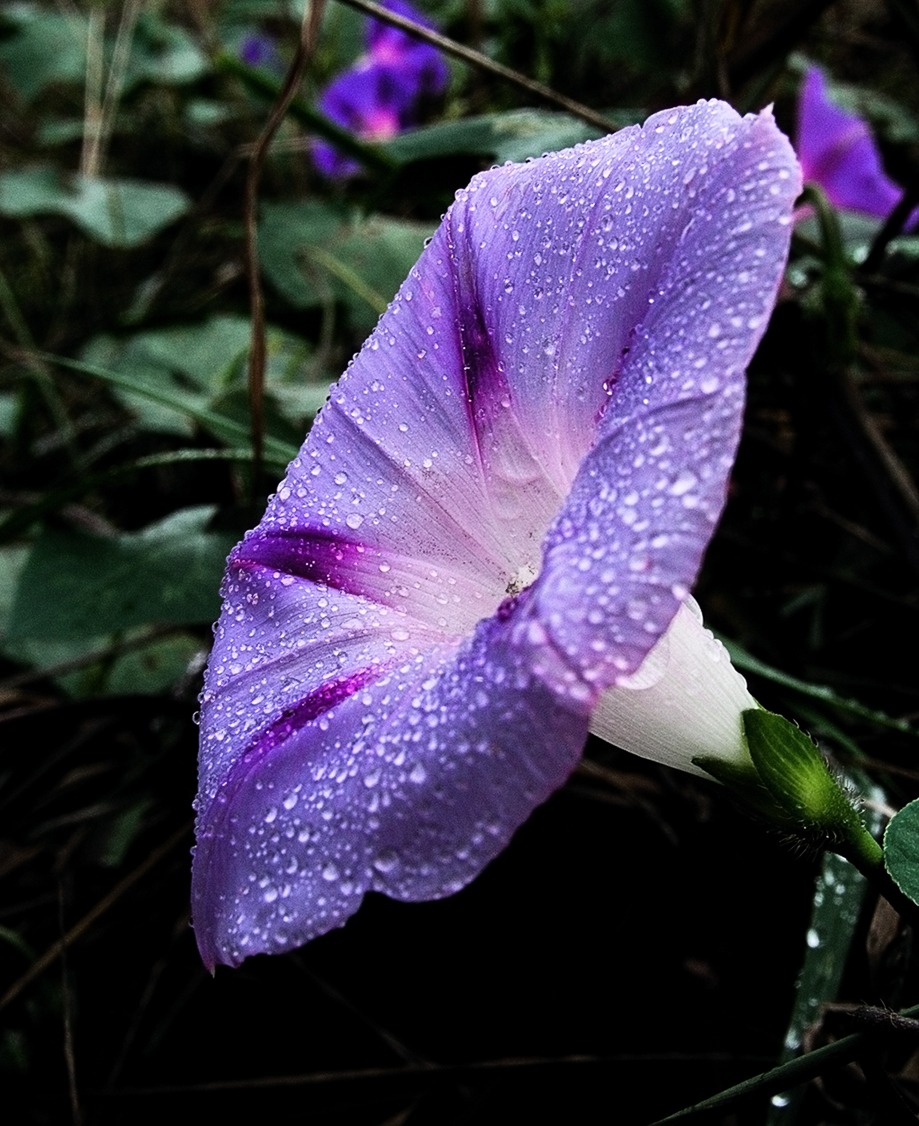 Common Morning-gloryIpomoea purpurea
-
 Star-gloryIpomoea quamoclit
-
 Goat's FootIpomoea pes-caprae
- Japanese Morning GloryIpomoea nil
Compare
Questions and answers
What is the scientific name of the Sweet Potato?
The scientific name of the Sweet Potato is Ipomoea batatas. Written with its author, the full name is Ipomoea batatas (L.) Lam..
Which family does the Sweet Potato belong to?
Ipomoea batatas belongs to the family Convolvulaceae, in the order Solanales and the class Magnoliopsida.
Where is the Sweet Potato found?
Checklists and occurrence records place Ipomoea batatas in 157 countries, including Peru, Afghanistan, Mexico, Brazil, United States and Colombia.
What is the conservation status of the Sweet Potato?
The IUCN Red List category recorded for Ipomoea batatas is Data Deficient (DD).
What other names does the Sweet Potato have?
Ipomoea batatas is also known in English as Sweet-potato and Yam.
What environment do sweet potatoes grow in?
Sweet Potato cultivation is suitable for tropical and warm temperate regions where sufficient water is available. The plant grows best at an average temperature of approximately 24 °C and in well-drained, light- to medium-textured soils with a pH between 4.5 and 7.0.[10][13][11]
Sources
Passages the profile rests on
- The leaves can be green or purple, with purple pigmentation sometimes concentrated along the veins. Source passage: “The leaves are mostly green in color, but the accumulation of anthocyanins, especially along the leaf veins, can make them purple.” — English Wikipedia
- The flowers have five fused petals forming a funnel-shaped structure, with coloration ranging from light pink to deep purple. Source passage: “The 5 sepals are deeply lobed and the 5 petals form a funnel shape tube, measuring between 3 to 6cm wide by 2 to 5cm long. The colour ranges from light pink to deep purple.” — blogs.reading.ac.uk
- The storage roots have smooth skin and can display beige, yellow, orange, red, brown, or purple coloration. Source passage: “The edible, tuberous root is long and tapered, with a smooth skin whose color ranges between beige, yellow, orange, red, brown, and purple.” — English Wikipedia
- The flesh of the storage roots ranges from beige and white to red, pink, violet, yellow, orange, and purple. Source passage: “Its flesh ranges from beige through white, red, pink, violet, yellow, orange, and purple.” — English Wikipedia
- The leaf stalks measure between 13 and 51 centimetres in length. Source passage: “The leaf stalk is 13 to 51 centimetres (5 to 20 inches) long.” — English Wikipedia
- The leaf blades measure between 5 and 13 centimetres long. Source passage: “The leaf blades are very variable, 5 to 13 cm (2 to 5 in) long” — English Wikipedia
- Leaf dimensions can range from 5 to 15 centimetres in both length and width. Source passage: “Leaf size is also very variable, ranging from 5 to 15cm long by 5 to 15 cm wide (Purseglove, 1974).” — blogs.reading.ac.uk
- The stems typically measure between 0.5 and 4 metres in total length, although some cultivars produce shoots reaching 16 metres. Source passage: “Depending on the variety, the total length of a stem can be between 0.5 and 4 m (1+1⁄2 and 13 ft). Some cultivars also form shoots up to 16 m (52 ft) in length.” — English Wikipedia
- The flowers have corollas measuring approximately 4 to 7 centimetres in length. Source passage: “The 4 to 7 cm (1+1⁄2 to 2+3⁄4 in) long, overgrown and funnel-shaped, folded crown” — English Wikipedia
- The plant grows best at an average temperature of approximately 24 °C. Source passage: “It grows best at an average temperature of 24 °C (75 °F), with abundant sunshine and warm nights.” — English Wikipedia
- Sweet potato cultivation is suitable for tropical and warm temperate regions where sufficient water is available. Source passage: “Sweet potatoes are cultivated throughout tropical and warm temperate regions wherever water is sufficient to support their growth.” — English Wikipedia
- Annual rainfall between 750 and 1,000 millimetres is considered most suitable for cultivation. Source passage: “Annual rainfalls of 750–1,000 mm (30–39 in) are considered most suitable, with a minimum of 500 mm (20 in) in the growing season.” — English Wikipedia
- The plant grows favorably in well-drained, light- to medium-textured soils with a pH between 4.5 and 7.0. Source passage: “sweet potatoes are grown on a variety of soils, but well-drained, light- and medium-textured soils with a pH range of 4.5–7.0 are more favorable for the plant.” — English Wikipedia
- The species does not tolerate frost. Source passage: “The plant does not tolerate frost.” — English Wikipedia
- The plant is sensitive to waterlogging, which can cause storage-root rot and restrict root development. Source passage: “it is not tolerant to waterlogging, which may cause tuber rots and reduce the growth of storage roots if aeration is poor.” — English Wikipedia
- The storage roots contain substantial amounts of starch and have a sweet taste. Source passage: “Its sizeable, starchy, sweet-tasting, tuberous roots are used as a root vegetable” — English Wikipedia
- The young shoots and leaves are consumed as leafy vegetables. Source passage: “Moreover, the young shoots and leaves are eaten as greens with nutritional composition comparable to spinach.” — English Wikipedia
- The leaves and vines can be eaten raw or cooked. Source passage: “Sweetpotato leaves and vines are very similar to spinach in eating quality, they can be eaten raw or cooked, and they hold up in cooking similar to kale.” — vegetables.wsu.edu
- The entire sweet potato plant, including its vines, is edible. Source passage: “Though sweetpotatoes are typically grown as a root crop, the entire plant is edible, including the vines.” — vegetables.wsu.edu
- The trailing stems develop roots when their nodes come into contact with soil. Source passage: “When the nodes of trailing stems touch the soil, roots are produced.” — blogs.reading.ac.uk
- The flowers open before sunrise, remain open for several hours, and close again in the morning. Source passage: “The flowers open before sunrise and stay open for a few hours. They close again in the morning and begin to wither.” — English Wikipedia
- The species produces hermaphroditic flowers. Source passage: “The hermaphrodite, five-fold, and short-stalked flowers are single or few in stalked, zymous inflorescences” — English Wikipedia
- Seed production occurs only through cross-pollination. Source passage: “Seeds are only produced from cross-pollination.” — English Wikipedia
- The storage roots are used as a staple root vegetable in various parts of the world. Source passage: “Its sizeable, starchy, sweet-tasting, tuberous roots are used as a root vegetable, which is a staple food in parts of the world.” — English Wikipedia
- Sweet potato storage roots can be processed into flour, dried chips, juice, bread, noodles, candy, and pectin. Source passage: “they can be turned into flour, dried chips, juice, bread, noodles, candy, and pectin (cip.potato.org).” — blogs.reading.ac.uk
- The entire vine can be used as animal feed. Source passage: “the entire vine can be used as animal feed (unlike potato leaves).” — vegetables.wsu.edu
- Sweet potato leaves and vines can serve as an alternative leafy vegetable to spinach. Source passage: “Some growers are also interested in sweetpotato as an alternative leafy green crop to spinach in late summer and early fall.” — vegetables.wsu.edu
- Ipomoea trifida is identified as the closest wild relative of sweet potato. Source passage: “I. trifida, a diploid, is the closest wild relative of the sweet potato” — English Wikipedia
Data
- Catalogue of Life, 2026-10-16 XR cc by
- Global Biodiversity Information Facility CC BY 4.0
- Wikidata CC0
- GeoNames CC BY 4.0
- Wikimedia Commons per image; credit shown with each image
- Within the Catalogue of Life, this name comes from Synonymic Checklists of the Vascular Plants of the World cc by
References
- Lam. (1793). Tabl. Encycl. 1: 465 (1793). where the name was published
This species in other databases
Page built on 24 November 2026. See how the catalog is made and all sources and licences.
Cite this page
ScientificNames.org. (2026). Ipomoea batatas (Sweet Potato). Retrieved November 24, 2026, from https://scientificnames.org/species/ipomoea-batatas
“Ipomoea batatas (Sweet Potato).” ScientificNames.org, 2026, scientificnames.org/species/ipomoea-batatas. Accessed 24 Nov. 2026.
ScientificNames.org. “Ipomoea batatas (Sweet Potato).” Accessed November 24, 2026. https://scientificnames.org/species/ipomoea-batatas.
@misc{scientificnames_ipomoea_batatas_sweet_potato,
  author = {{ScientificNames.org}},
  title = {Ipomoea batatas (Sweet Potato)},
  year = {2026},
  url = {https://scientificnames.org/species/ipomoea-batatas},
  note = {Accessed 2026-11-24}
}