Species · Flowering plants
Ipomoea barbatisepala
Ipomoea barbatisepala has no English name on record in the checklists used here. It is a species of flowering plant in the family Convolvulaceae (bindweed family), order Solanales.
- Scientific name
- Ipomoea barbatisepala A.Gray
- Genus
- Ipomoea
- Family
- Convolvulaceae (Bindweed Family)
- Order
- Solanales
- Class
- Magnoliopsida
- Recorded in
- 2 countries
- Name status
- accepted in the Catalogue of Life
Overview
Ipomoea barbatisepala, commonly known as canyon morning glory, is a species of morning glory. It is native to the Southwestern United States, where it has been found in New Mexico and Arizona; in these regions, its native range overlaps with the non-native range of the closely related Ipomoea hederacea. It is also found in the west of Mexico.
Classification of Ipomoea barbatisepala
| Kingdom | Plantae |
|---|---|
| Subkingdom | Pteridobiotina |
| Phylum | Tracheophyta |
| Class | Magnoliopsida |
| Order | Solanales |
| Family | Convolvulaceae (Bindweed Family) |
| Subfamily | Convolvuloideae |
| Tribe | Ipomoeeae |
| Genus | Ipomoea (Morning Glory) |
| Species | Ipomoea barbatisepala A.Gray |
Where Ipomoea barbatisepala is found
Checklists and occurrence records place Ipomoea barbatisepala in 2 countries across North America. GBIF holds 393 georeferenced records of it.
Countries
Regions and cities with the most records
- Arizona, United States 220
- Catalina Foothills, United States 34
- Casas Adobes, United States 33
- Oro Valley, United States 31
- Tucson, United States 30
- Sonora, Mexico 21
- Baja California Sur, Mexico 19
- New Mexico, United States 16
- Nogales, Mexico 14
- El Paso, United States 10
- Sinaloa, Mexico 10
- Texas, United States 10
- Ciudad Juárez, Mexico 5
- Culiacán, Mexico 4
- Cabo San Lucas, Mexico 3
- Chihuahua, Mexico 3
- Colonia del Sol, Mexico 3
- Michoacán, Mexico 3
- Guerrero, Mexico 2
- Oaxaca, Mexico 2
- Tamaulipas, Mexico 1
- Coahuila, Mexico
- San Luis Potosí, Mexico
- Veracruz, Mexico
Range as the checklists state it
USA (Arizona, New Mexico, Texas); Mexico (Baja California Sur, Chihuahua, Coahuila, Guerrero, Michoacán, Oaxaca, San Luis Potosí, Sinaloa, Sonora, Tamaulipas, Veracruz)
A number beside a place is its count of GBIF occurrence records. A place without a number comes from a checklist alone. Records show where a species has been observed or collected, which can include escapes and vagrants.
Common names
Subspecies and varieties
Related species
-
 Sweet PotatoIpomoea batatas
-
 Water Morning GloryIpomoea aquatica
-
 MoonflowerIpomoea alba
- Garden Morning GloryIpomoea tricolor
-
 Oceanblue Morning GloryIpomoea indica
-
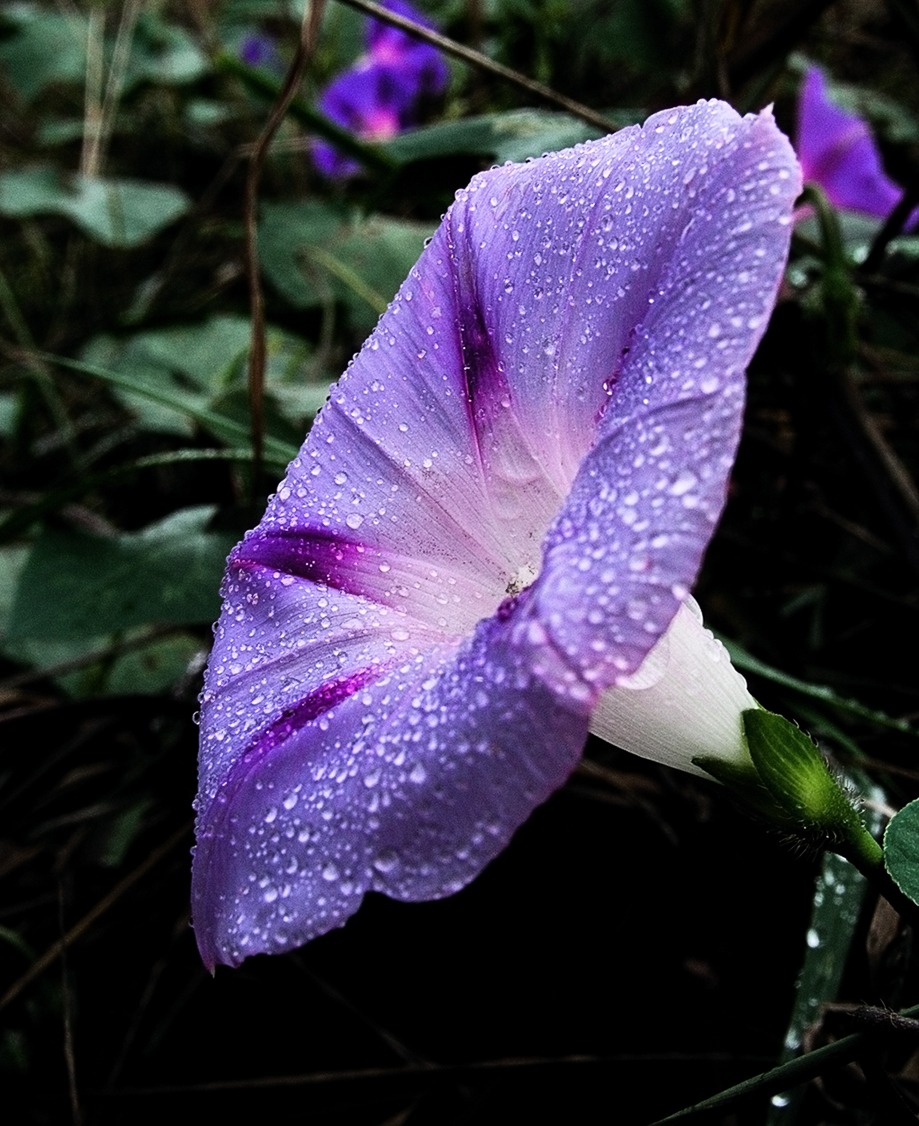 Common Morning-gloryIpomoea purpurea
-
 Star-gloryIpomoea quamoclit
-
 Goat's FootIpomoea pes-caprae
Compare
Sources
Data
- Catalogue of Life, 2026-10-16 XR cc by
- Global Biodiversity Information Facility CC BY 4.0
- Wikidata CC0
- English Wikipedia CC BY-SA 4.0
- GeoNames CC BY 4.0
- Within the Catalogue of Life, this name comes from Synonymic Checklists of the Vascular Plants of the World cc by
References
- Gray, A. (1878). Syn. Fl. N. Amer. 2(1): 212 (1878). where the name was published
This species in other databases
- Catalogue of Life 3PVNF
- Wikidata Q15484177
- iNaturalist 164078
- World Flora Online wfo-0001297245
- GRIN 433522
Page built on 25 November 2026. See how the catalog is made and all sources and licences.
Cite this page
ScientificNames.org. (2026). Ipomoea barbatisepala. Retrieved November 25, 2026, from https://scientificnames.org/species/ipomoea-barbatisepala
“Ipomoea barbatisepala.” ScientificNames.org, 2026, scientificnames.org/species/ipomoea-barbatisepala. Accessed 25 Nov. 2026.
ScientificNames.org. “Ipomoea barbatisepala.” Accessed November 25, 2026. https://scientificnames.org/species/ipomoea-barbatisepala.
@misc{scientificnames_ipomoea_barbatisepala,
  author = {{ScientificNames.org}},
  title = {Ipomoea barbatisepala},
  year = {2026},
  url = {https://scientificnames.org/species/ipomoea-barbatisepala},
  note = {Accessed 2026-11-25}
}