Species · Flowering plants
Tiger's Footprint Ipomoea pes-tigridis
The scientific name of the Tiger's Footprint is Ipomoea pes-tigridis. It is a species of flowering plant in the family Convolvulaceae (bindweed family), order Solanales.
- Scientific name
- Ipomoea pes-tigridis L.
- Common name
- Tiger's Footprint
- Genus
- Ipomoea
- Family
- Convolvulaceae (Bindweed Family)
- Order
- Solanales
- Class
- Magnoliopsida
- Recorded in
- 44 countries
- Name status
- accepted in the Catalogue of Life

Overview
Ipomoea pes-tigridis is native to tropical and subtropical regions of Asia, Africa, and New Guinea, and is naturalised in Australia.
Written 26 November 2026 from the sources listed below. Each statement was checked against the passage it cites; statements that could not be supported were removed.
Appearance
The vine can reach a length of 1–3 m. Its palmately lobed leaves measure 6–10 cm in diameter, with each leaf having 5–9 elliptic lobes with narrowed bases and rounded sinuses between them.[1][2][3]
The flowers are white and trumpet-shaped, measuring approximately 4 cm long. The flower corolla opens to approximately 3 cm in diameter.[4][5][6]
Habitat
The species grows at elevations from sea level to 400 m.[7]
Behaviour
The flowers occur in clusters, usually with only one flower open at a time in each cluster. Individual flowers open after 4 pm and wither by the following morning.[8][9]
Reproduction and life cycle
The species has a flowering period from September through November.[10]
Uses
The roots are used as a purgative and are reported as being used to treat boils, carbuncles, and dog bites.[11][12][13][14]
Classification of the Tiger's Footprint
| Kingdom | Plantae |
|---|---|
| Subkingdom | Pteridobiotina |
| Phylum | Tracheophyta |
| Class | Magnoliopsida |
| Order | Solanales |
| Family | Convolvulaceae (Bindweed Family) |
| Subfamily | Convolvuloideae |
| Tribe | Ipomoeeae |
| Genus | Ipomoea (Morning Glory) |
| Species | Ipomoea pes-tigridis L. |
Where the Tiger's Footprint is found
Checklists and occurrence records place Ipomoea pes-tigridis in 44 countries across Africa, Asia and Oceania. GBIF holds 2,716 georeferenced records of it.
Countries where it is native or its origin is not stated
- Angola 1
- Bangladesh 6
- Benin 43
- Bhutan 1
- Botswana 24
- British Indian Ocean Territory 3
- Burkina Faso 1
- Cambodia 4
- Cameroon 13
- Chad 29
- China 74
- Democratic Republic of the Congo 9
- Gambia 2
- Guinea-Bissau 4
- India 686
- Indonesia 134
- Kenya 22
- Malawi 30
- Malaysia 15
- Mali 14
- Mauritania 5
- Mongolia 4
- Mozambique 29
- Myanmar 6
- Namibia 10
- Nepal 16
- Niger 23
- Nigeria 16
- Pakistan 44
- Philippines 67
- Senegal 526
- Singapore 4
- Somalia
- South Africa 15
- Sri Lanka 48
- Sudan
- Taiwan 325
- Tanzania 106
- Thailand 93
- Uganda
- Vietnam 21
- Zambia 32
- Zimbabwe 20
Countries where it has been introduced
Regions and cities with the most records
- Louga, Senegal 438
- Dara, Senegal 242
- Ndibène Dahra, Senegal 240
- Northern Territory, Australia 151
- Taiwan, Taiwan 141
- Maharashtra, India 122
- Gujarat, India 101
- Tamil Nadu, India 92
- Tainan, Taiwan 91
- Yongkang, Taiwan 86
- Jalgaon, India 64
- Telangana, India 62
- Fengshan, Taiwan 56
- Kaohsiung, Taiwan 51
- Saint-Louis, Senegal 49
- Hainan, China 42
- Hyderabad, India 42
- Kukatpally, India 41
- Palmerston, Australia 40
- Gaddi Annaram, India 39
- Jilādiguda, India 37
- Meerpet, India 37
- Quthbullapur, India 37
- Rajasthan, India 37
- Darwin, Australia 35
- Erlun, Taiwan 33
- Kerala, India 33
- Hengchun, Taiwan 32
- Lal Bahadur Nagar, India 31
- Chaozhou, Taiwan 30
- Uppal Kalan, India 30
- Bodupāl, India 29
- Donggang, Taiwan 29
- Malkajgiri, India 29
- Xiluo, Taiwan 29
- Pīrzādagūda, India 28
7 more countries have a few records outside this range
These countries hold a few records of Ipomoea pes-tigridis but lie outside the range the checklists give for it. Such records are often zoo or garden specimens, museum material or vagrants, so the species is not counted as occurring there.
Range as the checklists state it
Mauritania; Senegal; Gambia; Guinea-Bissau; Mali; E-Burkina Faso; Benin; Niger; Nigeria; Cameroon; Chad; Sudan; Somalia; Kenya; Pemba Isl.; Tanzania; Zambia; Malawi; Zimbabwe; Mozambique; Namibia; Botswana; South Africa (Mpulamanga); China (Guangdong, S-Guangxi, Hainan, S-Yunnan); Taiwan; Pakistan (Karachi, Swat, Hazara); Nepal; Bhutan; India (almost throughout); Sri Lanka; Bangladesh; Myanmar; Thailand; Cambodia; Vietnam; South China Sea Isl.; peninsular Malaysia (Langkawi Isl., Penang, Selangor, Melaka, Kelantan, Pahang); Singapore; Sumatera; Borneo; Sulawesi; Philippines; Jawa; Lesser Sunda Isl. (Bali, etc.); Moluccas; New Guinea (Irian Jaya); Australia [I] (Northern Territory [I], Queensland [I])
A number beside a place is its count of GBIF occurrence records. A place without a number comes from a checklist alone. Records show where a species has been observed or collected, which can include escapes and vagrants.
Common names
English
- Tiger's Footprint
- Tiger-foot Ipomoea
Names in 5 other languages
- Chinese
- 九爪藤, 虎掌藤
- Finnish
- tiikerinelämänlanka
- Japanese
- キクザアサガオ
- Slovak
- povojník tigrí
- Thai
- ขยุ้มตีนหมา
Synonyms
19 other scientific names have been used for this species and are now treated as synonyms of Ipomoea pes-tigridis.
- Cleiostoma villosum Raf.
- Convolvuloides palmata Moench
- Convolvulus capitellatus Buch.-Ham. ex Wall.
- Convolvulus pes-tigridis (L.) Spreng.
- Ipomoea aggregata (Lour.) Poir.
- Ipomoea capitellata Choisy
- Ipomoea pes-tigridis f. subintegrifolia Roberty
- Ipomoea pes-tigridis var. capitellata (Choisy) C.B.Clarke
- Ipomoea pes-tigridis var. hepaticifolia (L.) C.B.Clarke
- Ipomoea pes-tigridis var. indica Hallier fil.
- Ipomoea tigrina Pers.
- Ipomoea tigripes Stokes
- Convolvulus aggregatus Lour. ambiguous synonym
- Convolvulus bryoniifolius Salisb. ambiguous synonym
- Convolvulus hepaticifolius (L.) Spreng. ambiguous synonym
- Ipomoea hepaticifolia L. ambiguous synonym
- Ipomoea serpens L. ambiguous synonym
- Ipomoea tamnifolia Burm.fil. ambiguous synonym
- Neorthosis tigrina (Pers.) Raf. ambiguous synonym
Subspecies and varieties
Related species
-
 Sweet PotatoIpomoea batatas
-
 Water SpinachIpomoea aquatica
-
 MoonflowerIpomoea alba
-
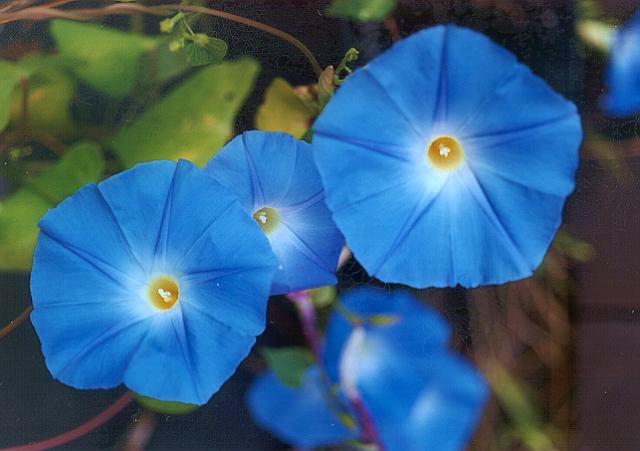 Mexican Morning GloryIpomoea tricolor
-
 Blue Morning GloryIpomoea indica
-
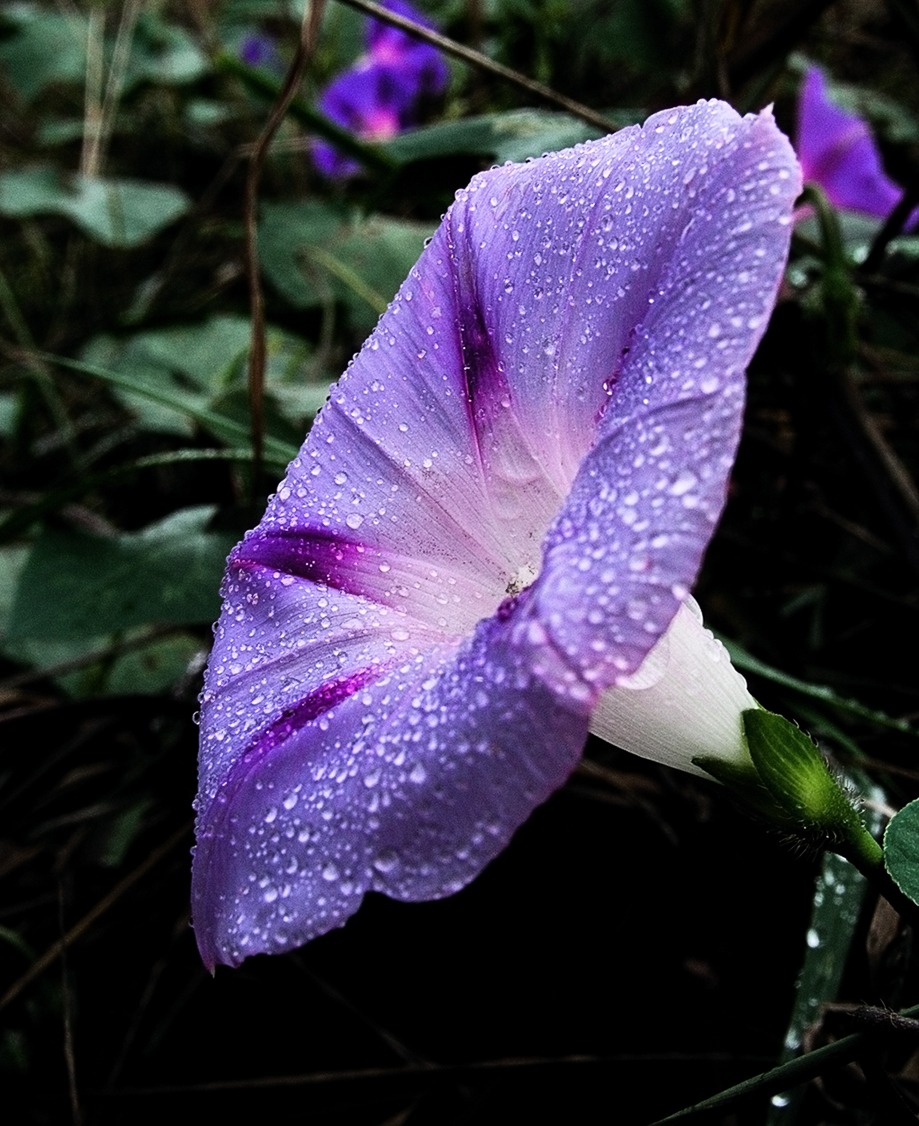 Common Morning-gloryIpomoea purpurea
-
 Cypress VineIpomoea quamoclit
-
 Beach Morning GloryIpomoea pes-caprae
Compare
Questions and answers
What is the scientific name of the Tiger's Footprint?
The scientific name of the Tiger's Footprint is Ipomoea pes-tigridis. Written with its author, the full name is Ipomoea pes-tigridis L..
Which family does the Tiger's Footprint belong to?
Ipomoea pes-tigridis belongs to the family Convolvulaceae, in the order Solanales and the class Magnoliopsida.
Where is the Tiger's Footprint found?
Checklists and occurrence records place Ipomoea pes-tigridis in 44 countries, including India, Senegal, Taiwan, Indonesia, Tanzania and Thailand.
What other names does the Tiger's Footprint have?
Ipomoea pes-tigridis is also known in English as Tiger-foot Ipomoea.
Sources
Passages the profile rests on
- The vine can reach a length of 1–3 m. Source passage: “It can grow up to 1–3 m (3 ft 3 in – 9 ft 10 in).” — English Wikipedia
- Its leaves are palmately lobed and measure 6–10 cm in diameter. Source passage: “The leaves are palmately lobed, 6–10 cm (2.4–3.9 in) diameter” — English Wikipedia
- Each leaf has 5–9 elliptic lobes with narrowed bases and rounded sinuses between them. Source passage: “with 5-9 lobes on edge of the leaf; the lobes are elliptic, with a narrowed base; the sinus between the lobes being rounded.” — English Wikipedia
- The flowers are white and trumpet-shaped. Source passage: “The trumpet-shaped flowers are white, 4 cm (1.6 in) long” — English Wikipedia
- The flowers are approximately 4 cm long. Source passage: “The trumpet-shaped flowers are white, 4 cm (1.6 in) long” — English Wikipedia
- The flower corolla opens to approximately 3 cm in diameter. Source passage: “the corolla opening to 3 cm (1.2 in) diameter” — English Wikipedia
- The species grows at elevations from sea level to 400 m. Source passage: “It grows from sea level up to 400 m.” — English Wikipedia
- The flowers occur in clusters, usually with only one flower open at a time in each cluster. Source passage: “The flowers are in clusters, but usually only one open at a time in each cluster” — English Wikipedia
- Individual flowers open after 4 pm and wither by the following morning. Source passage: “the individual flowers open after 4 pm, and wither by the following morning.” — English Wikipedia
- The species has a flowering period from September through November. Source passage: “Its flowering period is between September and November.” — English Wikipedia
- The roots are used as a purgative. Source passage: “Medicinal Uses: Roots are purgative;” — academia.edu
- The roots are reported as being used to treat boils. Source passage: “used for the treatment of bolis, carbuncles and dog-bites.” — academia.edu
- The roots are reported as being used to treat carbuncles. Source passage: “used for the treatment of bolis, carbuncles and dog-bites.” — academia.edu
- The roots are reported as being used to treat dog bites. Source passage: “used for the treatment of bolis, carbuncles and dog-bites.” — academia.edu
Data
- Catalogue of Life, 2026-10-16 XR cc by
- Global Biodiversity Information Facility CC BY 4.0
- Wikidata CC0
- GeoNames CC BY 4.0
- Wikimedia Commons per image; credit shown with each image
- Within the Catalogue of Life, this name comes from Synonymic Checklists of the Vascular Plants of the World cc by
References
- L. (1753). Sp. Pl. [Linnaeus] 1: 162 (1753), nom. cons. where the name was published
This species in other databases
- Catalogue of Life 6N8FW
- Wikidata Q310302
- iNaturalist 425675
- World Flora Online wfo-0001296673
- GRIN 20208
Page built on 27 November 2026. See how the catalog is made and all sources and licences.
Cite this page
ScientificNames.org. (2026). Ipomoea pes-tigridis (Tiger's Footprint). Retrieved November 27, 2026, from https://scientificnames.org/species/ipomoea-pes-tigridis
“Ipomoea pes-tigridis (Tiger's Footprint).” ScientificNames.org, 2026, scientificnames.org/species/ipomoea-pes-tigridis. Accessed 27 Nov. 2026.
ScientificNames.org. “Ipomoea pes-tigridis (Tiger's Footprint).” Accessed November 27, 2026. https://scientificnames.org/species/ipomoea-pes-tigridis.
@misc{scientificnames_ipomoea_pes_tigridis_tigers_footprint,
  author = {{ScientificNames.org}},
  title = {Ipomoea pes-tigridis (Tiger's Footprint)},
  year = {2026},
  url = {https://scientificnames.org/species/ipomoea-pes-tigridis},
  note = {Accessed 2026-11-27}
}