Species · Flowering plants
Littlebell Ipomoea triloba
The scientific name of the Littlebell is Ipomoea triloba. It is a species of flowering plant in the family Convolvulaceae (bindweed family), order Solanales.
- Scientific name
- Ipomoea triloba L.
- Common name
- Littlebell
- Genus
- Ipomoea
- Family
- Convolvulaceae (Bindweed Family)
- Order
- Solanales
- Class
- Magnoliopsida
- Red List category
- LC Least Concern
- Recorded in
- 76 countries
- Name status
- accepted in the Catalogue of Life

Overview
The species is native to the West Indies, Mexico, Belize, and Trinidad and is widely naturalized throughout tropical regions.
Written 26 November 2026 from the sources listed below. Each statement was checked against the passage it cites; statements that could not be supported were removed.
Behaviour
Littlebell is a fast-growing vine that grows by twining or creeping. Its stems rarely exceed 10 feet in length.[1][2][3]
The vine commonly scrambles through grasses and over low shrubs rather than climbing to great heights.[4]
Appearance
Littlebell has long, thin stems and petioled leaves. The leaves may be heart-shaped, three-lobed, or five-lobed.[5][6]
The leaves measure 2.5–6 centimeters in length.[7]
The flowers grow in leaf axils, either singly or in small clusters. They are funnel-shaped, with five short lobes, each ending in an abrupt point.[8][9]
The flowers range from pink to pale purple and measure between half an inch and one inch long.[10][11]
The sepals occur in two unequal whorls, with the outer two shorter than the inner three. They are oblong, have minutely ciliate margins, and end in distinct abrupt points.[12][13]
Cut stems and leaf stalks exude a small amount of milky sap.[14]
Habitat
Littlebell occurs in warm regions of the world as an introduced plant and is widely naturalized throughout tropical regions.[15][16]
It occurs in disturbed residential landscapes, nurseries, abandoned homesites, agricultural fields, orchards, old pastures, and highway and utility corridors.[17]
Reproduction and life cycle
The fruits are small, globose capsules approximately one-quarter inch wide. Each capsule retains a persistent style and contains between two and four dark brown seeds.[18][19][20]
Littlebell seed dispersal has not been specifically documented in detail. Morning glory seeds may be dispersed by gravity, wind, or rain.[21][22]
Littlebell may escape into the wild after being cultivated.[23]
Conservation
Littlebell is often regarded as a noxious weed in areas where it has been introduced. By the 1980s, it was recognized as a serious weed in citrus groves, particularly in Hendry County, Florida.[24][25]
Similar species
The flowers of tievine and sweet potato measure between one and one-quarter and three inches long, whereas Littlebell flowers are always shorter than one inch.[26]
Whitestar (Ipomoea lacunosa) resembles Littlebell in its low, scrambling growth habit and similarly small flowers. Whitestar has white flowers with purple anthers, whereas Littlebell has pink or purple flowers with white anthers.[27][28]
Classification of the Littlebell
| Kingdom | Plantae |
|---|---|
| Subkingdom | Pteridobiotina |
| Phylum | Tracheophyta |
| Class | Magnoliopsida |
| Order | Solanales |
| Family | Convolvulaceae (Bindweed Family) |
| Subfamily | Convolvuloideae |
| Tribe | Ipomoeeae |
| Genus | Ipomoea (Morning Glory) |
| Species | Ipomoea triloba L. |
Where the Littlebell is found
Checklists and occurrence records place Ipomoea triloba in 76 countries across Africa, Asia, Europe, North America, Oceania and South America. GBIF holds 11,626 georeferenced records of it.
Countries where it is native or its origin is not stated
- Afghanistan 3
- Argentina 59
- Australia 412
- Bolivia 11
- Bonaire, Saint Eustatius and Saba 9
- Brazil 965
- Cayman Islands 14
- Christmas Island 12
- Colombia 149
- Costa Rica 17
- Dominican Republic 59
- El Salvador 17
- Fiji 3
- Guatemala 60
- Haiti 9
- Hong Kong 54
- Indonesia 173
- Israel 36
- Japan 348
- Malaysia 46
- Marshall Islands 4
- Martinique 9
- Mexico 1,864
- Micronesia 24
- Nicaragua 8
- Niue 3
- Northern Mariana Islands 34
- Palau 12
- Panama 9
- Papua New Guinea 36
- Paraguay 45
- Saint Barthelemy 5
- Saint Kitts and Nevis 4
- Solomon Islands 12
- Timor Leste 7
- Trinidad and Tobago 7
- Turks and Caicos Islands 5
- U.S. Virgin Islands 46
- United States 1,602
- Uruguay 4
- Venezuela 36
Countries where it has been introduced
- Anguilla 2
- Aruba 10
- Bahamas 90
- Barbados 1
- Belize 30
- Benin 104
- Burkina Faso 1
- Cabo Verde 5
- China 233
- Cuba 115
- Curacao 16
- Ecuador 420
- Guadeloupe 13
- Guam 45
- Guinea 17
- Honduras 15
- India 379
- Ivory Coast 39
- Jamaica 48
- Laos 3
- Mauritius 27
- Myanmar 15
- Nepal 1
- Peru 45
- Philippines 148
- Puerto Rico 200
- Senegal 37
- Sierra Leone 23
- Singapore 33
- South Korea 162
- Spain 20
- Sri Lanka 36
- Taiwan 3,005
- Thailand 52
- Vietnam 4
Regions and cities with the most records
- Taiwan, Taiwan 1,936
- Florida, United States 589
- Sinaloa, Mexico 378
- Citong, Taiwan 364
- Douliu, Taiwan 341
- Xiluo, Taiwan 339
- Erlun, Taiwan 328
- Xingang, Taiwan 288
- Linnei, Taiwan 282
- Xinying, Taiwan 276
- Fengshan, Taiwan 255
- Taibao, Taiwan 253
- Beidou, Taiwan 237
- Chiayi City, Taiwan 231
- Kaohsiung, Taiwan 223
- Galápagos, Ecuador 215
- Beigang, Taiwan 214
- Hawaii, United States 212
- Zhushan, Taiwan 201
- Pitou, Taiwan 199
- Tianzhong, Taiwan 198
- Hengchun, Taiwan 189
- Tianwei, Taiwan 186
- Jalisco, Mexico 184
- Yongkang, Taiwan 181
- Shetou, Taiwan 179
- Northern Territory, Australia 172
- Yongjing, Taiwan 167
- Queensland, Australia 162
- Erlin, Taiwan 161
- Tainan, Taiwan 153
- Yuanlin, Taiwan 151
- Yujing, Taiwan 151
- Nantou, Taiwan 150
- Zhongxing New Village, Taiwan 149
- Caotun, Taiwan 145
13 more countries have a few records outside this range
These countries hold a few records of Ipomoea triloba but lie outside the range the checklists give for it. Such records are often zoo or garden specimens, museum material or vagrants, so the species is not counted as occurring there.
Range as the checklists state it
Spain [I]; Cape Verde Isl. [I] (Santo Antao Isl. [I], Ilha de Sao Tiago [I], Fogo Isl. [I], Ilha Brava [I]); Senegal [I]; Guinea [I]; Sierra Leone [I]; Burkina Faso [I]; Ivory Coast [I]; Ivory Coast [I]; Benin [I]; Bioko Isl. [Fernando Poo] [I]; Mauritius [I]; China [I] (Anhui [I], Guangdong [I], S-Shaanxi [I], Zhejiang [I]); South Korea [I]; Volcano Isl. [I] (Iwojima [I]); Taiwan [I]; Nepal [I]; India [I] (Gujarat [I], Kerala [I], Maharashtra [I]); Sri Lanka [I]; Myanmar [I]; Thailand [I]; Laos [I]; Vietnam [I]; South China Sea Isl. [I]; peninsular Malaysia [I] (Perlis [I], Selangor [I], Negeri Sembilan [I], Kelantan [I], Pahang [I]); Singapore [I]; Sumatera [I]; Borneo [I] (Sabah [I], Sarawak [I]; Sulawesi [I]; Philippines [I]; Jawa [I]; Lesser Sunda Isl. [I]; Moluccas [I]; Christmas Isl. [Austr.] [I]; New Guinea [I]; Solomon Isl. [I]; Australia [I] (Northern Territory [I], Queensland [I]); American Samoa [I] (Tutuila [I]); Palau [I] (Koror [I], Malakal [I], Angaur [I]); Northern Marianas [I] (Saipan [I], Tinian [I]); Guam [I]; Fed. States of Micronesia [I] (Yap [I], Truk [I], Fefan [I], Pohnpei [I]); Marshall Isl. [I] (Kwajalein [I]); Hawaii [I] (Midway Isl. [I], Kauai [I], Oahu [I], Maui [I], Hawaii Isl. [I]); USA [I] (California [I], Florida [I]); Mexico (Baja California Sur, Campeche, Chiapas, Chihuahua, Coahuila, Colima, Guerrero, Hidalgo, Jalisco, México State, Michoacán, Morelos, Nayarit, Nuevo León, Oaxaca, Queretaro, Quintana Roo, San Luis Potosí, Sinaloa, Sonora, Tabasco, Tamaulipas, Veracruz, Yucatán, Zacatecas); Revillagigedos Isl. (Isla Socorro); Belize; Honduras; Clipperton Isl. [I]; Bahamas; Turks & Caicos Isl.; Cuba; Jamaica; Hispaniola; Puerto Rico; Virgin Isl. (Guana, St. Croix, St. John, St. Thomas, Tortola, Virgin Gorda); Anguilla; St. Barthélémy; St. Eustatius; St. Kitts; Antigua; Guadeloupe; St. Lucia; Barbados; Tobago; Trinidad; Aruba; Bonaire; Curacao; Colombia (Chocó, Córdoba, Magdalena, Meta, Valle); Ecuador; Galápagos; Peru; N-Brazil (Amazonas); NE-Brazil (Ceará, Rio Grande do Norte, Bahia); WC-Brazil (Mato Grosso, Goiás, Brazília Distrito Federal, Mato Grosso do Sul); SE-Brazil (Espírito Santo, São Paulo, Rio de Janeiro); S-Brazil (Paraná, Santa Catarina)
A number beside a place is its count of GBIF occurrence records. A place without a number comes from a checklist alone. Records show where a species has been observed or collected, which can include escapes and vagrants.
Common names
English
- Littlebell
- Little-bell
Names in 12 other languages
- Bengali
- ঘণ্টি কলমি
- Chinese
- 三裂叶薯, 三裂葉牽牛 三裂葉薯, 紅花野牽牛
- Hebrew
- לפופית משולשת
- Japanese
- ホシアサガオ
- Korean
- 별나팔꽃
- Marathi
- इवली भोवरी
- Papiamento
- Batata Shimaron, Trompèt
- Portuguese
- Gramofone
- Spanish
- Bejuquillo de puerco, Campanilla, amole
- Thai
- หญ้าดอกขน
- Ukrainian
- Кручені паничі трилопатеві
- cha
- Fofegau, Fofgu, Fofgu-sabana
Synonyms
24 other scientific names have been used for this species and are now treated as synonyms of Ipomoea triloba.
- Amphione lobata Raf.
- Convolvulus ipomoea Vell.
- Convolvulus mariannensis (Choisy) Gaudich. ex Saff.
- Convolvulus sloanei Spreng.
- Convolvulus subquinquelobus Wood
- Ipomoea eustachiana Jacq.
- Ipomoea galapagensis Andersson
- Ipomoea hirta M.Martens & Galeotti
- Ipomoea krugii Urb.
- Ipomoea laxiflora H.J.Chowdhery & Debta
- Ipomoea mariannensis Choisy
- Ipomoea triloba var. deccanensis D.K.Londhe & Bhukatar
- Ipomoea triloba var. eustachiana (Jacq.) Griseb.
- Ipomoea triloba var. genuina Meisn. in Martius
- Ipomoea triloba var. glaberrima Meisn.
- Ipomoea triloba var. quinquefolia Kuntze
- Ipomoea triloba var. quinqueloba Kuntze
- Ipomoea webbii Cout.
- Quamoclit eustachiana (Jacq.) G.Don
- Quamoclit triloba (L.) G.Don
- Sanilum parviflorum (Vahl) Raf.
- Convolvulus heterophyllus Sessé & Moc. ambiguous synonym
- Convolvulus trilobus (L.) Desr. ambiguous synonym
- Ipomoea parviflora Vahl ambiguous synonym
Related species
-
 Sweet PotatoIpomoea batatas
-
 Water SpinachIpomoea aquatica
-
 MoonflowerIpomoea alba
-
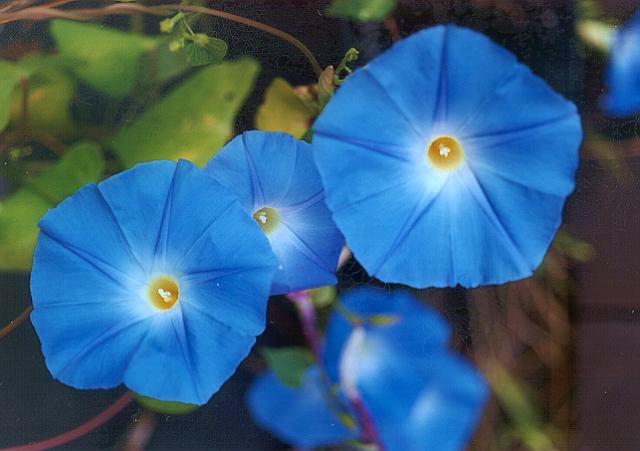 Mexican Morning GloryIpomoea tricolor
-
 Blue Morning GloryIpomoea indica
-
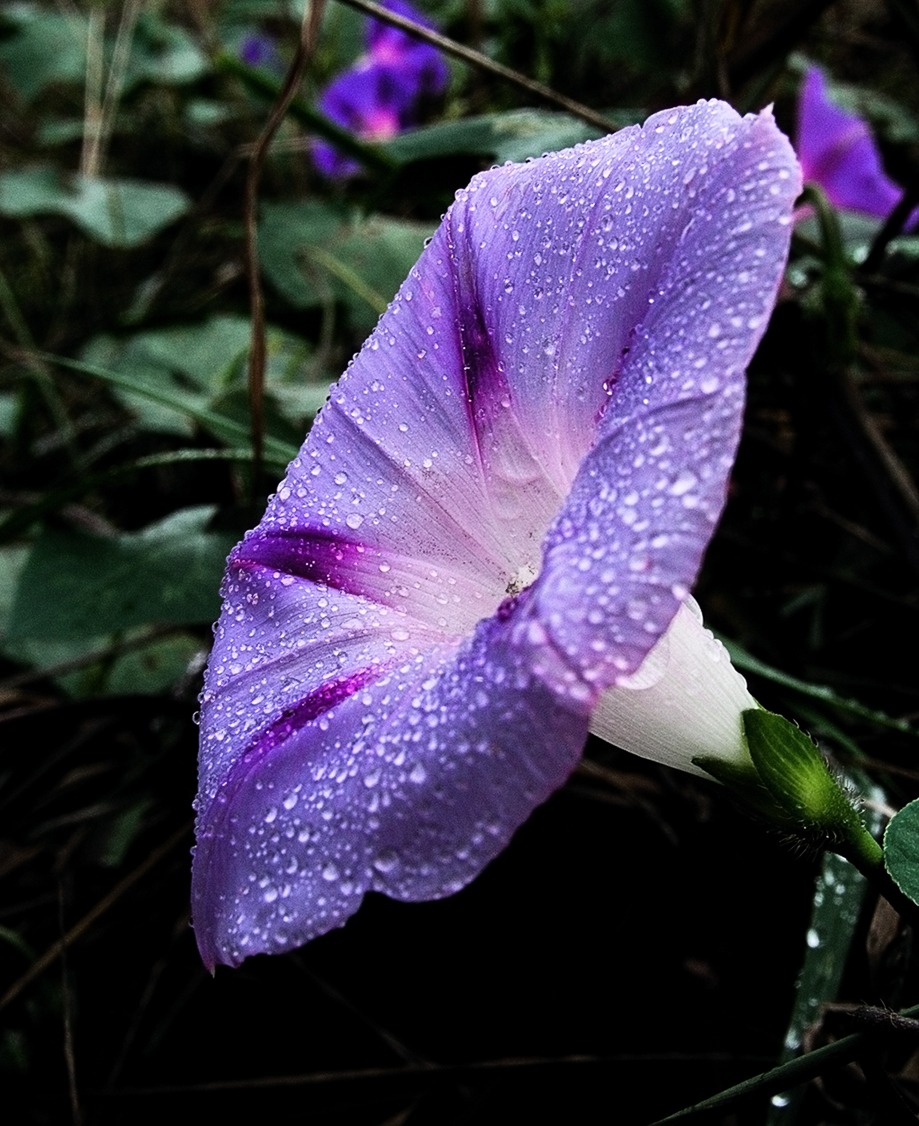 Common Morning-gloryIpomoea purpurea
-
 Cypress VineIpomoea quamoclit
-
 Beach Morning GloryIpomoea pes-caprae
Compare
Questions and answers
What is the scientific name of the Littlebell?
The scientific name of the Littlebell is Ipomoea triloba. Written with its author, the full name is Ipomoea triloba L..
Which family does the Littlebell belong to?
Ipomoea triloba belongs to the family Convolvulaceae, in the order Solanales and the class Magnoliopsida.
Where is the Littlebell found?
Checklists and occurrence records place Ipomoea triloba in 76 countries, including Mexico, United States, Brazil, Australia, Japan and Indonesia.
What is the conservation status of the Littlebell?
The IUCN Red List category recorded for Ipomoea triloba is Least Concern (LC).
What other names does the Littlebell have?
Ipomoea triloba is also known in English as Little-bell.
Sources
Passages the profile rests on
- Ipomoea triloba is a fast-growing vine. Source passage: “This is a fast-growing, vining, annual herb” — English Wikipedia
- Littlebell grows by twining or creeping. Source passage: “Littlebell is a vine with a twining or creeping habit.” — fdacs.gov
- The stems rarely exceed 10 feet in length. Source passage: “Stems rarely exceed 10 feet.” — fdacs.gov
- Littlebell commonly scrambles through grasses and over low shrubs rather than climbing to great heights. Source passage: “It is not a high climber but is more often seen scrambling through grasses and over low shrubs.” — fdacs.gov
- Ipomoea triloba has long, thin stems with ivy-like, petioled, heart-shaped leaves. Source passage: “long, thin stems with ivy-like, petioled, heart-shaped leaves” — English Wikipedia
- The leaves may be heart-shaped, three-lobed, or five-lobed. Source passage: “heart-shaped, three-lobed or five-lobed” — fdacs.gov
- The leaves measure 2.5–6 centimeters in length. Source passage: “leaves 2.5–6 centimeters (0.98–2.36 in) long.” — English Wikipedia
- The flowers grow in leaf axils, either singly or in small clusters. Source passage: “Flowers are borne in the leaf axils; they are sometimes solitary but more often in small clusters.” — fdacs.gov
- The flowers are funnel-shaped and have five short lobes, each ending in an abrupt point. Source passage: “funnelform (gradually widening from base to apex) with five short lobes, each ending in a short, abrupt point.” — fdacs.gov
- The flowers range in color from pink to pale purple. Source passage: “The pink to pale purple flowers” — fdacs.gov
- The flowers measure between half an inch and one inch long. Source passage: “measure ½ to 1 inch long” — fdacs.gov
- The sepals occur in two unequal whorls, with the outer two shorter than the inner three. Source passage: “The sepals are in two unequal whorls (the outer two shorter than the inner three)” — fdacs.gov
- The sepals are oblong, have minutely ciliate margins, and end in distinct abrupt points. Source passage: “oblong in shape, with minutely ciliate margins and ending in a distinct, abrupt point.” — fdacs.gov
- Cut stems and leaf stalks exude a small amount of milky sap. Source passage: “When cut, the stems and the petioles (leaf stalks) exude a small amount of milky sap.” — fdacs.gov
- The species occurs in warm regions of the world as an introduced plant. Source passage: “it is widespread in warm areas of the world, where it is an introduced species” — English Wikipedia
- Littlebell is widely naturalized throughout tropical regions. Source passage: “it is now widely naturalized throughout the tropics.” — fdacs.gov
- Littlebell occurs in disturbed residential landscapes, nurseries, abandoned homesites, agricultural fields, orchards, old pastures, and highway and utility corridors. Source passage: “It is typically found on disturbed sites such residential landscapes, nurseries, abandoned homesites, agricultural fields, orchards, old pastures and highway and utility corridors.” — fdacs.gov
- The fruits are small, globose capsules approximately one-quarter inch wide. Source passage: “The fruit are small (about ¼ inch wide), globose capsules” — fdacs.gov
- The fruit capsules retain a persistent style. Source passage: “capsules with a persistent style.” — fdacs.gov
- Each fruit capsule contains between two and four dark brown seeds. Source passage: “Each capsule contains two to four dark brown seeds.” — fdacs.gov
- Littlebell seed dispersal has not been specifically documented in detail. Source passage: “There is little specific information on the dispersal of this species.” — fdacs.gov
- Morning glory seeds may be dispersed by gravity, wind, or rain. Source passage: “In general, morning glory seeds are dispersed by gravity, wind or rain.” — fdacs.gov
- Littlebell may escape into the wild after being cultivated. Source passage: “Littlebell is occasionally cultivated and may escape from cultivation.” — fdacs.gov
- Ipomoea triloba is often regarded as a noxious weed in areas where it has been introduced. Source passage: “often a noxious weed.” — English Wikipedia
- By the 1980s, Littlebell was recognized as a serious weed in citrus groves, particularly in Hendry County, Florida. Source passage: “By the 1980s, it was recognized as a serious weed of citrus groves, especially in Hendry County.” — fdacs.gov
- The flowers of tievine and sweet potato measure between one and one-quarter and three inches long, whereas Littlebell flowers are always shorter than one inch. Source passage: “both of those species have flowers 1 ¼ to 3 inches long, while the flowers of littlebell are always less than an inch long.” — fdacs.gov
- Whitestar, Ipomoea lacunosa, resembles Littlebell in having a low, scrambling growth habit and similarly small flowers. Source passage: “Whitestar (Ipomoea lacunosa) is a native morning glory with a low, scrambling habit and flowers as small as those of littlebell” — fdacs.gov
- Whitestar has white flowers with purple anthers, whereas Littlebell has pink or purple flowers with white anthers. Source passage: “its flowers are white with purple anthers (littlebell flowers are pink or purple with white anthers).” — fdacs.gov
- The UF/IFAS assessment lists Littlebell and Aiea morning glory as common names for Ipomoea triloba. Source passage: “Common Names. little bell, aiea morning glory” — assessment.ifas.ufl.edu
- The iNaturalist taxonomic entry also identifies littlebell and Aiea morning glory as common names for Ipomoea triloba. Source passage: “including littlebell and Aiea morning glory.” — inaturalist.org
Data
- Catalogue of Life, 2026-10-16 XR cc by
- Global Biodiversity Information Facility CC BY 4.0
- Wikidata CC0
- GeoNames CC BY 4.0
- Wikimedia Commons per image; credit shown with each image
- iNaturalist per image; credit shown with each image
- Within the Catalogue of Life, this name comes from Synonymic Checklists of the Vascular Plants of the World cc by
References
- L. (1753). Sp. Pl. [Linnaeus] 1: 161 (1753). where the name was published
This species in other databases
Page built on 26 November 2026. See how the catalog is made and all sources and licences.
Cite this page
ScientificNames.org. (2026). Ipomoea triloba (Littlebell). Retrieved November 26, 2026, from https://scientificnames.org/species/ipomoea-triloba
“Ipomoea triloba (Littlebell).” ScientificNames.org, 2026, scientificnames.org/species/ipomoea-triloba. Accessed 26 Nov. 2026.
ScientificNames.org. “Ipomoea triloba (Littlebell).” Accessed November 26, 2026. https://scientificnames.org/species/ipomoea-triloba.
@misc{scientificnames_ipomoea_triloba_littlebell,
  author = {{ScientificNames.org}},
  title = {Ipomoea triloba (Littlebell)},
  year = {2026},
  url = {https://scientificnames.org/species/ipomoea-triloba},
  note = {Accessed 2026-11-26}
}