Species · Flowering plants
Canary Laurel Laurus novocanariensis
The scientific name of the Canary Laurel is Laurus novocanariensis. It is a species of flowering plant in the family Lauraceae (laurel family), order Laurales.
- Scientific name
- Laurus novocanariensis Rivas Mart., Lousã, Fern.Prieto, E.Días, J.C.Costa & C.Aguiar
- Common name
- Canary Laurel
- Genus
- Laurus
- Family
- Lauraceae (Laurel Family)
- Order
- Laurales
- Class
- Magnoliopsida
- Recorded in
- 3 countries
- Name status
- accepted in the Catalogue of Life

Overview
Canary Laurel is a flowering plant in the family Lauraceae, order Laurales and class Magnoliopsida. It is native to Madeira and the western and central Canary Islands. It is dioecious, with male and female flowers occurring on separate plants.
Written 26 November 2026 from the sources listed below. Each statement was checked against the passage it cites; statements that could not be supported were removed.
Appearance
Canary Laurel grows as a large shrub or tree with a relatively dense canopy and aromatic, shiny dark-green foliage. Its leaves are alternate, petiolate, leathery and lanceolate, with small glands between the central and lateral veins.[1][2][3][4]
The leaves have deep-green, glossy surfaces and a finer aroma than those of Laurus nobilis. They measure 5 to 17 centimetres in length.[5][6][7]
Its flowers are small, fragrant and yellowish-white, growing in pairs beside leaves in axillary clusters. They measure approximately 1 centimetre in diameter.[8][9][10]
Its fruit is an olive-like, ovoid berry that becomes black when mature. Each berry contains one seed.[11][12]
Under favorable conditions, the tree can reach heights of 3 to 20 metres.[13]
Habitat
Canary Laurel grows in rich soils in humid locations within the cloud zone of subtropical climates. It is characteristic of Macaronesian laurisilva forests.[14][15]
It is commonly associated with Apollonias barbujana and Ocotea foetens.[16]
Behaviour
Canary Laurel is dioecious, with male and female flowers occurring on separate plants. Female individuals are locally called laurel, while male individuals are called loro.[17][18]
Reproduction and life cycle
Canary Laurel produces unisexual flowers. Flowering occurs from November through April.[19][20]
Conservation
Canary Laurel was considered identical to Laurus azorica until 2004. The two species were formerly classified together, but Laurus azorica is now restricted to the Azores.[21][22]
Similar species
Canary Laurel is closely related to Laurus azorica. The two species differ genetically, morphologically and physiologically.[23]
Classification of the Canary Laurel
| Kingdom | Plantae |
|---|---|
| Subkingdom | Pteridobiotina |
| Phylum | Tracheophyta |
| Class | Magnoliopsida |
| Order | Laurales |
| Family | Lauraceae (Laurel Family) |
| Tribe | Laureae |
| Genus | Laurus (Laurel) |
| Species | Laurus novocanariensis Rivas Mart., Lousã, Fern.Prieto, E.Días, J.C.Costa & C.Aguiar |
Where the Canary Laurel is found
Checklists and occurrence records place Laurus novocanariensis in 3 countries across Africa and Europe. GBIF holds 2,054 georeferenced records of it.
Countries where it is native or its origin is not stated
Countries where it has been introduced
Regions and cities with the most records
- Canary Islands, Spain 920
- Madeira, Portugal 879
- Câmara de Lobos, Portugal 638
- Santo António, Portugal 623
- Funchal, Portugal 617
- São Martinho, Portugal 605
- Caniço, Portugal 497
- La Laguna, Spain 347
- Santa Cruz de Tenerife, Spain 343
- Tacoronte, Spain 285
- Santa Cruz de la Palma, Spain 241
- Los Llanos de Aridane, Spain 239
- Icod de los Vinos, Spain 92
- Arucas, Spain 86
- Santa Brígida, Spain 86
- Guía de Isora, Spain 84
- San Bartolomé de Tirajana, Spain 83
- Las Palmas de Gran Canaria, Spain 82
- Gáldar, Spain 81
- Candelaria, Spain 54
- Santa Lucía, Spain 53
- Telde, Spain 52
- La Orotava, Spain 51
- Puerto de la Cruz, Spain 51
- Los Realejos, Spain 48
- Realejo Alto, Spain 47
- Güimar, Spain 44
- Coimbra, Portugal 37
- Coimbra, Portugal 37
- Condeixa-a-Nova, Portugal 37
- Eiras, Portugal 37
- Ribeira de Frades, Portugal 37
- Santo António dos Olivais, Portugal 37
- São Martinho do Bispo, Portugal 37
- São Paulo de Frades, Portugal 37
- Agüimes, Spain 11
1 more country has a few records outside this range
These countries hold a few records of Laurus novocanariensis but lie outside the range the checklists give for it. Such records are often zoo or garden specimens, museum material or vagrants, so the species is not counted as occurring there.
Range as the checklists state it
Morocco [I]; Canary Isl. (Lanzarote, Fuerteventura, Gran Canaria, Tenerife, La Gomera, Hierro, La Palma)
A number beside a place is its count of GBIF occurrence records. A place without a number comes from a checklist alone. Records show where a species has been observed or collected, which can include escapes and vagrants.
Common names
English
- Canary Laurel
- Canary Islands Laurel
Names in 8 other languages
- Chinese
- 加那利月桂
- French
- Laurier des Canaries
- German
- Kanaren-Lorbeer
- Hebrew
- ער קנרי
- Polish
- wawrzyn kanaryjski
- Portuguese
- Loureiro, Loureiro-da-madeira
- Russian
- Лавр новоканарский
- Slovak
- vavrín kanársky
Synonyms
3 other scientific names have been used for this species and are now treated as synonyms of Laurus novocanariensis.
- Laurus canariensis var. elliptica Meisn.
- Laurus azorica f. grandifolia P.Silva & Q.J.P.Silva ambiguous synonym
- Laurus canariensis Webb & Berthel. ambiguous synonym
Subspecies and varieties
Related species
-
 Bay LaurelLaurus nobilis
-
 Azores LaurelLaurus azorica
-
 AvocadoPersea americana
-
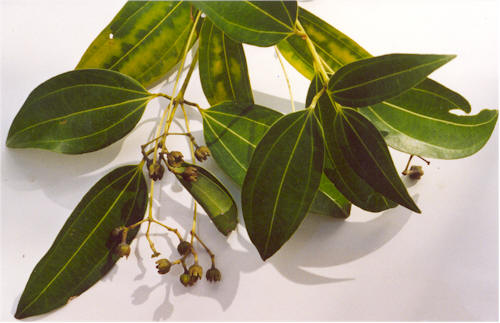 Ceylon CinnamonCinnamomum verum
-
 SassafrasSassafras albidum
-
 SpicebushLindera benzoin
-
 Indian Bay LeafCinnamomum tamala
-
 Phoebe zhennan
Compare
Questions and answers
What is the scientific name of the Canary Laurel?
The scientific name of the Canary Laurel is Laurus novocanariensis. Written with its author, the full name is Laurus novocanariensis Rivas Mart., Lousã, Fern.Prieto, E.Días, J.C.Costa & C.Aguiar.
Which family does the Canary Laurel belong to?
Laurus novocanariensis belongs to the family Lauraceae, in the order Laurales and the class Magnoliopsida.
Where is the Canary Laurel found?
Checklists and occurrence records place Laurus novocanariensis in 3 countries, including Spain and Portugal.
What other names does the Canary Laurel have?
Laurus novocanariensis is also known in English as Canary Islands Laurel.
Sources
Passages the profile rests on
- The species grows as a large shrub or tree with aromatic, shiny dark-green foliage. Source passage: “Laurus novocanariensis is a large shrub or tree with aromatic, shiny dark-green foliage.” — English Wikipedia
- The tree has a relatively dense canopy. Source passage: “This is a tree with rather dense canopy” — English Wikipedia
- Its leaves are lanceolate and have small glands between the central and lateral veins. Source passage: “lanceolate leaves, which have small glands in the angle between the central vein and the lateral veins.” — English Wikipedia
- Its leaves are alternate, petiolate and leathery. Source passage: “Leaves have 5 to 17 cm (2.0 to 6.7 in) long, petiolate and alternate.” — English Wikipedia
- Its leaves have deep-green, glossy surfaces. Source passage: “and leathery, deep green and glossy” — English Wikipedia
- Its leaves have a finer aroma than those of Laurus nobilis. Source passage: “Leaves have a much finer, very exquisite aroma in contrast to the strongly scented leaves of Laurus nobilis.” — English Wikipedia
- The leaves measure 5 to 17 centimetres in length. Source passage: “Leaves have 5 to 17 cm (2.0 to 6.7 in) long” — English Wikipedia
- Its flowers are small, fragrant and yellowish-white. Source passage: “The flowers are small, about 1 cm diameter, unisexual, yellowish-white, fragrant” — English Wikipedia
- Its flowers grow in pairs beside leaves in axillary clusters. Source passage: “arranged in axillary crests, born in pairs beside a leaf.” — English Wikipedia
- The flowers measure approximately 1 centimetre in diameter. Source passage: “The flowers are small, about 1 cm diameter” — English Wikipedia
- Its fruit is an olive-like, ovoid berry that becomes black when mature. Source passage: “The fruit is an ovoid berry, olive-like, 1–1.5 cm, seed each, black when mature.” — English Wikipedia
- Each berry contains one seed. Source passage: “1–1.5 cm, seed each, black when mature.” — English Wikipedia
- Under favorable conditions, the tree can reach heights of 3 to 20 metres. Source passage: “Under favorable conditions it is an impressive tree of 3 to 20 m (9.8 to 65.6 ft). tall.” — English Wikipedia
- The species grows in rich soils in humid locations within the cloud zone of subtropical climates. Source passage: “It is native of rich soils in the cloud zone of always moist spots in subtropical climate with a high air-humidity” — English Wikipedia
- The species is characteristic of Macaronesian laurisilva forests. Source passage: “Laurus novocanariensis is a species characteristic of the laurisilva forests of Macaronesia” — English Wikipedia
- The species is commonly associated with Apollonias barbujana and Ocotea foetens. Source passage: “It is commonly associated with Apollonias barbujana and Ocotea foetens.” — English Wikipedia
- The species is dioecious, with male and female flowers occurring on separate plants. Source passage: “The laurel is dioecious (unisexual), with male and female flowers on separate plants.” — English Wikipedia
- Female individuals are locally called laurel, while male individuals are called loro. Source passage: “Locally, female individuals are named laurel and male specimens are named loro.” — English Wikipedia
- The species produces unisexual flowers. Source passage: “The flowers are small, about 1 cm diameter, unisexual” — English Wikipedia
- Flowering occurs from November through April. Source passage: “It flowers from November to April.” — English Wikipedia
- The species was formerly classified together with Laurus azorica, which is now restricted to the Azores. Source passage: “The species was formerly included in Laurus azorica, a species that is now restricted to the Azores.” — English Wikipedia
- The species was considered identical to Laurus azorica until 2004. Source passage: “Until 2004 it was considered the same species as Laurus azorica” — English Wikipedia
- Laurus novocanariensis is closely related to Laurus azorica but differs genetically, morphologically and physiologically. Source passage: “Though closely related to the Azorean species, it has significant genetic, morphological and physiological differences from the latter.” — English Wikipedia
Data
- Catalogue of Life, 2026-10-16 XR cc by
- Global Biodiversity Information Facility CC BY 4.0
- Wikidata CC0
- GeoNames CC BY 4.0
- Wikimedia Commons per image; credit shown with each image
- Within the Catalogue of Life, this name comes from Synonymic Checklists of the Vascular Plants of the World cc by
References
- Rivas Mart., Lousã, Fern.Prieto, E.Días, J.C.Costa & C.Aguiar. (2002). Itinera Geobot. 15(2): 703 (2002), nom. nov. where the name was published
This species in other databases
Page built on 29 November 2026. See how the catalog is made and all sources and licences.
Cite this page
ScientificNames.org. (2026). Laurus novocanariensis (Canary Laurel). Retrieved November 29, 2026, from https://scientificnames.org/species/laurus-novocanariensis
“Laurus novocanariensis (Canary Laurel).” ScientificNames.org, 2026, scientificnames.org/species/laurus-novocanariensis. Accessed 29 Nov. 2026.
ScientificNames.org. “Laurus novocanariensis (Canary Laurel).” Accessed November 29, 2026. https://scientificnames.org/species/laurus-novocanariensis.
@misc{scientificnames_laurus_novocanariensis_canary_laurel,
  author = {{ScientificNames.org}},
  title = {Laurus novocanariensis (Canary Laurel)},
  year = {2026},
  url = {https://scientificnames.org/species/laurus-novocanariensis},
  note = {Accessed 2026-11-29}
}