Species · Mammals
Amur Lemming Lemmus amurensis
The scientific name of the Amur Lemming is Lemmus amurensis. It is a species of mammal in the family Cricetidae (new world mice and rats), order Rodentia. The name dates from 1924.
- Scientific name
- Lemmus amurensis Vinogradov, 1924
- Common name
- Amur Lemming
- Genus
- Lemmus
- Family
- Cricetidae (New World Mice and Rats)
- Order
- Rodentia
- Class
- Mammalia
- Red List category
- LC Least Concern
- Recorded in
- 1 country
- Name status
- accepted in the Catalogue of Life
Overview
The Amur Lemming inhabits marshes and occurs near the Amur River in Siberia.
Written 26 November 2026 from the sources listed below. Each statement was checked against the passage it cites; statements that could not be supported were removed.
Appearance
The Amur Lemming often has a thicker black stripe across the back of its neck. This stripe can be less pronounced in some individuals.[1][2]
Habitat
The Amur Lemming inhabits marshes.[3]
Diet
The Amur Lemming feeds on mosses, including Dicranum, Drepanocladus, and Hyloomnium.[4]
Reproduction and life cycle
Female Amur Lemmings can produce two to four litters annually. Each litter can contain between three and nine young.[5][6]
Females produce fewer offspring per litter during their first breeding season.[7]
Similar species
The Amur Lemming can produce fertile hybrids with the Norway lemming and the West Siberian lemming.[8][9]
Conservation
The IUCN Red List classifies the Amur Lemming as Least Concern.[10][11]
Failed trapping attempts in areas previously inhabited by the Amur Lemming have been reported as evidence suggesting declines in some populations.[12]
Classification of the Amur Lemming
| Kingdom | Animalia |
|---|---|
| Phylum | Chordata |
| Subphylum | Vertebrata |
| Infraphylum | Gnathostomata |
| Parvphylum | Osteichthyes |
| Megaclass | Tetrapoda |
| Class | Mammalia (Mammal) |
| Subclass | Theria |
| Infraclass | Eutheria |
| Order | Rodentia (Rodent) |
| Suborder | Myomorpha (Mice) |
| Superfamily | Muroidea |
| Family | Cricetidae (New World Mice and Rats) |
| Subfamily | Arvicolinae (Arvicoline Rodents) |
| Genus | Lemmus (True Lemming) |
| Species | Lemmus amurensis Vinogradov, 1924 |
Where the Amur Lemming is found
Checklists and occurrence records place Lemmus amurensis in 1 country. GBIF holds 10 georeferenced records of it.
Countries
Regions and cities with the most records
Range as the checklists state it
Europe & Northern Asia (excluding China)
A number beside a place is its count of GBIF occurrence records. A place without a number comes from a checklist alone. Records show where a species has been observed or collected, which can include escapes and vagrants.
Common names
English
- Amur Lemming
- Amur Brown Lemming
Names in 8 other languages
- Czech
- lumík amurský
- Dutch
- Amoerlemming
- Finnish
- amurinsopuli
- Japanese
- アムールレミング
- Norwegian Bokmål
- Amurlemen
- Polish
- leming amurski
- Russian
- Amurskii Lemming, Амурский лемминг
- Spanish
- Lemming de Amur
Synonyms
4 other scientific names have been used for this species and are now treated as synonyms of Lemmus amurensis.
- Lemmus amurensis ognevi Vinogradov, 1933
- Lemmus flavescens Vinogradov, 1925
- Lemmus obensis chrysogaster J. A. Allen, 1903
- Lemmus xanthotrichus Vinogradov, 1925
Related species
-
 Norway LemmingLemmus lemmus
-
 Canadian LemmingLemmus trimucronatus
-
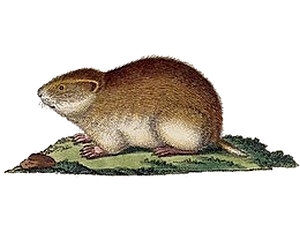 West Siberian LemmingLemmus sibiricus
-
 Wrangel Island LemmingLemmus portenkoi
-
 MuskratOndatra zibethicus
-
 European HamsterCricetus cricetus
-
 Golden HamsterMesocricetus auratus
-
 Winter White Dwarf HamsterPhodopus sungorus
Compare
Questions and answers
What is the scientific name of the Amur Lemming?
The scientific name of the Amur Lemming is Lemmus amurensis. Written with its author, the full name is Lemmus amurensis Vinogradov, 1924.
Which family does the Amur Lemming belong to?
Lemmus amurensis belongs to the family Cricetidae, in the order Rodentia and the class Mammalia.
Where is the Amur Lemming found?
Checklists and occurrence records place Lemmus amurensis in 1 country: Russia.
What is the conservation status of the Amur Lemming?
The IUCN Red List category recorded for Lemmus amurensis is Least Concern (LC).
What other names does the Amur Lemming have?
Lemmus amurensis is also known in English as Amur Brown Lemming.
What is a lemmings diet?
The Amur Lemming feeds on mosses, including Dicranum, Drepanocladus, and Hyloomnium.[4]
What habitat does a lemming live in?
The Amur Lemming inhabits marshes.[3]
What does a brown lemming eat?
The Amur Lemming feeds on mosses, including Dicranum, Drepanocladus, and Hyloomnium.[4]
Sources
Passages the profile rests on
- The Amur lemming often has a thicker black stripe across the back of its neck. Source passage: “It often has a thicker black stripe running across the dorsal neck” — English Wikipedia
- The black neck stripe can be less pronounced in some individuals. Source passage: “however this may be less pronounced in some individuals.” — English Wikipedia
- The Amur lemming inhabits marshes. Source passage: “The Amur lemming inhabits marshes” — English Wikipedia
- The Amur lemming feeds on mosses, including Dicranum, Drepanocladus, and Hyloomnium. Source passage: “It feeds on mosses (particularly Dicranum, Drepanocladus, and Hyloomnium mosses)” — English Wikipedia
- Female Amur lemmings can produce two to four litters annually. Source passage: “Females can birth 2-4 litters per year” — English Wikipedia
- Each litter can contain between three and nine young. Source passage: “with 3-9 young in each litter.” — English Wikipedia
- Females produce fewer offspring per litter during their first breeding season. Source passage: “Females produces fewer pups per little during their first breeding season.” — English Wikipedia
- The Amur lemming can produce fertile hybrids with the Norway lemming. Source passage: “can produce fertile hybrids with both the Norway lemming (Lemmus lemmus)” — English Wikipedia
- The Amur lemming can produce fertile hybrids with the West Siberian lemming. Source passage: “and the West Siberian lemming (Lemmus sibiricus).” — English Wikipedia
- The IUCN Red List classifies the Amur lemming as Least Concern. Source passage: “The IUCN Red List lists L. amurencis as a species of least concern.” — English Wikipedia
- The Amur lemming is rated as Least Concern on the IUCN Red List. Source passage: “The Amur lemming is rated as Least Concern on the IUCN” — inaturalist.org
- Failed trapping attempts in areas previously inhabited by the Amur lemming have been reported as evidence suggesting declines in some populations. Source passage: “failed trapping attempts in regions once inhabited by the Amur lemming which suggest that the some populations are in decline.” — English Wikipedia
Data
- Catalogue of Life, 2026-10-16 XR cc by
- Global Biodiversity Information Facility CC BY 4.0
- Wikidata CC0
- GeoNames CC BY 4.0
- Within the Catalogue of Life, this name comes from The Integrated Taxonomic Information System cc0
References
- Ann. Mag. Nat. Hist., ser. 9 vol.14 p.186 where the name was published
- Ellerman, J. R., and T. C. S. Morrison-Scott. (1966). Checklist of Palaearctic and Indian Mammals 1758 to 1946, 2nd Edition.
- Wilson, Don E., and DeeAnn M. Reeder, eds. (1993). Mammal Species of the World: A Taxonomic and Geographic Reference, 2nd Ed., 3rd Printing.
- Wilson, Don E., and F. Russell Cole. (2000). Common Names of Mammals of the World.
- Musser, Guy G., and Michael D. Carleton / Wilson, Don E., and DeeAnn M. Reeder, eds. (2005). Superfamily Muroidea. Mammal Species of the World: A Taxonomic and Geographic Reference, 3rd Ed., Vol. 2.
This species in other databases
Page built on 29 November 2026. See how the catalog is made and all sources and licences.
Cite this page
ScientificNames.org. (2026). Lemmus amurensis (Amur Lemming). Retrieved November 29, 2026, from https://scientificnames.org/species/lemmus-amurensis
“Lemmus amurensis (Amur Lemming).” ScientificNames.org, 2026, scientificnames.org/species/lemmus-amurensis. Accessed 29 Nov. 2026.
ScientificNames.org. “Lemmus amurensis (Amur Lemming).” Accessed November 29, 2026. https://scientificnames.org/species/lemmus-amurensis.
@misc{scientificnames_lemmus_amurensis_amur_lemming,
  author = {{ScientificNames.org}},
  title = {Lemmus amurensis (Amur Lemming)},
  year = {2026},
  url = {https://scientificnames.org/species/lemmus-amurensis},
  note = {Accessed 2026-11-29}
}