Species · Mammals
Norway Lemming Lemmus lemmus
The scientific name of the Norway Lemming is Lemmus lemmus. It is a species of mammal in the family Cricetidae (new world mice and rats), order Rodentia. The name dates from 1758.
- Scientific name
- Lemmus lemmus (Linnaeus, 1758)
- Common name
- Norway Lemming
- Genus
- Lemmus
- Family
- Cricetidae (New World Mice and Rats)
- Order
- Rodentia
- Class
- Mammalia
- Red List category
- LC Least Concern
- Recorded in
- 9 countries
- Name status
- accepted in the Catalogue of Life

Overview
Lemmus lemmus occurs across northern Fennoscandia, with a documented mainland range from western Norway east to the Kola Peninsula. Its populations fluctuate in cycles, and it sometimes migrates in very large numbers.
Written 26 November 2026 from the sources listed below. Each statement was checked against the passage it cites; statements that could not be supported were removed.
Habitat
The Norway Lemming inhabits tundra, fell, and alpine environments, including heathland dominated by dwarf shrubs. It prefers habitats close to water.[1][2][3][4]
During winter, Norway lemmings occupy insulated spaces beneath the snow. When snow cover is absent, they may inhabit bogs, marshes, and other moist terrestrial environments.[5][6]
Diet
The Norway Lemming is herbivorous. Its diet mainly consists of mosses, lichens, bark, and some grasses.[7][8]
Adult Norway lemmings primarily consume sedges, grasses, and mosses.[9]
Appearance
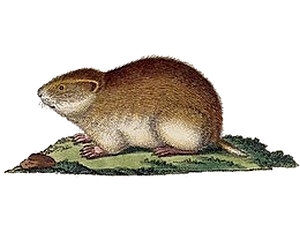
The Norway Lemming has a thick body and dense coat. Its fur is black and brown with golden-yellow streaks, and its underbelly is lighter than the rest of its fur.[10][11][12]
Its fur coloration remains the same throughout the year. Males and females are generally similar in size and coloration.[13][14]
Norway lemmings have short limbs positioned mostly beneath their bodies. The first-digit claw on each paw is larger and flatter than the other claws.[15][16]
Behaviour
Norway lemmings are active during both daytime and nighttime, alternating between sleeping and active periods. They spend an average of six hours awake foraging and moving.[17][18][19]
Norway lemmings are naturally solitary and generally live independently. They can become aggressive when overcrowded, and males have been observed boxing and wrestling.[20][21][22]
Norway lemmings spend winter in nests beneath the snow. During spring thaw, they move toward higher or lower ground as snow conditions change.[23][24]
Norway lemming populations fluctuate in cycles lasting approximately three to four years. Population peaks can cause dispersal beyond their normal range in search of additional space and food.[25][26]
Population peaks generally occur every three to five years. During these peaks, Norway lemmings can reach densities of up to 330 individuals per hectare.[27][28]
Norway lemmings sometimes migrate in very large numbers.[29]
Reproduction and life cycle
Female Norway lemmings can reach sexual maturity at approximately three weeks of age, while males generally reach sexual maturity at approximately one month.[30][31]
Norway lemmings can reproduce throughout the year when environmental conditions are suitable. The gestation period is approximately 16 days.[32][33]
Females can produce litters of six to eight young at intervals of three to four weeks. Litters typically contain between five and thirteen young.[34][35]
Young Norway lemmings are generally weaned between 14 and 16 days after birth.[36]
Classification of the Norway Lemming
| Kingdom | Animalia |
|---|---|
| Phylum | Chordata |
| Subphylum | Vertebrata |
| Infraphylum | Gnathostomata |
| Parvphylum | Osteichthyes |
| Megaclass | Tetrapoda |
| Class | Mammalia (Mammal) |
| Subclass | Theria |
| Infraclass | Eutheria |
| Order | Rodentia (Rodent) |
| Suborder | Myomorpha (Mice) |
| Superfamily | Muroidea |
| Family | Cricetidae (New World Mice and Rats) |
| Subfamily | Arvicolinae (Arvicoline Rodents) |
| Genus | Lemmus (True Lemming) |
| Species | Lemmus lemmus (Linnaeus, 1758) |
Where the Norway Lemming is found
Checklists and occurrence records place Lemmus lemmus in 9 countries. GBIF holds 105,332 georeferenced records of it.
Countries
- Finland 14,255
- France 3
- Germany 6
- Norway 89,301
- Poland 106
- Portugal 5
- Romania 3
- Russia 151
- Sweden 1,502
Regions and cities with the most records
- Finnmark, Norway 24,863
- Nordland, Norway 21,100
- Lapland, Finland 3,238
- Murmansk, Russia 455
- Møre og Romsdal, Norway 409
- Norrbotten, Sweden 353
- Buskerud, Norway 339
- Troms, Norway 336
- Jämtland, Sweden 311
- Telemark, Norway 275
- Rogaland, Norway 196
- Västerbotten, Sweden 186
- Tromsdalen, Norway 118
- Tromsø, Norway 118
- Stjørdalshalsen, Norway 104
- Dalarna, Sweden 85
- Trondheim, Norway 59
- Mo i Rana, Norway 50
- Kongsberg, Norway 27
- Levanger, Norway 26
- Lillehammer, Norway 23
- Alta, Norway 18
- Apatity, Russia 13
- Kirovsk, Russia 13
- Bodø, Norway 8
- Kuopio, Finland 8
- Molde, Norway 6
- Nikel, Russia 5
- Oslo, Norway 5
- Harstad, Norway 4
- Bihor County, Romania 3
- Brive-la-Gaillarde, France 3
- Kristiansund, Norway 3
- Murmansk, Russia 3
- Oradea, Romania 3
- Östersund, Sweden 3
2 more countries have a few records outside this range
These countries hold a few records of Lemmus lemmus but lie outside the range the checklists give for it. Such records are often zoo or garden specimens, museum material or vagrants, so the species is not counted as occurring there.
Range as the checklists state it
Europe & Northern Asia (excluding China)
A number beside a place is its count of GBIF occurrence records. A place without a number comes from a checklist alone. Records show where a species has been observed or collected, which can include escapes and vagrants.
Common names
English
- Norway Lemming
- Amur Lemming
- Norway Brown Lemming
- Norwegian Lemming
Names in 22 other languages
- Basque
- Leming arrunt
- Breton
- Lemming an toundra
- Chinese
- 挪威旅鼠
- Czech
- Lumík norský, lumík amurský
- Danish
- Lemming
- Dutch
- Amoerlemming
- Finnish
- amurinsopuli, tunturisopuli
- French
- Lemming de tundra, Lemming des Toundras
- German
- Berglemming
- Greek
- Νορβηγικό Λέμινγκ
- Hungarian
- Norvégiai lemming
- Japanese
- ノルウェーレミング
- Lithuanian
- Norveginis lemingas
- Northern Sami
- goddesáhpán
- Norwegian Bokmål
- Amurlemen, lemen, norsk lemen
- Polish
- leming amurski, leming norweski
- Portuguese
- Lemingue
- Russian
- Амурский лемминг, Норвежский лемминг
- Serbian
- Норвешки леминг
- Slovenian
- leming
- Spanish
- Leming de Tundra
- Swedish
- fjällämmel
Synonyms
4 other scientific names have been used for this species and are now treated as synonyms of Lemmus lemmus.
- Cuniculus iterator Gistel, 1850
- Lemmus borealis Nilsson, 1820
- Lemmus norvegicus Desmarest, 1822
- Mus lemmus Linnaeus, 1758
Related species
-
 Canadian LemmingLemmus trimucronatus
-
 West Siberian LemmingLemmus sibiricus
- Amur LemmingLemmus amurensis
-
 Wrangel Island LemmingLemmus portenkoi
-
 MuskratOndatra zibethicus
-
 European HamsterCricetus cricetus
-
 Golden HamsterMesocricetus auratus
-
 Winter White Dwarf HamsterPhodopus sungorus
Compare
Questions and answers
What is the scientific name of the Norway Lemming?
The scientific name of the Norway Lemming is Lemmus lemmus. Written with its author, the full name is Lemmus lemmus (Linnaeus, 1758).
Which family does the Norway Lemming belong to?
Lemmus lemmus belongs to the family Cricetidae, in the order Rodentia and the class Mammalia.
Where is the Norway Lemming found?
Checklists and occurrence records place Lemmus lemmus in 9 countries, including Norway, Finland, Sweden, Russia, Poland and Germany.
What is the conservation status of the Norway Lemming?
The IUCN Red List category recorded for Lemmus lemmus is Least Concern (LC).
What other names does the Norway Lemming have?
Lemmus lemmus is also known in English as Amur Lemming, Norway Brown Lemming and Norwegian Lemming.
What is the average lifespan of a Norway lemming in the wild?
Lemmus species generally live for one to two years.[37]
What habitat does a lemming live in?
The Norway Lemming inhabits tundra, fell, and alpine environments, as well as heathland dominated by dwarf shrubs. It prefers habitats close to water.[1][2][3][4]
Are lemmings herbivores carnivores or omnivores?
The Norway Lemming is herbivorous.[7]
Sources
Passages the profile rests on
- The Norway lemming inhabits tundra and fell environments. Source passage: “dwells in tundra and fells” — English Wikipedia
- The species prefers habitats close to water. Source passage: “prefers to live near water.” — English Wikipedia
- The species inhabits tundra and alpine environments. Source passage: “Norway lemmings are found in tundra and alpine regions.” — animaldiversity.org
- The species also inhabits heathland dominated by dwarf shrubs. Source passage: “They also inhabit heathland where dwarf shrubs are the main vegetation.” — animaldiversity.org
- During winter, Norway lemmings occupy insulated spaces beneath the snow. Source passage: “During the winter they live in insulated spaces under the snow.” — animaldiversity.org
- When snow cover is absent, Norway lemmings may inhabit bogs, marshes, and other moist terrestrial environments. Source passage: “Norway lemmings may live in a variety of bogs, marshes, and other moist terrestrial habitats.” — animaldiversity.org
- Norway lemmings are herbivorous. Source passage: “Norway lemmings are herbivorous.” — animaldiversity.org
- The species mainly consumes mosses, lichens, bark, and some grasses. Source passage: “They mainly eat mosses, lichens, bark, and some grasses.” — animaldiversity.org
- Adult Norway lemmings primarily consume sedges, grasses, and mosses. Source passage: “Adults feed primarily on sedges, grasses and moss.” — English Wikipedia
- Norway lemmings have thick bodies and dense coats that help retain body heat. Source passage: “They have thick bodies with heavy coats for maintaining body heat against the cold.” — animaldiversity.org
- The fur of Norway lemmings is black and brown with golden-yellow streaks. Source passage: “Fur color is black and brown with some golden-yellow streaks.” — animaldiversity.org
- The species has a lighter-colored underbelly than the rest of its fur. Source passage: “The underbelly is a lighter color than the rest of their fur.” — animaldiversity.org
- Norway lemmings retain the same fur coloration throughout the year. Source passage: “Norway lemmings retain the same fur color, regardless of season” — animaldiversity.org
- Male and female Norway lemmings are generally similar in size and coloration. Source passage: “the males and females are generally similar in size and color.” — animaldiversity.org
- Norway lemmings have short limbs that are mostly positioned beneath their bodies. Source passage: “Their limbs are short and mostly tucked under the body.” — animaldiversity.org
- The first-digit claw on each paw is larger and flatter than the other claws. Source passage: “The claw of the first digit on each paw is larger and flatter than the rest of the claws.” — animaldiversity.org
- Norway lemmings alternate between sleeping and active periods throughout both daytime and nighttime. Source passage: “They are active at both day and night, alternating naps with periods of activity.” — English Wikipedia
- Norway lemmings are active during both daytime and nighttime. Source passage: “Norway lemmings are active during the day as well as the night.” — animaldiversity.org
- Norway lemmings spend an average of six hours awake foraging and moving. Source passage: “They spend their waking periods (6 hours on average) foraging and moving about.” — animaldiversity.org
- Norway lemmings are naturally solitary animals. Source passage: “Being solitary creatures by nature” — English Wikipedia
- Norway lemmings generally live independently but can become aggressive when overcrowded. Source passage: “Norway lemmings prefer to live independently of each other, and they can become aggressive toward each other during periods of overcrowding.” — animaldiversity.org
- Male Norway lemmings have been observed boxing and wrestling. Source passage: “male Norway lemmings have been observed engaging in boxing and wrestling behavior.” — animaldiversity.org
- Norway lemmings spend winter in nests beneath the snow. Source passage: “The Norway lemming spends the winter in nests under the snow.” — English Wikipedia
- During spring thaw, Norway lemmings move toward higher or lower ground as snow conditions change. Source passage: “they must migrate to higher ground, where the snow is still firm enough for safety, or, more commonly, to lower ground” — English Wikipedia
- The species experiences population fluctuations in cycles lasting approximately three to four years. Source passage: “a dramatic three- to four-year population cycle” — English Wikipedia
- Population peaks can cause Norway lemmings to disperse beyond their normal range in search of additional space and food. Source passage: “During these peaks the lemming population will disperse beyond their normal range in search of more space and more food.” — animaldiversity.org
- Norway lemming population peaks generally occur every three to five years. Source passage: “Generally, the population peaks occur every 3 to 5 years.” — animaldiversity.org
- Norway lemmings can reach densities of up to 330 individuals per hectare during population peaks. Source passage: “when the population is high there may be up to 330 lemmings per ha” — animaldiversity.org
- Norway lemmings sometimes migrate in very large numbers. Source passage: “Lemmings do migrate, and in vast numbers sometimes” — English Wikipedia
- Female Norway lemmings can reach sexual maturity at approximately three weeks of age. Source passage: “On average, sexual maturity is reached at 3 weeks for females” — animaldiversity.org
- Male Norway lemmings generally reach sexual maturity at approximately one month of age. Source passage: “and at one month for males.” — animaldiversity.org
- The species can reproduce throughout the year when environmental conditions are suitable. Source passage: “breed year-round if conditions are right” — English Wikipedia
- The gestation period of Norway lemmings is approximately 16 days. Source passage: “with a gestation period of 16 days.” — animaldiversity.org
- A female can produce litters of six to eight young at intervals of three to four weeks. Source passage: “producing a litter of six to eight young every three to four weeks.” — English Wikipedia
- Norway lemming litters typically contain between five and thirteen young. Source passage: “Each litter of Norway lemmings yield between 5 and 13 young.” — animaldiversity.org
- Young Norway lemmings are generally weaned between 14 and 16 days after birth. Source passage: “Females in the genus Lemmus wean their young in 14 to 16 days.” — animaldiversity.org
- Lemmus species generally live for one to two years. Source passage: “Lemmus species generally live for 1 to 2 years.” — animaldiversity.org
Data
- Catalogue of Life, 2026-10-16 XR cc by
- Global Biodiversity Information Facility CC BY 4.0
- Wikidata CC0
- GeoNames CC BY 4.0
- Wikimedia Commons per image; credit shown with each image
- Within the Catalogue of Life, this name comes from The Integrated Taxonomic Information System cc0
References
- Syst. Nat., 10th ed. vol.1 p.59 where the name was published
- Ellerman, J. R., and T. C. S. Morrison-Scott. (1966). Checklist of Palaearctic and Indian Mammals 1758 to 1946, 2nd Edition.
- Wilson, Don E., and DeeAnn M. Reeder, eds. (1993). Mammal Species of the World: A Taxonomic and Geographic Reference, 2nd Ed., 3rd Printing.
- Wilson, Don E., and F. Russell Cole. (2000). Common Names of Mammals of the World.
- Musser, Guy G., and Michael D. Carleton / Wilson, Don E., and DeeAnn M. Reeder, eds. (2005). Superfamily Muroidea. Mammal Species of the World: A Taxonomic and Geographic Reference, 3rd Ed., Vol. 2.
This species in other databases
Page built on 27 November 2026. See how the catalog is made and all sources and licences.
Cite this page
ScientificNames.org. (2026). Lemmus lemmus (Norway Lemming). Retrieved November 27, 2026, from https://scientificnames.org/species/lemmus-lemmus
“Lemmus lemmus (Norway Lemming).” ScientificNames.org, 2026, scientificnames.org/species/lemmus-lemmus. Accessed 27 Nov. 2026.
ScientificNames.org. “Lemmus lemmus (Norway Lemming).” Accessed November 27, 2026. https://scientificnames.org/species/lemmus-lemmus.
@misc{scientificnames_lemmus_lemmus_norway_lemming,
  author = {{ScientificNames.org}},
  title = {Lemmus lemmus (Norway Lemming)},
  year = {2026},
  url = {https://scientificnames.org/species/lemmus-lemmus},
  note = {Accessed 2026-11-27}
}