Species · Birds
Auckland Rail Lewinia muelleri
The scientific name of the Auckland Rail is Lewinia muelleri. It is a species of bird in the family Rallidae (rail), order Gruiformes. The name dates from 1893.
- Scientific name
- Lewinia muelleri (Rothschild, 1893)
- Common name
- Auckland Rail
- Genus
- Lewinia
- Family
- Rallidae (Rail)
- Order
- Gruiformes
- Class
- Aves
- Red List category
- VU Vulnerable
- Recorded in
- 2 countries
- Name status
- accepted in the Catalogue of Life

Overview
Lewinia muelleri is endemic to the Auckland Islands and currently restricted to Adams Island and Disappointment Island. It is highly secretive and can fly, but does so very rarely.
Written 26 November 2026 from the sources listed below. Each statement was checked against the passage it cites; statements that could not be supported were removed.
Similar species
The closest relative of the Auckland Rail is Lewin's rail of Australia. The species is sometimes classified in the genus Dryolimnas.[1][2]
Appearance
The head and neck are reddish-brown, the breast is grey, and the back is brown-black. The sexes have similar plumage, although females may be duller than males.[3][4]
Adults measure 17–20 cm in length. Four recorded adults weighed between 89 and 100 g.[5][6]
Habitat
The Auckland Rail is endemic to the Auckland Islands, approximately 460 km south of New Zealand. It currently occurs on Adams Island and Disappointment Island.[7][8][9]
Diet
The Auckland Rail probably feeds mainly on invertebrates.[10]
Behaviour
The Auckland Rail is active during daylight and may remain active for some time after sunset. It appears to defend territories and is highly secretive.[11][12][13]
The species can fly, but does so very rarely. Its characteristic call is a loud 'kek' or 'crek' sound.[14][15]
The species also produces quieter calls, grunts, and clicks.[16]
Reproduction and life cycle
The Auckland Rail is probably monogamous. An active nest containing two eggs was recorded in November.[17][18]
The nest is constructed from woven grass and/or sedges. The eggs are cream-coloured with brown, red-brown, and pale grey spots and blotches.[19][20]
The eggs measure an average of 34 mm by 25 mm. The incubation period is probably similar to that of Lewin's rail, at 19–20 days.[21][22]
Conservation
The Auckland Rail was considered extinct following its last sighting in 1893. It was rediscovered on Adams Island in 1966 and on Disappointment Island in 1993.[23][24][25]
The population was estimated at 2,000 mature individuals across Adams Island and Disappointment Island as of 2022. The population was believed to be stable as of 2022.[26][27]
The species is classified as Vulnerable by the IUCN and BirdLife International. It faces extinction risks associated with its restricted geographical range and potential introduction of invasive mammals.[28][29]
The species is thought to have become extinct on Auckland Island because of introduced feral cats and pigs. Harvesting for food and native cultural purposes is identified as a threat.[30][31]
Classification of the Auckland Rail
| Kingdom | Animalia |
|---|---|
| Phylum | Chordata |
| Subphylum | Vertebrata |
| Infraphylum | Gnathostomata |
| Parvphylum | Osteichthyes |
| Megaclass | Tetrapoda |
| Class | Aves (Bird) |
| Order | Gruiformes (Rails) |
| Family | Rallidae (Rail) |
| Genus | Lewinia (Lewin's Rail and Allies) |
| Species | Lewinia muelleri (Rothschild, 1893) |
Where the Auckland Rail is found
Checklists and occurrence records place Lewinia muelleri in 2 countries across Oceania. GBIF holds 13 georeferenced records of it.
Countries
Range as the checklists state it
Australia
A number beside a place is its count of GBIF occurrence records. A place without a number comes from a checklist alone. Records show where a species has been observed or collected, which can include escapes and vagrants.
Common names
English
- Auckland Rail
- Auckland Island Rail
- Auckland Islands Rail
- Aukland Island Rail
Names in 25 other languages
- Arabic
- مرعة جزر أوكلاند
- Catalan
- rascló de les illes Auckland
- Chinese
- 奥岛秧鸡, 奧克蘭紋秧雞
- Croatian
- oklandska kokošica
- Czech
- chřástal aucklandský
- Danish
- Aucklandrikse
- Dutch
- Müllers Ral
- Esperanto
- aŭklanda ralo
- Estonian
- aucklandi väikeruik
- Finnish
- aucklandinluhtakana
- French
- Râle des Auckland
- German
- Aucklandralle
- Hungarian
- auckland-szigeteki guvat
- Italian
- Rallo delle Auckland
- Japanese
- オークランドクイナ
- Lithuanian
- oklandinė vištelė
- Polish
- wodnik maoryski
- Portuguese
- frango-d'água-das-auckland, frango-de-água-das-auckland, saracura-das-aucklands
- Russian
- Оклендский пастушок
- Serbian
- Oklandski petlovan
- Slovak
- chriašteľ aucklandský
- Spanish
- Rascón de las Auckland
- Swedish
- aucklandrall
- Turkish
- Aukland Sukılavuzu
- Ukrainian
- левинія маорійська
Synonyms
4 other scientific names have been used for this species and are now treated as synonyms of Lewinia muelleri.
- Dryolimnas muelleri Rothschild, LW, 1893
- Gallirallus pectoralis muelleri Rothschild, LW, 1893
- Rallus muelleri Rothschild, 1893
- Rallus pectoralis muelleri Rothschild, 1893
Related species
-
 Slaty-breasted RailLewinia striata
-
 Lewin's RailLewinia pectoralis
- Brown-banded RailLewinia mirifica
-
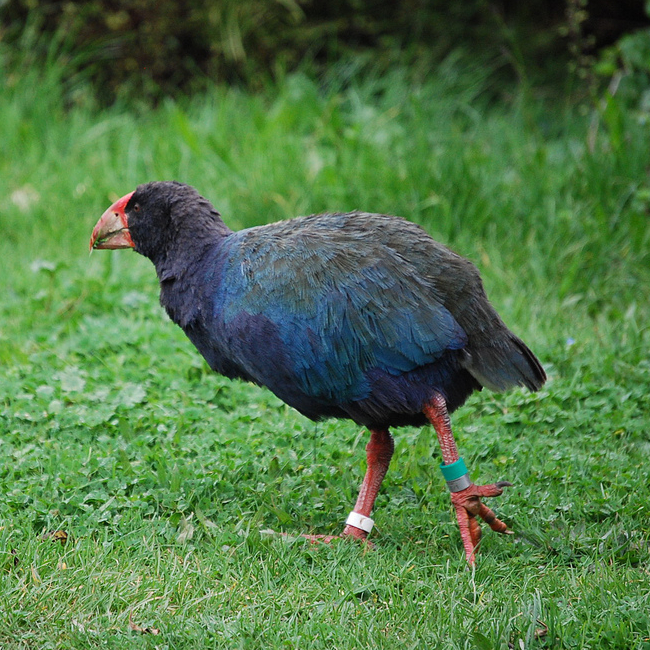 TakahēPorphyrio hochstetteri
-
 Australasian SwamphenPorphyrio melanotus
-
 American CootFulica americana
-
 Eurasian CootFulica atra
-
 Common MoorhenGallinula chloropus
Compare
Questions and answers
What is the scientific name of the Auckland Rail?
The scientific name of the Auckland Rail is Lewinia muelleri. Written with its author, the full name is Lewinia muelleri (Rothschild, 1893).
Which family does the Auckland Rail belong to?
Lewinia muelleri belongs to the family Rallidae, in the order Gruiformes and the class Aves.
Where is the Auckland Rail found?
Checklists and occurrence records place Lewinia muelleri in 2 countries: New Zealand and Australia.
What is the conservation status of the Auckland Rail?
The IUCN Red List category recorded for Lewinia muelleri is Vulnerable (VU).
What other names does the Auckland Rail have?
Lewinia muelleri is also known in English as Auckland Island Rail, Auckland Islands Rail and Aukland Island Rail.
Sources
Passages the profile rests on
- The species' closest relative is Lewin's rail of Australia. Source passage: “Its closest relative is Lewin's rail of Australia.” — English Wikipedia
- The species is sometimes classified in the genus Dryolimnas. Source passage: “The Auckland rail is sometimes placed in the genus Dryolimnas.” — English Wikipedia
- The sexes have similar plumage, although females may be duller than males. Source passage: “The sexes are similar, the females are possibly duller however.” — English Wikipedia
- The head and neck are reddish-brown, the breast is grey, and the back is brown-black. Source passage: “Its head and neck are reddish-brown in colour, while it has a grey breast and a brown-black coloured back.” — English Wikipedia
- Adults measure 17–20 cm in length. Source passage: “the Auckland rail measures 17–20 cm (6.7–7.9 in) in length” — English Wikipedia
- Four recorded adults weighed between 89 and 100 g. Source passage: “four adults were found to weigh 89–100 g (3.1–3.5 oz).” — English Wikipedia
- The species occurs on Adams Island and Disappointment Island in the Auckland Islands. Source passage: “The species is currently restricted to two islands in the Auckland islands group, Adams Island and Disappointment Island.” — English Wikipedia
- The species is endemic to the Auckland Islands, approximately 460 km south of New Zealand. Source passage: “endemic to the Auckland Islands 460 km south of New Zealand.” — English Wikipedia
- The species is currently restricted to Adams Island and Disappointment Island. Source passage: “The species is currently restricted to two islands in the Auckland islands group, Adams Island and Disappointment Island.” — English Wikipedia
- The species probably feeds mainly on invertebrates. Source passage: “it probably feeds mainly on invertebrates.” — English Wikipedia
- The species is active during daylight and may remain active for some time after sunset. Source passage: “The Auckland rail is active during daylight but may also be active for some time after sunset.” — English Wikipedia
- The species appears to defend territories. Source passage: “It appears to be territorial.” — English Wikipedia
- The species is highly secretive. Source passage: “The Auckland rail is highly secretive” — English Wikipedia
- The species can fly, but does so very rarely. Source passage: “The Auckland rail can fly but only does so very rarely.” — English Wikipedia
- Its characteristic call is a loud 'kek' or 'crek' sound. Source passage: “Its characteristic call is a loud "kek" or "crek" sound” — English Wikipedia
- The species also produces quieter calls, grunts, and clicks. Source passage: “but it can also make a variety of quieter calls, as well as grunts and clicks.” — English Wikipedia
- The species is probably monogamous. Source passage: “It is probably monogamous.” — English Wikipedia
- An active nest containing two eggs was recorded in November. Source passage: “One active nest of the Auckland rail was found in November, containing two eggs.” — English Wikipedia
- The nest is constructed from woven grass and/or sedges. Source passage: “The nest is woven of grass and/or sedges.” — English Wikipedia
- The eggs are cream-coloured with brown, red-brown, and pale grey spots and blotches. Source passage: “Its eggs are cream coloured with brown, red-brown and pale grey spots and blotches.” — English Wikipedia
- The eggs measure an average of 34 mm by 25 mm. Source passage: “The eggs measure 34 mm × 25 mm (1.34 in × 0.98 in), on average.” — English Wikipedia
- The incubation period is probably similar to that of Lewin's rail, at 19–20 days. Source passage: “Its incubation period is probably similar to Lewin's rail, which incubates for 19–20 days.” — English Wikipedia
- The species was considered extinct following its last sighting in 1893. Source passage: “was considered to be extinct after its last sighting in 1893” — English Wikipedia
- The species was rediscovered on Adams Island in 1966. Source passage: “It was once thought to be extinct but was rediscovered on Adams Island (100 km2) in 1966 and ...” — datazone.birdlife.org
- The species was rediscovered on Disappointment Island in 1993. Source passage: “before being rediscovered on Adams Island in 1966, and Disappointment island in 1993.” — English Wikipedia
- The population was estimated at 2,000 mature individuals across Adams Island and Disappointment Island as of 2022. Source passage: “As of 2022, the population is believed to be stable and is estimated at 2,000 mature individuals between these two islands.” — English Wikipedia
- The population was believed to be stable as of 2022. Source passage: “As of 2022, the population is believed to be stable” — English Wikipedia
- The species is classified as Vulnerable by the IUCN and BirdLife International. Source passage: “The species is currently considered Vulnerable by the IUCN and BirdLife International” — English Wikipedia
- The species faces extinction risks associated with its restricted geographical range and potential introduction of invasive mammals. Source passage: “due to its restricted range and threat of rapid extinction if invasive mammals were to be introduced.” — English Wikipedia
- The species is thought to have become extinct on Auckland Island because of introduced feral cats and pigs. Source passage: “It is thought to have become extinct on the main Auckland Island due to the presence of introduced feral cats and pigs.” — English Wikipedia
- Harvesting for food and native cultural purposes is identified as a threat to the species. Source passage: “Threats to this species include harvesting for food and for native culture (IUCN Red List).” — udspace.udel.edu
Data
- Catalogue of Life, 2026-10-16 XR cc by
- Global Biodiversity Information Facility CC BY 4.0
- Wikidata CC0
- GeoNames CC BY 4.0
- Wikimedia Commons per image; credit shown with each image
- iNaturalist per image; credit shown with each image
- Within the Catalogue of Life, this name comes from The Integrated Taxonomic Information System cc0
References
- Taylor, & Barry. (1988). Rails: A Guide to the Rails, Crakes, Gallinules and Coots of the World.
- Gill, Frank, & and Minturn Wright. (2006). Birds of the World: Recommended English Names.
- Dickinson, E. C., and J. V. Remsen Jr., eds. (2013). The Howard and Moore Complete Checklist of the Birds of the World, 4th Edition, Vol. 1 Non-Passerines.
This species in other databases
Page built on 27 November 2026. See how the catalog is made and all sources and licences.
Cite this page
ScientificNames.org. (2026). Lewinia muelleri (Auckland Rail). Retrieved November 27, 2026, from https://scientificnames.org/species/lewinia-muelleri
“Lewinia muelleri (Auckland Rail).” ScientificNames.org, 2026, scientificnames.org/species/lewinia-muelleri. Accessed 27 Nov. 2026.
ScientificNames.org. “Lewinia muelleri (Auckland Rail).” Accessed November 27, 2026. https://scientificnames.org/species/lewinia-muelleri.
@misc{scientificnames_lewinia_muelleri_auckland_rail,
  author = {{ScientificNames.org}},
  title = {Lewinia muelleri (Auckland Rail)},
  year = {2026},
  url = {https://scientificnames.org/species/lewinia-muelleri},
  note = {Accessed 2026-11-27}
}