Species · Birds
Slaty-breasted Rail Lewinia striata
The scientific name of the Slaty-breasted Rail is Lewinia striata. It is a species of bird in the family Rallidae (rail), order Gruiformes. The name dates from 1766.
- Scientific name
- Lewinia striata (Linnaeus, 1766)
- Common name
- Slaty-breasted Rail
- Genus
- Lewinia
- Family
- Rallidae (Rail)
- Order
- Gruiformes
- Class
- Aves
- Red List category
- LC Least Concern
- Recorded in
- 18 countries
- Name status
- accepted in the Catalogue of Life

Overview
The Slaty-breasted Rail is a bird species in the genus Lewinia. It has a chestnut-colored crown and nape, a blue-grey breast, a long reddish bill, and an intricately barred back and belly.
Written 26 November 2026 from the sources listed below. Each statement was checked against the passage it cites; statements that could not be supported were removed.
Appearance
The Slaty-breasted Rail has a chestnut-colored or rufous crown and nape, a blue-grey breast, and a long reddish bill. Its back and belly are intricately barred, and its throat and breast are gray.[1][2]
Adults measure 25–30 cm in length and weigh between 100 and 142 g.[3][4]
Habitat
The species primarily inhabits wetlands, generally at elevations up to 1,000 m. In Sri Lanka, it has been recorded at elevations reaching 1,850 m.[5][6]
Diet
The Slaty-breasted Rail feeds on worms, molluscs, and crustaceans. It also consumes seeds of marsh plants.[7][8][9][10]
Behaviour
The species forages and vocalizes within smooth cordgrass vegetation. It relies substantially on this vegetation during its breeding season.[11][12]
Reproduction and life cycle
The breeding season varies depending on geographical location. Clutches contain five to nine eggs, and both sexes incubate them for 19–22 days.[13][14][15]
Chicks can leave the nest shortly after hatching. Their parents feed and care for them after they leave the nest.[16][17]
The species has successfully reproduced within invasive smooth cordgrass vegetation.[18]
Conservation
The decline of natural wetlands may increase the species' reliance on invasive smooth cordgrass as a refuge. The removal of smooth cordgrass along China's coast may negatively affect populations of the species.[19][20]
Classification of the Slaty-breasted Rail
| Kingdom | Animalia |
|---|---|
| Phylum | Chordata |
| Subphylum | Vertebrata |
| Infraphylum | Gnathostomata |
| Parvphylum | Osteichthyes |
| Megaclass | Tetrapoda |
| Class | Aves (Bird) |
| Order | Gruiformes (Rails) |
| Family | Rallidae (Rail) |
| Genus | Lewinia (Lewin's Rail and Allies) |
| Species | Lewinia striata (Linnaeus, 1766) |
Where the Slaty-breasted Rail is found
Checklists and occurrence records place Lewinia striata in 18 countries across Asia. GBIF holds 15,114 georeferenced records of it.
Countries
- Bangladesh 52
- Bhutan 24
- Brunei 11
- Cambodia 181
- China 519
- Hong Kong 327
- India 4,015
- Indonesia 510
- Laos 15
- Malaysia 747
- Myanmar 44
- Nepal 19
- Philippines 455
- Singapore 2,430
- Sri Lanka 179
- Taiwan 4,158
- Thailand 1,181
- Vietnam 247
Regions and cities with the most records
- Taiwan, Taiwan 3,005
- Bukit Timah, Singapore 2,413
- Queenstown Estate, Singapore 2,403
- Anak Bukit, Singapore 2,386
- Ang Mo Kio New Town, Singapore 2,371
- Yio Chu Kang, Singapore 2,370
- Yishun New Town, Singapore 2,365
- Sungai Simpang, Singapore 2,364
- Novena, Singapore 2,356
- Bukit Panjang New Town, Singapore 2,352
- Teck Whye, Singapore 2,343
- Choa Chu Kang New Town, Singapore 2,335
- Woodlands, Singapore 2,332
- Yew Tee, Singapore 2,328
- Sembawang Estate, Singapore 2,321
- Sengkang New Town, Singapore 2,295
- Keat Hong Village, Singapore 2,257
- Jurong East, Singapore 2,235
- Jurong West, Singapore 2,235
- Jurong Town, Singapore 2,230
- Marsiling, Singapore 2,161
- Singapore, Singapore 2,060
- Johor Bahru, Malaysia 1,971
- Boon Lay, Singapore 1,869
- Kampung Larkin Lama, Malaysia 1,724
- Iskandar Puteri, Malaysia 1,698
- MacPherson, Singapore 1,698
- Eunos, Singapore 1,672
- Perling, Malaysia 1,621
- Horizon Hills, Malaysia 1,604
- Bukit Indah, Malaysia 1,527
- Matilda Estate, Singapore 1,515
- Punggol, Singapore 1,419
- Kampung Pasir Gudang Baru, Malaysia 1,327
- Gelang Patah, Malaysia 1,262
- Masai, Malaysia 1,260
Range as the checklists state it
Southern Asia
A number beside a place is its count of GBIF occurrence records. A place without a number comes from a checklist alone. Records show where a species has been observed or collected, which can include escapes and vagrants.
Common names
English
- Slaty-breasted Rail
- Slaty-breasted Banded Rail
Names in 41 other languages
- Arabic
- مرعة أردوازية الصدر
- Bengali
- মেটেবুক ঝিল্লি
- Burmese
- ရေငုံးရင်မီးခိုး
- Catalan
- rascló de cap vermell
- Chinese
- 灰胸秧雞, 灰胸秧雞〔藍胸秧雞〕, 灰胸秧鸡, 灰胸紋秧雞
- Croatian
- crvenokapa kokošica
- Czech
- chřástal proužkovaný
- Danish
- Gråbrystet Skovrikse
- Dutch
- Gebandeerde Ral
- Esperanto
- stria ralo
- Estonian
- punapea-ruik
- Finnish
- seepraluhtakana
- French
- Râle strié
- German
- Graubrustralle
- Hungarian
- szürkemellű guvat
- Indonesian
- Mandar-Padi Siantar, Mandar-padi sintar
- Italian
- Rallo pettoardesia, Rallo pettoblu
- Japanese
- ハシナガクイナ, ミナミクイナ
- Latvian
- svītrainais rallis
- Lithuanian
- pilkakrūtė vištelė
- Malay
- Burung Sintar
- Malayalam
- നീലമാറൻ കുളക്കോഴി
- Marathi
- निळ्या छातीची पाणकोंबडी
- Nepali
- ठूलो कस्दरी
- Norwegian
- orientrikse
- Persian
- یلوه سینهتوسی
- Polish
- wodnik rdzawogłowy
- Portuguese
- frango-d'água-de-peito-azulado, frango-d'água-listado, frango-de-água-de-peito-azulado, sanã-de-peito-azulado
- Russian
- Серогрудый пастушок, Серогрудый трескун
- Serbian
- Sitnoprugasti petlovan
- Slovak
- chriašteľ hnedohlavý
- Spanish
- Rascón rufigrís
- Swedish
- brunkronad rall
- Tamil
- நீலமார்புச் சம்பங்கோழி
- Thai
- นกอัญชันอกสีเทา, นกอัญชันอกเทา
- Turkish
- Gri Gerdanlı Sukılavuzu
- Ukrainian
- пастушок рудоголовий
- Vietnamese
- Gà nước vằn
- Welsh
- Rhegen gefnresog
- ori
- ମେଘୁଆ ବେଣା ଡାହୁକ
- pnb
- سلیٹی چھاتی آلی ریل
Synonyms
2 other scientific names have been used for this species and are now treated as synonyms of Lewinia striata.
- Gallirallus striatus (Linnaeus, 1766)
- Rallus striatus Linnaeus, 1766
Subspecies and varieties
- Lewinia striata albiventer subspecies
- Lewinia striata gularis subspecies
- Lewinia striata jouyi subspecies
- Lewinia striata obscurior (Andaman Slaty Breasted Rail) subspecies
- Lewinia striata striata subspecies
- Lewinia striata taiwana subspecies
Related species
-
 Auckland RailLewinia muelleri
-
 Lewin's RailLewinia pectoralis
- Brown-banded RailLewinia mirifica
-
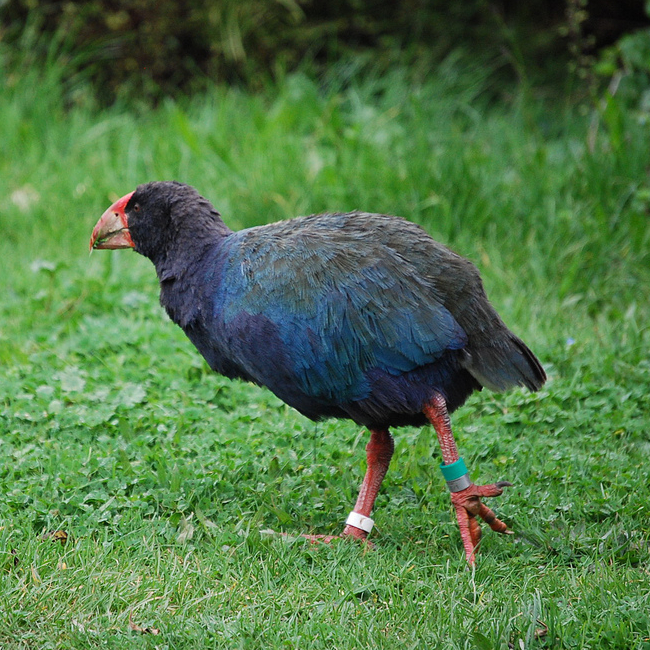 TakahēPorphyrio hochstetteri
-
 Australasian SwamphenPorphyrio melanotus
-
 American CootFulica americana
-
 Eurasian CootFulica atra
-
 Common MoorhenGallinula chloropus
Compare
Questions and answers
What is the scientific name of the Slaty-breasted Rail?
The scientific name of the Slaty-breasted Rail is Lewinia striata. Written with its author, the full name is Lewinia striata (Linnaeus, 1766).
Which family does the Slaty-breasted Rail belong to?
Lewinia striata belongs to the family Rallidae, in the order Gruiformes and the class Aves.
Where is the Slaty-breasted Rail found?
Checklists and occurrence records place Lewinia striata in 18 countries, including Taiwan, India, Singapore, Thailand, Malaysia and China.
What is the conservation status of the Slaty-breasted Rail?
The IUCN Red List category recorded for Lewinia striata is Least Concern (LC).
What other names does the Slaty-breasted Rail have?
Lewinia striata is also known in English as Slaty-breasted Banded Rail.
Sources
Passages the profile rests on
- The species has a chestnut-colored crown and nape, a blue-grey breast, and a long reddish bill. Source passage: “the slaty-breasted rail has a chestnut crown and nape, a blue-grey breast, and a long, reddish bill.” — English Wikipedia
- The species has an intricately barred back and belly, a gray throat and breast, and a rufous crown and nape. Source passage: “Combination of intricately barred back and belly, gray throat and breast, and rufous crown and nape separates this furtive bird from similar species.” — ebird.org
- Adults measure 25–30 cm in length. Source passage: “it measures 25–30 cm (9.8–11.8 in) in length” — English Wikipedia
- Adults weigh between 100 and 142 g. Source passage: “weighs 100–142 g (3.5–5.0 oz).” — English Wikipedia
- The species primarily inhabits wetlands, generally at elevations up to 1,000 m. Source passage: “The slaty-breasted rail is mostly found in wetlands, up to elevations of typically 1,000 m (3,300 ft)” — English Wikipedia
- In Sri Lanka, the species has been recorded at elevations reaching 1,850 m. Source passage: “but also up to 1,500 m (4,900 ft) and 1,850 m (6,070 ft) in Sri Lanka.” — English Wikipedia
- The species feeds on worms. Source passage: “It feeds on worms, molluscs, crustaceans, and the seeds of marsh plants.” — English Wikipedia
- The species feeds on molluscs. Source passage: “It feeds on worms, molluscs, crustaceans, and the seeds of marsh plants.” — English Wikipedia
- The species feeds on crustaceans. Source passage: “It feeds on worms, molluscs, crustaceans, and the seeds of marsh plants.” — English Wikipedia
- The species consumes seeds of marsh plants. Source passage: “It feeds on worms, molluscs, crustaceans, and the seeds of marsh plants.” — English Wikipedia
- The species relies substantially on smooth cordgrass vegetation during its breeding season. Source passage: “These rails exhibit a significant reliance on the invaded vegetative community during their breeding season” — pmc.ncbi.nlm.nih.gov
- The species forages and vocalizes within smooth cordgrass vegetation. Source passage: “engaging in foraging, vocalization, and even successful reproduction within the smooth cordgrass.” — pmc.ncbi.nlm.nih.gov
- The species lays clutches containing five to nine eggs. Source passage: “It lays 5–9 eggs, which are incubated by both sexes for 19–22 days.” — English Wikipedia
- Both sexes incubate the eggs for 19–22 days. Source passage: “which are incubated by both sexes for 19–22 days.” — English Wikipedia
- The breeding season varies depending on geographical location. Source passage: “Breeding season can vary by location.” — English Wikipedia
- Chicks can leave the nest shortly after hatching. Source passage: “Chicks can leave the nest soon after hatching” — English Wikipedia
- Parents feed and care for chicks after they leave the nest. Source passage: “they are fed and cared for by their parents.” — English Wikipedia
- The species has successfully reproduced within invasive smooth cordgrass vegetation. Source passage: “engaging in foraging, vocalization, and even successful reproduction within the smooth cordgrass.” — pmc.ncbi.nlm.nih.gov
- The decline of natural wetlands may increase the species' reliance on invasive smooth cordgrass as a refuge. Source passage: “as natural wetlands continue to decline, birds that are highly dependent on marsh ecosystems may increasingly resort to the invasive Spartina community as a critical refuge.” — pmc.ncbi.nlm.nih.gov
- The removal of smooth cordgrass along China's coast may negatively affect populations of this species. Source passage: “the disappearance of smooth cordgrass may harm the population of these birds.” — pmc.ncbi.nlm.nih.gov
Data
- Catalogue of Life, 2026-10-16 XR cc by
- Global Biodiversity Information Facility CC BY 4.0
- Wikidata CC0
- GeoNames CC BY 4.0
- Wikimedia Commons per image; credit shown with each image
- Within the Catalogue of Life, this name comes from The Integrated Taxonomic Information System cc0
References
- Dickinson, E. C., and J. V. Remsen Jr., eds. (2013). The Howard and Moore Complete Checklist of the Birds of the World, 4th Edition, Vol. 1 Non-Passerines.
This species in other databases
Page built on 27 November 2026. See how the catalog is made and all sources and licences.
Cite this page
ScientificNames.org. (2026). Lewinia striata (Slaty-breasted Rail). Retrieved November 27, 2026, from https://scientificnames.org/species/lewinia-striata
“Lewinia striata (Slaty-breasted Rail).” ScientificNames.org, 2026, scientificnames.org/species/lewinia-striata. Accessed 27 Nov. 2026.
ScientificNames.org. “Lewinia striata (Slaty-breasted Rail).” Accessed November 27, 2026. https://scientificnames.org/species/lewinia-striata.
@misc{scientificnames_lewinia_striata_slaty_breasted_rail,
  author = {{ScientificNames.org}},
  title = {Lewinia striata (Slaty-breasted Rail)},
  year = {2026},
  url = {https://scientificnames.org/species/lewinia-striata},
  note = {Accessed 2026-11-27}
}