Species · Mammals
Southern River Otter Lontra provocax
The scientific name of the Southern River Otter is Lontra provocax. It is a species of mammal in the family Mustelidae (mustelids), order Carnivora. The name dates from 1908.
- Scientific name
- Lontra provocax (Thomas, 1908)
- Common name
- Southern River Otter
- Genus
- Lontra
- Family
- Mustelidae (Mustelids)
- Order
- Carnivora
- Class
- Mammalia
- Red List category
- EN Endangered
- Recorded in
- 2 countries
- Name status
- accepted in the Catalogue of Life

Overview
Lontra provocax occurs in central and southern Chile and parts of Argentina. It has dark brown upper fur contrasting with a silvery whitish underside, webbed feet and strong claws.
Written 26 November 2026 from the sources listed below. Each statement was checked against the passage it cites; statements that could not be supported were removed.
Appearance
The Southern River Otter has a very dark brown back that contrasts strongly with its silvery whitish underside. Its feet are webbed and equipped with strong claws, and its fur has a velvety texture.[1][2][3]
Its guard hairs measure between 15 and 17 mm long, while its underfur measures between 7 and 8 mm long. Its nose is diamond-shaped with a squared-off bottom corner.[4][5][6]
Its body can reach approximately 70 cm in length, and its tail adds approximately 40 cm. Its average body weight ranges from 5 to 10 kg.[7][8][9]
Its total length ranges from 1,000 to 1,160 mm, and its tail measures between 350 and 460 mm long.[10][11]
Habitat
The Southern River Otter inhabits marine and freshwater environments. It occurs on rocky coasts and in protected canals where wave activity is limited.[12][13]
It prefers coastal and freshwater environments with dense vegetation rather than exposed coastal areas. It is commonly found in freshwater lakes and rivers with substantial shoreline vegetation.[14][15]
Its habitat includes mature tree root systems and fallen tree debris.[16]
Diet
The Southern River Otter feeds primarily on fish. Its natural prey also includes crustaceans and mollusks.[17][18]
It occasionally eats birds and their eggs, particularly those of ground-nesting species near water. It may also prey on frogs, small turtles, lizards and snakes.[19][20]
Fish occurred in 75% of analyzed fecal samples from a Chilean population. In an Argentine population, crustaceans occurred in 99% of analyzed scats, while fish occurred in only 2%.[21][22][23]
Behaviour
Family groups generally consist of an adult female and her offspring. Males are generally solitary except during the breeding season.[24][25]
Both sexes are usually active at night. Males generally have larger home ranges than family groups.[26][27]
Reproduction and life cycle
Females usually produce one or two offspring per breeding season, although litters can contain up to four. Females have four nipples.[28][29]
Breeding typically occurs during winter and spring, with births taking place the following year. Reported gestation lasts between 10 and 12 months, while embryonic development lasts approximately two months.[30][31][32]
Newborn offspring are blind, helpless and scarcely mobile. Young begin eating solid food at approximately seven weeks of age and begin swimming at approximately three months.[33][34][35]
Young generally become capable of catching their own food within four months. They remain with their family group for their first year before dispersing.[36][37]
Reproductive maturity is reached during the second or third year of life.[38]
Conservation
The Southern River Otter is classified as endangered. Historical hunting for its fur contributed substantially to its population decline.[39][40]
Illegal hunting, habitat loss and water pollution are identified as major threats. Introduced American mink are considered potential competitors for habitat and food resources.[41][42]
In Argentina, hunting and capture of the species have been outlawed since 1950. The species has been exterminated from much of its Chilean range through hunting.[43][44]
Uses
The Southern River Otter was historically harvested for its fur.[45]
Classification of the Southern River Otter
| Kingdom | Animalia |
|---|---|
| Phylum | Chordata |
| Subphylum | Vertebrata |
| Infraphylum | Gnathostomata |
| Parvphylum | Osteichthyes |
| Megaclass | Tetrapoda |
| Class | Mammalia (Mammal) |
| Subclass | Theria |
| Infraclass | Eutheria |
| Order | Carnivora (Carnivores) |
| Suborder | Caniformia (Dog-like Carnivores) |
| Family | Mustelidae (Mustelids) |
| Subfamily | Lutrinae (Otters) |
| Genus | Lontra (River Otters) |
| Species | Lontra provocax (Thomas, 1908) |
Where the Southern River Otter is found
Checklists and occurrence records place Lontra provocax in 2 countries across South America. GBIF holds 318 georeferenced records of it.
Countries
Regions and cities with the most records
- Los Lagos Region, Chile 87
- Neuquen, Argentina 56
- Aysén, Chile 45
- Los Ríos Region, Chile 18
- Araucania, Chile 13
- Tierra del Fuego, Argentina 9
- Rio Negro, Argentina 8
- Valdivia, Chile 8
- Ancud, Chile 6
- Loncoche, Chile 6
- Ushuaia, Argentina 6
- Villarrica, Chile 4
- Castro, Chile 3
- Llanquihue, Chile 3
- Paillaco, Chile 3
- Puerto Varas, Chile 3
1 more country has a few records outside this range
These countries hold a few records of Lontra provocax but lie outside the range the checklists give for it. Such records are often zoo or garden specimens, museum material or vagrants, so the species is not counted as occurring there.
Range as the checklists state it
South America
South America
A number beside a place is its count of GBIF occurrence records. A place without a number comes from a checklist alone. Records show where a species has been observed or collected, which can include escapes and vagrants.
Common names
English
- Southern River Otter
- Huillin
- Large River Otter
- River Wolf
Names in 20 other languages
- Arabic
- قضاعة الأنهار الجنوبية
- Chinese
- 智利水獺
- Croatian
- Južna riječna vidra
- Czech
- vydra jižní
- Dutch
- Zuidelijke Rivierotter
- Finnish
- patagoniansaukko
- French
- Loutre du Chili
- German
- Patagonischer Fischotter, Südlicher Flussotter
- Hungarian
- déli vidra
- Italian
- Lontra australe
- Japanese
- チリカワウソ
- Korean
- 남방강수달, 남아메리카수달
- Norwegian Bokmål
- Sørelvoter, Sørlig Elveoter
- Polish
- Wydra południowa, Wydrak południowy
- Portuguese
- Lontra-Patagônica
- Romanian
- Lutră chiliană, Vidră sud-americană
- Russian
- Южная выдра
- Spanish
- Huillín, Lobito Patagonica, Lobito Patagonico, Nutria Patagónica o huillín, Nutria de Chile
- Thai
- นากแม่น้ำใต้
- Turkish
- Şili su samuru
Synonyms
3 other scientific names have been used for this species and are now treated as synonyms of Lontra provocax.
- Lutra canadensis provocax (Thomas, 1908)
- Lutra provocax Thomas, 1908
- Lutra provoeax Thomas, 1908
Related species
-
 North American River OtterLontra canadensis
-
 Marine OtterLontra felina
-
 Neotropical OtterLontra longicaudis
-
 WolverineGulo gulo
-
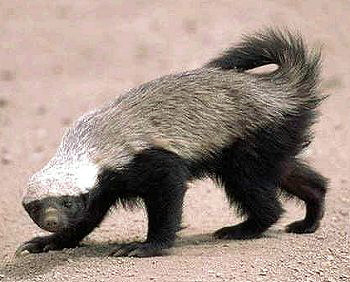 Honey BadgerMellivora capensis
-
 StoatMustela erminea
-
 Sea OtterEnhydra lutris
- SableMartes zibellina
Compare
Questions and answers
What is the scientific name of the Southern River Otter?
The scientific name of the Southern River Otter is Lontra provocax. Written with its author, the full name is Lontra provocax (Thomas, 1908).
Which family does the Southern River Otter belong to?
Lontra provocax belongs to the family Mustelidae, in the order Carnivora and the class Mammalia.
Where is the Southern River Otter found?
Checklists and occurrence records place Lontra provocax in 2 countries: Chile and Argentina.
What is the conservation status of the Southern River Otter?
The IUCN Red List category recorded for Lontra provocax is Endangered (EN).
What other names does the Southern River Otter have?
Lontra provocax is also known in English as Huillin, Large River Otter and River Wolf.
What habitat does a river otter live in?
The Southern River Otter inhabits marine and freshwater environments, including rocky coasts, protected canals, freshwater lakes and rivers with substantial shoreline vegetation.[12][13][15]
Are river otters carnivores or omnivores?
The Southern River Otter is classified in the order Carnivora and feeds primarily on fish. Its natural prey also includes crustaceans and mollusks.[17][18]
What is an otter's favorite food?
The Southern River Otter feeds primarily on fish.[17]
Sources
Passages the profile rests on
- The species has a very dark brown back that contrasts strongly with its silvery whitish underside. Source passage: “The dorsum is a very dark brown, which strongly contrasts with the silvery whitish ventrum.” — animaldiversity.org
- Its feet are webbed and equipped with strong claws. Source passage: “These otters possess webbed feet with strong claws.” — animaldiversity.org
- Its fur has a velvety texture. Source passage: “Their hair has a velvety texture.” — animaldiversity.org
- Its guard hairs measure between 15 and 17 mm long. Source passage: “The guard hairs range in length from 15 to 17 mm” — animaldiversity.org
- Its underfur measures between 7 and 8 mm long. Source passage: “the under fur is 7 to 8 mm long.” — animaldiversity.org
- Its nose is diamond-shaped with a squared-off bottom corner. Source passage: “Their nose is diamond-shape with the bottom corner squared off” — animaldiversity.org
- Its body can reach approximately 70 cm in length. Source passage: “body can grow up to 70 cm (28 in) long” — English Wikipedia
- Its tail adds approximately 40 cm to its body length. Source passage: “with the tail adding about 40 cm (16 in).” — English Wikipedia
- Its average body weight ranges from 5 to 10 kg. Source passage: “Body weight averages about 5–10 kg (11–22 lb).” — English Wikipedia
- Its total length ranges from 1,000 to 1,160 mm. Source passage: “It ranges from 1000 mm to 1160 mm in total length.” — animaldiversity.org
- Its tail measures between 350 and 460 mm long. Source passage: “Its tail is 350 to 460 mm long.” — animaldiversity.org
- The species inhabits marine and freshwater environments. Source passage: “L. provocax inhabits both marine and fresh waters.” — animaldiversity.org
- It occurs on rocky coasts and in protected canals where wave activity is limited. Source passage: “It is found on rocky coasts and in protected canals in areas where there are few waves.” — animaldiversity.org
- It prefers coastal and freshwater environments with dense vegetation rather than exposed coastal areas. Source passage: “It does not live in open coastal areas, but instead prefers coastal and freshwater environments with dense vegetation” — animaldiversity.org
- It is commonly found in freshwater lakes and rivers with substantial shoreline vegetation. Source passage: “mostly found in freshwater lakes and rivers having a significant amount of dense vegetation, especially along the shorelines” — English Wikipedia
- Its habitat includes mature tree root systems and fallen tree debris. Source passage: “Their habitats also need the root systems of mature trees, as well as fallen tree debris.” — English Wikipedia
- The species feeds primarily on fish. Source passage: “They are piscivorous” — English Wikipedia
- Its natural prey includes fish, crustaceans and mollusks. Source passage: “their natural prey includes many types of fish, crustaceans, mollusks” — English Wikipedia
- It occasionally eats birds and their eggs, particularly those of ground-nesting species near water. Source passage: “occasionally birds or their eggs, particularly of ground-nesting species found near water.” — English Wikipedia
- It may also prey on frogs, small turtles, lizards and snakes. Source passage: “including frogs, smaller turtles, lizards and even some snakes.” — English Wikipedia
- Fish occurred in 75% of analyzed fecal samples from a Chilean population. Source passage: “75% of fecal samples analyzed had fish in them” — animaldiversity.org
- Crustaceans occurred in 99% of analyzed scats from an Argentine population. Source passage: “In Argentina the feces showed 99% of scats had crustaceans” — animaldiversity.org
- Fish occurred in only 2% of analyzed scats from an Argentine population. Source passage: “and only 2% contained fish” — animaldiversity.org
- Family groups generally consist of an adult female and her offspring. Source passage: “Family groups usually consist only of a female and her young” — English Wikipedia
- Males are generally solitary except during the breeding season. Source passage: “Males are usually solitary except during the mating season.” — animaldiversity.org
- Both sexes are usually active at night. Source passage: “Both sexes of this species are usually active during the night” — animaldiversity.org
- Males generally have larger home ranges than family groups. Source passage: “Males also tend to have a larger home range than family groups.” — animaldiversity.org
- Females usually produce one or two offspring per breeding season, although litters can contain up to four. Source passage: “Females have four nipples and produce one to four young each season, but usually produce only one or two young.” — animaldiversity.org
- Females have four nipples. Source passage: “Females have four nipples” — animaldiversity.org
- Breeding typically occurs during winter and spring, with births taking place the following year. Source passage: “River otters typically breed in the winter and spring, with births taking place the following year.” — animaldiversity.org
- Reported gestation lasts between 10 and 12 months. Source passage: “Although gestation has been reported to be 10-12 months long” — animaldiversity.org
- Embryonic development lasts approximately two months. Source passage: “actual embryonic development is around two months” — animaldiversity.org
- Newborn offspring are blind, helpless and scarcely mobile. Source passage: “L. provocax young are born a helpless, blind and scarcely mobile.” — animaldiversity.org
- Young begin eating solid food at approximately seven weeks of age. Source passage: “They open their eyes at approximately one month and begin to eat solid foods at 7 weeks.” — animaldiversity.org
- Young begin swimming at approximately three months of age. Source passage: “They begin to swim at about 3 months of age.” — animaldiversity.org
- Young generally become capable of catching their own food within four months. Source passage: “They are usually capable of catching their own food within 4 months.” — animaldiversity.org
- Young remain with their family group for their first year before dispersing. Source passage: “The young remain with the family group for the first year before they disperse” — animaldiversity.org
- Reproductive maturity is reached during the second or third year of life. Source passage: “Reproductive maturity is attained in the second or third year of life.” — animaldiversity.org
- The species is classified as endangered. Source passage: “It is listed by the International Union for Conservation of Nature as an endangered species.” — English Wikipedia
- Historical hunting for its fur contributed substantially to its population decline. Source passage: “This is the major cause of their current low population numbers and endangered conservation status.” — English Wikipedia
- Illegal hunting, habitat loss and water pollution are identified as major threats. Source passage: “This is primarily due to illegal hunting, habitat loss and water pollution” — animaldiversity.org
- Introduced American mink are considered potential competitors for habitat and food resources. Source passage: “Mink were introduced and/or escaped into the area over many years, and are thought to directly compete with the southern river otters for resources and habitat” — English Wikipedia
- In Argentina, hunting and capture of the species have been outlawed since 1950. Source passage: “In Argentina, the hunting and capture of the southern river otter has been outlawed since 1950.” — English Wikipedia
- The species has been exterminated from much of its Chilean range through hunting. Source passage: “This species has been exterminated from much of its range in Chile by hunting.” — animaldiversity.org
- The species was historically harvested for its fur. Source passage: “L. provocax was harvested for its fur” — animaldiversity.org
- The species occurs in central and southern Chile and parts of Argentina. Source passage: “Southern river otters, Lontra provocax , are only found in central and southern Chile and parts of Argentina.” — animaldiversity.org
- In Argentina, its range extends along the Andes from Tierra del Fuego to southern Neuquen province. Source passage: “it is found along the Andes from Tierra del Fuego all the way to the southern part of Neuquen province” — animaldiversity.org
Data
- Catalogue of Life, 2026-10-16 XR cc by
- Global Biodiversity Information Facility CC BY 4.0
- Wikidata CC0
- GeoNames CC BY 4.0
- Wikimedia Commons per image; credit shown with each image
- Within the Catalogue of Life, this name comes from The Integrated Taxonomic Information System cc0
References
- Ann. Mag. Nat. Hist., ser. 8 vol.1 p.391 where the name was published
- Fish and Wildlife Service, U. S. (1976). Endangered Status for 159 Taxa of Animals. Federal Register, Vol. 41, No. 115.
- Wilson, Don E., and DeeAnn M. Reeder, eds. (1993). Mammal Species of the World: A Taxonomic and Geographic Reference, 2nd Ed., 3rd Printing.
- Larivière, & Serge. (1999). Lontra provocax. Mammalian Species, No. 610.
- Wilson, Don E., and F. Russell Cole. (2000). Common Names of Mammals of the World.
- Wilson, Don E., and DeeAnn M. Reeder, eds. (2005). Mammal Species of the World: A Taxonomic and Geographic Reference, 3rd Ed., Vols. 1 & 2.
- Larivière, S., and A. P. Jennings / Don E. Wilson and Russell A. Mittermeier, eds. (2009). Family Mustelidae (Weasels and relatives). Handbook of the Mammals of the World. Vol. 1: Carnivores.
- Burgin, Connor J., Don E. Wilson, Russell A. Mittermeier, Anthony B. Rylands, et al. (2020). Illustrated Checklist of the Mammals of the World. Vol. 1. Monotremata to Rodentia.
This species in other databases
- Catalogue of Life 3VZKT
- Wikidata Q840714
- iNaturalist 41779
- WoRMS urn:lsid:marinespecies.org:taxname:343993
Page built on 29 November 2026. See how the catalog is made and all sources and licences.
Cite this page
ScientificNames.org. (2026). Lontra provocax (Southern River Otter). Retrieved November 29, 2026, from https://scientificnames.org/species/lontra-provocax
“Lontra provocax (Southern River Otter).” ScientificNames.org, 2026, scientificnames.org/species/lontra-provocax. Accessed 29 Nov. 2026.
ScientificNames.org. “Lontra provocax (Southern River Otter).” Accessed November 29, 2026. https://scientificnames.org/species/lontra-provocax.
@misc{scientificnames_lontra_provocax_southern_river_otter,
  author = {{ScientificNames.org}},
  title = {Lontra provocax (Southern River Otter)},
  year = {2026},
  url = {https://scientificnames.org/species/lontra-provocax},
  note = {Accessed 2026-11-29}
}