Species · Mammals
African Wild Dog Lycaon pictus
The scientific name of the African Wild Dog is Lycaon pictus. It is a species of mammal in the family Canidae (dogs), order Carnivora. The name dates from 1820.
- Scientific name
- Lycaon pictus (Temminck, 1820)
- Common name
- African Wild Dog
- Genus
- Lycaon
- Family
- Canidae (Dogs)
- Order
- Carnivora
- Class
- Mammalia
- Red List category
- EN Endangered
- Recorded in
- 21 countries
- Name status
- accepted in the Catalogue of Life

Overview
The species occurs primarily in Southern and East Africa. It is distinguished by a mottled coat with patches of red, black, brown, white, and yellow fur, with a unique pattern in each individual.
Written 26 November 2026 from the sources listed below. Each statement was checked against the passage it cites; statements that could not be supported were removed.
Appearance
The African Wild Dog has large, rounded ears and a distinctive mottled coat containing patches of red, black, brown, white, and yellow fur. Each individual has a unique coat pattern.[1][2][3]
Adults measure 60–75 cm at the shoulders, with a head-and-body length of 71 to 112 cm and a tail length of 29–41 cm. Adult body weight ranges from 18 to 36 kg, and males are slightly larger than females.[4][5][6][7][8]
Individuals have four toes on each foot rather than five on their forefeet. The pads of the middle digits are connected by dermal webbing, and the middle two toepads are usually fused.[9][10][11]
The species has stiff bristle-hairs and no underfur.[12]
Habitat
The African Wild Dog primarily inhabits savannas and arid zones. It typically occupies open plains and sparse woodlands and generally avoids forested areas.[13][14][15]
A forest-dwelling population occurs in Ethiopia's Harenna Forest, a wet montane forest reaching 2,400 m elevation. The species has also been recorded at elevations of 4,050 m on Ethiopia's Sanetti Plateau.[16][17]
Diet
The African Wild Dog primarily hunts terrestrial ungulates, including antelopes and wildebeests. It supplements its diet with rodents and birds.[18][19][20]
The species can consume substantial quantities of meat and bone rapidly.[21]
Behaviour
The African Wild Dog commonly hunts at dawn and dusk but also exhibits daytime activity. Individuals use stamina and cooperative hunting to exhaust their prey.[22][23]
The species lives in permanent social packs containing two to 27 adults and yearling pups. Solitary living and hunting are extremely rare.[24][25]
Males generally remain in their natal packs, whereas females disperse. Males in a pack generally outnumber females by three to one.[26][27]
Pack members share food and assist weak or ill individuals. The species communicates through touch, actions, and vocalizations.[28][29]
Lions kill African Wild Dogs where possible, while spotted hyenas frequently steal their food.[30]
Reproduction and life cycle
Southern African populations usually breed between April and July. The gestation period lasts 69–73 days.[31][32]
Litters typically contain around six to 16 pups, averaging 10. Females have 12–14 mammary glands.[33][34]
Pups begin eating solid food at approximately three to four weeks of age. They are weaned at approximately five weeks and receive regurgitated meat from other pack members.[35][36]
Conservation
The African Wild Dog is classified as endangered on the IUCN Red List. Habitat fragmentation, human conflict, and infectious diseases contribute to its population decline.[37][38]
The species is susceptible to rabies and canine distemper. Protected wildlife corridors are used to connect increasingly fragmented habitats.[39][40]
The species was formerly distributed throughout sub-Saharan Africa.[41]
Uses
Approximately 600 African Wild Dogs are kept in zoos for public education and as ambassadors supporting species recovery.[42]
Classification of the African Wild Dog
| Kingdom | Animalia |
|---|---|
| Phylum | Chordata |
| Subphylum | Vertebrata |
| Infraphylum | Gnathostomata |
| Parvphylum | Osteichthyes |
| Megaclass | Tetrapoda |
| Class | Mammalia (Mammal) |
| Subclass | Theria |
| Infraclass | Eutheria |
| Order | Carnivora (Carnivores) |
| Suborder | Caniformia (Dog-like Carnivores) |
| Family | Canidae (Dogs) |
| Genus | Lycaon (African Wild Dogs) |
| Species | Lycaon pictus (Temminck, 1820) |
Where the African Wild Dog is found
Checklists and occurrence records place Lycaon pictus in 21 countries across Africa. GBIF holds 2,512 georeferenced records of it.
Countries
- Angola 41
- Benin 5
- Botswana 438
- Central African Republic 27
- Chad 5
- Democratic Republic of the Congo 32
- Ethiopia 16
- Ivory Coast 4
- Kenya 218
- Malawi 18
- Mozambique 37
- Namibia 51
- Rwanda 6
- Somalia 5
- South Africa 1,199
- South Sudan 3
- Sudan 12
- Tanzania 131
- Uganda 6
- Zambia 161
- Zimbabwe 97
Regions and cities with the most records
- Mpumalanga, South Africa 704
- North-West, Botswana 308
- Limpopo, South Africa 276
- KwaZulu-Natal, South Africa 107
- Chobe, Botswana 78
- North West, South Africa 54
- Laikipia, Kenya 49
- Matabeleland North, Zimbabwe 45
- Muchinga, Zambia 45
- Matsulu, South Africa 32
- Manyara, Tanzania 30
- Mashonaland West, Zimbabwe 29
- Narok County, Kenya 29
- Sofala, Mozambique 27
- Masvingo Province, Zimbabwe 26
- Mkhuhlu, South Africa 26
- Northern Cape, South Africa 26
- Acornhoek, South Africa 24
- Eastern Province, Zambia 24
- Calcutta, South Africa 23
- Zambezi Region, Namibia 20
- Ghanzi, Botswana 19
- Mbomou, Central African Republic 19
- Taita Taveta, Kenya 19
- Komatipoort, South Africa 17
- Mara, Tanzania 17
- Pwani, Tanzania 17
- Iringa, Tanzania 16
- Lusaka Province, Zambia 15
- Hlanganani, South Africa 14
- Phalaborwa, South Africa 14
- Erongo Region, Namibia 12
- Central, Botswana 11
- Samburu County, Kenya 11
- Otjozondjupa Region, Namibia 10
- Ressano Garcia, Mozambique 10
3 more countries have a few records outside this range
These countries hold a few records of Lycaon pictus but lie outside the range the checklists give for it. Such records are often zoo or garden specimens, museum material or vagrants, so the species is not counted as occurring there.
Range as the checklists state it
Africa
A number beside a place is its count of GBIF occurrence records. A place without a number comes from a checklist alone. Records show where a species has been observed or collected, which can include escapes and vagrants.
Common names
English
- African Wild Dog
- African Painted Dog
- African Painted Wolf
- African Wolf
- African Hunting Dog
- Cape Hunting Dog
- Hunting Dog
- Painted Dog
- Painted Hunting Dog
- Painted Lycaon
- Painted Wolf
- Thoa
- Wild Hunting Dog
Names in 44 other languages
- Afrikaans
- Wildehond
- Arabic
- ذئب ملون, ذئب ملون إفريقي, كلب الصيد الإفريقي, كلب الصيد الملون, كلب بري إفريقي, كلب ملون, كلب ملون إفريقي
- Bulgarian
- Хиеново куче
- Chinese
- 非洲野犬
- Czech
- Pes hyenovitý, pes hyenový
- Danish
- Afrikansk vildhund, Hyænehund
- Dutch
- Afrikaanse Wilde Hond
- Estonian
- Hüäänrebane
- Finnish
- Hyeenakoira, savannikoira
- French
- Chien sauvage africain, Cynhyene, Le Cynhyene, Loup-peint, Lycaon
- Georgian
- აფთრისებრი ძაღლი
- German
- Afrikanischer Bemalter Wolf, Afrikanischer Wildhund, Bemalter Wolf, Hyänenhund
- Greek
- Αφρικανικό αγριόσκυλο
- Hebrew
- זאב טלוא
- Hungarian
- afrikai vadkutya
- Italian
- Cane selvatico africano, Licaone
- Japanese
- リカオン
- Kazakh
- Қорқау ит
- Korean
- 아프리카들개
- Lithuanian
- Afrikos hieninis šuo
- Norwegian Bokmål
- Afrikansk Villhund, Hyenehund
- Polish
- Likaon pstry
- Portuguese
- Cão-selvagem africano, Cão-selvagem-africano, Mabeco
- Russian
- Гиеновая собака, Гиеновидная собака
- Serbian
- Дивљи пас
- Spanish
- Licaon, Perro Salvaje, licaón
- Swahili
- kisu
- Tongan
- suntwe
- Tswana
- Leteane, leTharelwa, leTlhalerwa, lekanyane
- Turkish
- Afrika Yaban Köpeği
- Ukrainian
- Собака гієноподібний
- Xhosa
- Isitshetshe
- bem
- imbwa, umumbulu, umwele
- her
- ohakanne, okahane
- kmb
- Dibeku, Imbuá yanchito
- lam
- impupi
- lun
- kunwidi
- luo
- Gwok Lum, urut
- nmq
- chibaza
- nya
- mpeni
- sbs
- kafuro
- sna
- mumi
- ven
- tarelo, tarelwa
- yao
- chipula
Synonyms
6 other scientific names have been used for this species and are now treated as synonyms of Lycaon pictus.
- Hyaena picta Temminck, 1820
- Lycaon pictus lupinus Thomas, 1902
- Lycaon pictus manguensis Matschie, 1915
- Lycaon pictus pictus (Temminck, 1820)
- Lycaon pictus sharicus Thomas & Wroughton, 1907
- Lycaon pictus somalicus Thomas, 1904
Related species
- DogCanis familiaris
-
 WolfCanis lupus
-
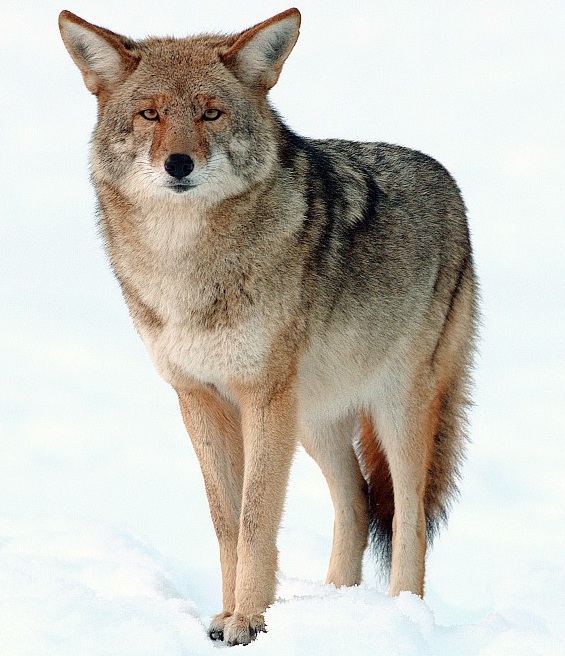 CoyoteCanis latrans
-
 Red FoxVulpes vulpes
-
 Japanese Raccoon DogNyctereutes viverrinus
-
 Maned WolfChrysocyon brachyurus
-
 DholeCuon alpinus
-
 Fennec FoxVulpes zerda
Compare
Questions and answers
What is the scientific name of the African Wild Dog?
The scientific name of the African Wild Dog is Lycaon pictus. Written with its author, the full name is Lycaon pictus (Temminck, 1820).
Which family does the African Wild Dog belong to?
Lycaon pictus belongs to the family Canidae, in the order Carnivora and the class Mammalia.
Where is the African Wild Dog found?
Checklists and occurrence records place Lycaon pictus in 21 countries, including South Africa, Botswana, Kenya, Zambia, Tanzania and Zimbabwe.
What is the conservation status of the African Wild Dog?
The IUCN Red List category recorded for Lycaon pictus is Endangered (EN).
What other names does the African Wild Dog have?
Lycaon pictus is also known in English as African Painted Dog, African Painted Wolf, African Wolf, African Hunting Dog, Cape Hunting Dog and Hunting Dog.
Can you describe the habitat of African wild dogs?
African Wild Dogs primarily inhabit savannas and arid zones, typically occupying open plains and sparse woodlands. They generally avoid forested areas, although a forest-dwelling population occurs in Ethiopia's Harenna Forest.[13][14][15][16]
Sources
Passages the profile rests on
- The species has a distinctive mottled coat with patches of red, black, brown, white, and yellow fur. Source passage: “irregular, mottled coat, which features patches of red, black, brown, white, and yellow fur.” — nationalgeographic.com
- Each individual has a unique coat pattern. Source passage: “Each animal has its own unique coat pattern” — nationalgeographic.com
- The species has large, rounded ears. Source passage: “all have big, rounded ears.” — nationalgeographic.com
- Adults measure 60–75 cm at the shoulders. Source passage: “stands 60 to 75 cm (24 to 30 in) at the shoulders” — English Wikipedia
- Adult head-and-body length ranges from 71 to 112 cm. Source passage: “measures 71 to 112 cm (28 to 44 in) in head-and-body length” — English Wikipedia
- The tail measures 29–41 cm long. Source passage: “has a tail length of 29 to 41 cm (11 to 16 in).” — English Wikipedia
- Adult body weight ranges from 18 to 36 kg. Source passage: “Adults have a weight range of 18 to 36 kg (40 to 79 lb).” — English Wikipedia
- Males are slightly larger than females. Source passage: “with males slightly larger than females.” — pmc.ncbi.nlm.nih.gov
- Individuals have four toes on each foot rather than five on their forefeet. Source passage: “only four toes per foot, unlike other dogs, which have five toes on their forefeet.” — nationalgeographic.com
- The pads of the middle digits are connected by dermal webbing. Source passage: “the pads of the middle digits are connected by dermal webbing.” — pmc.ncbi.nlm.nih.gov
- The middle two toepads are usually fused. Source passage: “The middle two toepads are usually fused.” — English Wikipedia
- The species has stiff bristle-hairs and no underfur. Source passage: “consisting entirely of stiff bristle-hairs with no underfur.” — English Wikipedia
- The species primarily inhabits savannas and arid zones. Source passage: “It inhabits mostly savannas and arid zones” — English Wikipedia
- The species generally avoids forested areas. Source passage: “generally avoiding forested areas.” — English Wikipedia
- The species typically occupies open plains and sparse woodlands. Source passage: “typically roam the open plains and sparse woodlands of sub-Saharan Africa.” — nationalgeographic.com
- A forest-dwelling population occurs in Ethiopia's Harenna Forest, a wet montane forest reaching 2,400 m elevation. Source passage: “A forest-dwelling population has been identified in the Harenna Forest, a wet montane forest up to an elevation of 2,400 m” — English Wikipedia
- The species has been recorded at elevations of 4,050 m on Ethiopia's Sanetti Plateau. Source passage: “a dead individual was found in June 1995 at 4,050 m (13,290 ft) on the Sanetti Plateau.” — English Wikipedia
- The species primarily hunts terrestrial ungulates. Source passage: “The African wild dog is a specialized hunter of terrestrial ungulates” — English Wikipedia
- Its prey includes antelopes and wildebeests. Source passage: “Packs hunt antelopes and will also tackle much larger prey, such as wildebeests” — nationalgeographic.com
- The species supplements its diet with rodents and birds. Source passage: “The dogs supplement their diet with rodents and birds.” — nationalgeographic.com
- The species can consume substantial quantities of meat and bone rapidly. Source passage: “which allow them to consume sizable quantities of meat and bone with impressive speed.” — pmc.ncbi.nlm.nih.gov
- The species commonly hunts at dawn and dusk but also exhibits daytime activity. Source passage: “mostly hunting at dawn and dusk, but it also displays diurnal activity.” — English Wikipedia
- Individuals use stamina and cooperative hunting to exhaust their prey. Source passage: “It captures its prey by using stamina and cooperative hunting to exhaust them.” — English Wikipedia
- The species lives in permanent social packs containing two to 27 adults and yearling pups. Source passage: “It lives in permanent packs consisting of two to 27 adults and yearling pups.” — English Wikipedia
- Solitary living and hunting are extremely rare in this species. Source passage: “solitary living and hunting are extremely rare in the species.” — English Wikipedia
- Males generally remain in their natal packs, whereas females disperse. Source passage: “males remain in the natal pack, while females disperse” — English Wikipedia
- Males in a pack generally outnumber females by three to one. Source passage: “males in any given pack tend to outnumber females 3:1.” — English Wikipedia
- Pack members share food and assist weak or ill individuals. Source passage: “packs have been known to share food and to assist weak or ill members.” — nationalgeographic.com
- The species communicates through touch, actions, and vocalizations. Source passage: “the dogs communicate by touch, actions, and vocalizations.” — nationalgeographic.com
- Lions kill African wild dogs where possible, while spotted hyenas frequently steal their food. Source passage: “the former kill the dogs where possible, whilst the latter are frequent kleptoparasites.” — English Wikipedia
- Southern African populations usually breed between April and July. Source passage: “those in Southern Africa usually breed during the April–July period.” — English Wikipedia
- The gestation period lasts 69–73 days. Source passage: “The gestation period lasts 69–73 days” — English Wikipedia
- Litters typically contain around six to 16 pups, averaging 10. Source passage: “litters containing around six to 16 pups, with an average of 10” — English Wikipedia
- Females have 12–14 mammary glands. Source passage: “females have 12–14 mammae.” — pmc.ncbi.nlm.nih.gov
- Pups begin eating solid food at approximately three to four weeks of age. Source passage: “old enough to eat solid food at three to four weeks of age.” — English Wikipedia
- Pups are weaned at approximately five weeks of age and receive regurgitated meat from other pack members. Source passage: “The pups are weaned at the age of five weeks, when they are fed regurgitated meat by the other pack members.” — English Wikipedia
- The species is classified as endangered on the IUCN Red List. Source passage: “the African wild dog has been listed as endangered on the IUCN Red List since 1990.” — English Wikipedia
- Habitat fragmentation, human conflict, and infectious diseases contribute to the species' population decline. Source passage: “continues to decline as a result of ongoing habitat fragmentation, conflict with humans, and infectious disease.” — pmc.ncbi.nlm.nih.gov
- The species is susceptible to rabies and canine distemper. Source passage: “their susceptibility to diseases like rabies and canine distemper.” — nationalgeographic.com
- Protected wildlife corridors are used to connect increasingly fragmented habitats for the species. Source passage: “benefit from the creation of protected wildlife corridors that help connect their increasingly fragmented habitats.” — nationalgeographic.com
- The species was formerly distributed throughout sub-Saharan Africa. Source passage: “African wild dogs were formerly distributed throughout sub-Saharan Africa” — pmc.ncbi.nlm.nih.gov
- Approximately 600 African wild dogs are kept in zoos for public education and as ambassadors supporting species recovery. Source passage: “There are approximately 600 African wild dogs in zoos, which serve to educate the public and fulfill an important role as ambassadors aiding the recovery effort for this species.” — pmc.ncbi.nlm.nih.gov
Data
- Catalogue of Life, 2026-10-16 XR cc by
- Global Biodiversity Information Facility CC BY 4.0
- Wikidata CC0
- GeoNames CC BY 4.0
- Wikimedia Commons per image; credit shown with each image
- Within the Catalogue of Life, this name comes from The Integrated Taxonomic Information System cc0
References
- Ann. Gen. Sci. Phys. vol.3 p.p. 54, pl. 35 where the name was published
- Wilson, Don E., and DeeAnn M. Reeder, eds. (1993). Mammal Species of the World: A Taxonomic and Geographic Reference, 2nd Ed., 3rd Printing.
- Wilson, Don E., and F. Russell Cole. (2000). Common Names of Mammals of the World.
- Wilson, Don E., and DeeAnn M. Reeder, eds. (2005). Mammal Species of the World: A Taxonomic and Geographic Reference, 3rd Ed., Vols. 1 & 2.
- Sillero-Zubiri, C. / Don E. Wilson and Russell A. Mittermeier, eds. (2009). Family Canidae (Dogs). Handbook of the Mammals of the World. Vol. 1: Carnivores.
- Burgin, Connor J., Don E. Wilson, Russell A. Mittermeier, Anthony B. Rylands, et al. (2020). Illustrated Checklist of the Mammals of the World. Vol. 1. Monotremata to Rodentia.
This species in other databases
Page built on 27 November 2026. See how the catalog is made and all sources and licences.
Cite this page
ScientificNames.org. (2026). Lycaon pictus (African Wild Dog). Retrieved November 27, 2026, from https://scientificnames.org/species/lycaon-pictus
“Lycaon pictus (African Wild Dog).” ScientificNames.org, 2026, scientificnames.org/species/lycaon-pictus. Accessed 27 Nov. 2026.
ScientificNames.org. “Lycaon pictus (African Wild Dog).” Accessed November 27, 2026. https://scientificnames.org/species/lycaon-pictus.
@misc{scientificnames_lycaon_pictus_african_wild_dog,
  author = {{ScientificNames.org}},
  title = {Lycaon pictus (African Wild Dog)},
  year = {2026},
  url = {https://scientificnames.org/species/lycaon-pictus},
  note = {Accessed 2026-11-27}
}