Species · Flowering plants
Scarlet Pimpernel Lysimachia arvensis
The scientific name of the Scarlet Pimpernel is Lysimachia arvensis. It is a species of flowering plant in the family Primulaceae (primrose family), order Ericales.
- Scientific name
- Lysimachia arvensis (L.) U.Manns & Anderb.
- Common name
- Scarlet Pimpernel
- Genus
- Lysimachia
- Family
- Primulaceae (Primrose Family)
- Order
- Ericales
- Class
- Magnoliopsida
- Recorded in
- 131 countries
- Name status
- accepted in the Catalogue of Life

Overview
The species is native to Europe, Western Asia and North Africa and has become naturalised across much of the world. It is distinguished by brightly coloured flowers, most commonly scarlet but also bright blue or pink, and flowers that open in sunshine and close under overcast conditions.
Written 26 November 2026 from the sources listed below. Each statement was checked against the passage it cites; statements that could not be supported were removed.
Appearance
The flowers measure approximately 10–15 millimetres in diameter. The plant produces capsule fruits that split open when mature.[1][2]
Behaviour
As a summer annual, scarlet pimpernel grows close to the ground with creeping stems. As a winter annual, it develops a half-rosette with an upright stem.[3][4]
Its flowers open in sunshine and close under overcast conditions. The flowers can reproduce through self-pollination.[5][6]
Reproduction and life cycle
Scarlet pimpernel produces individual flowers in the leaf axils from spring through autumn. Its stamens have lollipop-shaped hairs that attract pollinators, particularly flies.[7][8]
The capsule fruits ripen between August and October in the Northern Hemisphere. The weight of developing fruits bends the stem, and the seeds are transported by wind or rain.[9][10][11]
Conservation
Scarlet pimpernel is generally regarded as an unwelcome cosmopolitan invasive plant. Human activity has spread the species both intentionally as an ornamental plant and accidentally.[12][13][14]
Uses
Scarlet pimpernel has traditionally been applied externally in some countries to ulcers and wounds that heal slowly. Traditional applications have also included its use as an expectorant, and it was historically used as an antidepressant in ancient Greece.[15][16][17]
The plant has insect-repellent properties against some insects. It has also been deliberately distributed as an ornamental flower.[18][14]
Similar species
The blue-flowered form of scarlet pimpernel can be difficult to distinguish from Lysimachia foemina. Lysimachia foemina is more closely related to Lysimachia monelli than to Lysimachia arvensis.[19][20]
Diet
Grazing livestock generally avoid eating scarlet pimpernel unless pastures are heavily overgrazed or contain unsatisfying stubble.[21]
Classification of the Scarlet Pimpernel
| Kingdom | Plantae |
|---|---|
| Subkingdom | Pteridobiotina |
| Phylum | Tracheophyta |
| Class | Magnoliopsida |
| Order | Ericales |
| Family | Primulaceae (Primrose Family) |
| Subfamily | Myrsinoideae |
| Tribe | Lysimachieae |
| Genus | Lysimachia (Loosestrife) |
| Species | Lysimachia arvensis (L.) U.Manns & Anderb. |
Where the Scarlet Pimpernel is found
Checklists and occurrence records place Lysimachia arvensis in 131 countries across Africa, Asia, Europe, North America, Oceania and South America. GBIF holds 461,993 georeferenced records of it.
Countries where it is native or its origin is not stated
- Afghanistan 62
- Aland Islands 5
- Albania 100
- Algeria 136
- Andorra 11
- Armenia 22
- Austria 2,746
- Azerbaijan 35
- Bahrain 6
- Bangladesh
- Belarus 59
- Belgium 12,810
- Bhutan 7
- Bosnia and Herzegovina 20
- Chad
- China 133
- Croatia 487
- Cyprus 157
- Czechia 2,735
- Denmark 2,483
- Djibouti 10
- Egypt 141
- Eritrea 7
- Estonia 317
- Ethiopia 95
- Finland 174
- France 147,835
- Georgia 138
- Germany 35,188
- Greece 1,699
- Guernsey 63
- Hungary 189
- India 256
- Iran 48
- Iraq 103
- Ireland 1,962
- Isle of Man 594
- Israel 138
- Italy 4,188
- Japan 340
- Jersey 43
- Jordan 14
- Kazakhstan 106
- Kenya 42
- Kosovo 7
- Kuwait 9
- Kyrgyzstan 54
- Latvia 23
- Lebanon 35
- Libya 25
- Liechtenstein 9
- Lithuania 92
- Luxembourg 1,149
- Mauritania
- Moldova 4
- Montenegro 46
- Morocco 294
- Nepal 65
- Norfolk Island 18
- North Macedonia 4
- Norway 822
- Oman 40
- Pakistan 33
- Palestinian Territory 34
- Poland 5,578
- Reunion 39
- Romania 148
- Russia 362
- San Marino
- Saudi Arabia 35
- Serbia 39
- Slovakia 1,126
- Slovenia 163
- Somalia 13
- South Korea 468
- Spain 21,873
- Sri Lanka 5
- Sweden 8,303
- Switzerland 7,357
- Syria 22
- Taiwan 275
- Tajikistan 23
- Tanzania 11
- The Netherlands 24,260
- Tunisia 95
- Turkey 620
- Turkmenistan 10
- United Arab Emirates 6
- United States Minor Outlying Islands 3
- Uzbekistan 131
- Yemen 32
Countries where it has been introduced
- Angola 6
- Argentina 679
- Australia 34,188
- Bolivia 60
- Brazil 885
- Bulgaria 98
- Cabo Verde 21
- Canada 1,444
- Chile 376
- Colombia 147
- Costa Rica 12
- Cuba 2
- Dominican Republic 26
- Ecuador 108
- El Salvador 6
- Gibraltar 5
- Greenland 2
- Guatemala 34
- Haiti 21
- Honduras 23
- Jamaica 18
- Malta 70
- Mauritius 15
- Mexico 3,951
- Myanmar
- New Caledonia 26
- New Zealand 2,672
- Nicaragua 4
- Paraguay
- Peru 151
- Portugal 8,675
- Qatar 8
- Saint Helena 36
- South Africa 857
- Sudan 13
- Ukraine 532
- United Kingdom 79,539
- United States 37,807
- Venezuela 11
- Zimbabwe 1
Regions and cities with the most records
- England, United Kingdom 69,079
- Île-de-France, France 22,274
- California, United States 21,057
- Centre-Val de Loire, France 18,799
- Bourgogne-Franche-Comté, France 16,239
- New South Wales, Australia 15,259
- Auvergne-Rhône-Alpes, France 14,426
- Bavaria, Germany 14,344
- Grand Est, France 13,641
- Hauts-de-France, France 12,622
- Victoria, Australia 10,797
- Occitanie, France 10,668
- Valencia, Spain 5,881
- Pays de la Loire, France 5,728
- Salpêtrière, France 5,591
- Paris 13 Gobelins, France 5,585
- Quinze-Vingts, France 5,575
- Gare, France 5,572
- Saint-Mandé, France 5,521
- Paris 12 Reuilly, France 5,519
- Catalonia, Spain 5,508
- Paris 05 Panthéon, France 5,493
- Paris 11 Popincourt, France 5,491
- Paris 09 Opéra, France 5,471
- Paris 02 Bourse, France 5,459
- Charenton-le-Pont, France 5,455
- Paris, France 5,450
- Paris 03 Temple, France 5,448
- Paris 04 Hôtel-de-Ville, France 5,439
- Maisons-Alfort, France 5,435
- Paris 06 Luxembourg, France 5,435
- Montreuil, France 5,425
- Paris 07 Palais-Bourbon, France 5,424
- Bagnolet, France 5,398
- Vincennes, France 5,393
- Paris 01 Louvre, France 5,376
4 more countries have a few records outside this range
These countries hold a few records of Lysimachia arvensis but lie outside the range the checklists give for it. Such records are often zoo or garden specimens, museum material or vagrants, so the species is not counted as occurring there.
Range as the checklists state it
England (England, Wales, Isle of Man, Scotland, Outer Hebrides, Orkney Isl. [I], Shetland Isl. [I], Isles of Scilly); Ireland (Ireland, Northern Ireland); Denmark; Norway; Sweden; Finland; Netherlands; Belgium; Luxembourg; Germany (Brandenburg, Berlin, Baden-Württemberg, Bayern, Hessen, Hamburg, Mecklenburg-Vorpommern, Niedersachsen, Nordrhein-Westfalen, Rheinland-Pfalz, Schleswig-Holstein, Saarland, Sachsen, Sachsen-Anhalt, Thüringen); Switzerland; Liechtenstein; Austria; Poland; Czech Republic; Slovakia; Hungary; Portugal; Spain; Andorra; Gibraltar [I]; Baleares [I]; France; Channel Isl. (Alderney, Guernsey, Jersey, Sark); Corsica; Sardinia; Italy; Sicily; Pantelleria; Isole Pelagie (Lampedusa); Malta [I]; San Marino; Slovenia; Croatia; Bosnia & Hercegovina; Montenegro; Serbia; Kosovo; North Macedonia; Albania; Romania; Bulgaria [I]; European Turkey; Greece (widespread, incl. all islands); Crete; Estonia; Latvia; Lithuania; Belarus; C-European Russia; E-European Russia; N-European Russia; W-European Russia; Moldova; Ukraine; Crimea [I]; Morocco; Algeria; Tunisia; Libya; Egypt (Desert Oases, Eastern Desert, Great Southwestern Desert, NE-Egypt, Nile Delta, NW-coastal Egypt, NW-coastal Egypt, SE-Egypt); Azores (Santa Maria Isl., Sao Miguel Isl., Terceira, Graciosa, Sao Jorge, Pico, Faial, Flores Isl., Corvo Isl.); Madeira [I] (Madeira Isl. [I], Ilhas Desertas [I], Porto Santo Isl. [I]); Islas Selvagens [I]; Canary Isl. [I] (Lanzarote [I], Fuerteventura [I], Gran Canaria [I], Tenerife [I], La Gomera [I], Hierro [I], La Palma [I]); Cape Verde Isl. [I] (Santo Antao Isl. [I], Ilha de Sao Tiago [I], Fogo Isl. [I]); Mauritania; Chad; Sudan [I]; Soqotra; Angola [I]; Zimbabwe [I]; South Africa [I] (widespread); St. Helena [I]; Mauritius [I]; La Réunion [I]; Russian Far East [I] (Primorye [I]); Kazakhstan; Turkmenistan; Uzbekistan; Kyrgyzstan; Tajikistan; Northern Caucasus; Georgia [Caucasus]; Armenia; Azerbaijan; East Aegaean Isl. (widespread, incl. Rhodos); Turkey (Inner Anatolia); Turkey (N-Anatolia, NE-Anatolia, NW-Anatolia: Bithynia, S-Anatolia, SE-Anatolia, SSW-Anatolia, SW-Anatolia, WN-Anatolia); Iraq (NE-Iraq, NW-Iraq, SE-Iraq: Mesopotamia, S-Iraq); Iran (EC-Iran, NE-Iran: Mts., N-Iran, Iranian Aserbaijan, S-Iran, W-Iran); Afghanistan (Badghys, Baghlan, Balkh, Bamyan, Farah, Kabul, Kandahar, Kunar / Nuristan, Nangarhar, Parwan, Qunduz, Samangan, Takhar); Cyprus (C-Mountains, E-Cyprus, N-Cyprus, S-Cyprus); Lebanon (Antilebanon, C-Lebanon, coastal W-Lebanon); Syria (C-Syrian Desert, NW-Syria, W-Syrian Mountains); Israel (coastal W-Israel, Rift Valley, Negev Desert, N-Israel, Judean Desert); Sinai peninsula (C-Sinai, N-Sinai, S-Sinai); Jordania (S-Jordania, W-Jordania); Saudi Arabia (C-Saudi Arabia, NE-Saudi Arabia, N-Saudi Arabia, Hejaz, Asir, Nejd Desert); Kuwait; Bahrain; Qatar [I]; United Arab Emirates; Oman (Dhofar, Mascat & Oman); Yemen (N-Inner Yemen, W-Yemen); China (Fujian, Guangdong, Zhejiang); South Korea; Japan (Izu Isl., Shikoku, Kyushu); Ryukyu Isl.; Ogasawara Isl. (Chichijima); Volcano Isl. (Kita-Iwojima); Taiwan; Pakistan; Nepal; Bhutan; India (almost throughout); Bangladesh; Myanmar [I]; Australia [I] (Western Australia [I], South Australia [I], Queensland [I], New South Wales [I], Victoria [I], Tasmania [I]); Lord Howe Isl. [I]; Norfolk Isl. [I]; New Zealand [I]; Chatham Isl. [I]; Auckland Isl.; New Caledonia [I]; Easter Isl. [I]; Hawaii [I] (Kure Atoll [I], Midway Isl. [I], Kauai [I], Oahu [I], Molokai [I], Lanai [I], Maui [I], Kahoolawe Isl. [I], Hawaii Isl. [I]); Greenland [I]; Canada [I] (Alberta [I], British Columbia [I], New Brunswick [I], Newfoundland [I], Nova Scotia [I], Ontario [I], Prince Edward Isl. [I], Québec [I], Saskatchewan [I]); USA [I] (Alabama [I], Arkansas [I], Arizona [I], California [I], Connecticut [I], District of Columbia [I], Delaware [I], Florida [I], Georgia [I], Iowa [I], Idaho [I], Illinois [I], Indiana [I], Kansas [I], Kentucky [I], Louisiana [I], Massachusetts [I], Maryland [I], Maine [I], Michigan [I], Minnesota [I], Missouri [I], Mississippi [I], Montana [I], North Carolina [I], Nebraska [I], New Hampshire [I], New Jersey [I], New Mexico [I], Nevada [I], New York [I], Ohio [I], Oklahoma [I], Oregon [I], Pennsylvania [I], Rhode Island [I], South Carolina [I], South Dakota [I], Tennessee [I], Texas [I], Utah [I], Virginia [I], Vermont [I], Washington State [I], Wisconsin [I], West Virginia [I]); Mexico [I] (widespread); Isla Guadalupe [I]; Guatemala [I]; El Salvador [I]; Honduras [I]; Nicaragua [I]; Costa Rica [I]; Cuba [I]; Jamaica [I]; Hispaniola [I] (Dominican Republic [I], Haiti [I]); Colombia [I]; Venezuela [I]; Ecuador [I]; Galápagos [I]; Peru [I]; Bolivia [I]; Brazil [I]; Paraguay [I]; Argentina [I]; Chile [I] (Arica y Parinacota [I], Tarapacá [I], Atacama [I], Coquimbo [I], Valparaíso [I], Metropolitana de Santiago [I], O'Higgins [I], Maule [I], Ñuble [I], Biobío [I], Araucanía [I], Los Lagos [I]); Juan Fdz. Isl. [I]; Tristan da Cunha [I]
A number beside a place is its count of GBIF occurrence records. A place without a number comes from a checklist alone. Records show where a species has been observed or collected, which can include escapes and vagrants.
Common names
English
- Scarlet Pimpernel
- Common Scarlet Pimpernel
- Poor Man's Weather Glass
- Shepherd's Calendar
- Shepherd's Weather-Glass
- Bird's-eye
- Blue Pimpernel
- Poor-man's-weatherglass
- Red Chickweed
- Shepherd's-clock
- Shepherd's-weatherglass
- Wink-a-peep
Names in 46 other languages
- Afrikaans
- Blouselblommetjie, pimpernel, rooimuur
- Arabic
- 'ayn al qat, 'ebeila, أناغالس حقلي, لبين حقلي, نبات عين القط
- Azerbaijani
- Tarla anaqallisi
- Basque
- Pasmo belarra, Pasmo-belar loregorri
- Bulgarian
- Полско огнивче
- Catalan
- Morró
- Chinese
- liu li fan lu, 海綠, 琉璃繁縷, 琉璃繁缕
- Croatian
- Poljska krika, Poljska krivičica, Vidac
- Czech
- drchnička rolní
- Danish
- Grine til middag, Rød arve
- Dutch
- Rood guichelheil
- Estonian
- põld-varsapõlv
- Finnish
- peltopunka, punapeltopunka
- French
- Mouron des champs rouge, buglosse des champs, mouron des champs, mouron rouge
- Galician
- Herba da rabia
- Georgian
- საპონელა
- German
- Acker-Gauchheil, Ackergauchheil
- Greek
- Αναγαλλίς η Αρουραία, Λουλούδι του ουρανού, Λυσιμαχία η Αρουραία, Περδικούλι, Φελλόχορτο
- Hebrew
- מרגנית השדה, מרגנית השדה הכתומה, מרגנית כתומה
- Hindi
- कृष्ण नील
- Hungarian
- Mezei tikszem
- Irish
- Falcaire fiáin
- Italian
- Centonchio, Centonchio dei campi, Mordigallina
- Japanese
- アカバナルリハコベ, ルリハコベ
- Kazakh
- Егістік көздәрі
- Lithuanian
- Raudonžiedis progailis
- Norwegian Bokmål
- nonsblom
- Pashto
- اناگالیس اروېنسیس
- Polish
- Kurzyślad polny
- Portuguese
- Morrião-dos-campos, Morrião-vermelho
- Romanian
- Scânteiuță, scînteuță
- Russian
- očnyj cvet polevoj, Очный цвет полевой
- Scottish Gaelic
- loisgean
- Serbian
- Видова трава
- Slovak
- drchnička roľná
- Slovenian
- navadna kurja češnjica
- Spanish
- Cenicilla, Jabonera europea, murajes, pimpinela escarlata
- Swedish
- rödarv, rödmire
- Tamil
- அனிச்சை
- Turkish
- Farekulağı, Sülük otu, Tarla Farekulağı
- Ukrainian
- Вербозілля польове
- Uzbek
- Sovunoʻt
- Welsh
- Gwlyddyn Mair
- frr
- Hingst an waanj
- hsb
- Čerwjeny kurymór
- pnb
- بلی بوٹی
Synonyms
46 other scientific names have been used for this species and are now treated as synonyms of Lysimachia arvensis.
- Anagallis amoena Heldr.
- Anagallis arabica Duby
- Anagallis arvensis L.
- Anagallis arvensis f. alba Lüdi
- Anagallis arvensis f. arvensis
- Anagallis arvensis f. bicolor Lüdi
- Anagallis arvensis f. carnea (Schrank) Schinz & R.Keller
- Anagallis arvensis f. coerulea Arechav.
- Anagallis arvensis f. decipiens (R.Uechtr.) Schinz & R.Keller
- Anagallis arvensis f. lilacina (Alef.) Schinz & R.Keller
- Anagallis arvensis f. pallida (Hook.fil.) Hyl.
- Anagallis arvensis f. phoenicea (Scop.) H.Hara
- Anagallis arvensis f. purpurea (Douie) P.D.Sell
- Anagallis arvensis subsp. carnea (Schrank) Bertsch & F.Bertsch
- Anagallis arvensis subsp. lilacina (Alef.) Schinz & Thell.
- Anagallis arvensis subsp. pallida (Hook.f.) Hyl.
- Anagallis arvensis subsp. phoenicea (Scop.) Vollm.
- Anagallis arvensis var. arvensis
- Anagallis arvensis var. carnea (Schrank) Rchb.
- Anagallis arvensis var. carnea (Schrank) Boenn.
- Anagallis arvensis var. decipiens R.Uechtr.
- Anagallis arvensis var. immaculata Lej.
- Anagallis arvensis var. lilacina Alef.
- Anagallis arvensis var. pallida (Hook.fil.) Hook.fil.
- Anagallis arvensis var. phoenicea Gouan
- Anagallis arvensis var. phoenicea (Scop.) Baumg.
- Anagallis arvensis var. purpurea Douie
- Anagallis arvensis var. repens (DC.) Merino
- Anagallis arvensis var. tridyma Klett & Richt.
- Anagallis arvensis var. uniflora F.Schmidt
- Anagallis arvensis var. viridiflora Hampe
- Anagallis indica Sweet
- Anagallis jacquemontii Duby
- Anagallis mas Vill.
- Anagallis micrantha Rouy
- Anagallis monelli M.Bieb.
- Anagallis orientalis Fisch., C.A.Mey. & Avé-Lall.
- Anagallis parviflora Loisel.
- Anagallis phoenicea Scop.
- Anagallis phoenicea var. verticillata Gray
Showing 40 of 46.
Subspecies and varieties
- Anagallis arvensis subsp. arvensis (Scarlet Pimpernel) subspecies
- Anagallis arvensis subsp. viridiflora subspecies
Related species
-
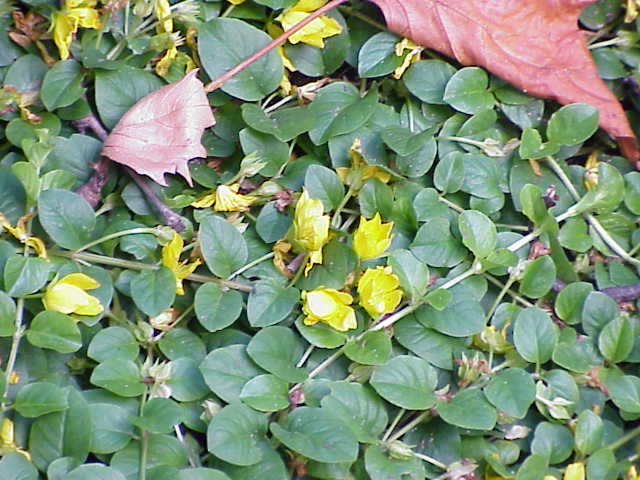 Creeping-JennyLysimachia nummularia
-
 Gooseneck LoosestrifeLysimachia clethroides
-
 Yellow LoosestrifeLysimachia vulgaris
-
 Large Yellow LoosestrifeLysimachia punctata
-
 Arctic StarflowerLysimachia europaea
-
 Pacific StarflowerLysimachia latifolia
-
 Fringed LoosestrifeLysimachia ciliata
-
 Black SaltwortLysimachia maritima
Compare
Questions and answers
What is the scientific name of the Scarlet Pimpernel?
The scientific name of the Scarlet Pimpernel is Lysimachia arvensis. Written with its author, the full name is Lysimachia arvensis (L.) U.Manns & Anderb..
Which family does the Scarlet Pimpernel belong to?
Lysimachia arvensis belongs to the family Primulaceae, in the order Ericales and the class Magnoliopsida.
Where is the Scarlet Pimpernel found?
Checklists and occurrence records place Lysimachia arvensis in 131 countries, including France, Germany, The Netherlands, Spain, Belgium and Sweden.
What other names does the Scarlet Pimpernel have?
Lysimachia arvensis is also known in English as Common Scarlet Pimpernel, Poor Man's Weather Glass, Shepherd's Calendar, Shepherd's Weather-Glass, Bird's-eye and Blue Pimpernel.
Sources
Passages the profile rests on
- The plant produces capsule fruits that split open when mature. Source passage: “The dehiscent capsule fruits ripen from August to October in the northern hemisphere.” — English Wikipedia
- The flowers measure approximately 10–15 millimetres in diameter. Source passage: “The orange, red or blue, radially symmetric flowers, about 10–15 millimetres (0.4–0.6 in) in diameter” — English Wikipedia
- As a summer annual, the plant grows close to the ground with creeping stems. Source passage: “When found as a summer annual, the scarlet pimpernel has a low-growing creeping habit” — English Wikipedia
- As a winter annual, the plant develops a half-rosette with an upright stem. Source passage: “but as a winter annual, it forms a half-rosette with an upright stem.” — English Wikipedia
- Its flowers open in sunshine and close under overcast conditions. Source passage: “Scarlet pimpernel flowers open only when the sun shines, and even close in overcast conditions.” — English Wikipedia
- The flowers can reproduce through self-pollination. Source passage: “but the flowers are also capable of autopollination.” — English Wikipedia
- The plant produces individual flowers in the leaf axils from spring through autumn. Source passage: “are produced singly in the leaf axils from spring to autumn.” — English Wikipedia
- The plant's stamens have lollipop-shaped hairs that attract pollinators, particularly flies. Source passage: “The stamens have lollipop hairs and therefore attract a variety of pollinators, especially flies” — English Wikipedia
- The capsule fruits ripen between August and October in the Northern Hemisphere. Source passage: “The dehiscent capsule fruits ripen from August to October in the northern hemisphere.” — English Wikipedia
- The weight of the developing fruits bends the stem. Source passage: “The weight of the fruiting body bends the stem” — English Wikipedia
- The plant's seeds are transported by wind or rain. Source passage: “the seeds are transported by the wind or rain.” — English Wikipedia
- Human activity has spread the species both intentionally as an ornamental plant and accidentally. Source passage: “The species has been distributed widely by humans, either deliberately as an ornamental flower or accidentally.” — English Wikipedia
- The species is generally regarded as an unwelcome cosmopolitan invasive plant. Source passage: “Lysimachia arvensis is generally unwelcome as a cosmopolitan invasive species” — English Wikipedia
- The species has been deliberately distributed as an ornamental flower. Source passage: “deliberately as an ornamental flower” — English Wikipedia
- The plant has traditionally been applied externally in some countries to ulcers and wounds that heal slowly. Source passage: “the plant material has been applied externally to slow-healing ulcers and wounds.” — English Wikipedia
- Traditional applications of the plant have included its use as an expectorant. Source passage: “It also has been applied as an expectorant” — English Wikipedia
- The plant has historically been used as an antidepressant in ancient Greece. Source passage: “It was used as an antidepressant in ancient Greece” — English Wikipedia
- The plant has insect-repellent properties against some insects. Source passage: “Lysimachia arvensis is insecticidal, or at least is repellent to some insects” — English Wikipedia
- The blue-flowered form of the species can be difficult to distinguish from Lysimachia foemina. Source passage: “The blue form can be difficult to distinguish from L. foemina” — English Wikipedia
- Lysimachia foemina is more closely related to Lysimachia monelli than to Lysimachia arvensis. Source passage: “Lysimachia foemina is more closely related to Lysimachia monelli than to Lysimachia arvensis” — English Wikipedia
- Grazing livestock generally avoid eating the plant unless pastures are heavily overgrazed or contain unsatisfying stubble. Source passage: “grazing livestock generally avoid eating it except in conditions of overgrazing or grazing of unsatisfying stubble.” — English Wikipedia
Data
- Catalogue of Life, 2026-10-16 XR cc by
- Global Biodiversity Information Facility CC BY 4.0
- Wikidata CC0
- GeoNames CC BY 4.0
- Wikimedia Commons per image; credit shown with each image
- Within the Catalogue of Life, this name comes from Synonymic Checklists of the Vascular Plants of the World cc by
References
- U.Manns & Anderb. (2009). Willdenowia 39(1): 51 (2009). where the name was published
This species in other databases
- Catalogue of Life 6QQND
- Wikidata Q21327968
- iNaturalist 791928
- World Flora Online wfo-0000744184
- GRIN 467243
Page built on 28 November 2026. See how the catalog is made and all sources and licences.
Cite this page
ScientificNames.org. (2026). Lysimachia arvensis (Scarlet Pimpernel). Retrieved November 28, 2026, from https://scientificnames.org/species/lysimachia-arvensis
“Lysimachia arvensis (Scarlet Pimpernel).” ScientificNames.org, 2026, scientificnames.org/species/lysimachia-arvensis. Accessed 28 Nov. 2026.
ScientificNames.org. “Lysimachia arvensis (Scarlet Pimpernel).” Accessed November 28, 2026. https://scientificnames.org/species/lysimachia-arvensis.
@misc{scientificnames_lysimachia_arvensis_scarlet_pimpernel,
  author = {{ScientificNames.org}},
  title = {Lysimachia arvensis (Scarlet Pimpernel)},
  year = {2026},
  url = {https://scientificnames.org/species/lysimachia-arvensis},
  note = {Accessed 2026-11-28}
}