Species · Mammals
Chinese Ferret-badger Melogale moschata
The scientific name of the Chinese Ferret-badger is Melogale moschata. It is a species of mammal in the family Mustelidae (mustelids), order Carnivora. The name dates from 1831.
- Scientific name
- Melogale moschata (Gray, 1831)
- Common name
- Chinese Ferret-badger
- Genus
- Melogale
- Family
- Mustelidae (Mustelids)
- Order
- Carnivora
- Class
- Mammalia
- Red List category
- LC Least Concern
- Recorded in
- 8 countries
- Name status
- accepted in the Catalogue of Life

Overview
Melogale moschata inhabits grasslands, open forests, tropical rainforests, and subtropical forests, and occurs from northeastern India through southern China to Hong Kong and northern Indochina, as well as Taiwan and Hainan Island. It has distinctive mask-like facial markings, a slender body, large ears, and a long bushy tail.
Written 26 November 2026 from the sources listed below. Each statement was checked against the passage it cites; statements that could not be supported were removed.
Appearance
The Chinese Ferret-badger has a black face with a white forehead bordering a variable dark mask. Its distinctive mask-like facial markings are a characteristic feature.[1][2]
Its dorsal fur ranges from dark chocolate-brown through fawn-brown to grayish-brown, while its underside ranges from white to orange. Its short fur usually includes a stripe along the middle of the back and a spot on the crown.[3][4]
It has a slender body, large ears, and a long bushy tail. Its elongated, strong foreclaws are adapted for digging.[5][6]
Its average body length is 33–43 cm, excluding the tail, and its tail measures approximately 15–23 cm. Adults weigh between 1 and 3 kg.[7][8][9]
Habitat
The Chinese Ferret-badger inhabits grasslands, open forests, tropical rainforests, and subtropical forests. Its distribution extends from northeastern India through southern China to Hong Kong and northern Indochina, and includes Taiwan and Hainan Island.[10][11][12][13]
It temporarily occupies agricultural habitats, including rice paddies, soybean fields, cotton fields, and grass fields. It also uses farmland and vegetable gardens as feeding sites.[14][15]
Diet
The Chinese Ferret-badger is omnivorous. Its diet includes small rodents, insects, amphibians, invertebrates, and occasionally fruit.[16][17]
Earthworms, insects, and amphibians are among its most important food items. It also feeds on cockroaches and other pest insects.[18][19]
It eats fleshy fruits including Chinese plum, oriental raisin tree, date-plum, and Chinese kiwi.[20]
Behaviour
The Chinese Ferret-badger is active at dusk and during the night. It is capable of climbing well.[21][22]
Its typical home range measures approximately 4–9 hectares. A study conducted between 1994 and 1996 recorded average home ranges of approximately 10.6 hectares.[23][24]
Male and female home ranges overlap, suggesting that individuals do not maintain territorial boundaries against one another. Individuals move between resting sites without establishing permanent residences.[25][26]
When alarmed, it releases foul-smelling anal secretions. It may defend itself fiercely when attacked.[27][28]
Reproduction and life cycle
Mating takes place in March. Females may give birth throughout the year, with births commonly occurring in May or June and again in September or October.[29][30]
A typical litter contains two to three cubs. Females give birth to litters of up to three young in May or June, and the young are born in burrows.[31][32][33]
Mothers feed and care for their cubs until they are approximately two to three months old.[34]
Conservation
The Chinese Ferret-badger is classified as Least Concern on the IUCN Red List. It is listed in Schedule I Part I of India's Wildlife (Protection) Act.[35][36]
Uses
The Chinese Ferret-badger is hunted for its fur in southern China. Some members of the Bhotia and Lepha tribes encourage the species to enter their huts.[37][38]
Classification of the Chinese Ferret-badger
| Kingdom | Animalia |
|---|---|
| Phylum | Chordata |
| Subphylum | Vertebrata |
| Infraphylum | Gnathostomata |
| Parvphylum | Osteichthyes |
| Megaclass | Tetrapoda |
| Class | Mammalia (Mammal) |
| Subclass | Theria |
| Infraclass | Eutheria |
| Order | Carnivora (Carnivores) |
| Suborder | Caniformia (Dog-like Carnivores) |
| Family | Mustelidae (Mustelids) |
| Subfamily | Helictidinae (Ferret-badgers) |
| Genus | Melogale (Ferret-badger) |
| Species | Melogale moschata (Gray, 1831) |
Where the Chinese Ferret-badger is found
Checklists and occurrence records place Melogale moschata in 8 countries across Asia. GBIF holds 1,136 georeferenced records of it.
Countries
Regions and cities with the most records
- Zhejiang, China 634
- Taiwan, Taiwan 118
- Jiangxi, China 90
- Wufeng, Taiwan 33
- Caotun, Taiwan 29
- Zhongxing New Village, Taiwan 29
- Miaoli, Taiwan 26
- Jiangsu, China 25
- Nantou, Taiwan 23
- Toufen, Taiwan 23
- Chang-hua, Taiwan 21
- Changhua, Taiwan 21
- Yujing, Taiwan 21
- Puli, Taiwan 19
- Tianzhong, Taiwan 19
- Shetou, Taiwan 17
- Xiaolingwei, China 17
- Yongjing, Taiwan 17
- Yuanlin, Taiwan 17
- Beidou, Taiwan 15
- Fujian, China 15
- Guangdong, China 15
- Tianwei, Taiwan 15
- Nanjing, China 13
- Zhudong, Taiwan 13
- Hsinchu, Taiwan 10
- Lao Cai, Vietnam 10
- Lugu, Taiwan 10
- Yunnan, China 9
- Sichuan, China 8
- Zhubei, Taiwan 8
- Humen, China 7
- Pok Fu Lam, Hong Kong 7
- Fuyang, China 6
- Lào Cai, Vietnam 6
- Taichung, Taiwan 6
Range as the checklists state it
Southern Asia
A number beside a place is its count of GBIF occurrence records. A place without a number comes from a checklist alone. Records show where a species has been observed or collected, which can include escapes and vagrants.
Common names
English
- Chinese Ferret-badger
- Chinese Ferret Badger
- East Asian Ferret Badger
- Oriental Ferret Badger
- Small-toothed Ferret Badger
- Small-toothed Ferret-badger
Names in 17 other languages
- Arabic
- غرير ابن مقرض الصيني
- Breton
- Furig-Broc'h Sinat
- Chinese
- 鼬獾, 鼬貛
- Czech
- jezevec šedý
- Dutch
- Chinese Zonnedas
- Finnish
- Aurinkomäyrä, kiinanhillerimäyrä
- French
- Blaireau-furet de Chine
- German
- China-Sonnendachs, Chinesischer Sonnendachs
- Japanese
- シナイタチアナグマ
- Korean
- 작은이빨족제비오소리, 중국족제비오소리
- Norwegian Bokmål
- Kinesisk Ildergrevling
- Polish
- Ryjonos piżmowy
- Portuguese
- Furão-texugo-chinês
- Russian
- Китайский барсук
- Spanish
- Tejón Chino, tejón turón chino
- Thai
- หมาหริ่งจีน
- Turkish
- Doğu Asya güneş porsuğu
Synonyms
One other scientific name has been used for this species and is now treated as a synonym of Melogale moschata.
- Helictis moschata Gray, 1831
Subspecies and varieties
- Melogale moschata ferreogrisea (Northern China Small-toothed Ferret Badger) subspecies
- Melogale moschata millsi (Indian Small-toothed Ferret Badger) subspecies
- Melogale moschata moschata (Central China Small-toothed Ferret Badger) subspecies
- Melogale moschata sorella (Southeast China Ferret Badger) subspecies
- Melogale moschata taxilla (Vietnam Small-toothed Ferret Badger) subspecies
Related species
-
 Javan Ferret-badgerMelogale orientalis
-
 Burmese Ferret-badgerMelogale personata
- Formosan Ferret-badgerMelogale subaurantiaca
- Vietnam Ferret-badgerMelogale cucphuongensis
- Bornean Ferret BadgerMelogale everetti
-
 WolverineGulo gulo
-
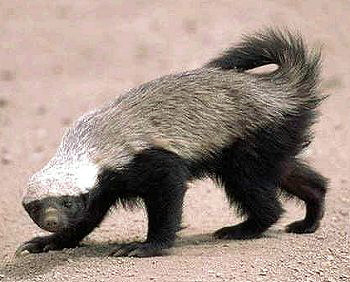 Honey BadgerMellivora capensis
-
 StoatMustela erminea
Compare
Questions and answers
What is the scientific name of the Chinese Ferret-badger?
The scientific name of the Chinese Ferret-badger is Melogale moschata. Written with its author, the full name is Melogale moschata (Gray, 1831).
Which family does the Chinese Ferret-badger belong to?
Melogale moschata belongs to the family Mustelidae, in the order Carnivora and the class Mammalia.
Where is the Chinese Ferret-badger found?
Checklists and occurrence records place Melogale moschata in 8 countries, including China, Taiwan, Vietnam, Laos, Hong Kong and India.
What is the conservation status of the Chinese Ferret-badger?
The IUCN Red List category recorded for Melogale moschata is Least Concern (LC).
What other names does the Chinese Ferret-badger have?
Melogale moschata is also known in English as Chinese Ferret Badger, East Asian Ferret Badger, Oriental Ferret Badger, Small-toothed Ferret Badger and Small-toothed Ferret-badger.
Where do ferret badgers live?
The Chinese Ferret-badger inhabits grasslands, tropical and subtropical forests, and open forests. Its distribution extends from northeastern India through southern China to Hong Kong and northern Indochina, and includes Taiwan and Hainan Island.[10][11][12][13]
Is a badger a carnivore, herbivore, or omnivore?
The Chinese Ferret-badger is omnivorous.[16]
What is a badgers' favorite food?
Earthworms, insects, and amphibians are among the Chinese Ferret-badger's most important food items.[18]
Sources
Passages the profile rests on
- The species has distinctive mask-like facial markings. Source passage: “Distinctive mask-like face markings distinguish the Chinese ferret-badger from most other oriental mustelids” — English Wikipedia
- Its face is black with a white forehead bordering a variable dark mask. Source passage: “The face is black with a white forehead, which borders a dark, variable "mask."” — animaldiversity.org
- Its dorsal fur ranges from dark chocolate-brown through fawn-brown to grayish-brown, while its underside ranges from white to orange. Source passage: “The dorsal color has phases that vary from dark chocolate-brown, to fawn-brown, to grayish-brown. The underside can vary from white to orange.” — animaldiversity.org
- Its fur is short and usually includes a stripe along the middle of the back and a spot on the crown. Source passage: “The fur of Chinese ferret badgers is short. There usually is a stripe down the middle of the back and a spot on the crown of the head” — animaldiversity.org
- The species has a long bushy tail, large ears, and a slender body. Source passage: “This species has a characteristic long bushy tail, large ears, and a slender body.” — animaldiversity.org
- The species has elongated, strong foreclaws adapted for digging. Source passage: “They also have elongated, strong fore claws needed for digging” — animaldiversity.org
- Its average body length is 33–43 cm, excluding the tail. Source passage: “The average body size of the Chinese ferret-badger is 33 to 43 centimetres (13 to 17 in)” — English Wikipedia
- Its tail measures approximately 15–23 cm. Source passage: “with a tail of 15 to 23 centimetres (5.9 to 9.1 in).” — English Wikipedia
- Adults weigh between 1 and 3 kg. Source passage: “They can weigh from 1 to 3 kg” — animaldiversity.org
- The species inhabits grasslands, open forests, and tropical rainforests. Source passage: “The Chinese ferret-badger lives in grassland, open forests, and tropical rainforests” — English Wikipedia
- It occurs in tropical and subtropical forests as well as grasslands. Source passage: “Melogale moschata live in tropical and subtropical forests, and can also be found in grasslands” — animaldiversity.org
- The species occurs on Taiwan and Hainan Island. Source passage: “as well as in Taiwan, and Hainar” — animaldiversity.org
- Its range extends from northeastern India through southern China to Hong Kong and northern Indochina. Source passage: “from northeast India to southern China, including Hainan Island, and south to Hong Kong and northern Indochina.” — English Wikipedia
- It temporarily occupies agricultural habitats including rice paddies, soybean fields, cotton fields, and grass fields. Source passage: “temporarily reside in agricultural areas such as rice paddies, soybean, cotton, or grass fields.” — English Wikipedia
- It uses farmland and vegetable gardens as feeding sites. Source passage: “using farmland and vegetable gardens as feeding sites.” — English Wikipedia
- The species is omnivorous. Source passage: “Melogale moschata is an omnivore.” — animaldiversity.org
- Its diet includes small rodents, insects, amphibians, invertebrates, and occasionally fruit. Source passage: “The diet consists of small rodents, insects, amphibians, invertebrates, and occasionally fruit.” — animaldiversity.org
- Earthworms, insects, and amphibians are among its most important food items. Source passage: “The most important food items eaten by ferret badgers are earthworms, insects, and amphibians” — animaldiversity.org
- It feeds on cockroaches and other pest insects. Source passage: “People like these animals around because they feed on certain pest insects such as cockroaches” — animaldiversity.org
- It eats fleshy fruits including Chinese plum, oriental raisin tree, date-plum, and Chinese kiwi. Source passage: “It also eats fleshy fruits such as of Chinese plum, oriental raisin tree, date-plum and Chinese kiwi.” — English Wikipedia
- The species is active at dusk and during the night. Source passage: “The Chinese ferret-badger is active at dusk and at night.” — English Wikipedia
- It is capable of climbing well. Source passage: “It is a good climber.” — English Wikipedia
- Its home ranges average approximately 10.6 hectares according to a study conducted between 1994 and 1996. Source passage: “average around 10.6 ha (26 acres) in area.” — English Wikipedia
- Its typical home range measures approximately 4–9 hectares. Source passage: “Their home ranges are typically from 4 to 9 hectares in size.” — animaldiversity.org
- Male and female home ranges overlap, suggesting that individuals do not maintain territorial boundaries against one another. Source passage: “The home ranges of male and female ferret-badgers overlap, suggesting a lack of territoriality between members of the species.” — English Wikipedia
- Individuals move between resting sites without establishing permanent residences. Source passage: “ferret-badgers are relatively nomadic creatures, moving from one resting spot to the next without establishing permanent residence.” — English Wikipedia
- When alarmed, it releases foul-smelling anal secretions. Source passage: “When alarmed it emits foul-smelling anal secretions.” — English Wikipedia
- It may defend itself fiercely when attacked. Source passage: “Chinese ferret badgers will fiercely defend themselves if attacked” — animaldiversity.org
- Mating takes place in March. Source passage: “Chinese ferret-badgers mate in March.” — English Wikipedia
- Females may give birth throughout the year, with births commonly occurring in May or June and again in September or October. Source passage: “Chinese ferret badgers give birth to cubs, which can be born year round, but usually arrive in late spring (May or June) and again in late fall (September and October).” — animaldiversity.org
- A typical litter contains two to three cubs. Source passage: “On average, two to three cubs make up a litter.” — animaldiversity.org
- Females give birth to litters of up to three young in May or June. Source passage: “The female gives birth to a litter of up to three young in May or June.” — English Wikipedia
- Young are born in burrows. Source passage: “These litters are born in burrows.” — animaldiversity.org
- Mothers feed and care for their cubs until they are approximately two to three months old. Source passage: “The mother feeds the cubs until they are two to three months of age” — animaldiversity.org
- The species is classified as Least Concern on the IUCN Red List. Source passage: “It is listed as Least Concern on the IUCN Red List” — English Wikipedia
- The species is listed in Schedule I Part I of India's Wildlife (Protection) Act. Source passage: “The Chinese ferret badger is listed in Schedule I part I of the Indian Wildlife (Protection) Act” — animaldiversity.org
- The species is hunted for its fur in southern China. Source passage: “Ferret-badgers are among the most hunted fur-bearing animals in Southern China” — English Wikipedia
- Some members of the Bhotia and Lepha tribes encourage the species to enter their huts. Source passage: “Some people, such as members of the Bhotia and the Lepha tribes, encourage Chinese ferret badgers to come into their huts” — animaldiversity.org
Data
- Catalogue of Life, 2026-10-16 XR cc by
- Global Biodiversity Information Facility CC BY 4.0
- Wikidata CC0
- GeoNames CC BY 4.0
- Wikimedia Commons per image; credit shown with each image
- Within the Catalogue of Life, this name comes from The Integrated Taxonomic Information System cc0
References
- Proc. Zool. Soc. Lond. vol.1831 p.94 where the name was published
- Wilson, Don E., and DeeAnn M. Reeder, eds. (1993). Mammal Species of the World: A Taxonomic and Geographic Reference, 2nd Ed., 3rd Printing.
- Wilson, Don E., and F. Russell Cole. (2000). Common Names of Mammals of the World.
- Wilson, Don E., and DeeAnn M. Reeder, eds. (2005). Mammal Species of the World: A Taxonomic and Geographic Reference, 3rd Ed., Vols. 1 & 2.
- Larivière, S., and A. P. Jennings / Don E. Wilson and Russell A. Mittermeier, eds. (2009). Family Mustelidae (Weasels and relatives). Handbook of the Mammals of the World. Vol. 1: Carnivores.
- Sato, Jun J. / Proulx, G., and E. Do Linh San, eds. (2016). Chapter 1: The Systematics and Taxonomy of the World’s Badger Species - A Review. Badgers: Systematics, Biology, Conservation and Research Techniques.
- Burgin, Connor J., Don E. Wilson, Russell A. Mittermeier, Anthony B. Rylands, et al. (2020). Illustrated Checklist of the Mammals of the World. Vol. 1. Monotremata to Rodentia.
This species in other databases
Page built on 26 November 2026. See how the catalog is made and all sources and licences.
Cite this page
ScientificNames.org. (2026). Melogale moschata (Chinese Ferret-badger). Retrieved November 26, 2026, from https://scientificnames.org/species/melogale-moschata
“Melogale moschata (Chinese Ferret-badger).” ScientificNames.org, 2026, scientificnames.org/species/melogale-moschata. Accessed 26 Nov. 2026.
ScientificNames.org. “Melogale moschata (Chinese Ferret-badger).” Accessed November 26, 2026. https://scientificnames.org/species/melogale-moschata.
@misc{scientificnames_melogale_moschata_chinese_ferret_badger,
  author = {{ScientificNames.org}},
  title = {Melogale moschata (Chinese Ferret-badger)},
  year = {2026},
  url = {https://scientificnames.org/species/melogale-moschata},
  note = {Accessed 2026-11-26}
}