Species · Mammals
Eurasian Harvest Mouse Micromys minutus
The scientific name of the Eurasian Harvest Mouse is Micromys minutus. It is a species of mammal in the family Muridae (mice), order Rodentia. The name dates from 1771.
- Scientific name
- Micromys minutus (Pallas, 1771)
- Common name
- Eurasian Harvest Mouse
- Genus
- Micromys
- Family
- Muridae (Mice)
- Order
- Rodentia
- Class
- Mammalia
- Red List category
- LC Least Concern
- Environment
- terrestrial
- Recorded in
- 33 countries
- Name status
- accepted in the Catalogue of Life

Overview
Micromys minutus inhabits cereal fields, wetlands, reed beds, grasslands, hedgerows and woodlands. It has a prehensile tail, broad gripping feet and an adult body mass of 4 to 11 g.
Written 26 November 2026 from the sources listed below. Each statement was checked against the passage it cites; statements that could not be supported were removed.
Appearance
The upperparts are brown with yellowish or reddish tinges, while the underparts range from white to cream or buff. The species has large eyes and ears, a small nose and short, stubble-like whiskers.[1][2]
Its fur is thick and soft, becoming thicker during winter than summer. Its prehensile tail is usually two-coloured and lacks fur at the tip.[3][4]
Its broad feet have a large, somewhat opposable outermost toe that helps it grip vegetation.[5]
Adults measure 55–75 mm in body length, with tails measuring 50–75 mm. Adult body mass ranges from 4 to 11 g.[6][7]
The species is described as the smallest rodent in Europe.[8]
Habitat
The Eurasian Harvest Mouse inhabits cereal fields containing crops such as wheat, rice and oats. Its habitats also include reed beds, long grass and hedgerows.[9][10]
In Italy and East Asia, the species also inhabits rice fields. Its preferred habitats include high meadows, reed grass plots, bushland interspersed with grasses and grain fields.[11][12]
The species originally inhabited humid areas with tall, persistent grasses near rivers, ponds and lakes. When agricultural harvesting removes vegetation, individuals may shelter in shallow soil burrows, barns or silos.[13][14]
Diet
The species feeds mainly on seeds and insects, while also consuming nectar and fruit. Its diet includes grass seeds, fruit and grain.[15][16]
During summer, it also consumes insects and larvae, including moths, caterpillars and grasshoppers. During winter, individuals may feed on stored human food in grain silos and haystacks.[17][18]
Behaviour
The species uses its prehensile tail as an additional gripping limb when climbing vegetation. Individuals use their feet and tails to grasp stems and leaves while keeping their forepaws free for feeding and grooming.[19][20]
The species is moderately sociable and occupies small, overlapping home ranges. Population density generally ranges from 100 to 200 individuals per hectare.[21][22]
During winter, as many as 5,000 individuals may congregate in a barn or grain storage area. The species does not hibernate.[23][24]
Individuals remain active in alternating periods of sleeping and feeding throughout the day and night. When threatened, they may remain motionless against grass stalks as a camouflage response.[25][26]
If danger persists, individuals drop toward ground level to escape predators.[27]
Reproduction and life cycle
Breeding generally occurs between April and September. Females produce an average litter of five to six young after a gestation period of approximately 21 days.[28][29]
Litter sizes range from one to thirteen young, usually comprising three to eight. Under favourable conditions, females can produce several litters in rapid succession.[30][31]
Litters are born in elevated nests constructed approximately 100–130 cm above ground. These spherical structures are woven from grass and attached to stems above ground.[32][33]
Breeding nests measure approximately 60–130 mm in diameter and consist of three tightly woven layers of grass blades.[34][35]
Young are born naked, blind and dependent on parental care. They reach sexual maturity at approximately 35 days old.[36][37]
Conservation
The species has been protected under the UK Wildlife and Countryside Act 1981.[38]
Classification of the Eurasian Harvest Mouse
| Kingdom | Animalia |
|---|---|
| Phylum | Chordata |
| Subphylum | Vertebrata |
| Infraphylum | Gnathostomata |
| Parvphylum | Osteichthyes |
| Megaclass | Tetrapoda |
| Class | Mammalia (Mammal) |
| Subclass | Theria |
| Infraclass | Eutheria |
| Order | Rodentia (Rodent) |
| Suborder | Myomorpha (Mice) |
| Superfamily | Muroidea |
| Family | Muridae (Mice) |
| Subfamily | Murinae (Old World Mice) |
| Genus | Micromys |
| Species | Micromys minutus (Pallas, 1771) |
Where the Eurasian Harvest Mouse is found
Checklists and occurrence records place Micromys minutus in 33 countries. GBIF holds 41,265 georeferenced records of it.
Countries
- Austria 151
- Belarus 3
- Belgium 806
- Bulgaria 73
- Croatia 43
- Czechia 30
- Denmark 2,717
- Estonia 267
- Finland 2,096
- France 7,199
- Germany 2,598
- Hungary 72
- Italy 53
- Japan 1,117
- Latvia 3
- Lithuania 7
- Luxembourg 109
- Montenegro 3
- North Macedonia 5
- Norway 113
- Poland 2,364
- Romania 58
- Russia 274
- Serbia 27
- Slovakia 5
- Slovenia 18
- South Korea 750
- Spain 415
- Sweden 213
- Switzerland 2,149
- The Netherlands 9,228
- Ukraine 879
- United Kingdom 7,420
Regions and cities with the most records
- England, United Kingdom 6,514
- Rhoon, The Netherlands 3,635
- Oud-Beijerland, The Netherlands 3,609
- Spijkenisse, The Netherlands 3,590
- Barendrecht, The Netherlands 3,534
- Hoogvliet, The Netherlands 3,525
- Ridderkerk, The Netherlands 2,198
- Hendrik-Ido-Ambacht, The Netherlands 2,148
- Papendrecht, The Netherlands 2,126
- Zwijndrecht, The Netherlands 2,120
- Dordrecht, The Netherlands 2,104
- Schiedam, The Netherlands 2,080
- Alblasserdam, The Netherlands 2,076
- Rotterdam, The Netherlands 2,065
- Vlaardingen, The Netherlands 2,038
- Krimpen aan den IJssel, The Netherlands 1,999
- Bergschenhoek, The Netherlands 1,971
- Capelle aan den IJssel, The Netherlands 1,962
- Berkel en Rodenrijs, The Netherlands 1,931
- Middelharnis, The Netherlands 1,929
- Hellevoetsluis, The Netherlands 1,895
- Maassluis, The Netherlands 1,729
- Steenbergen, The Netherlands 1,664
- Bourgogne-Franche-Comté, France 1,212
- Auvergne-Rhône-Alpes, France 1,165
- Hauts-de-France, France 1,110
- Neuchâtel, Switzerland 1,104
- Waddinxveen, The Netherlands 995
- Rotherham, United Kingdom 964
- Vaud, Switzerland 958
- Burngreave, United Kingdom 949
- Sheffield, United Kingdom 938
- Rawmarsh, United Kingdom 937
- Maltby, United Kingdom 923
- Dinnington, United Kingdom 917
- Dronfield, United Kingdom 906
10 more countries have a few records outside this range
These countries hold a few records of Micromys minutus but lie outside the range the checklists give for it. Such records are often zoo or garden specimens, museum material or vagrants, so the species is not counted as occurring there.
Range as the checklists state it
Europe & Northern Asia (excluding China)
A number beside a place is its count of GBIF occurrence records. A place without a number comes from a checklist alone. Records show where a species has been observed or collected, which can include escapes and vagrants.
Common names
English
- Eurasian Harvest Mouse
- Harvest Mouse
- Indochinese Harvest Mouse
Names in 31 other languages
- Belarusian
- Мыш-малышка
- Catalan
- Ratolí de les collites
- Chinese
- 巢鼠
- Danish
- Dværgmus
- Dutch
- Dwergmuis
- Estonian
- pisihiir
- Finnish
- vaivaishiiri
- French
- Rat des moissons
- German
- Eurasische Zwergmaus, Zwergmaus
- Greek
- Νανοποντικός
- Hebrew
- עכברון הקציר
- Hungarian
- törpeegér
- Italian
- Topolino delle risaie
- Japanese
- カヤネズミ
- Kazakh
- Кішкентай қаптесер
- Korean
- 멧밭쥐
- Latvian
- pundurpele
- Lithuanian
- Pelė mažylė
- Norwegian Bokmål
- dvergmus
- Polish
- Badylarka, Badylarka pospolita
- Portuguese
- Rato-espigueiro
- Russian
- Мышь-малютка
- Serbian
- Patuljasti miš, патуљасти миш
- Slovak
- Myška drobná
- Slovenian
- pritlikava miš
- Spanish
- Ratón Espiguero
- Swedish
- dvärgmus
- Turkish
- Cüce Fare, Hasat Faresi
- Ukrainian
- Миша-крихітка
- Welsh
- Llygod yr Yd, Llygoden yr Yd, Llygoden yr ŷd
- fry
- Nôtmûs
Synonyms
66 other scientific names have been used for this species and are now treated as synonyms of Micromys minutus.
- Micromys agilis Dehne, 1841
- Micromys arundinaceus
- Micromys campestris
- Micromys danubialis
- Micromys erythrotis Blyth, 1856
- Micromys fenniae
- Micromys meridionalis
- Micromys messorius
- Micromys minatus
- Micromys minutus aokii Kuroda, 1922
- Micromys minutus berezowskii Argyropulo, 1929
- Micromys minutus brauneri Martino, 1930
- Micromys minutus danubialis Simionnescu, 1971
- Micromys minutus hertigi Johnson and Jones, 1955
- Micromys minutus hondonis Kuroda, 1933
- Micromys minutus japonicus Thomas, 1906
- Micromys minutus kastschenkoi Charlamagne, 1915
- Micromys minutus kytmanovi Kastschenko, 1910
- Micromys minutus mehelyi Bolkay, 1925
- Micromys minutus minutus (Pallas, 1771)
- Micromys minutus pianmaensis Peng, 1981
- Micromys minutus shenshiensis Li, Wu & Shao, 1965
- Micromys minutus subobscurus Fritsche, 1934
- Micromys minutus takasagoensis Tokuda, 1941
- Micromys minutus ussuricus Barrett-Hamilton, 1899
- Micromys minutus ussuricus Thomas, 1906
- Micromys minutus zhenjiangensis Huang, 1989
- Micromys oryzivorus
- Micromys pendulinus
- Micromys pratensis
- Micromys pumilus
- Micromys pygmaeus (Milne-Edwards, 1874)
- Micromys soricinus
- Micromys subobscurus
- Micromys triticetus
- Mus arundinaceus Petenyi, 1882
- Mus arvensis Leach, 1816
- Mus avenarius Wolf, 1794
- Mus camperstris Desmarest, 1822
- Mus erythrotis Blyth, 1856
Showing 40 of 66.
Related species
-
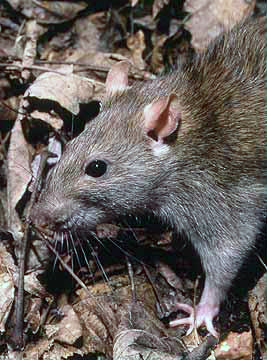 Brown RatRattus norvegicus
-
 Black RatRattus rattus
-
 Polynesian RatRattus exulans
-
 RakaliHydromys chrysogaster
-
 Wood MouseApodemus sylvaticus
-
 Bramble Cay MelomysMelomys rubicola
-
 Greater Bandicoot RatBandicota indica
-
 Bush RatRattus fuscipes
Compare
Questions and answers
What is the scientific name of the Eurasian Harvest Mouse?
The scientific name of the Eurasian Harvest Mouse is Micromys minutus. Written with its author, the full name is Micromys minutus (Pallas, 1771).
Which family does the Eurasian Harvest Mouse belong to?
Micromys minutus belongs to the family Muridae, in the order Rodentia and the class Mammalia.
Where is the Eurasian Harvest Mouse found?
Checklists and occurrence records place Micromys minutus in 33 countries, including The Netherlands, United Kingdom, France, Denmark, Germany and Poland.
What is the conservation status of the Eurasian Harvest Mouse?
The IUCN Red List category recorded for Micromys minutus is Least Concern (LC).
What other names does the Eurasian Harvest Mouse have?
Micromys minutus is also known in English as Harvest Mouse and Indochinese Harvest Mouse.
What does a harvest mouse eat?
The Eurasian Harvest Mouse feeds mainly on seeds and insects, while also consuming nectar, fruit and grain. During summer, it eats insects and larvae, including moths, caterpillars and grasshoppers. During winter, it may feed on stored human food in grain silos and haystacks.[15][16][17][18]
Sources
Passages the profile rests on
- The upperparts are brown with yellowish or reddish tinges, while the underparts range from white to cream or buff. Source passage: “The upper part of the body is brown, sometimes with a yellow or red tinge; the under-parts range from white to cream coloured.” — English Wikipedia
- The species has large eyes and ears, a small nose, and short, stubble-like whiskers. Source passage: “Its eyes and ears are relatively large. It has a small nose, with short, stubble-like whiskers” — English Wikipedia
- Its fur is thick and soft, becoming thicker during winter than summer. Source passage: “thick, soft fur, somewhat thicker in winter than in summer.” — English Wikipedia
- Its prehensile tail is usually two-coloured and lacks fur at the tip. Source passage: “It has a prehensile tail which is usually bicoloured and furless at the tip.” — English Wikipedia
- Its broad feet have a large, somewhat opposable outermost toe that helps it grip vegetation. Source passage: “The mouse's rather broad feet are adapted specifically for climbing, with a somewhat opposable, large outermost toe” — English Wikipedia
- Adults measure 55–75 mm in body length and have tails measuring 50–75 mm. Source passage: “The harvest mouse ranges from 55 to 75 mm (2.2 to 3.0 in) long, and its tail from 50 to 75 mm (2.0 to 3.0 in) long” — English Wikipedia
- Adult body mass ranges from 4 to 11 g. Source passage: “it weighs from 4 to 11 g (0.14 to 0.39 oz)” — English Wikipedia
- The species is described as the smallest rodent in Europe. Source passage: “It is the smallest European rodent” — English Wikipedia
- The species inhabits cereal fields containing crops such as wheat, rice and oats. Source passage: “typically found in fields of cereal crops, such as wheat, rice and oats” — English Wikipedia
- Its habitats include reed beds, long grass and hedgerows. Source passage: “in reed beds and in other tall ground vegetation, such as long grass and hedgerows.” — English Wikipedia
- In Italy and East Asia, the species also inhabits rice fields. Source passage: “In Italy and East Asia, they also make a home in rice fields.” — animaldiversity.org
- Its preferred habitats include high meadows, reed grass plots, bushland interspersed with grasses and grain fields. Source passage: “These would include high meadows, reed grass plots, bushland interspersed with grasses,and grain fields.” — animaldiversity.org
- The species originally inhabited humid areas with tall, persistent grasses near rivers, ponds and lakes. Source passage: “Originally, these mice lived in humid regions with high, long-lasting grasses growing near rivers, ponds, and lakes.” — animaldiversity.org
- When agricultural harvesting removes vegetation, individuals may shelter in shallow soil burrows, barns or silos. Source passage: “The problem is solved by the mouse either forming a shallow burrow in the soil, or finding shelter in the barn or silo.” — animaldiversity.org
- The species feeds mainly on seeds and insects, while also consuming nectar and fruit. Source passage: “It eats chiefly seeds and insects, but also nectar and fruit.” — English Wikipedia
- Its diet includes grass seeds, fruit and grain. Source passage: “M. minutus eats a variety of seeds, especially grasses, fruit and grain.” — animaldiversity.org
- During summer, it also consumes insects and larvae, including moths, caterpillars and grasshoppers. Source passage: “In the summer, its diet also contains insects and larvae, such as moths, caterpillars, and grasshoppers.” — animaldiversity.org
- During winter, individuals may feed on stored human food in grain silos and haystacks. Source passage: “In winter, when food is scarce, M. minutus takes advantage of human stores of food and is often found in grain silos or haystacks.” — animaldiversity.org
- The species uses its prehensile tail as an additional gripping limb when climbing vegetation. Source passage: “Harvest mice have a prehensile tail that functions as an extra limb during climbing.” — English Wikipedia
- Individuals use their feet and tails to grasp stems and leaves while keeping their forepaws free for feeding and grooming. Source passage: “They grasp leaves and stems with their feet and tail, which leaves their hands free for other tasks.” — English Wikipedia
- The species is moderately sociable and occupies small, overlapping home ranges. Source passage: “These tiny mice are moderately sociable. They live in small, overlapping home ranges.” — animaldiversity.org
- Population density generally ranges from 100 to 200 individuals per hectare. Source passage: “Population density typically remains around 100 to 200 individuals per hectare” — animaldiversity.org
- During winter, as many as 5,000 individuals may congregate in a barn or grain storage area. Source passage: “as many as 5,000 individuals may congregate in a barn or grain storage area during the winter.” — animaldiversity.org
- The species does not hibernate. Source passage: “This mouse does not hibernate.” — animaldiversity.org
- Individuals remain active in alternating periods of sleeping and feeding throughout the day and night. Source passage: “It is active in spurts of time throughout the day and night, with a three hourly rhythm of alternating sleeping and eating throughout each 24 hour day.” — animaldiversity.org
- When threatened, individuals may remain motionless against grass stalks as a camouflage response. Source passage: “M. minutus moves slowly, and incorporates "camouflage posture" as a defense, where it remains motionless against the stalk of the grass.” — animaldiversity.org
- If danger persists, individuals drop toward ground level to escape predators. Source passage: “If danger persists, the mouse lets itself drop into the darkness of the ground level.” — animaldiversity.org
- Females produce an average litter of five to six young after a gestation period of approximately 21 days. Source passage: “The female gives birth to an average litter of 5 to 6 young after a gestation period of 21 days.” — animaldiversity.org
- Breeding generally occurs between April and September. Source passage: “Reproduction is usually concentrated during warmer, drier months, starting around April and ending in September.” — animaldiversity.org
- Females can produce several litters in rapid succession under favourable conditions. Source passage: “under the correct favorable conditions, can give birth several times in rapid succession.” — animaldiversity.org
- Litter sizes range from one to thirteen young, usually comprising three to eight. Source passage: “The number of young per litter ranges from 1 to 13, but is usually around 3 to 8.” — animaldiversity.org
- Litters are born in elevated nests constructed approximately 100–130 cm above ground. Source passage: “Births take place in "high nests", structures built about 100 to 130 cm above the ground.” — animaldiversity.org
- Breeding nests are spherical structures woven from grass and attached to stems above ground. Source passage: “Breeding nests are spherical constructions carefully woven from grass and attached to stems well above the ground.” — English Wikipedia
- Breeding nests measure approximately 60–130 mm in diameter. Source passage: “These nests are globular in shape, about 60 to 130 mm in diameter.” — animaldiversity.org
- Breeding nests consist of three tightly woven layers of grass blades. Source passage: “They are formed of three layers of grass blades woven tightly together.” — animaldiversity.org
- Young are born naked, blind and dependent on parental care. Source passage: “The young are born naked, blind and altricial” — animaldiversity.org
- Young reach sexual maturity at approximately 35 days old. Source passage: “and reach sexual maturity in 35 days.” — animaldiversity.org
- The species has been protected under the UK Wildlife and Countryside Act 1981. Source passage: “the harvest mouse is protected under the 1981 Wildlife and Countryside Act of 1981” — English Wikipedia
Data
- Catalogue of Life, 2026-10-16 XR cc by
- Global Biodiversity Information Facility CC BY 4.0
- Wikidata CC0
- GeoNames CC BY 4.0
- Wikimedia Commons per image; credit shown with each image
- Within the Catalogue of Life, this name comes from The Integrated Taxonomic Information System cc0
References
- Reise Prov. Russ. Reichs. vol.1 p.454 where the name was published
- Ellerman, J. R., and T. C. S. Morrison-Scott. (1966). Checklist of Palaearctic and Indian Mammals 1758 to 1946, 2nd Edition.
- Wilson, Don E., and DeeAnn M. Reeder, eds. (1993). Mammal Species of the World: A Taxonomic and Geographic Reference, 2nd Ed., 3rd Printing.
- Musser, Guy G., and Michael D. Carleton / Wilson, Don E., and DeeAnn M. Reeder, eds. (2005). Superfamily Muroidea. Mammal Species of the World: A Taxonomic and Geographic Reference, 3rd Ed., Vol. 2.
This species in other databases
- Catalogue of Life 42ZQ8
- Wikidata Q209516
- iNaturalist 45316
- WoRMS urn:lsid:marinespecies.org:taxname:1506678
Page built on 26 November 2026. See how the catalog is made and all sources and licences.
Cite this page
ScientificNames.org. (2026). Micromys minutus (Eurasian Harvest Mouse). Retrieved November 26, 2026, from https://scientificnames.org/species/micromys-minutus
“Micromys minutus (Eurasian Harvest Mouse).” ScientificNames.org, 2026, scientificnames.org/species/micromys-minutus. Accessed 26 Nov. 2026.
ScientificNames.org. “Micromys minutus (Eurasian Harvest Mouse).” Accessed November 26, 2026. https://scientificnames.org/species/micromys-minutus.
@misc{scientificnames_micromys_minutus_eurasian_harvest_mouse,
  author = {{ScientificNames.org}},
  title = {Micromys minutus (Eurasian Harvest Mouse)},
  year = {2026},
  url = {https://scientificnames.org/species/micromys-minutus},
  note = {Accessed 2026-11-26}
}