Species · Amphibians
Demonic Poison Dart Frog Minyobates steyermarki
The scientific name of the Demonic Poison Dart Frog is Minyobates steyermarki. It is a species of amphibian in the family Dendrobatidae (poison dart frog), order Anura. The name dates from 1971.
- Scientific name
- Minyobates steyermarki (Rivero, 1971)
- Common name
- Demonic Poison Dart Frog
- Genus
- Minyobates
- Family
- Dendrobatidae (Poison Dart Frog)
- Order
- Anura
- Class
- Amphibia
- Red List category
- CR Critically Endangered
- Recorded in
- 1 country
- Name status
- accepted in the Catalogue of Life
Overview
Minyobates steyermarki is endemic to Cerro Yapacana in southern Venezuela, where it inhabits montane tepui forest. It is the only member of the genus Minyobates and has red to reddish-brown coloration with numerous small black spots.
Written 27 November 2026 from the sources listed below. Each statement was checked against the passage it cites; statements that could not be supported were removed.
Conservation
The Demonic Poison Dart Frog is classified as critically endangered. Its total geographic range is less than 10 square kilometres, and its population appears to be declining despite being reported as very common on the tepui in 1999.[1][2][3]
Illegal gold and diamond mining activities have threatened its habitat since the mid-1980s. Mining involves soil removal, river-flow redirection and the accumulation of hazardous solid waste, including mercury.[4][5]
Mining and associated deforestation have caused environmental contamination, erosion and desertification in the area. Open-pit gold mining threatens its forest habitat, and habitat destruction is identified as a reason for its critically endangered status.[6][7][8]
Wildfires could have serious consequences for the species. Illegal collection of specimens for research has also been identified as a threat.[9][10]
The species was most recently assessed for the IUCN Red List in 2020, which lists it as critically endangered.[11][12]
Similar species
The Demonic Poison Dart Frog is the only member of the genus Minyobates.[13]
Appearance
The frog has a broad head and a partially truncated snout. An angular ridge runs between its eye and nostril.[14][15]
Its front limbs are long and slender. All four fingers have discs at their tips, with the first finger longer than the second and the third and fourth fingers having larger discs than the other fingers.[16][17][18][19]
Its toes have smaller discs than those on its hands and lack webbing.[20][21]
The throat and flanks have finely granulated skin, while the rest of the body has smooth skin.[22]
Its dorsal coloration ranges from bright red and dull red to reddish-brown, with numerous small black spots. Its limbs are similar in colour to its body or salmon-pink.[23][24]
Its underparts resemble its body in colour but have larger dark blotches.[25]
Its typical snout-to-vent length is less than 17 mm, and its maximum snout-to-vent length is 19.5 mm.[26][27]
Habitat
The Demonic Poison Dart Frog inhabits montane tepui forest on Cerro Yapacana. Its natural habitat includes wooded areas containing trees approximately 8 to 10 metres tall.[28][29]
It commonly occupies terrestrial habitats among moss-covered rocks. It occurs in rocky locations where moss is abundant.[30][31]
Cerro Yapacana is a tepui plateau rising abruptly from the lowlands between the Orinoco and Ventuari Rivers. The plateau reaches an altitude of 1,345 m, while the surrounding rainforest lies approximately 80 metres above sea level.[32][33][34]
The plateau is entirely within Yapacana National Park. The area receives heavy rainfall and experiences temperatures between 13 and 27 °C.[35][36]
Behaviour
The species is mainly terrestrial.[37]
In captive breeding settings, males protect the eggs. After hatching, males transport tadpoles to water-filled leaf axils in bromeliads.[38][39]
Reproduction and life cycle
The species breeds in bromeliads. Breeding occurs in water accumulated in leaf axils and bromeliad rosettes.[40][41]
In captivity, females typically lay clutches of 3 to 9 eggs. They deposit their eggs in sheltered, humid locations or artificial phytotelmata.[42][43]
After hatching, tadpoles complete their developmental stage in water-filled bromeliad leaf axils.[39][44]
Classification of the Demonic Poison Dart Frog
| Kingdom | Animalia |
|---|---|
| Phylum | Chordata |
| Subphylum | Vertebrata |
| Infraphylum | Gnathostomata |
| Parvphylum | Osteichthyes |
| Megaclass | Tetrapoda |
| Class | Amphibia (Amphibians) |
| Order | Anura (Frogs) |
| Superfamily | Dendrobatoidea |
| Family | Dendrobatidae (Poison Dart Frog) |
| Subfamily | Dendrobatinae |
| Genus | Minyobates (Demonic Poison Frogs) |
| Species | Minyobates steyermarki (Rivero, 1971) |
Where the Demonic Poison Dart Frog is found
Checklists and occurrence records place Minyobates steyermarki in 1 country. GBIF holds 142 georeferenced records of it.
Countries
A number beside a place is its count of GBIF occurrence records. A place without a number comes from a checklist alone. Records show where a species has been observed or collected, which can include escapes and vagrants.
Common names
English
- Demonic Poison Dart Frog
- Demonic Poison Frog
- Demonic Poison-arrow Frog
- Little Red Frog of Yapacana
- Steyermark´s Poison Frog
- Yapacana's Little Red Frog
- Yapacana’s Little Red Frog
Names in 5 other languages
- Czech
- pralesnička Steyermarkova
- Dutch
- Tafelberg pijlgifkikker
- German
- Dämonenbaumsteiger, Tafelberg-Baumsteiger
- Russian
- Дьявольский древолаз
- Spanish
- Rana de punta de flecha de Steyermark, Sapito Rojo Del Yapacana
Synonyms
2 other scientific names have been used for this species and are now treated as synonyms of Minyobates steyermarki.
- Adelphobates steyermarki Twomey & Brown, 2008
- Dendrobates steyermarki Rivero, 1971
Related species
-
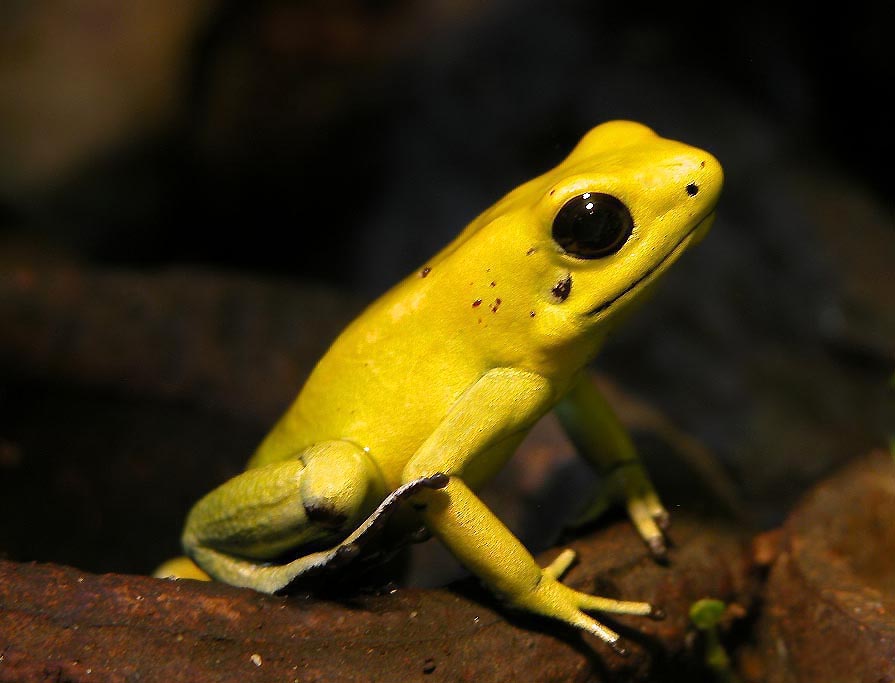 Golden Poison FrogPhyllobates terribilis
-
 Strawberry Poison Dart FrogOophaga pumilio
-
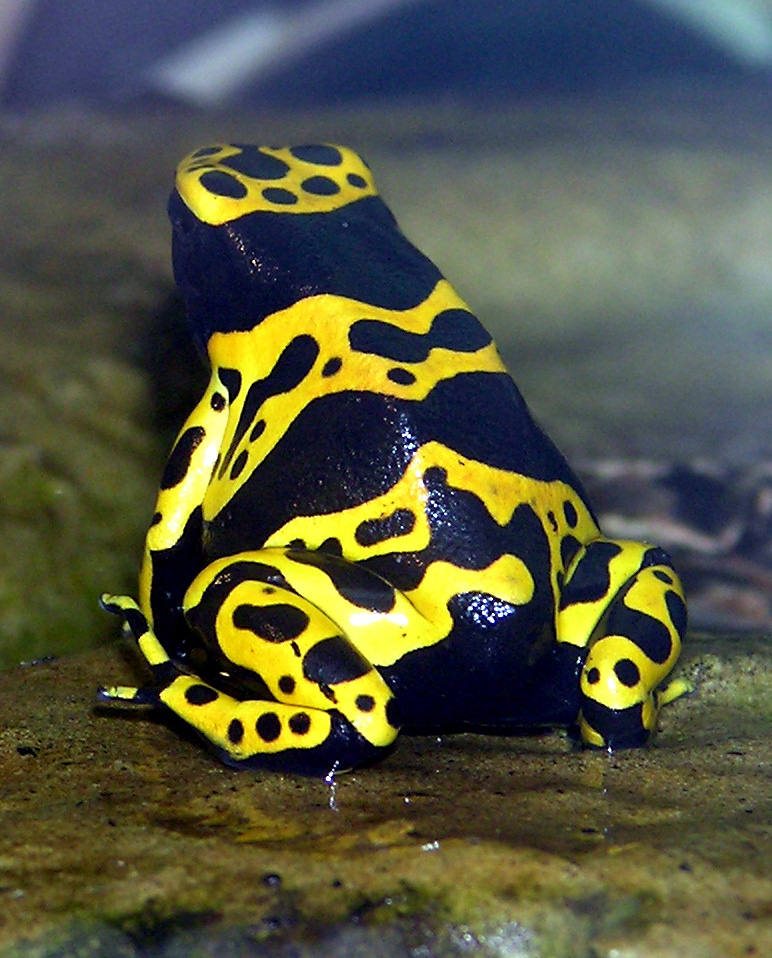 Yellow-banded Poison Dart FrogDendrobates leucomelas
-
 Green and Black Poison Dart FrogDendrobates auratus
-
 Dyeing Poison Dart FrogDendrobates tinctorius
-
 Granular Poison FrogOophaga granulifera
-
 Mimic Poison FrogRanitomeya imitator
-
 Amazon Dart FrogRanitomeya amazonica
Compare
Questions and answers
What is the scientific name of the Demonic Poison Dart Frog?
The scientific name of the Demonic Poison Dart Frog is Minyobates steyermarki. Written with its author, the full name is Minyobates steyermarki (Rivero, 1971).
Which family does the Demonic Poison Dart Frog belong to?
Minyobates steyermarki belongs to the family Dendrobatidae, in the order Anura and the class Amphibia.
Where is the Demonic Poison Dart Frog found?
Checklists and occurrence records place Minyobates steyermarki in 1 country: Venezuela.
What is the conservation status of the Demonic Poison Dart Frog?
The IUCN Red List category recorded for Minyobates steyermarki is Critically Endangered (CR).
What other names does the Demonic Poison Dart Frog have?
Minyobates steyermarki is also known in English as Demonic Poison Frog, Demonic Poison-arrow Frog, Little Red Frog of Yapacana, Steyermark´s Poison Frog, Yapacana's Little Red Frog and Yapacana’s Little Red Frog.
Sources
Passages the profile rests on
- The species is classified as critically endangered. Source passage: “The International Union for Conservation of Nature has assessed Minyobates steyermarki as being "critically endangered".” — English Wikipedia
- Its total geographic range is less than 10 square kilometres. Source passage: “its total range is under 10 square kilometres (3.9 sq mi)” — English Wikipedia
- Although the species was reported as very common on the tepui in 1999, its population appears to be declining. Source passage: “although it was said to be very common on the tepui in 1999, its numbers appear to be decreasing.” — English Wikipedia
- Illegal gold and diamond mining activities have threatened its habitat since the mid-1980s. Source passage: “illegal gold and diamond mining activities, which began in the mid-1980s and have escalated over the years.” — English Wikipedia
- Mining activities in its habitat involve soil removal, river-flow redirection and accumulation of hazardous solid waste, including mercury. Source passage: “This activity involves soil removal, redirection of river flows, and the accumulation of hazardous solid waste, including mercury.” — English Wikipedia
- Open-pit gold mining threatens the frog's forest habitat. Source passage: “its forest habitat is threatened by opencast gold mining” — English Wikipedia
- Mining and associated deforestation have caused environmental contamination, erosion and desertification in the area. Source passage: “Coupled with deforestation, these practices have resulted in significant environmental contamination, erosion, and desertification of the area.” — English Wikipedia
- Habitat destruction is identified as a reason for the species' critically endangered status. Source passage: “their habitat is being destroyed” — amphibiaweb.org
- Wildfires could have serious consequences for the species. Source passage: “Wildfires could have serious consequences for this species” — English Wikipedia
- Illegal collection of specimens for research has been identified as a threat. Source passage: “specimens have been removed illegally for research.” — English Wikipedia
- The species was most recently assessed for the IUCN Red List in 2020. Source passage: “Minyobates steyermarki has most recently been assessed for The IUCN Red List of Threatened Species in 2020.” — iucnredlist.org
- The IUCN Red List lists the species as critically endangered. Source passage: “Minyobates steyermarki is listed as Critically ...” — iucnredlist.org
- The species is the only member of the genus Minyobates. Source passage: “It is monotypic in the genus Minyobates.” — English Wikipedia
- The frog has a broad head and a partially truncated snout. Source passage: “The head is broad with a partially truncated snout” — English Wikipedia
- An angular ridge runs between its eye and nostril. Source passage: “and an angular ridge between the eye and nostril.” — English Wikipedia
- Its front limbs are long and slender. Source passage: “The front limbs are long and slender” — English Wikipedia
- All four fingers have discs at their tips. Source passage: “all the fingers have discs at their tips.” — English Wikipedia
- The first finger is longer than the second finger. Source passage: “The first digit on the hand is longer than the second one” — English Wikipedia
- The third and fourth fingers have larger discs than the other fingers. Source passage: “the third and fourth digits have discs larger than the other two.” — English Wikipedia
- Its toes have discs that are smaller than those on its hands. Source passage: “The toes also have discs but these are smaller than those on the hands.” — English Wikipedia
- Its toes lack webbing. Source passage: “The toes are unwebbed.” — English Wikipedia
- The throat and flanks have finely granulated skin, while the rest of the body has smooth skin. Source passage: “The skin is finely granulated on the throat and flanks but smooth elsewhere.” — English Wikipedia
- Its dorsal coloration ranges from bright red and dull red to reddish-brown, with numerous small black spots. Source passage: “The dorsal surface is bright red, dull red or reddish-brown and liberally speckled with small black spots.” — English Wikipedia
- Its limbs are similar in colour to its body or salmon-pink. Source passage: “The limbs are a similar colour to the body or may be salmon-pink.” — English Wikipedia
- Its underparts resemble its body in colour but have larger dark blotches. Source passage: “The underparts are also similar but have rather larger dark blotches.” — English Wikipedia
- Its maximum snout-to-vent length is 19.5 mm. Source passage: “growing to a maximum snout-to-vent length of 19.5 mm (0.8 in)” — English Wikipedia
- Its typical snout-to-vent length is less than 17 mm. Source passage: “but more typically being shorter than 17 mm (0.7 in).” — English Wikipedia
- Its natural habitat consists of montane tepui forest. Source passage: “Its natural habitat is montane tepui forest” — English Wikipedia
- It inhabits wooded areas containing trees approximately 8 to 10 metres tall. Source passage: “is found in wooded areas with trees 8 to 10 metres (26 to 33 ft) high” — English Wikipedia
- The frog commonly occupies terrestrial habitats among moss-covered rocks. Source passage: “where it is common in terrestrial habitats among moss-clad rocks” — English Wikipedia
- It occurs in rocky locations where moss is abundant. Source passage: “in rocky places where moss abounds.” — English Wikipedia
- Cerro Yapacana is a tepui plateau rising abruptly from the lowlands between the Orinoco and Ventuari Rivers. Source passage: “a raised plateau that rises abruptly from the flat land between the Orinoco and Ventuari Rivers.” — English Wikipedia
- The plateau reaches an altitude of 1,345 m. Source passage: “This has an altitude of up to 1,345 m (4,413 ft)” — English Wikipedia
- The surrounding rainforest lies approximately 80 metres above sea level. Source passage: “whereas the surrounding rainforest is at 80 metres (260 ft) above sea level.” — English Wikipedia
- The plateau is entirely within Yapacana National Park. Source passage: “The plateau is entirely in the Yapacana National Park.” — English Wikipedia
- The area receives heavy rainfall and experiences temperatures between 13 and 27 °C. Source passage: “The area has heavy rainfall and the temperature varies between 13 and 27 °C (55 and 81 °F).” — English Wikipedia
- The species is mainly terrestrial. Source passage: “Minyobates steyermarki is a mainly terrestrial species” — English Wikipedia
- Males protect the eggs in captive breeding settings. Source passage: “while the males take on the role of protecting these eggs.” — English Wikipedia
- After hatching, males transport tadpoles to water-filled leaf axils in bromeliads. Source passage: “the males transport the tadpoles to water-filled leaf axils found within bromeliads.” — English Wikipedia
- The species breeds in bromeliads. Source passage: “and breeds in bromeliads.” — English Wikipedia
- Breeding occurs in water accumulated in leaf axils and bromeliad rosettes. Source passage: “Breeding takes place in the water that collects in leaf axils and in the water-filled rosettes of bromeliads.” — English Wikipedia
- In captivity, females typically lay clutches of 3 to 9 eggs. Source passage: “the females typically lay a clutch consisting of 3 to 9 eggs” — English Wikipedia
- Captive females deposit their eggs in sheltered, humid locations or artificial phytotelmata. Source passage: “within sheltered, humid locations or artificial phytotelmata” — English Wikipedia
- The tadpoles complete their developmental stage in water-filled bromeliad leaf axils. Source passage: “These tadpoles then spend the remainder of their developmental stage within this safe, water-filled environment.” — English Wikipedia
Data
- Catalogue of Life, 2026-10-16 XR cc by
- Global Biodiversity Information Facility CC BY 4.0
- Wikidata CC0
- GeoNames CC BY 4.0
- Within the Catalogue of Life, this name comes from The Integrated Taxonomic Information System cc0
This species in other databases
Page built on 27 November 2026. See how the catalog is made and all sources and licences.
Cite this page
ScientificNames.org. (2026). Minyobates steyermarki (Demonic Poison Dart Frog). Retrieved November 27, 2026, from https://scientificnames.org/species/minyobates-steyermarki
“Minyobates steyermarki (Demonic Poison Dart Frog).” ScientificNames.org, 2026, scientificnames.org/species/minyobates-steyermarki. Accessed 27 Nov. 2026.
ScientificNames.org. “Minyobates steyermarki (Demonic Poison Dart Frog).” Accessed November 27, 2026. https://scientificnames.org/species/minyobates-steyermarki.
@misc{scientificnames_minyobates_steyermarki_demonic_poison_dart_frog,
  author = {{ScientificNames.org}},
  title = {Minyobates steyermarki (Demonic Poison Dart Frog)},
  year = {2026},
  url = {https://scientificnames.org/species/minyobates-steyermarki},
  note = {Accessed 2026-11-27}
}